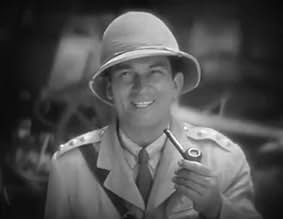
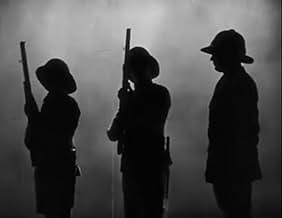
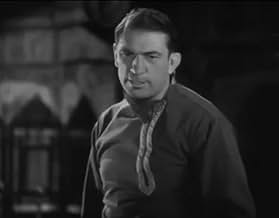
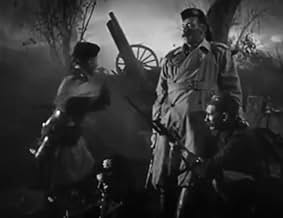
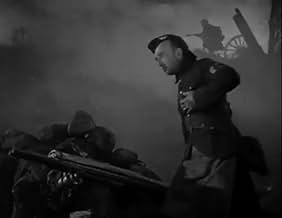
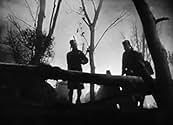
Captain Donald King of the British Army goes to India just as World War I breaks out, convincing his comrades that he is a coward. In reality, he is on a secret mission to rescue British sol... Read allCaptain Donald King of the British Army goes to India just as World War I breaks out, convincing his comrades that he is a coward. In reality, he is on a secret mission to rescue British soldiers held prisoner there.Captain Donald King of the British Army goes to India just as World War I breaks out, convincing his comrades that he is a coward. In reality, he is on a secret mission to rescue British soldiers held prisoner there.
- Director
- Writers
- Stars
Claude King
- General in India
- (as Claud King)
Harry Allen
- Sandy
- (uncredited)
Frank Baker
- 42nd Highlander
- (uncredited)
William Begg
- 42nd Highlander
- (uncredited)
Arthur Clayton
- 42nd Highlander
- (uncredited)
Joseph Diskay
- Muezzin
- (uncredited)
Francis Ford
- Maj. MacGregor
- (uncredited)
Gregory Gaye
- 42nd Highlander
- (uncredited)
- Director
- Writers
- All cast & crew
- Production, box office & more at IMDbPro
5.6568
1
2
3
4
5
6
7
8
9
10
Featured reviews
Everything but the kitchen sink in this early Ford epic.
John Ford had notched up almost 50 films in the director's chair when he took on this project in the late 20's coinciding with the advent of sound.
Far less well known than its 1953 re-make (known AS KING OF THE KHYBER RIFLES) with Tyrone Power in the Victor McLlaglen role, the story is that of British Army Officer Captain King, who encounters way more than he expected when he is asked to put down an Indian rebellion up around the Khyber Pass.
Very dated now and without the benefit of wide screen color which so enhances desert dramas especially, BLACK WATCH is still an interesting time-capsule. I saw it many years ago on late night TV, both to compare with the later version and to see how John Ford's direction held up in 1929. On both counts, the film scored well!
Far less well known than its 1953 re-make (known AS KING OF THE KHYBER RIFLES) with Tyrone Power in the Victor McLlaglen role, the story is that of British Army Officer Captain King, who encounters way more than he expected when he is asked to put down an Indian rebellion up around the Khyber Pass.
Very dated now and without the benefit of wide screen color which so enhances desert dramas especially, BLACK WATCH is still an interesting time-capsule. I saw it many years ago on late night TV, both to compare with the later version and to see how John Ford's direction held up in 1929. On both counts, the film scored well!
Rough Around the Edges -The Black Watch
John Ford would do much better work in future films. Writers and directors were used to silent films and the mechanisms of silent film. This plot was an interesting idea, but it was poorly executed.
The actors and poor Loy recited their lines as if they were on stage, as sound movies were still in development. Writers wrote stiff dialogue; directors were used to shouting instructions for silent films, and actors were used to bulging their eyes and making exaggerated expressions and movements.
Victor McLaglen would do much better work in The Informer, also directed by Ford, who also did a much better job of directing in that film.
Myrna Loy would go on to do much better work as well. The WW1 tale of the Scottish Black Watch should be remade at some point in the future.
The actors and poor Loy recited their lines as if they were on stage, as sound movies were still in development. Writers wrote stiff dialogue; directors were used to shouting instructions for silent films, and actors were used to bulging their eyes and making exaggerated expressions and movements.
Victor McLaglen would do much better work in The Informer, also directed by Ford, who also did a much better job of directing in that film.
Myrna Loy would go on to do much better work as well. The WW1 tale of the Scottish Black Watch should be remade at some point in the future.
The Black Watch
This might have fared better with a stronger leading character because, for my money, getting Victor McLaglen to play a captain in the Royal Scots engaging in some tribal Indian subterfuge was just a mission too far! Anyway, he is "King" who just as his regiment is heading for France is re-routed to the Northwest Territories of India on a top secret mission. His erstwhile colleagues view this as akin to desertion, but we know that his task to discover and destroy a massive arms dump that could spell doom and destruction for the Raj and rescue some hostages is something that this locally born man is best suited to do. Pretty effortlessly this six-foot gent finds and infiltrates the tribe and thanks to the sponsorship of it's high priestess "Yasmani" (Myrna Loy) manages to formulate a plan to thwart the cunning antics of the would-be revolutionaries. The last ten minutes or so bring the story alive and allow the engaging McLaglen to show us a little of the glint in his eye, but the rest of this is a remarkably stage-bound exercise that rarely ventures outdoors and rather than steeping us in end-to-end action, rather drowns us in end-to-end dialogue. Loy looks every inch the star, but more of the silent movies than a talkie as her poise is perfect but her pitch "will you obey my commands?" much less so. Inadvertently, perhaps, the conclusion also reminds us just how the tiny contingent of British soldiers did manage to subdue a population hundreds of times their number and of course there isn't a great deal of jeopardy as the story takes a bit too long to reach it's predictable end. I do like the genre, but this is just a bit too static an interpretation of derring-do to stick in the mind for long with some of the editing looking like it was done on a rollercoaster.
Ford's first feature foray into sound is solid.
Released in 1929, THE BLACK WATCH is an entertaining flick shot in black & white, and John Ford's first all-talkie film. It's based on the 1916 novel 'King of the Khyber Rifles' by Talbot Mundy.
Captain Donald King (McLaglen) goes undercover and leaves his regiment (Black Watch) to put down a rebellion in India at the at the start of WWI. There he finds the beautiful princess Yasmani (Loy) who plans to send her minions to attack British forces at the Khyber Pass.
As we would expect from a Ford movie it has a good look, especially the outdoor scenes. The Cave of Echoes scenes are well crafted with fine visuals and sound effects.
The problem the movie has is it's dialogue in many scenes, Myrna Loy's in particular, is stilted and stagy , as if they thought the mics couldn't keep up with their voices. Still, a good movie.
Captain Donald King (McLaglen) goes undercover and leaves his regiment (Black Watch) to put down a rebellion in India at the at the start of WWI. There he finds the beautiful princess Yasmani (Loy) who plans to send her minions to attack British forces at the Khyber Pass.
As we would expect from a Ford movie it has a good look, especially the outdoor scenes. The Cave of Echoes scenes are well crafted with fine visuals and sound effects.
The problem the movie has is it's dialogue in many scenes, Myrna Loy's in particular, is stilted and stagy , as if they thought the mics couldn't keep up with their voices. Still, a good movie.
Secret mission
Is it because it's the beginning of the talkies that both McLaglen's and Myrna Loy's playing are almost ridiculous ?One should forgive the actress for her part of an Indian Joan Of Ark -but a maid who is fond of men,we are told- is not exactly what you call the part of her life.All that takes place in a pasteboard India looks like a poor man's "lifes of a Bengal Lancer"(which would appear six years later):even two names (Mohammed Khan and McGregor) are used in both movies.
On the other hand ,all that takes place in Scotland shows John Ford's touch :the manly camaraderie, the brothers in arm singing "Auld Lang Syne" before leaving for France (WW1),the officer wrongly accused of cowardice -his superior warns him:"you will be a pariah"-;and more prosaically ,the missus ' piece of advice to the private about his privates and the soldier confessing later that at least at war he was left alone.
The scene of the crystal ball almost predates the one in Mankiewicz's "Cleopatra" when Julius Cesar is murdered.
On the other hand ,all that takes place in Scotland shows John Ford's touch :the manly camaraderie, the brothers in arm singing "Auld Lang Syne" before leaving for France (WW1),the officer wrongly accused of cowardice -his superior warns him:"you will be a pariah"-;and more prosaically ,the missus ' piece of advice to the private about his privates and the soldier confessing later that at least at war he was left alone.
The scene of the crystal ball almost predates the one in Mankiewicz's "Cleopatra" when Julius Cesar is murdered.
Did you know
- Quotes
General in India: Forget your schoolboy scruples. This is war.
- ConnectionsFeatured in Hollywood (1980)
- How long is The Black Watch?Powered by Alexa
Details
- Release date
- Country of origin
- Language
- Also known as
- King of the Khyber Rifles
- Production company
- See more company credits at IMDbPro
Box office
- Budget
- $400,000 (estimated)
- Runtime
- 1h 33m(93 min)
- Color
Contribute to this page
Suggest an edit or add missing content