
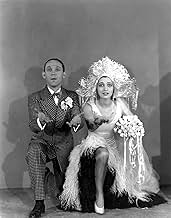
When a vaudeville comic and a pretty young dancer have little luck in their separate careers, they decide to combine their acts; to save money on the road, they get married.When a vaudeville comic and a pretty young dancer have little luck in their separate careers, they decide to combine their acts; to save money on the road, they get married.When a vaudeville comic and a pretty young dancer have little luck in their separate careers, they decide to combine their acts; to save money on the road, they get married.
- Awards
- 3 wins total




Ralph Theodore
- Harvey Howell
- (as Ralph Theadore)


Utahna La Reno
- Amazon Chorus Girl
- (as Miss La Reno)
Corra Beach
- Amazon Chorus Girl
- (as Cora Beach Shumway)

6.7389
1
2
3
4
5
6
7
8
9
10
Featured reviews
If you cut out the musical numbers, this would be a much better film.
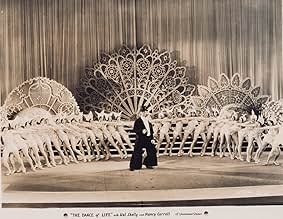
Back in the early days of sound movies, Hollywood was in love with musical spectaculars. The problem is that with the earliest ones, the quality of the sound and dancing is pretty awful. This is painfully obvious in "The Dance of Life". I don't entirely blame the films. After all, sound technology was primitive and quality choreography was something you wouldn't see until the early 30s. The Busby Berkeley-style song and dance numbers were very crisp and professional--the stuff in the earlier films just looks rough...very rough.
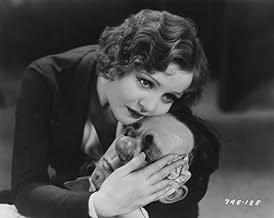
This film is about two stage performers--Skid (Hal Skelly), a comedian, and Bonny (Nancy Carroll). When the film begins, both are out of work and struggling. Together, they seem to do much better and come to be friends and eventually marry. However, over time, Skid hits the big time and Bonny is left behind--putting a big strain on their relationship. Eventually, she takes up with a millionaire and Skid, unexpectedly, hits the skids. What's next for the duo?
This film is very dated. As I mentioned, the dancing is pretty bad. Additionally, similar material is handled better in other films. Mostly of interest to devoted fans of the real oldies.
By the way, sadly only a few years after doing this film, Hal Skelly was killed when he was a passenger in a car that got hit by a train! So, if you ever wanted to see this vaudevillian, this film is one of the few chances.
This film is about two stage performers--Skid (Hal Skelly), a comedian, and Bonny (Nancy Carroll). When the film begins, both are out of work and struggling. Together, they seem to do much better and come to be friends and eventually marry. However, over time, Skid hits the big time and Bonny is left behind--putting a big strain on their relationship. Eventually, she takes up with a millionaire and Skid, unexpectedly, hits the skids. What's next for the duo?
This film is very dated. As I mentioned, the dancing is pretty bad. Additionally, similar material is handled better in other films. Mostly of interest to devoted fans of the real oldies.
By the way, sadly only a few years after doing this film, Hal Skelly was killed when he was a passenger in a car that got hit by a train! So, if you ever wanted to see this vaudevillian, this film is one of the few chances.
One of the very best films from 1929
Other than APPLAUSE, I can't think of any 1929 films I'd class as 'good.' The advent of sound seemed to imbue most directors with creative impotence and turn even great actors into talking statues. This one however is actually a genuinely watchable piece of entertainment.
If you're a weird masochists like me who like to torture yourself by watching early talkies, this will be a pleasant surprise for you. It feels like a big budget, high quality Paramount spectacular - a typical 1930s Hollywood movie - even though it's not actually a Hollywood movie. Paramount's new state of the art studio had just burned down so they had to relocate to their old New York studio for this.
Besides APPLAUSE and to a lesser extent THE LADY LIES and BROADWAY MELODY, most 1929 productions can only be viewed as interesting (or in most cases, boring) curios. This one however lets you sit back and, kick off your shoes and enjoy it as a proper picture. It's got proper modern style acting delivered with dialogue which sounds natural and authentic. The actors do what actors are meant to do: make you think they're real people.
One reason for this must attributed to David O'Selznick's decision to use two directors: one with a movie background and one with a theatre background - it works well. (David O'Selznick at Paramount? Working for MGM and RKO was clearly not enough for him!) The photography is as fluid and imaginative as it was before the restrictions of sound recording came in and the sound recording itself is superb. Also, another big plus is that although it's to some extent a romance, it is refreshingly not one of those nauseating, mushy, sickly sweet pictures which polluted our screens in the late twenties.
It's a bit longer than a typical early talkie but lovely Nancy Carroll thoroughly keeps your attention for the whole two hours. Like a lot of actors and actresses who became massively famous in early talkies, she virtually vanished after the mid thirties. You can understand that with many of those stars like Helen Twelvetrees for example who just didn't fit in with the style of filmmaking which the early talkies evolved into. With Nancy Carroll however it doesn't make sense because, certainly in this picture, she was so believable and engaging. She's not just beautiful and super-sexy like say Alice White, she's a real, normal person whom you think you might have gone to school with.
If you're a weird masochists like me who like to torture yourself by watching early talkies, this will be a pleasant surprise for you. It feels like a big budget, high quality Paramount spectacular - a typical 1930s Hollywood movie - even though it's not actually a Hollywood movie. Paramount's new state of the art studio had just burned down so they had to relocate to their old New York studio for this.
Besides APPLAUSE and to a lesser extent THE LADY LIES and BROADWAY MELODY, most 1929 productions can only be viewed as interesting (or in most cases, boring) curios. This one however lets you sit back and, kick off your shoes and enjoy it as a proper picture. It's got proper modern style acting delivered with dialogue which sounds natural and authentic. The actors do what actors are meant to do: make you think they're real people.
One reason for this must attributed to David O'Selznick's decision to use two directors: one with a movie background and one with a theatre background - it works well. (David O'Selznick at Paramount? Working for MGM and RKO was clearly not enough for him!) The photography is as fluid and imaginative as it was before the restrictions of sound recording came in and the sound recording itself is superb. Also, another big plus is that although it's to some extent a romance, it is refreshingly not one of those nauseating, mushy, sickly sweet pictures which polluted our screens in the late twenties.
It's a bit longer than a typical early talkie but lovely Nancy Carroll thoroughly keeps your attention for the whole two hours. Like a lot of actors and actresses who became massively famous in early talkies, she virtually vanished after the mid thirties. You can understand that with many of those stars like Helen Twelvetrees for example who just didn't fit in with the style of filmmaking which the early talkies evolved into. With Nancy Carroll however it doesn't make sense because, certainly in this picture, she was so believable and engaging. She's not just beautiful and super-sexy like say Alice White, she's a real, normal person whom you think you might have gone to school with.
Unexpected Surprise
This was certainly not what I expected. I was delightfully surprised in just about every way. This film shows clearer than any I've seen the Vaudeville life and the acts in the last years. The sound was handled beautifully and the ending quite touching. Since I caught this where I could find it on You Tube, there were no sequences in color, alas, but everything else was precious, particularly the leads. It paved the way for so many subsequent "show must go on" movies and the phrase itself finally became cliché but this is pristine, sensitive and ultimately quite moving. I was also thankful that so many of the acts were filmed in their entirety, for historical as well as artistic reasons. The balance was perfect!
Curtis Stotlar
Curtis Stotlar
Still entertains and delights!
Here's one of the early talkies that has been readily available to home video, but one I've avoided. An early musical, and yet another "backstage" plotline, this was something I've seen done so poorly elsewhere I suspected I'd wind up throwing things at my TV. [Have any of you anguished your way through the musical numbers of The Great Gabbo?] Happily, such was not the case. Here is a film totally accessible to contemporary audiences.
A big film in its time, Paramount popped for Technicolor and assigned it's two top directors, Cromwell and Sutherland. [The directors appear in cameos as doorman and theatre attendant, respectively.] Musical sequences are well done and entertain. Cringe factor on a one to five scale, one. The wonder of seeing the tall, lanky Skelly and diminutive Carroll dancing in perfect unison is still with me. They're the most unlikely team this side of Laurel and Hardy.
Many other splendid differences between this film and its contemporaries are worth noting. Released August, 1929, Paramount's superimposed credits seem so much more modern than the silent card graphics MGM still used. Not everyone cares to know who the associated producer is, we want entertained. Behind The Dance Of Life, silhouetted stage hands scurry about, pulling backdrops and riggings. You're treated to seeing behind the scenes while the obligatory texts play out. The ensemble cast has antagonists which prove to be red herrings. It's loaded with interesting camera compositions. A train is gained and quit at night in a pouring rainstorm. A sandwich is used as a romantic device. And what I enjoyed the most was the personal and up close feeling the directors give scenes. Skelly, after pratfalling from wing to wing, sings "True Blue Lou" so personally it would seem he was oblivious to the camera which closed in three times during the song.
A snapshot of a lost form of American entertainment, The Dance Of Life stands apart from its roots as a great film. See it!
A big film in its time, Paramount popped for Technicolor and assigned it's two top directors, Cromwell and Sutherland. [The directors appear in cameos as doorman and theatre attendant, respectively.] Musical sequences are well done and entertain. Cringe factor on a one to five scale, one. The wonder of seeing the tall, lanky Skelly and diminutive Carroll dancing in perfect unison is still with me. They're the most unlikely team this side of Laurel and Hardy.
Many other splendid differences between this film and its contemporaries are worth noting. Released August, 1929, Paramount's superimposed credits seem so much more modern than the silent card graphics MGM still used. Not everyone cares to know who the associated producer is, we want entertained. Behind The Dance Of Life, silhouetted stage hands scurry about, pulling backdrops and riggings. You're treated to seeing behind the scenes while the obligatory texts play out. The ensemble cast has antagonists which prove to be red herrings. It's loaded with interesting camera compositions. A train is gained and quit at night in a pouring rainstorm. A sandwich is used as a romantic device. And what I enjoyed the most was the personal and up close feeling the directors give scenes. Skelly, after pratfalling from wing to wing, sings "True Blue Lou" so personally it would seem he was oblivious to the camera which closed in three times during the song.
A snapshot of a lost form of American entertainment, The Dance Of Life stands apart from its roots as a great film. See it!
Hal Skelly Is Excellent
Odd title for the film version of the Broadway hit, BURLESQUE, that starred Hal Skelly and Barbra Stanwyck and made them both stars. Odd also that Skelly would topline the 1929 film version but Nancy Carroll would get the lead role over Stanwyck.
In any case both stars are excellent in this underrated and forgotten gem that includes great vaudeville numbers, songs, comedy, and drama.
Skelly is an "eccentric" dancer who teams with Carroll and they struggle on the burlesque circuit until a talent scout spots Skelly and gets him a spot in the Ziegfeld Follies. But money and fame go to his head and he starts boozing with a golddigging hussy. Eventually he his fired and Carroll sues for divorce to marry a Wyoming rancher. Skelly has one more chance when he's offered his old job with the burlesque show but Carroll must leave Wyoming to help him get through his opening show.
Hackneyed plot but done with great spirit and truth. Carroll and Skelly are great. Supporting cast includes May Boley terrific as Gussie, Oscar Levant as a pianist, Al St. John as Bozo, Charles Brown as the burlesque manager, Ralph Theodore as Harvey, and Dorothy Revier as Marco.
High point is a terrific semi closeup of Skelly sitting on the stage and singing "True Blue Lou" in his sad clown makeup. Great moment. Carroll gets to do several dances and she's damned good. Her singing isn't as good though.
After seeing the lousy HONEY I was skeptical about another Nancy Carroll musical but THE DANCE OF LIFE is terrific. Hal Skelly could have been a big big star but he was hideously killed in 1934 when the car in which he was riding was smashed by a freight train in Connecitcut.
In any case both stars are excellent in this underrated and forgotten gem that includes great vaudeville numbers, songs, comedy, and drama.
Skelly is an "eccentric" dancer who teams with Carroll and they struggle on the burlesque circuit until a talent scout spots Skelly and gets him a spot in the Ziegfeld Follies. But money and fame go to his head and he starts boozing with a golddigging hussy. Eventually he his fired and Carroll sues for divorce to marry a Wyoming rancher. Skelly has one more chance when he's offered his old job with the burlesque show but Carroll must leave Wyoming to help him get through his opening show.
Hackneyed plot but done with great spirit and truth. Carroll and Skelly are great. Supporting cast includes May Boley terrific as Gussie, Oscar Levant as a pianist, Al St. John as Bozo, Charles Brown as the burlesque manager, Ralph Theodore as Harvey, and Dorothy Revier as Marco.
High point is a terrific semi closeup of Skelly sitting on the stage and singing "True Blue Lou" in his sad clown makeup. Great moment. Carroll gets to do several dances and she's damned good. Her singing isn't as good though.
After seeing the lousy HONEY I was skeptical about another Nancy Carroll musical but THE DANCE OF LIFE is terrific. Hal Skelly could have been a big big star but he was hideously killed in 1934 when the car in which he was riding was smashed by a freight train in Connecitcut.


Did you know
- TriviaOriginally intended as Paramount's first talkie, this production was transferred to the Astoria studios in Queens after the January '28 fire that destroyed Paramount's Hollywood studios. It was eventually transferred from Astoria back to Hollywood, incurring another delay, allowing several other features to be released before this film finally made it to theaters in mid-1929.
- Quotes
Ralph 'Skid' Johnson: Say, you're out of a job--let's both wire him.
Bonny Lee King: Yeah, but I ain' got your talent.
Ralph 'Skid' Johnson: Aw, rats. With your face and figure, baby, you could make good anywhere.
- SoundtracksTrue Blue Lou
(uncredited)
Music by Richard A. Whiting
Lyrics by Sam Coslow and Leo Robin
Sung by Hal Skelly
Details
- Runtime
- 1h 55m(115 min)
- Color
Contribute to this page
Suggest an edit or add missing content