IMDb RATING
5.6/10
2.5K
YOUR RATING


An all-star revue featuring MGM contract players.An all-star revue featuring MGM contract players.An all-star revue featuring MGM contract players.
- Directors
- Writers
- Stars
- Nominated for 1 Oscar
- 1 win & 1 nomination total


Cliff Edwards
- Ukelele Ike
- (as Ukulele Ike)


Nils Asther
- Nils Asther
- (scenes deleted)

Brox Sisters
- The Brox Sisters
- (as Brox Sisters - Singing Trio)


- Directors
- Writers
- All cast & crew
- Production, box office & more at IMDbPro
5.62.4K
1
2
3
4
5
6
7
8
9
10
Featured reviews
Lavish, But Dated All-Star Revue
I have seen this film a few times and always think boy they were the good old days. In 1929, for their first talking film, MGM put together this lavish, all-star revue with absolutely no plot. It contains guest appearances from many of MGM's top silent film stars. If you do ever see this you will notice many of them did not make it through the transition of the talking pictures. Joan Crawford stands out doing her horrible dance and singing routine, but the best is the technicolor SINGIN' IN THE RAIN finale. This is a must for any film buff.
Don't be too harsh in your judgements
I watched the tape I had made on 4/18/02 again today and read over some of the comments that have been made on this old curio and I felt the need to add a few more observations of my own.
- Firstly, I enjoy watching old films. I see them not as competitors with current entertainment but as portholes into the past. I see the past as a series of presents and the present as living history that we are privileged to witness. Old films allow us to `look' at past era, such as 1929, up close. Each era contains its classics, such as this same year's `All Quiet on the Western Front', that are so good that they are timeless. But most of what was created was material such as Hollywood Review of 1929, designed to provide entertainment for the masses, to the tastes of the age. These people were not making this film to entertain us but rather to entertain the audiences of 1929. They must have done a good job, as this was a big hit. There is plenty of material being produced today that will look just as silly to future generations. Some of it looks pretty silly right now.
- Keep in mind that while the cinema was three decades old at this time, sound recording was an infant. Not only do we hear the `clump clump clump of the dancer's feet but the limitations imposed on the camera by the new technology had stripped a generation of innovations from the medium and what we have is a very flat rendering of a stage review. In time, Hollywood would rediscover how to make films- essentially they filmed much of them in silence and added what sounds they wished us to hear afterwards. We could hear the tap of Fred Astaire's shoes but the clump of the dancer's feet would be muted. The songs would be dubbed in under controlled conditions in a studio. The same presentation would have been done a lot better just a few years later. But this is the best that could be done in 1929.
- In the wake of the development of sound, Hollywood rushed out movies that exploited the new technology as fast as they could, (this one was put together in 28 days), just as a lot of films today use computer generated monsters, armies, cliffs, etc., just to show off what they can do. We have to remember what a miracle watching movies stars talk must have seemed like at the time. Whenever a technical process becomes a drawing card in itself, other aspects of the movies are going to suffer- just as today we see many movies designed simply to show off computer technology that neglect to create human characters we can relate to or tell a coherent plot. I'm not sure I wouldn't rather see `Hollywood Revue of 1929' again than to see `Van Helsing' again. I wonder what the cast of the first would have thought of the second. They might have liked their product a little better.
- It was decided that the best way to exploit the new medium was to produce musicals. Talking was fine but people wanted to hear music, as well. And singing and dancing filled the bill. But the people who had become silent movie stars were not necessarily talented musical performers. Joan Crawford was a chorus girl but that's a long way from being a lead singer or dancer. Imagine modern Hollywood putting on a show like this- with Tom Cruise playing comic foil to some Saturday Night Live types and Julia Roberts dancing and singing. Would it come out any better?
It's best not to be too critical and just look through the crystal ball of the TV at the year nineteen hundred and twenty nine, up close and personal.
- Firstly, I enjoy watching old films. I see them not as competitors with current entertainment but as portholes into the past. I see the past as a series of presents and the present as living history that we are privileged to witness. Old films allow us to `look' at past era, such as 1929, up close. Each era contains its classics, such as this same year's `All Quiet on the Western Front', that are so good that they are timeless. But most of what was created was material such as Hollywood Review of 1929, designed to provide entertainment for the masses, to the tastes of the age. These people were not making this film to entertain us but rather to entertain the audiences of 1929. They must have done a good job, as this was a big hit. There is plenty of material being produced today that will look just as silly to future generations. Some of it looks pretty silly right now.
- Keep in mind that while the cinema was three decades old at this time, sound recording was an infant. Not only do we hear the `clump clump clump of the dancer's feet but the limitations imposed on the camera by the new technology had stripped a generation of innovations from the medium and what we have is a very flat rendering of a stage review. In time, Hollywood would rediscover how to make films- essentially they filmed much of them in silence and added what sounds they wished us to hear afterwards. We could hear the tap of Fred Astaire's shoes but the clump of the dancer's feet would be muted. The songs would be dubbed in under controlled conditions in a studio. The same presentation would have been done a lot better just a few years later. But this is the best that could be done in 1929.
- In the wake of the development of sound, Hollywood rushed out movies that exploited the new technology as fast as they could, (this one was put together in 28 days), just as a lot of films today use computer generated monsters, armies, cliffs, etc., just to show off what they can do. We have to remember what a miracle watching movies stars talk must have seemed like at the time. Whenever a technical process becomes a drawing card in itself, other aspects of the movies are going to suffer- just as today we see many movies designed simply to show off computer technology that neglect to create human characters we can relate to or tell a coherent plot. I'm not sure I wouldn't rather see `Hollywood Revue of 1929' again than to see `Van Helsing' again. I wonder what the cast of the first would have thought of the second. They might have liked their product a little better.
- It was decided that the best way to exploit the new medium was to produce musicals. Talking was fine but people wanted to hear music, as well. And singing and dancing filled the bill. But the people who had become silent movie stars were not necessarily talented musical performers. Joan Crawford was a chorus girl but that's a long way from being a lead singer or dancer. Imagine modern Hollywood putting on a show like this- with Tom Cruise playing comic foil to some Saturday Night Live types and Julia Roberts dancing and singing. Would it come out any better?
It's best not to be too critical and just look through the crystal ball of the TV at the year nineteen hundred and twenty nine, up close and personal.
"The Jewels of Beauty Rare..."
After the first big production number, Conrad Nagel appears and soon gets around to "Well, this IS nice. Here's one of my favourites--and I know you like her too. Because she's the personification of youth and beauty and joy and happiness: JOAN CRAWFORD--"
Could there be a remark more evocative of a time so innocent, especially in Hollywood, as to be all but unimaginable if it weren't still on film 75 years later?
The audiences at the late, lamented Theatre 80 St. Marks didn't think so either.
There is no attempt whatever to make this vaudeville-follies extravaganza cinematic--and who cares? Maybe that's why I find it so unique, so altogether touching. Sure, it's full of silliness and cornball nonsense, but there are so many moments of sweet charm that those are all right too.
It's just like being in a big vaudeville barn, and everybody does everything onstage; there is even an overture for the second act that is made of 2 songs from the first act, "Your Mother and My Mother,Too" and Crawford's song-and-dance number "Got a Feelin' for You."
I came to the movie because 3 players from 'The Broadway Melody'--Bessie Love, Charles King and Anita Page--were all reappearing here, and so there is a little variation on some of their numbers and personae from the earlier film. In 'Broadway Melody', Charles King falls in love with Anita Page and declares his love to her in the old classic "You Were Meant for Me." In 'The Hollywood Revue', Conrad Nagel sings it to Miss Page; this makes for a charming echo, and since it is plot less, the fact that Nagel is a real leading man much more than is King doesn't seem totally cruel--and, after all, King had been engaged to Bessie Love, Miss Page's sister in 'Broadway Melody'; maybe that balances the score a little. Bessie Love is made tiny to sit in Jack Benny's hands (a rare moment of "cinema" in the proceedings), and later does some work with Marie Dressler and Polly Moran. Bessie Love is one of my favourites: she was the Bride of Cana in Griffith's 'Intolerance' in 1916, thirteen years before these two musicals; was Vanessa Redgrave's mother in 'Isadora', Jean Seberg's mother in 'Mousey', and in between the last 2 was Aunt Pity-Pat in the London stage production of the musical version of 'Gone With the Wind', which was first made for Japan and has a fine Harold Rome score (although there's nothing in it that even approaches 'Tara's Theme.')
But there's a lot more I like about this movie. The opening number "There'll Be Some New Songs in the Old Town Tonight" and "That Low-Down Rhythm" are both tuneful and fun dance numbers--although the second definitely has a moment when pointe work looks a bit earthbound and leaden when it has gone on a little too long..again, it works nevertheless.
The long "Singin' in the Rain" number is lovely and varied (including 3 girl songbirds all in a single transparent raincoat) and the last number "Orange Blossom Time" is infectiously naive, with parts of it in color and better ballet work this time,as well as Charlie King (who sings the opening of the song) being allowed to prevail after having been somewhat unceremoniously trashed by Nagel earlier on.
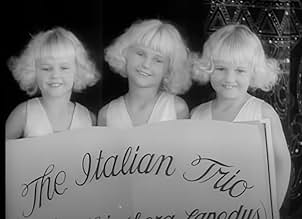
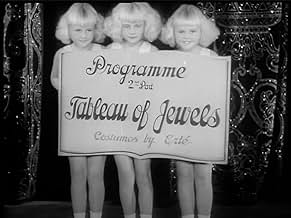
The loveliest for me is the first part of the Ziegfeld Follies-style number, which opens the second act, the "Tableau of Jewels," with its exquisite Erte costumes. There is a whole song here, no matter that the short musical introduction is silly, and the actual tableau is followed by absurd pseudo-Arabian music and dancing, culminating in Buster Keaton as a "beauty."
This song is sung so beautifully and pristinely I do wish I could find out who the tenor is (he rolls his r's so marvelously, and sounds like a courtly German), but the lyrics are priceless; there would be 2 more editions of 'The Ziegfeld Follies' on Broadway (in 1934 and 1936), so an exemplary moment of the still-fresh species--the "glorification of the American Girl"--is herein captured for posterity's delectation most sublimely. For a long time, I thought the first line of the song was "I bring to you the joy of beauty rare, my lady fair..." but I should have known that this kind of "realism" would only come later, when Rodgers and Hammerstein would redefine the musical; and that the professionals who made this kind of picture had no need to see any dissonance between the luxury of gems and the stirrings of the true heart. Here are the lyrics in their entirety:
"I bring to you the jewels of beauty rare, my lady fair, A token of my love for you to wear, my lady fair... Each little ray of brilliancy May bring you closer, love, to me.
I say it with these jewels of beauty rare, my lady fair, They're only little jewels to make you fair, to make you care... Let them linger on your breast, on your arms, in your hair.. I'm jealous of each space...they may embrace, my lady fair.
Love is sweet beauty, not passion vain, Beauty comes once and never again..
I bring to you the jewels of beauty rare, my lady fair, Oh, let me be a fool, my love is there, my lady fair... I'd give all the diamonds' art..in the world...one kiss to impart... I bring to you the jewels, for you're the JEWEL OF MY HEART!"
Could there be a remark more evocative of a time so innocent, especially in Hollywood, as to be all but unimaginable if it weren't still on film 75 years later?
The audiences at the late, lamented Theatre 80 St. Marks didn't think so either.
There is no attempt whatever to make this vaudeville-follies extravaganza cinematic--and who cares? Maybe that's why I find it so unique, so altogether touching. Sure, it's full of silliness and cornball nonsense, but there are so many moments of sweet charm that those are all right too.
It's just like being in a big vaudeville barn, and everybody does everything onstage; there is even an overture for the second act that is made of 2 songs from the first act, "Your Mother and My Mother,Too" and Crawford's song-and-dance number "Got a Feelin' for You."
I came to the movie because 3 players from 'The Broadway Melody'--Bessie Love, Charles King and Anita Page--were all reappearing here, and so there is a little variation on some of their numbers and personae from the earlier film. In 'Broadway Melody', Charles King falls in love with Anita Page and declares his love to her in the old classic "You Were Meant for Me." In 'The Hollywood Revue', Conrad Nagel sings it to Miss Page; this makes for a charming echo, and since it is plot less, the fact that Nagel is a real leading man much more than is King doesn't seem totally cruel--and, after all, King had been engaged to Bessie Love, Miss Page's sister in 'Broadway Melody'; maybe that balances the score a little. Bessie Love is made tiny to sit in Jack Benny's hands (a rare moment of "cinema" in the proceedings), and later does some work with Marie Dressler and Polly Moran. Bessie Love is one of my favourites: she was the Bride of Cana in Griffith's 'Intolerance' in 1916, thirteen years before these two musicals; was Vanessa Redgrave's mother in 'Isadora', Jean Seberg's mother in 'Mousey', and in between the last 2 was Aunt Pity-Pat in the London stage production of the musical version of 'Gone With the Wind', which was first made for Japan and has a fine Harold Rome score (although there's nothing in it that even approaches 'Tara's Theme.')
But there's a lot more I like about this movie. The opening number "There'll Be Some New Songs in the Old Town Tonight" and "That Low-Down Rhythm" are both tuneful and fun dance numbers--although the second definitely has a moment when pointe work looks a bit earthbound and leaden when it has gone on a little too long..again, it works nevertheless.
The long "Singin' in the Rain" number is lovely and varied (including 3 girl songbirds all in a single transparent raincoat) and the last number "Orange Blossom Time" is infectiously naive, with parts of it in color and better ballet work this time,as well as Charlie King (who sings the opening of the song) being allowed to prevail after having been somewhat unceremoniously trashed by Nagel earlier on.
The loveliest for me is the first part of the Ziegfeld Follies-style number, which opens the second act, the "Tableau of Jewels," with its exquisite Erte costumes. There is a whole song here, no matter that the short musical introduction is silly, and the actual tableau is followed by absurd pseudo-Arabian music and dancing, culminating in Buster Keaton as a "beauty."
This song is sung so beautifully and pristinely I do wish I could find out who the tenor is (he rolls his r's so marvelously, and sounds like a courtly German), but the lyrics are priceless; there would be 2 more editions of 'The Ziegfeld Follies' on Broadway (in 1934 and 1936), so an exemplary moment of the still-fresh species--the "glorification of the American Girl"--is herein captured for posterity's delectation most sublimely. For a long time, I thought the first line of the song was "I bring to you the joy of beauty rare, my lady fair..." but I should have known that this kind of "realism" would only come later, when Rodgers and Hammerstein would redefine the musical; and that the professionals who made this kind of picture had no need to see any dissonance between the luxury of gems and the stirrings of the true heart. Here are the lyrics in their entirety:
"I bring to you the jewels of beauty rare, my lady fair, A token of my love for you to wear, my lady fair... Each little ray of brilliancy May bring you closer, love, to me.
I say it with these jewels of beauty rare, my lady fair, They're only little jewels to make you fair, to make you care... Let them linger on your breast, on your arms, in your hair.. I'm jealous of each space...they may embrace, my lady fair.
Love is sweet beauty, not passion vain, Beauty comes once and never again..
I bring to you the jewels of beauty rare, my lady fair, Oh, let me be a fool, my love is there, my lady fair... I'd give all the diamonds' art..in the world...one kiss to impart... I bring to you the jewels, for you're the JEWEL OF MY HEART!"
Only Musical Revue to Earn Academy Awards' Best Picture Nomination
MGM was one of the last studios to convert from silent to sound movies. To break the ice for the stars' talkie transformation, studio executives felt if they dipped their collective toes on a sound stage these silent movie actors and actresses wouldn't be so scared to hear their recorded voices for the first time. The June 1929 "The Hollywood Revue of 1929" proved to be a grab bag of MGM performers mixing song-and-dance routines with comedic acts. The movie served as a predecessor to television variety shows such as 'Ed Sullivan Show,' while at the same time harkened back to those earlier vaudeville days.
The 'moving camera' of the later silent movie era was all but discarded for a stationary one anchored just behind the orchestra pit in the audience seats. Additional cameras captured close-up and two shots. But the majority of scenes took in all the stage action in one wide frame. The two-hour length of "The Hollywood Revue of 1929" served as an entire evening's entertainment to those not used to seeing huge Broadway musicals. Despite being contained on one stage, the movie still cost over $400,000 to produce, and was filmed over a 25-day period.
The revue, billed as an "All-Star Musical Extravaganza," was well received by the curious public. Stars not known for their singing and dancing, such as Marion Davies and Bessie Love, were given quick lessons in both to showcase their limited musical talents. Joan Crawford, a previous dancer, said "the revue "was one of those let's-throw-everyone-on-the-lot-into-a musical thing, but I did a good song-and-dance number." The feature film had so many fans flocking to those theaters wired for sound to hear their silent film stars vocalize on film for the first time that MGM earned an enormous $1 million profit. "The Hollywood Revue of 1929" was nominated Outstanding Picture, the only revue movie ever to be considered for the Academy Awards Best Picture.
The many acts were tied together by emcees Conrad Nagel and Jack Benny, appearing in his first film. As a vaudeville and stand-up comedian beginning in 1911, Benjamin Kubelsky (stage name Jack Benny), along with his trusty violin, bounced around the country for years. His agent, Sammy Lyons, approached MGM's Irving Thalberg, and asked the producer to give Benny a look-see at the local Orpheum Theatre in Los Angeles. Thalberg liked Benny so much he sign him to a contract, beginning with "The Hollywood Revue of 1929." Not only was Benny a co-anchor to the show, he came up with the special effects introducing actress Bessie Love by taking a miniature version of her out of his pocket and placing her on the stage. She quickly grows larger like the Wonder Bread commercial boy. To achieve such an effect, the actress was in front of a black velvet curtain while the camera moves in.
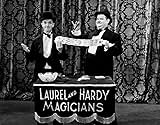
The movie is also noteworthy for the performance of actor John Gilbert, who plays Romeo in a tongue-in-cheek sketch with Thalberg's wife, Norma Shearer. Claims of Gilbert possessing a high, shrill voice aren't found in the color clip where his deliberate pacing isn't as bad as film historians claim it was in his later films. Additionally, one of the highlighted comedic acts was delivered by the Laurel and Hardy team, who had just released the pair's first talkie a few weeks earlier in "Unaccustomed As We Are."
In another skit where the song "Lon Chaney Will Get You if You Don't Watch Out," viewers are introduced to the Chaney character played up by actor Gus Edwards. Chaney inked a three-picture a year deal with MGM. The actor wanted "The Hollywood Revue of 1929" to count as one of those films, even though his appearance would be only five minutes of reel time. The studio balked at the expense of paying Chaney for the short performance, which would eat up a good portion of the film's planned budget. It flatly refused. The actor wasn't happy to find out the song about him was going forward. But the untimely death of Chaney a few months later forced MGM to cut the song while in theaters that summer. The studio did put the sequence back into the motion picture when re-released years later.
Director Charles Reisner got MGM to film the last-minute inclusion of the grand finale with the song 'Singin' in the Rain.' The sequence was shot 10 days before the movie's premier at Grauman's Chinese Theatre. The Technicolor ending included those stars who appeared in the previous acts to report to the studio stage to film late into night. Movie critics in the day appreciated the final coda with the New York Times praising "the most extravagant and extensive musical comedy so far presented by the talking pictures, and is in itself a complete evening's entertainment."
The 'moving camera' of the later silent movie era was all but discarded for a stationary one anchored just behind the orchestra pit in the audience seats. Additional cameras captured close-up and two shots. But the majority of scenes took in all the stage action in one wide frame. The two-hour length of "The Hollywood Revue of 1929" served as an entire evening's entertainment to those not used to seeing huge Broadway musicals. Despite being contained on one stage, the movie still cost over $400,000 to produce, and was filmed over a 25-day period.
The revue, billed as an "All-Star Musical Extravaganza," was well received by the curious public. Stars not known for their singing and dancing, such as Marion Davies and Bessie Love, were given quick lessons in both to showcase their limited musical talents. Joan Crawford, a previous dancer, said "the revue "was one of those let's-throw-everyone-on-the-lot-into-a musical thing, but I did a good song-and-dance number." The feature film had so many fans flocking to those theaters wired for sound to hear their silent film stars vocalize on film for the first time that MGM earned an enormous $1 million profit. "The Hollywood Revue of 1929" was nominated Outstanding Picture, the only revue movie ever to be considered for the Academy Awards Best Picture.
The many acts were tied together by emcees Conrad Nagel and Jack Benny, appearing in his first film. As a vaudeville and stand-up comedian beginning in 1911, Benjamin Kubelsky (stage name Jack Benny), along with his trusty violin, bounced around the country for years. His agent, Sammy Lyons, approached MGM's Irving Thalberg, and asked the producer to give Benny a look-see at the local Orpheum Theatre in Los Angeles. Thalberg liked Benny so much he sign him to a contract, beginning with "The Hollywood Revue of 1929." Not only was Benny a co-anchor to the show, he came up with the special effects introducing actress Bessie Love by taking a miniature version of her out of his pocket and placing her on the stage. She quickly grows larger like the Wonder Bread commercial boy. To achieve such an effect, the actress was in front of a black velvet curtain while the camera moves in.
The movie is also noteworthy for the performance of actor John Gilbert, who plays Romeo in a tongue-in-cheek sketch with Thalberg's wife, Norma Shearer. Claims of Gilbert possessing a high, shrill voice aren't found in the color clip where his deliberate pacing isn't as bad as film historians claim it was in his later films. Additionally, one of the highlighted comedic acts was delivered by the Laurel and Hardy team, who had just released the pair's first talkie a few weeks earlier in "Unaccustomed As We Are."
In another skit where the song "Lon Chaney Will Get You if You Don't Watch Out," viewers are introduced to the Chaney character played up by actor Gus Edwards. Chaney inked a three-picture a year deal with MGM. The actor wanted "The Hollywood Revue of 1929" to count as one of those films, even though his appearance would be only five minutes of reel time. The studio balked at the expense of paying Chaney for the short performance, which would eat up a good portion of the film's planned budget. It flatly refused. The actor wasn't happy to find out the song about him was going forward. But the untimely death of Chaney a few months later forced MGM to cut the song while in theaters that summer. The studio did put the sequence back into the motion picture when re-released years later.
Director Charles Reisner got MGM to film the last-minute inclusion of the grand finale with the song 'Singin' in the Rain.' The sequence was shot 10 days before the movie's premier at Grauman's Chinese Theatre. The Technicolor ending included those stars who appeared in the previous acts to report to the studio stage to film late into night. Movie critics in the day appreciated the final coda with the New York Times praising "the most extravagant and extensive musical comedy so far presented by the talking pictures, and is in itself a complete evening's entertainment."
Looking for the telescope
MGM used to boast that they had more stars than were in the heavens. This transitional picture shows some "stars", people who still have name recognition. Some of the performers were near the end of their career, some at the beginning, and others, probably did not have much of a career before or after this.
There's no real plot - it's pretty much a variety show hosted by Conrad Nagle and Jack Benny. There are some historical moments here - the first performance of "Singing in the Rain", the alleged cause of John Gilbert's career nosediving, Joan Crawford singing and dancing, some slapstick from Laurel & Hardy. There are appearances by the stunningly beautiful Anita Page who looks kind of sad while Conrad Nagle appears to be singing to her. William Haines, just before Louis B. Mayer ended his acting career, eating part of Jack Benny's clothing. Bessie Love appeared to come from one of Jack Benny's pockets - she said there was a $100 bill in the pocket, Benny quips that it's not his suit.
Parts of this was the inspiration of the movie "Singing in the Rain", which was done 20+ years later.
The pluses to this: some color sequences, including the closing performance of "Singing in the Rain", a weird dance sequence by Buster Keaton, who remains mute, and it's a great glimpse into Hollywood as it transitioned from the Silent Era to the age of "talkies". One interesting thing was the cameras weren't as static as they were for many of the early "talkies". There's also a kind of experimental dance sequence where it appears that they used some of the negatives in place of the processed film.
Some of the minuses are it wasn't a smooth transition from the Silent Era to the age of "talkies" - the sound quality is very inconsistent. Some people sounded kind of muffled, some people's voices weren't picked up very well. The version that was played by TCM on 8/4/08 wasn't closed captioned, so if you can't understand what someone is saying or singing, you don't have any captioning to help you out.
This is a good movie if you are interested in relatively early movies - it's almost 80 years old. It's also a chance to see some performers that didn't appear very often.
There's no real plot - it's pretty much a variety show hosted by Conrad Nagle and Jack Benny. There are some historical moments here - the first performance of "Singing in the Rain", the alleged cause of John Gilbert's career nosediving, Joan Crawford singing and dancing, some slapstick from Laurel & Hardy. There are appearances by the stunningly beautiful Anita Page who looks kind of sad while Conrad Nagle appears to be singing to her. William Haines, just before Louis B. Mayer ended his acting career, eating part of Jack Benny's clothing. Bessie Love appeared to come from one of Jack Benny's pockets - she said there was a $100 bill in the pocket, Benny quips that it's not his suit.
Parts of this was the inspiration of the movie "Singing in the Rain", which was done 20+ years later.
The pluses to this: some color sequences, including the closing performance of "Singing in the Rain", a weird dance sequence by Buster Keaton, who remains mute, and it's a great glimpse into Hollywood as it transitioned from the Silent Era to the age of "talkies". One interesting thing was the cameras weren't as static as they were for many of the early "talkies". There's also a kind of experimental dance sequence where it appears that they used some of the negatives in place of the processed film.
Some of the minuses are it wasn't a smooth transition from the Silent Era to the age of "talkies" - the sound quality is very inconsistent. Some people sounded kind of muffled, some people's voices weren't picked up very well. The version that was played by TCM on 8/4/08 wasn't closed captioned, so if you can't understand what someone is saying or singing, you don't have any captioning to help you out.
This is a good movie if you are interested in relatively early movies - it's almost 80 years old. It's also a chance to see some performers that didn't appear very often.


Did you know
- TriviaIn the "Singin' in the Rain" finale, Buster Keaton is shown carrying a small package in his left hand. This visual gag is a reference to Uneeda Biscuits, then a popular product made by Nabisco. The Uneeda Biscuit trademark showed a small boy wearing a yellow rain slicker and hat (similar to the outfits that the cast is wearing in this number) and walking home in the rain with a package of Uneeda Biscuits under his arm.
- GoofsAfter Cliff Edwards' opening number, one of the chorus girls in the background is chatting away with the girl next to her, when a sudden cut appears, and the same girl is now stone still (apparently the director told her in between to stop talking, and pay attention).
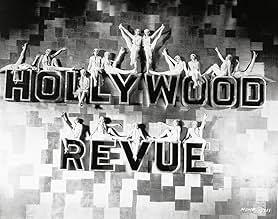
- Alternate versionsSome sources list the original running time of "Hollywood Revue of 1929" as 130 minutes. At least two sequences in the original roadshow version are missing from current prints: an opening recitation by the showgirls who are seen posing in the "Hollywood Revue" sign after the opening credits, and the appearance of Nils Asther, who assisted Jack Benny in introducing the final "Orange Blossom" number.
- ConnectionsAlternate-language version of Wir schalten um auf Hollywood (1931)
- SoundtracksSingin' in the Rain
(1929) (uncredited)
Music by Nacio Herb Brown
Lyrics by Arthur Freed
Played during the opening by The MGM Symphony Orchestra
Played on ukulele and sung by Cliff Edwards and The Brox Sisters; Danced by chorus
Sung by the major stars at the end
Details
- Release date
- Country of origin
- Official site
- Language
- Also known as
- Hollywood Revue
- Filming locations
- Production company
- See more company credits at IMDbPro
Box office
- Gross worldwide
- $5,277,780
- Runtime
- 2h 10m(130 min)
- Color
Contribute to this page
Suggest an edit or add missing content