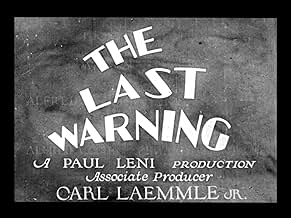
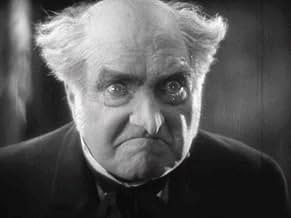
A producer decides to reopen a theater, that had been closed five years previously when one of the actors was murdered during a performance, by staging a production of the same play with the... Read allA producer decides to reopen a theater, that had been closed five years previously when one of the actors was murdered during a performance, by staging a production of the same play with the remaining members of the original cast.A producer decides to reopen a theater, that had been closed five years previously when one of the actors was murdered during a performance, by staging a production of the same play with the remaining members of the original cast.
Carrie Daumery
- Barbara Morgan
- (as Mme. Carrie Daumery)
Slim Summerville
- Tommy Wall
- (as 'Slim' Summerville)
Bud Phelps
- Sammy
- (as 'Buddy' Phelps)
Charles K. French
- Doctor
- (uncredited)
Pat Harmon
- Cop
- (uncredited)
Francisco Marán
- Jeffries
- (uncredited)
6.8960
1
2
3
4
5
6
7
8
9
10
Featured reviews
A Passable Mystery, But Peak Silent Cinema
This dazzling example of late silent cinema was available only in shoddy, awful looking prints for 80 years or more, until it was restored in 2016 and finally released on home video in 2019, and now for the most part looks fantastic. It was the final film made by the great Paul Leni, whose magnificent "The Man Who Laughs" is one of the absolutely essential silent works everyone needs to see at least once before they die.
The story of this one is a cross between The Cat And The Canary and The Phantom of The Opera, but not really as good as either: an actor is killed onstage and everyone in the cast and crew becomes a suspect; the theatre closes for years until the play is revived, and the killer plans to kill all over again. There's secret passageways and cobwebs galore, and a decent enough mystery, but it's got to be said the plot's a little messy and hard to follow at times.
It's in the visuals that The Last Warning really shines, with the camera in every scene swooping and zooming in on every action taking place, and great use of depth of field to draw one's eyes to things happening in the background: the camera is always doing something, always telling us something about the story and the characters, purely through visual means. This is the very peak of what silent cinema was reaching for at the end of the 1920s, just before the talkies came in the following year and largely destroyed that artform and the box of tricks it used for everyone but Alfred Hitchcock, at least until Citizen Kane came along. I always like to imagine what might have happened if sound had not been introduced for another 15 or twenty years; what visual magic and ways of imparting story through image might have been achieved.
In summation, then: not the most compelling or meaningful story but one full of energy, movement and endless inventiveness. A great delight for the eyes.
7½/10.
The story of this one is a cross between The Cat And The Canary and The Phantom of The Opera, but not really as good as either: an actor is killed onstage and everyone in the cast and crew becomes a suspect; the theatre closes for years until the play is revived, and the killer plans to kill all over again. There's secret passageways and cobwebs galore, and a decent enough mystery, but it's got to be said the plot's a little messy and hard to follow at times.
It's in the visuals that The Last Warning really shines, with the camera in every scene swooping and zooming in on every action taking place, and great use of depth of field to draw one's eyes to things happening in the background: the camera is always doing something, always telling us something about the story and the characters, purely through visual means. This is the very peak of what silent cinema was reaching for at the end of the 1920s, just before the talkies came in the following year and largely destroyed that artform and the box of tricks it used for everyone but Alfred Hitchcock, at least until Citizen Kane came along. I always like to imagine what might have happened if sound had not been introduced for another 15 or twenty years; what visual magic and ways of imparting story through image might have been achieved.
In summation, then: not the most compelling or meaningful story but one full of energy, movement and endless inventiveness. A great delight for the eyes.
7½/10.
Unseen masterpiece of mystery!
This movie pops up on ebay once in a while and for fans of mystery or horror films, particularly those of Universal, this is a must.
The plot is unimportant - it is about a haunted old theater where an old Broadway play is being brought back despite threats from the ghost of a dead actor.
This film was the last directed by the great Paul Leni. It is really the work of a virtuoso working at his peak. It has everything The Cat and the Canary had and more. The version that seems to be relatively available on video has a good music track too, but unfortunately it seems that the experimental sound sequences the film originally contained have not survived.
Nevertheless, we are lucky that this film has survived as it is such a joyous romp of horror cliches with inventive, wild camera moves and stunning lighting and spooky set design. It foreshadows the great horror classics that were less than two years away for Universal. It is just wonderful filmmaking from a forgotten great director who was at his peak, so if you are into old dark house mysteries or Universal horror movies - FIND IT! - It is one of the best!
8/10 - even better than The Cat and the Canary.
The plot is unimportant - it is about a haunted old theater where an old Broadway play is being brought back despite threats from the ghost of a dead actor.
This film was the last directed by the great Paul Leni. It is really the work of a virtuoso working at his peak. It has everything The Cat and the Canary had and more. The version that seems to be relatively available on video has a good music track too, but unfortunately it seems that the experimental sound sequences the film originally contained have not survived.
Nevertheless, we are lucky that this film has survived as it is such a joyous romp of horror cliches with inventive, wild camera moves and stunning lighting and spooky set design. It foreshadows the great horror classics that were less than two years away for Universal. It is just wonderful filmmaking from a forgotten great director who was at his peak, so if you are into old dark house mysteries or Universal horror movies - FIND IT! - It is one of the best!
8/10 - even better than The Cat and the Canary.
Paul Leni's Vision for the Old Dark House -- again!
THE STORY & (Pseudo)GENRE -- PHANTOM OF THE OPERA meets CAT AND THE CANARY (also by director Leni). Bizarre visuals liven up the nonsense.
THE VERDICT -- Fast-paced even at 78 minutes. Plenty of old-time thrills and smiles.
FREE ONLINE -- Yes. The ubiquitous orange-tinted print (77 minutes), but also the newer BD upgrade (78 minutes), can be found. Silent with music and effects. I have never seen an 89-minute version, as advertised by IMDB.
THE VERDICT -- Fast-paced even at 78 minutes. Plenty of old-time thrills and smiles.
FREE ONLINE -- Yes. The ubiquitous orange-tinted print (77 minutes), but also the newer BD upgrade (78 minutes), can be found. Silent with music and effects. I have never seen an 89-minute version, as advertised by IMDB.
Paul Leni demonstrates his visual mastery in backstage murder mystery
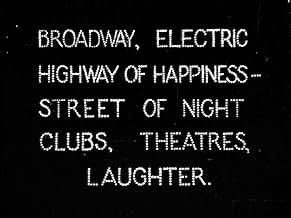
"The Last Warning" gave master director Paul Leni ample oportunity to pull from his seemingly unending bag of eye-popping visual tricks. Although this theatrical murder mystery does not quite hit the astonishing highs of "The Cat and the Canary", the sheer visual excitement and technical sophistication Leni brings still astonish. Even the title cards are deployed in a few clever visual gags! The movie only hits a slight bum note when the killer is identified, a reveal that did not live up to the thrilling chase that preceded it. The newly commissioned score by Arthur Barrow on the Flicker Alley release does a great job ratcheting up the tension.
A mystery dressed up as a horror film
Essentially this is part "Cat and the Canary" and part "Phantom of the Opera" - also silent Universal properties. It has some slack parts but the visual atmosphere helps to cover them up, and it has some very inventive title cards where the writing may be initially blurry and come into focus, or the writing may start up clear and then appear to melt down the page, or it may appear to be underwater.
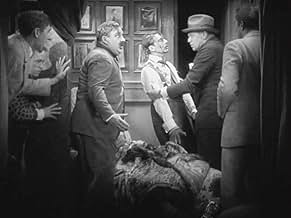
The film is about an actor, John Woodford, in a theatre on Broadway, who dies suddenly when he gets to the part of the play where he is backed into the fireplace by another actor and picks up a candlestick. The lights go out, and when they come back on there is Woodford dead on the floor. The police come to question everybody who was present, then Woodford's body disappears before the coroner gets there. It is discovered by the police that Woodford and another actor, Richard Quayle (John Boles) were arguing in actress Doris Terry's (Laura LaPlante's) dressing room, and both were suitors of hers.
So without a body, the investigation cannot go on, the theatre is closed, and the papers are shown having a field day with the "love triangle" that is insinuated to have something to do with the killing. Several years later, Woodford's close friend (Montagu Love as Arthur McHugh) decides to reopen the theatre with the same cast as the night of the killing and the same play. Why does the entire cast return? Because to not return would make them look guilty.
But somebody does not want the play to open. Heavy scenery comes crashing down. Smoke bombs go off. Threatening letters are written to members of the cast that they perform at their peril, and some mysterious masked figure is running and jumping about the place and even stealing Doris' purse and putting her personal possessions in strategic places to make her look like she is in on all of the strange happenings. Is it the ghost of John Woodford trying to avenge himself? Well of course not. But it might be the real John Woodford, having faked his own death, and still mad at Boles and LaPlante for his romantic rejection. Watch and find out what is behind all of this.
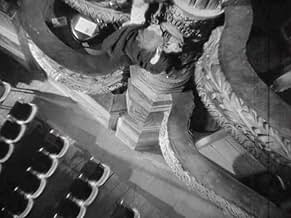
The visuals are just great here. The opening scene reminds me somewhat of 1929's Broadway with all of the pictures of the Broadway nightlife of 1929. Also, the theatre, from the outside, looks like the face of some frightening creature complete with eyes, a nose, and mouth. I just wish better prints were available.
The film is about an actor, John Woodford, in a theatre on Broadway, who dies suddenly when he gets to the part of the play where he is backed into the fireplace by another actor and picks up a candlestick. The lights go out, and when they come back on there is Woodford dead on the floor. The police come to question everybody who was present, then Woodford's body disappears before the coroner gets there. It is discovered by the police that Woodford and another actor, Richard Quayle (John Boles) were arguing in actress Doris Terry's (Laura LaPlante's) dressing room, and both were suitors of hers.
So without a body, the investigation cannot go on, the theatre is closed, and the papers are shown having a field day with the "love triangle" that is insinuated to have something to do with the killing. Several years later, Woodford's close friend (Montagu Love as Arthur McHugh) decides to reopen the theatre with the same cast as the night of the killing and the same play. Why does the entire cast return? Because to not return would make them look guilty.
But somebody does not want the play to open. Heavy scenery comes crashing down. Smoke bombs go off. Threatening letters are written to members of the cast that they perform at their peril, and some mysterious masked figure is running and jumping about the place and even stealing Doris' purse and putting her personal possessions in strategic places to make her look like she is in on all of the strange happenings. Is it the ghost of John Woodford trying to avenge himself? Well of course not. But it might be the real John Woodford, having faked his own death, and still mad at Boles and LaPlante for his romantic rejection. Watch and find out what is behind all of this.
The visuals are just great here. The opening scene reminds me somewhat of 1929's Broadway with all of the pictures of the Broadway nightlife of 1929. Also, the theatre, from the outside, looks like the face of some frightening creature complete with eyes, a nose, and mouth. I just wish better prints were available.
Did you know
- TriviaSets from The Phantom of the Opera (1925) used.
- ConnectionsFeatured in Universal Horror (1998)
- How long is The Last Warning?Powered by Alexa
Details
- Release date
- Country of origin
- Language
- Also known as
- Sista varningen
- Filming locations
- Production companies
- See more company credits at IMDbPro
- Runtime
- 1h 29m(89 min)
- Color
- Sound mix
Contribute to this page
Suggest an edit or add missing content