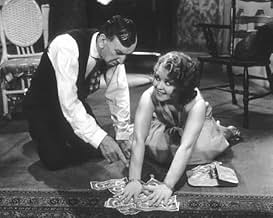
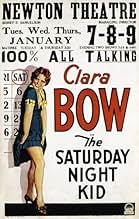
Mayme and sister Janie are salesgirls in Ginsberg's Department Store. Mayme is in love with store clerk Bill, but Janie tries to steal him from her. Hazel, another salesgirl, is Jean Harlow'... Read allMayme and sister Janie are salesgirls in Ginsberg's Department Store. Mayme is in love with store clerk Bill, but Janie tries to steal him from her. Hazel, another salesgirl, is Jean Harlow's first credited role.Mayme and sister Janie are salesgirls in Ginsberg's Department Store. Mayme is in love with store clerk Bill, but Janie tries to steal him from her. Hazel, another salesgirl, is Jean Harlow's first credited role.
Alice Adair
- Girl
- (uncredited)
Ernie Adams
- Gambler
- (uncredited)
Irving Bacon
- McGonigle
- (uncredited)
Getty Bird
- Riche Ginsberg
- (uncredited)
Eddie Dunn
- Jim
- (uncredited)
Bess Flowers
- Customer
- (uncredited)
Mary Gordon
- Reducing Customer
- (uncredited)
Jean Harlow
- Hazel
- (uncredited)
Leone Lane
- Pearl
- (uncredited)
Frank Ross
- Ken
- (uncredited)
5.8343
1
2
3
4
5
6
7
8
9
10
Featured reviews
Such Devoted Sisters
Hard-living was visibly taking its toll on Clara Bow by the end of the roaring twenties, hence her casting as Jean Arthur's wiser older sister in this disarming preCode quickie that establishes its tone of breezy amorality from the very outset when Miss Bow is required to postpone her morning bath since her friendly neighbourhood bootlegger, racing tipster & gambler Charles Sellon is using the tub to manufacture his liquor.
It's Clara who assumes the mantle of responsibility when little sister loses Edna Mae Oliver's welfare fund betting on a horse (while the film itself contains a remarkable but generally overlooked moment in film history where Bow and Arthur fleetingly get to share the screen with Jean Harlow).
In conclusion, aside from the novelty of seeing Miss Arthur boyishly bobbed as a flapper, after a nondescript career in silents the advent of talkies finally enabled to unleash that extraordinary voice.
It's Clara who assumes the mantle of responsibility when little sister loses Edna Mae Oliver's welfare fund betting on a horse (while the film itself contains a remarkable but generally overlooked moment in film history where Bow and Arthur fleetingly get to share the screen with Jean Harlow).
In conclusion, aside from the novelty of seeing Miss Arthur boyishly bobbed as a flapper, after a nondescript career in silents the advent of talkies finally enabled to unleash that extraordinary voice.
The Saturday Night Kid review
Clara Bow was a cutie even when carrying a few extra pounds, but critical focus on her weight overshadowed opinion regarding the merits of the film. It's decent enough, and she and Jean Arthur (who overcame similar criticism for the sound of her voice to enjoy a lengthy career in talkies) play well off one another.
Not your typical Clara Bow movie, but still not bad for 1929
After audiences of the 1920s had become accustomed to seeing Clara Bow portraying the carefree flapper or an aggressive woman out to get her man, this movie strays from those formulas. Confined by the limitations of the role of Mayme and the constraints of early sound films, Clara is much more inhibited and restrained in this film. That high energy personality and wonderful facial expressions that I love about her, were absent in this movie. As another reviewer stated, Clara would have been much more suited to play the role of Janie(particularly the scene where Janie steals Mayme's boyfriend) that went to a young Jean Arthur. Even when, she was several pounds overweight for a leading lady/sex symbol, Clara still manages too look great and she does well in the somewhat thankless role. Mayme is a "good" girl that has developed a cynical and hard boiled attitude from past romances gone bad. It was also interesting to see Jean Arthur play a selfish, impulsive, immature Janie(who doesn't hesitate to stab her sister in the back if her neck is on the line) after seeing her in more virtuous roles in the 30s and she turns in a good performance despite just an average script and dialogue. The Saturday Night Kid also provides an interesting glimpse into the late 20s lifestyle from riding a street car to working in a department store. Yes, 75 years ago they were doing company "pep rallies" that employees had to attend and show their enthusiasm whether they were enthused to be there or not. There are very few films that were made in 1929 with outstanding productions values and are enjoyable to watch. While this film has it's problems I think it is better than most of the early sound films that I've seen, including THE WILD PARTY with Clara. 6/10
6RJV
Generally unexceptional but some sparkling Bow moments.
In THE SATURDAY NIGHT KID, Clara Bow plays Mayme, a salesgirl who's in love with a fellow clerk named Bill (James Hall). Her sister Janie (Jean Arthur) also has eyes for him and schemes to snare for herself. The scenario is ordinary and the resolution is both banal and predictable. Clara Bow's performance in her third talkie is good, proving she could easily handle sound. Unfortunately, her role is, for the most part, colorless and inhibited. Mayme lacks the free-spiritedness and boldness of such roles like Alverna in MANTRAP and Betty Lou in IT; she's just a blandly virtuous heroine searching for true love. It doesn't help that her leading man Hall is uncharismatic and dull.
Occasionally, however, Bow gets to shine. She displays her comedic flair in some funny sequences, particularly a scene where she tries to help the inexperienced Hall in a difficult task without making him look incompetent. Bow also exhibits a flash of her effervescent "It" persona in a flirtatious chasing sequence. And in her big dramatic moments, Clara is persuasive and invigorating, making one regret she rarely had the opportunity for substantial dramatic material.
Jean Arthur is delightfully perfidious as Janie. Among the supporting players, Edna May Oliver as Mayme's snooty, imperious supervisor Miss Streeter and Charles Sellon as Lem Woodruff, the fumbling proprietor of the boardinghouse Mayme, Janie, and Bill live in, stand out. In an early film appearance, Jean Harlow has too minute a role to create any impression.
Overall, THE SATURDAY NIGHT KID is a pedestrian movie that doesn't take full advantage of Bow's talents. Considering that many of Clara Bow's films are lost or deteriorating, however, one should be grateful that this film has been recently restored.
Occasionally, however, Bow gets to shine. She displays her comedic flair in some funny sequences, particularly a scene where she tries to help the inexperienced Hall in a difficult task without making him look incompetent. Bow also exhibits a flash of her effervescent "It" persona in a flirtatious chasing sequence. And in her big dramatic moments, Clara is persuasive and invigorating, making one regret she rarely had the opportunity for substantial dramatic material.
Jean Arthur is delightfully perfidious as Janie. Among the supporting players, Edna May Oliver as Mayme's snooty, imperious supervisor Miss Streeter and Charles Sellon as Lem Woodruff, the fumbling proprietor of the boardinghouse Mayme, Janie, and Bill live in, stand out. In an early film appearance, Jean Harlow has too minute a role to create any impression.
Overall, THE SATURDAY NIGHT KID is a pedestrian movie that doesn't take full advantage of Bow's talents. Considering that many of Clara Bow's films are lost or deteriorating, however, one should be grateful that this film has been recently restored.
Shopgirl sisters (one virtuous, one not) in love with the same man.
Shopgirl sisters, one fun loving but virtuous (Clara Bow), the other a conniving, selfish brat (Jean Arthur) are in love with a fellow Ginsberg department store employee (James Hall). Trite screenplay, lousy production values, terrible directing. Bow only really becomes interesting in the second half where she's finally given interesting things to do. Jean Arthur is quite good as the dissembling brat sister. James Hall is dull. Edna May Oliver does her thing (which I love) in her talkie debut, and an unbilled (and very young looking) Jean Harlow has a tiny but memorable speaking part (her first). Ultimately, this is for Bow fanatics only (I raise my hand), and for those who want to see the earliest sound film appearance of the fully formed Jean Harlow persona.
Did you know
- TriviaThe dress that Jean Harlow wears in the pageant scene was intended for 'Clara Bow', but Bow had gained too much weight to fit into it, so she convinced designer Edith Head to let the unknown actress to wear it. Harlow never forgot the favor.
- Alternate versionsA silent version was released released simultaniously, with titles by Joseph L. Mankiewicz, for theaters that were not yet equipped for sound.
- ConnectionsFeatured in Hollywood (1980)
Details
- Release date
- Country of origin
- Language
- Also known as
- Love 'Em and Leave 'Em (1929)
- Filming locations
- Production company
- See more company credits at IMDbPro
- Runtime
- 1h 3m(63 min)
- Color
Contribute to this page
Suggest an edit or add missing content