IMDb RATING
7.4/10
1.9K
YOUR RATING

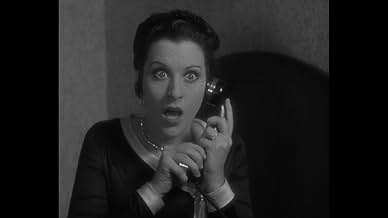
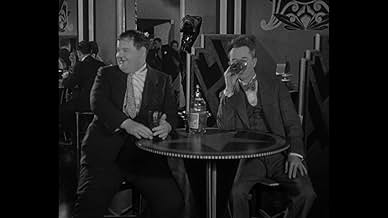
Stan fakes receiving a telegram so he can go to a club with Ollie and a bottle of his unsuspecting wife's liquor, but she overhears his plans.Stan fakes receiving a telegram so he can go to a club with Ollie and a bottle of his unsuspecting wife's liquor, but she overhears his plans.Stan fakes receiving a telegram so he can go to a club with Ollie and a bottle of his unsuspecting wife's liquor, but she overhears his plans.




Baldwin Cooke
- Waiter
- (uncredited)

Jean De Briac
- Shopkeeper
- (uncredited)

Dick Gilbert
- Phone Booth Gawker
- (uncredited)
Vladimir Gueteron
- Orchestra Leader
- (uncredited)

Charlie Hall
- Cabdriver
- (uncredited)
Jack Hill
- Man in Rainbow Club
- (uncredited)

Frank Holliday
- Rainbow Club Singer
- (uncredited)
Bob Minford
- Phone Booth Gawker
- (uncredited)

Tiny Sandford
- Headwaiter
- (uncredited)
Harry Wilde
- Nightclub patron
- (uncredited)
- Director
- Writers
- All cast & crew
- Production, box office & more at IMDbPro
7.41.9K
1
2
3
4
5
6
7
8
9
10
Featured reviews
Amusing but not consistent
Laurel and Hardy want to go out for a night at a bar, some sneaky drinking and an all round fun time. However, Laurel is unable to get out of the house as his wife has forbidden him. He manages to wrangle his way out of the house with the use of a faked telegram.
Having half the film with Laurel and Hardy separated was a bit of a risk, but one that the duo just about carry off. The plot sees Laurel trapped in his house by his wife while Hardy tries to contact him by phone. Laurel trying to play his wife is pretty amusing but, once the short moves out of the house it becomes less funny as the routines in the bar are less funny. It is still amusing but not quite as much.
As often happens, a Laurel and Hardy short that lacks one strong central sequence needs to achieve a consistent level of humour. This film neither has a peak or a high consistent level, meaning that it isn't as good as others in my opinion. Laurel does good work early on with his wife, and laughs convincingly towards the end. Hardy is less well used and his looks are used for reasons which are too slight and thus undervalue them slightly. Garvin is strong as Mrs Laurel though.
Overall this short needed to be consistently funny but it didn't manage to deliver it. Still funny but it lacks any parts which rise above the rest and lift the short as a whole.
Having half the film with Laurel and Hardy separated was a bit of a risk, but one that the duo just about carry off. The plot sees Laurel trapped in his house by his wife while Hardy tries to contact him by phone. Laurel trying to play his wife is pretty amusing but, once the short moves out of the house it becomes less funny as the routines in the bar are less funny. It is still amusing but not quite as much.
As often happens, a Laurel and Hardy short that lacks one strong central sequence needs to achieve a consistent level of humour. This film neither has a peak or a high consistent level, meaning that it isn't as good as others in my opinion. Laurel does good work early on with his wife, and laughs convincingly towards the end. Hardy is less well used and his looks are used for reasons which are too slight and thus undervalue them slightly. Garvin is strong as Mrs Laurel though.
Overall this short needed to be consistently funny but it didn't manage to deliver it. Still funny but it lacks any parts which rise above the rest and lift the short as a whole.
Cold tea and liquor
Stan Laurel and Oliver Hardy were comedic geniuses, individually and together, and their partnership was deservedly iconic and one of the best there was. They left behind a large body of work, a vast majority of it being entertaining to classic comedy, at their best they were hilarious and their best efforts were great examples of how to do comedy without being juvenile or distasteful.
Although a vast majority of Laurel and Hardy's previous efforts ranged from above average to very good ('45 Minutes from Hollywood' being the only misfire and mainly worth seeing as a curiosity piece and for historical interest, and even that wasn't a complete mess), 'Two Tars' for me was their first truly classic one with close to flawless execution. Didn't find 'Blotto' as one of their best and a bit disappointing compared to their late 1928 and the best of their 1929 efforts, which were among their best and funniest early work. It is still very good and has much of what makes Laurel and Hardy's work as appealing as it is.
The story is extremely slight to the point of non-existence and the first part takes a little bit too time to get going and is a little formulaic.
When 'Blotto' does get going, which it does do quite quickly, it is great fun, not always hilarious but never less than very amusing, the best being classic hilarity. It is never too silly, there is a wackiness that never loses its energy and the sly wit is here, some of the material may not be new but how it's executed actually doesn't feel too familiar and it doesn't get repetitive.
Laurel and Hardy are on top form here, both are well used, both have material worthy of them and they're equal rather than one being funnier than the other (before Laurel tended to be funnier and more interesting than Hardy, who tended to be underused). Their chemistry feels like a partnership here too, before 'Two Tars' you were yearning for more scenes with them together but in 'Blotto' and on the most part from 'Two Tars' onwards we are far from robbed of that. Their comic timing is impeccable.
'Blotto' looks good visually, is full of energy and the direction gets the best out of the stars, is at ease with the material and doesn't let it get too busy or static. The supporting players are solid with a scene stealing Anita Garvin.
Overall, very good. Not essential or classic Laurel and Hardy, but a very good representation of them. 8/10 Bethany Cox
Although a vast majority of Laurel and Hardy's previous efforts ranged from above average to very good ('45 Minutes from Hollywood' being the only misfire and mainly worth seeing as a curiosity piece and for historical interest, and even that wasn't a complete mess), 'Two Tars' for me was their first truly classic one with close to flawless execution. Didn't find 'Blotto' as one of their best and a bit disappointing compared to their late 1928 and the best of their 1929 efforts, which were among their best and funniest early work. It is still very good and has much of what makes Laurel and Hardy's work as appealing as it is.
The story is extremely slight to the point of non-existence and the first part takes a little bit too time to get going and is a little formulaic.
When 'Blotto' does get going, which it does do quite quickly, it is great fun, not always hilarious but never less than very amusing, the best being classic hilarity. It is never too silly, there is a wackiness that never loses its energy and the sly wit is here, some of the material may not be new but how it's executed actually doesn't feel too familiar and it doesn't get repetitive.
Laurel and Hardy are on top form here, both are well used, both have material worthy of them and they're equal rather than one being funnier than the other (before Laurel tended to be funnier and more interesting than Hardy, who tended to be underused). Their chemistry feels like a partnership here too, before 'Two Tars' you were yearning for more scenes with them together but in 'Blotto' and on the most part from 'Two Tars' onwards we are far from robbed of that. Their comic timing is impeccable.
'Blotto' looks good visually, is full of energy and the direction gets the best out of the stars, is at ease with the material and doesn't let it get too busy or static. The supporting players are solid with a scene stealing Anita Garvin.
Overall, very good. Not essential or classic Laurel and Hardy, but a very good representation of them. 8/10 Bethany Cox
Underrated.
"Blotto" is one of the few underrated Laurel and Hardy shorts. Strange, when you consider that "Below Zero", one of there lesser shorts, to be much more highly appreciated. Stan Laurel in his solo scenes with Mrs Laurel (Anita Garvin) are a revelation. It is quite surprising, as you would have thought that without the other half of the duo, it wouldn't really be very funny. With so much talent for solo performances, I wonder why he entered into a partnership with Oliver Hardy? Still, the scenes later on in the film with Oliver Hardy are just as good and I can't think of any of their films (except the nineteen forties movies they made, under completely different conditions, which didn't allowed them any artistic freedom) that don't have at least a couple of riotous laughs in them. Also, its the only one of their films to have Stan Laurel married, but not Oliver Hardy. A film well worth seeing.
Blotto -- a genuinely funny short
Ollie hatches a plan to sneak henpecked Stan out for a night on the town with Mrs. Laurel's hidden bottle of liquor. Unfortunately, Mrs. Laurel, played by the always reliable Anita Garvin, overhears the plot and substitutes the liquor for a distasteful combination of her making.
Fans and critics tend to be dismissive of film, but I have always found this film to be one of my favorites of their early talkie shorts. There isn't much of a plot, but the sequences are very well-constructed and funny. The interplay between Stan and Anita is very funny. (I like her much better than Linda Loredo, who plays the same role in the Spanish language version.) I also really enjoy Ollie's solo bits on the telephone. Those people who dismiss him as being Stan's straight man should watch that scene. His mannerisms and expressions are priceless.
The nightclub sequence is very funny as the boys proceed to get "drunk" on the illicit "alcohol." The best moment is when Stan is reduced to tears by a melancholy song. The boys would go on laughing jags later in the other films, but nowhere is it funnier than in this film, which also ends effectively with a big car gag -- as so many Laurel and Hardy films do!
Others may disagree, but I consider this a classic Laurel & Hardy short.
Fans and critics tend to be dismissive of film, but I have always found this film to be one of my favorites of their early talkie shorts. There isn't much of a plot, but the sequences are very well-constructed and funny. The interplay between Stan and Anita is very funny. (I like her much better than Linda Loredo, who plays the same role in the Spanish language version.) I also really enjoy Ollie's solo bits on the telephone. Those people who dismiss him as being Stan's straight man should watch that scene. His mannerisms and expressions are priceless.
The nightclub sequence is very funny as the boys proceed to get "drunk" on the illicit "alcohol." The best moment is when Stan is reduced to tears by a melancholy song. The boys would go on laughing jags later in the other films, but nowhere is it funnier than in this film, which also ends effectively with a big car gag -- as so many Laurel and Hardy films do!
Others may disagree, but I consider this a classic Laurel & Hardy short.
Laurel & Hardy without a story
This is a nice Laurel & Hardy short film, although you can not say there is a story. Laurel is married and wants to go out but his wife forbids him. Hardy calls Laurel a couple of times and after a while he speaks to Laurel's wife. She is nice instead of angry but has a plan of her own. She pretends to be in the kitchen while Laurel is talking but she also grabs a phone and learns about a plan the men have. This is the first part of the short.
The second part is the actual plan of Laurel & Hardy. They are on a night out but they have brought their own bottle of liquor. What happens there with the wife who knows where they are and their own bottle of liquor I will not reveal but it is a nice piece of comedy.
Maybe the premise doesn't sound very good, but there are a lot of laughs here. Especially Stanley Laurel is great and he manages to get a smile out of the most simple situations. Still, this is definitely not one of their best. Because it has no story it gets a little boring. Fortunately the final moment is hilarious and makes sure you will enjoy this short film from start to finish.
The second part is the actual plan of Laurel & Hardy. They are on a night out but they have brought their own bottle of liquor. What happens there with the wife who knows where they are and their own bottle of liquor I will not reveal but it is a nice piece of comedy.
Maybe the premise doesn't sound very good, but there are a lot of laughs here. Especially Stanley Laurel is great and he manages to get a smile out of the most simple situations. Still, this is definitely not one of their best. Because it has no story it gets a little boring. Fortunately the final moment is hilarious and makes sure you will enjoy this short film from start to finish.


Did you know
- TriviaThe number Oliver Hardy calls to reach Stan Laurel (OXford-0614) was Laurel's real phone number.
- GoofsFrom where they were standing, it would have been impossible for the laughing crowd to have actually seen Ollie at the phone booth.
- Alternate versionsThere is also a colorized version.
- ConnectionsAlternate-language version of La vida nocturna (1930)
- SoundtracksThe Curse of an Aching Heart
(1913) (uncredited)
Music by Al Piantadosi
Lyrics by Henry Fink
Performed by Frank Holliday
Details
- Runtime
- 26m
- Color
Contribute to this page
Suggest an edit or add missing content