IMDb RATING
7.0/10
2.6K
YOUR RATING
Albert is smitten for Pola but ends up wrongly committed in jail, in the meantime her affections are sought after by his friend, and on his release both love and friendship must be tested.Albert is smitten for Pola but ends up wrongly committed in jail, in the meantime her affections are sought after by his friend, and on his release both love and friendship must be tested.Albert is smitten for Pola but ends up wrongly committed in jail, in the meantime her affections are sought after by his friend, and on his release both love and friendship must be tested.
- Awards
- 1 win total
Edmond T. Gréville
- Louis
- (as Edmond Gréville)
Delphine Abdala
- La buraliste
- (uncredited)
Raymond Aimos
- Un gars du milieu
- (uncredited)
Raymond Blot
- Un membre de la bande à Fred
- (uncredited)
Thomy Bourdelle
- François
- (uncredited)
Léon Courtois
- L'inspecteur
- (uncredited)
Édouard Francomme
- Un membre de la bande à Fred
- (uncredited)
André Michaud
- Un agent
- (uncredited)
Jane Pierson
- La dame du premier
- (uncredited)
Louis Pré Fils
- Le locataire du troisième
- (uncredited)
Eugène Stuber
- Un membre de la bande à Fred
- (uncredited)
Louis Zellas
- Le consommateur jaloux
- (uncredited)
- Director
- Writer
- All cast & crew
- Production, box office & more at IMDbPro
7.02.6K
1
2
3
4
5
6
7
8
9
10
Featured reviews
Technically masterful, but light on content
"Sous les toits de Paris", a 1930 comedy/drama was René Clairs first venture into sound film making - and is already a masterful showcase for the use of sound. It is actually a blend between silent movie and talking movie with whole sections being without any sound or the dialogue turned off. In its deliberate use of sound, the movie reminded me of Fritz Lang's "M".
Also, the sets are fantastic. They show the "lower" quarters of Paris as both a fantastic place and a realist place. It gives the movie a very nice touch.
But the story isn't that fantastic. It's a simplistic plot about a man falling in love. He's getting arrested. In the meantime, his best friend falls in love with his girl. I think Clair wasn't out to write something terribly new but used this simple, yet lovely story to carry his technical idea about sound (he was at that time still a strong defender of the silent cinema). Also, he wanted to show the "other" life in Paris, the low life. And he succeeds quite well at that.
All that said, however, I have to add that this isn't my kind of film. I appreciate its virtuoso style for its time, I even might consider it a classic to some extend because it led the way for a generation of film makers - but personally, it doesn't do much for me. I watch it sort of emotionless. Overall, I'd give it a very personal
6/10
Also, the sets are fantastic. They show the "lower" quarters of Paris as both a fantastic place and a realist place. It gives the movie a very nice touch.
But the story isn't that fantastic. It's a simplistic plot about a man falling in love. He's getting arrested. In the meantime, his best friend falls in love with his girl. I think Clair wasn't out to write something terribly new but used this simple, yet lovely story to carry his technical idea about sound (he was at that time still a strong defender of the silent cinema). Also, he wanted to show the "other" life in Paris, the low life. And he succeeds quite well at that.
All that said, however, I have to add that this isn't my kind of film. I appreciate its virtuoso style for its time, I even might consider it a classic to some extend because it led the way for a generation of film makers - but personally, it doesn't do much for me. I watch it sort of emotionless. Overall, I'd give it a very personal
6/10
Parisian love letter
There were quite a few reasons for wanting to see 'Under the Roofs of Paris'. The premise sounded great. The title of the film is a charming and far from forgettable one. Not every early sound film is great or even good, with some silent film directors and actors not being able to transition from silent to sound. Have liked to loved other films of the very gifted Rene Clair, including other early sound films of his such as 'Le Million' (one of the best).
'Under the Roofs of Paris' isn't one of his best overall films. Also did prefer his other early sound films, namely 'Le Million' and 'Quartorze Juillet'. Also preferred 'A Nous La Liberte'. It is a very good film though and mostly accessible, even if the other three films had more story content and more rootable characters, have noticed that they have been the film's two main criticisms and can understand both. There is so much to recommend and all the good things of 'Under the Roofs of Paris' are brilliant.
Its weak link is the story, which is very slight and some of it is pretty uneventful.
Although the characters are very well played and quite interesting, they could have been developed more and will agree that they are not easy to get behind. Certainly didn't care for these characters as much as those in 'Le Million' and 'Quartorze Juillet'.
However, Clair's direction is absolutely immaculate and he depicts Paris in a way that is very nostalgic and full of atmosphere. It is very classy direction and is never static or dull, not all directors were comfortable with the silent film to sound transitioning but Clair was and it was like he was already a pro despite in reality being relatively new to it. The film is a clever mix of silent and sound, with no favouring of one over the other. The silent sections are handled with a lot of nuance and there is just as much energy as in the scenes with dialogue. The dialogue itself is not too talky and flows well, with a nice mix of amusing and touching in a sophisticated way.
Despite the story being very slight, there is charm and energy present too. The sound is cleverly used and doesn't come over as gratuitously random or gimmicky, no unrefined experimenting here. While there may not be standout performances as such, the actors play their characters with vigour and always in a natural way. The music is lovely to listen to, with a very infectious main song.
What stands out though in 'Under the Roofs of Paris' is the cinematography, which is pretty incredible. Not just very sophisticated, seamlessly fluid and really enhancing the handsomely and affectionately used locations, but also very creative in its technical skill (the case with all of Clair's early talkies).
In summary, not one of Clair's overall best or among his finest early works but as far as early talkies go 'Under the Roofs of Paris' fares better than most at this early stage of sound film development. 8/10
'Under the Roofs of Paris' isn't one of his best overall films. Also did prefer his other early sound films, namely 'Le Million' and 'Quartorze Juillet'. Also preferred 'A Nous La Liberte'. It is a very good film though and mostly accessible, even if the other three films had more story content and more rootable characters, have noticed that they have been the film's two main criticisms and can understand both. There is so much to recommend and all the good things of 'Under the Roofs of Paris' are brilliant.
Its weak link is the story, which is very slight and some of it is pretty uneventful.
Although the characters are very well played and quite interesting, they could have been developed more and will agree that they are not easy to get behind. Certainly didn't care for these characters as much as those in 'Le Million' and 'Quartorze Juillet'.
However, Clair's direction is absolutely immaculate and he depicts Paris in a way that is very nostalgic and full of atmosphere. It is very classy direction and is never static or dull, not all directors were comfortable with the silent film to sound transitioning but Clair was and it was like he was already a pro despite in reality being relatively new to it. The film is a clever mix of silent and sound, with no favouring of one over the other. The silent sections are handled with a lot of nuance and there is just as much energy as in the scenes with dialogue. The dialogue itself is not too talky and flows well, with a nice mix of amusing and touching in a sophisticated way.
Despite the story being very slight, there is charm and energy present too. The sound is cleverly used and doesn't come over as gratuitously random or gimmicky, no unrefined experimenting here. While there may not be standout performances as such, the actors play their characters with vigour and always in a natural way. The music is lovely to listen to, with a very infectious main song.
What stands out though in 'Under the Roofs of Paris' is the cinematography, which is pretty incredible. Not just very sophisticated, seamlessly fluid and really enhancing the handsomely and affectionately used locations, but also very creative in its technical skill (the case with all of Clair's early talkies).
In summary, not one of Clair's overall best or among his finest early works but as far as early talkies go 'Under the Roofs of Paris' fares better than most at this early stage of sound film development. 8/10
Strong on technique....relatively weak on story
"Under the Roofs of Paris" is a film written and directed by René Clair. His direction is lovely--with some creative and lovely camera-work. As far as the story goes, it seems a bit thin.
The film begins with Pola being vigorously dated by Fred. In other words, the thug Fred isn't about to take no for an answer--and Pola is naturally creeped out by him. Ultimately, Fred steals her apartment key and Pola is understandably afraid to return home. When she bumps into Albert, he takes pity for her and takes her home. Over time, they fall for each other. However, Albert is arrested (thanks to his friend Emil) and Fred isn't about to allow Albert and Pola to be together. What's to come of them?
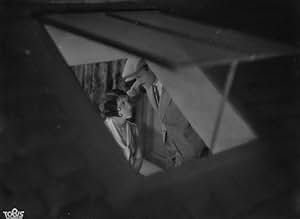
Technically, the film is a mixed bag--though I really cannot fault the film for its deficits. Although the film is part sound and part silent, films outside the United States took much longer to shift to all-talking pictures--so I accept that French films still were making the transition. Sound-wise, this 1930 film is very similar to 1927's "The Jazz Singer"--with a few songs and a bit of dialog but otherwise being essentially a silent film. However, what was very advanced was the camera work and the crane shots--they were very impressive and the film sure looked great.
Apart from the technical, the film had a story that seemed a bit weak. There isn't a lot of depth to the characters, they aren't necessarily likable and I didn't feel all that involved with them. So, overall, it is worth seeing but not a must-see--and not as good as some of the director's other efforts.
The film begins with Pola being vigorously dated by Fred. In other words, the thug Fred isn't about to take no for an answer--and Pola is naturally creeped out by him. Ultimately, Fred steals her apartment key and Pola is understandably afraid to return home. When she bumps into Albert, he takes pity for her and takes her home. Over time, they fall for each other. However, Albert is arrested (thanks to his friend Emil) and Fred isn't about to allow Albert and Pola to be together. What's to come of them?
Technically, the film is a mixed bag--though I really cannot fault the film for its deficits. Although the film is part sound and part silent, films outside the United States took much longer to shift to all-talking pictures--so I accept that French films still were making the transition. Sound-wise, this 1930 film is very similar to 1927's "The Jazz Singer"--with a few songs and a bit of dialog but otherwise being essentially a silent film. However, what was very advanced was the camera work and the crane shots--they were very impressive and the film sure looked great.
Apart from the technical, the film had a story that seemed a bit weak. There isn't a lot of depth to the characters, they aren't necessarily likable and I didn't feel all that involved with them. So, overall, it is worth seeing but not a must-see--and not as good as some of the director's other efforts.
10zetes
It's hard to describe how beautiful and perfect this movie is
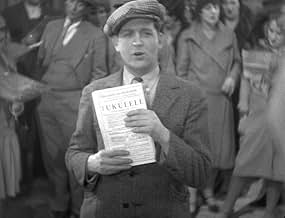
René Clair's early sound films are amongst the best ever made. Le Million (1931), Quatorze Juillet (1933), and Under the Roofs of Paris (1930) are masterpieces of musical comedy and romance (I leave out perhaps his most famous, À nous la liberté, which I need to see again). Under the Roofs of Paris is the loose but good story of a young street singer (Albert Préjean) who falls in love with a girl (Pola Illéry). He has an uneasy relationship with a couple of pickpockets (including Gaston Modot, who also made L'Âge d'or with Buñuel the same year) who like to work when he's demonstrating his talent. In the film's opening scene, there is an amazingly edited sequence of one of these men at work. Everyone wants Pola, including Albert's best friend, Louis, and when Albert is framed for burglary, they don't think twice about going after her. Clair's direction moves like silk. It's so supple. The camera movements, full of crane shots and pans, is technically stunning, especially for the time but even now. And the use of sound is absolutely revolutionary. It's more or less half silent, half talkie. Unlike many early sound films, Clair keeps the dialogue to a minimum, so it's never clunky. Characters only speak when they have to; at other times, they gesture. The film is often described as a musical, but it is not. There are two songs, and the music arises diagetically from an accordion player. The music, and the use of music, are quite amazing. This is one of the most wonderful movies ever made.
this film shows a true relationship, no matter how messed up it can be.
--- this film changed my views on b&w, i first saw this when i was a wee lass of 13, awkward and shy, all i had to do with myself was watch late- night t.v. i cried so hard at the end of the film i thought for sure i'd wake my mum, thank god CBC showed it again not long after that, and like the big geek i was, and probably still am, i taped it, i liked the rawness of it, the sound wasn't very good, but it didn't matter, still doesn't, i would love to make a movie that has this same feeling the absolut "realness" i dislike the crud hollywood keeps churning out, but , the fact remains that i live in this time, and am almost forced to swallow the disgraceful porridge that is cinema. it's christmas day, i think i'll go slip on my "under the rooftops of paris" and dream of a time when film still had a heart!!
Did you know
- TriviaThe opening sequence and the street scenes were filmed in a studio.
- Quotes
Albert, a young street singer: [On seeing Pola bedding down on his bedroom floor] Okay, take the bed, I'll sleep on the floor.
- ConnectionsFeatured in Les dossiers de l'écran: Boulevard du crépuscule (1969)
- How long is Under the Roofs of Paris?Powered by Alexa
Details
- Runtime
- 1h 36m(96 min)
- Color
Contribute to this page
Suggest an edit or add missing content