IMDb RATING
5.8/10
7.6K
YOUR RATING

A newspaper editor settles in an Oklahoma boom town with his reluctant wife at the end of the nineteenth century.A newspaper editor settles in an Oklahoma boom town with his reluctant wife at the end of the nineteenth century.A newspaper editor settles in an Oklahoma boom town with his reluctant wife at the end of the nineteenth century.
- Director
- Writers
- Stars
- Won 3 Oscars
- 7 wins & 5 nominations total




Roscoe Ates
- Jesse Rickey
- (as Rosco Ates)


Judith Barrett
- Donna Cravat
- (as Nancy Dover)


Max Barwyn
- Sabra's Luncheon Greeter
- (uncredited)

Frank Beal
- Louis Venable
- (uncredited)
Tyrone Brereton
- Dabney Venable
- (uncredited)

Dolores Brown
- Adult Ruby Big Elk
- (uncredited)
- Director
- Writers
- All cast & crew
- Production, box office & more at IMDbPro
5.87.5K
1
2
3
4
5
6
7
8
9
10
Featured reviews
A Film of Potential
Cimarron is a western epic that spans four decades, building on not only our main characters but the nation that surrounds them. Cimarron is the first western to win the Academy Award for Best Picture and the statue won't go to another western for nearly sixty years until Dances With Wolves. It is also the first and only Best Picture winner given to RKO Pictures. The film was directed by Wesley Ruggles in 1931 and is based on the book of the same name written by Edna Ferber a year prior. It stars Richard Dix as Yancey Cravat and Irene Dunn as Sabra Cavat.
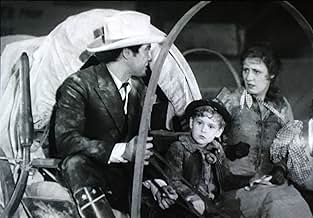
The film opens with an extraordinary scene of thousands of horses and wagons racing off to claim new land in the 1889 Oklahoma Land Rush, with Yancey and his family among them. To film this sequence, five-thousand extras and twenty-eight cameramen were used. We watch as Yancey, an editor, settles down in a small shanty town and creates a fledgling newspaper business. After four years, the business becomes well established, and Sabra believes that she and her family will stay and grow up there for the rest of their lives. Yancey, however, learns of a new land rush and leaves his family for five years without contact. Yancey returns as if nothing happens and continues his work until 1901 (three years after his return) when, without explanation, he is gone for another twenty-eight years. In the time he is gone his wife builds the newspaper business into an empire and using his profit Yancey runs for governor. Yancey is an advocate for Native American rights however we never find out how his campaign unfolds because the film cuts to another twenty years without a word of Yancey. The film continues and concludes its story with an aged Sabra and her children.
Cimarron suffers from becoming a somewhat aimless mess towards the end of the movie. In the first half, we watch as Yancey makes valid motivations for his family to move beyond to a new land and build a life for themselves, but in the latter, Yancey makes several confusing and unwarranted decisions. Even when Yancey leaves for five years it is clear why he does it, but when he leaves for an additional twenty-eight years soon after his return it is never mentioned why he does it. Cimarron also contains several character conflicts and plot lines that lead to nowhere like when Yancey, who has never shown himself to be religious, is suddenly selected to give a sermon at a church in town, and the scene is never brought up again.
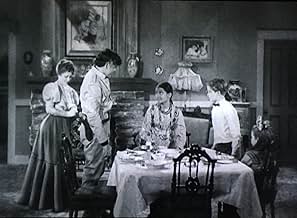
What brings Cimarron out from the depths as an otherwise boring movie, is its lavish production and costume design. Over the forty-year scope of this film, we watch as the shantytown in 1889 our characters started living in, grow and expand to a bustling city in 1928. RKO Pictures purchased 89 acres of land in California to build the full-scale western town and the lot was later turned into RKO Picture's movie ranch. Even the clothes everyone wears advance with the rapid march of time in the movie, from wild west rags on the less fortunate in the film and the flamboyant clothes on the wealthy. All of these clothes change as time progresses in the film. The film's production budget for the movie was $1.4 million (nearly $26 million today) and was the most expensive RKO picture at the time. While a critical success, the film initially lost money at the box office until MGM bought the rights to the movie in 1941 to create a remake that won't happen until 1960.
While Cimarron might have several major problems with its script, its production value is a treat to the eye that anyone can appreciate. There are many less notable but just as promising aspects with the film like its cinematography and camera work and thoughtful choices in its editing. Overall, Cimarron is a professional, expansive epic that was made to wow general audiences and Academy voters into soaring it to the top of that year. Now, ninety years after its release, I can see that Cimarron is a massive film on the surface with a lot of bark, but in between the lines, it has no real bite. It is a film that leaves no real impact through its storytelling, but should by no means be ignored by lovers of the western genre.
The film opens with an extraordinary scene of thousands of horses and wagons racing off to claim new land in the 1889 Oklahoma Land Rush, with Yancey and his family among them. To film this sequence, five-thousand extras and twenty-eight cameramen were used. We watch as Yancey, an editor, settles down in a small shanty town and creates a fledgling newspaper business. After four years, the business becomes well established, and Sabra believes that she and her family will stay and grow up there for the rest of their lives. Yancey, however, learns of a new land rush and leaves his family for five years without contact. Yancey returns as if nothing happens and continues his work until 1901 (three years after his return) when, without explanation, he is gone for another twenty-eight years. In the time he is gone his wife builds the newspaper business into an empire and using his profit Yancey runs for governor. Yancey is an advocate for Native American rights however we never find out how his campaign unfolds because the film cuts to another twenty years without a word of Yancey. The film continues and concludes its story with an aged Sabra and her children.
Cimarron suffers from becoming a somewhat aimless mess towards the end of the movie. In the first half, we watch as Yancey makes valid motivations for his family to move beyond to a new land and build a life for themselves, but in the latter, Yancey makes several confusing and unwarranted decisions. Even when Yancey leaves for five years it is clear why he does it, but when he leaves for an additional twenty-eight years soon after his return it is never mentioned why he does it. Cimarron also contains several character conflicts and plot lines that lead to nowhere like when Yancey, who has never shown himself to be religious, is suddenly selected to give a sermon at a church in town, and the scene is never brought up again.
What brings Cimarron out from the depths as an otherwise boring movie, is its lavish production and costume design. Over the forty-year scope of this film, we watch as the shantytown in 1889 our characters started living in, grow and expand to a bustling city in 1928. RKO Pictures purchased 89 acres of land in California to build the full-scale western town and the lot was later turned into RKO Picture's movie ranch. Even the clothes everyone wears advance with the rapid march of time in the movie, from wild west rags on the less fortunate in the film and the flamboyant clothes on the wealthy. All of these clothes change as time progresses in the film. The film's production budget for the movie was $1.4 million (nearly $26 million today) and was the most expensive RKO picture at the time. While a critical success, the film initially lost money at the box office until MGM bought the rights to the movie in 1941 to create a remake that won't happen until 1960.
While Cimarron might have several major problems with its script, its production value is a treat to the eye that anyone can appreciate. There are many less notable but just as promising aspects with the film like its cinematography and camera work and thoughtful choices in its editing. Overall, Cimarron is a professional, expansive epic that was made to wow general audiences and Academy voters into soaring it to the top of that year. Now, ninety years after its release, I can see that Cimarron is a massive film on the surface with a lot of bark, but in between the lines, it has no real bite. It is a film that leaves no real impact through its storytelling, but should by no means be ignored by lovers of the western genre.
American Frontier Epic
Vilified in modern times as one of the weakest and/or worst Oscar Best Picture winner, and spanked as "very racist and very bad" by one author, "Cimarron" does not deserve such condemnation. It won Best Picture because the script is high concept, the type of overarching, epic story that Hollywood has always rewarded.
Its script tells the fictional tale of adventurer and pioneer Yancey Cravat (Richard Dix) who, along with his wife Sabra (Irene Dunne), takes part in the 1889 land rush into Oklahoma Territory, along with thousands of others. In the film, these pioneers stake a land claim and build a new town, called Osage, out on the prairie.
The plot spans some forty years in the Cravat's lives, filled with dreams, accomplishments, sorrow, and interaction with a variety of characters, from prim and proper Mrs. Wyatt (humorous Edna May Oliver) to town thug Lon Yountis (Stanley Fields). Along the way we encounter: gun toting outlaws; dust; a strange gospel meeting; bullies; buildings and walkways made of wood; more dust; the trial of an "immoral" young woman; politicians; and still more dust.
The plot is structured to give most of the film's runtime to the Cravat's lives during the 19th century. As we move into the 20th century, the plot speeds up; characters age a little too quickly. That is a problem I have with the script. The film's tone starts out enthusiastic and rowdy, and ends stoical and long-suffering.
B&W photography is acceptable. There are lots of wide-angle shots, as we would expect for a story set in the wide-open spaces. Prod design and costumes are elaborate and probably accurate for the era. Casting is acceptable. For a 1920s type film, acting is predictably melodramatic. But with his eyes all bugged-out, Richard Dix seriously overacts, even for that era.
In retrospect, there may have been other films as deserving, or more so, for Best Picture of 1931. But at the time, this big-budget Western was almost certainly a predictable winner. I found the story only mildly interesting. But then I'm a creature of a more modern era. And I think viewers would do well to consider "Cimarron" a valid film, one that now gives us some historical perspective, both on Hollywood cinema and on American history.
Its script tells the fictional tale of adventurer and pioneer Yancey Cravat (Richard Dix) who, along with his wife Sabra (Irene Dunne), takes part in the 1889 land rush into Oklahoma Territory, along with thousands of others. In the film, these pioneers stake a land claim and build a new town, called Osage, out on the prairie.
The plot spans some forty years in the Cravat's lives, filled with dreams, accomplishments, sorrow, and interaction with a variety of characters, from prim and proper Mrs. Wyatt (humorous Edna May Oliver) to town thug Lon Yountis (Stanley Fields). Along the way we encounter: gun toting outlaws; dust; a strange gospel meeting; bullies; buildings and walkways made of wood; more dust; the trial of an "immoral" young woman; politicians; and still more dust.
The plot is structured to give most of the film's runtime to the Cravat's lives during the 19th century. As we move into the 20th century, the plot speeds up; characters age a little too quickly. That is a problem I have with the script. The film's tone starts out enthusiastic and rowdy, and ends stoical and long-suffering.
B&W photography is acceptable. There are lots of wide-angle shots, as we would expect for a story set in the wide-open spaces. Prod design and costumes are elaborate and probably accurate for the era. Casting is acceptable. For a 1920s type film, acting is predictably melodramatic. But with his eyes all bugged-out, Richard Dix seriously overacts, even for that era.
In retrospect, there may have been other films as deserving, or more so, for Best Picture of 1931. But at the time, this big-budget Western was almost certainly a predictable winner. I found the story only mildly interesting. But then I'm a creature of a more modern era. And I think viewers would do well to consider "Cimarron" a valid film, one that now gives us some historical perspective, both on Hollywood cinema and on American history.
A Historic But Very Dated Dunne-Dix Western
This is a very dated western but so much so it makes it interesting to watch in spots. However, it's too long - 131 minutes - and I watched it on a VHS tape in which the sound quality wasn't the best, which helped make it too tough to watch in one sitting. Yet, for its uniqueness and strange-looking characters and strange scenes, it made it worthwhile to stick it through to the end. However, the first half of the film is a lot better than the second half.
This was Irene Dunne's first starring role and, frankly, I didn't recognize her. She was anything but pretty and certainly looked different. Her role was that a steady person who keeps her marriage together but has a major flaws, including a real prejudice against the local Indians. In the end, sees the error of her ways. Richard Dix plays her husband. He overacts and looks cartoonish most of the time. This movie was in the beginning of "talkies" and Dix still looked like he belonged in silent movies. He marries Dunne and quickly leaves to go wandering. He comes home briefly and leaves again....and it's okay. Strange.
The story revolves around the two leads (Yancy and Sabra Cravat") and the their town which grows from nothing into a big city by the late 1920s. Seeing that city grow was interesting.
Included in this movie was the strangest "gospel meeting" I've ever seen. It begins well-intentioned, but becomes so spiritually weak and so secular that it makes a farce out of the whole proceedings. You have to see this to believe it. I just shook my head in amazement about how Hollywood has never had a clue when it came to topics like this.
I got rid of the VHS long ago but, if given the opportunity, now that it is out on DVD, would give it another look. It's almost a curiosity piece.
This was Irene Dunne's first starring role and, frankly, I didn't recognize her. She was anything but pretty and certainly looked different. Her role was that a steady person who keeps her marriage together but has a major flaws, including a real prejudice against the local Indians. In the end, sees the error of her ways. Richard Dix plays her husband. He overacts and looks cartoonish most of the time. This movie was in the beginning of "talkies" and Dix still looked like he belonged in silent movies. He marries Dunne and quickly leaves to go wandering. He comes home briefly and leaves again....and it's okay. Strange.
The story revolves around the two leads (Yancy and Sabra Cravat") and the their town which grows from nothing into a big city by the late 1920s. Seeing that city grow was interesting.
Included in this movie was the strangest "gospel meeting" I've ever seen. It begins well-intentioned, but becomes so spiritually weak and so secular that it makes a farce out of the whole proceedings. You have to see this to believe it. I just shook my head in amazement about how Hollywood has never had a clue when it came to topics like this.
I got rid of the VHS long ago but, if given the opportunity, now that it is out on DVD, would give it another look. It's almost a curiosity piece.
45 reviews have come before mine and I will try to write new stuff and not bore you with repeating what others have said.
In fairness to Richard Dix's overacting, Charles Bickford, one of the great character actors ever, also overacted atrociously in "Anna Christie," which was made exactly one year earlier than "Cimarron." The majority of movies didn't go from being silent to talking until 1929 and "Cimarron" was filmed in 1930, so both these films were real early talking films and the performers had not learned to down scale their performances.
The editing and cinematography were outstanding, even revolutionary for that era. The film needs to be viewed in a historic context and not compared to current films. I do agree that "Cimarron" does not hold up as well during the march of time from 1930 to 2008 as does "Public Enemy," "Little Caesar," "Scarface" but it was a complex and ambitious film adaptation of a novel by an outstanding writer, Edna Ferber.
Richard Dix's character does stand up for and vehemently support fairness to Indians and prostitutes, which was a revolutionary idea for a movie made in 1930.
I did notice that Eugene Jackson, the young black teenager, worked for 60 years in the film business, including a recurring role in "Stanford and Son," and in "Julia." Richard Dix, a major star in silent films starting in the early 1920s, peaked around the time of "Cimarron" and by the second half of the 1930s was stuck in B films but did continue his career and stared in films until his retirement in 1947.
Irene Dunne went on to super stardom for the next 20 years and made quite a few classics (check out her film list in her biography.) It is amazing!
I want to compliment the other writers who are classic film lovers but do want to state that too many readers check the not helpful box instead of the helpful box when evaluating the reviews of others. I feel that they are being too picky. After all, we are a select group of people who appreciate old films and should have support each other more as a group, unless the review is vindictive or totally uninformed.
The editing and cinematography were outstanding, even revolutionary for that era. The film needs to be viewed in a historic context and not compared to current films. I do agree that "Cimarron" does not hold up as well during the march of time from 1930 to 2008 as does "Public Enemy," "Little Caesar," "Scarface" but it was a complex and ambitious film adaptation of a novel by an outstanding writer, Edna Ferber.
Richard Dix's character does stand up for and vehemently support fairness to Indians and prostitutes, which was a revolutionary idea for a movie made in 1930.
I did notice that Eugene Jackson, the young black teenager, worked for 60 years in the film business, including a recurring role in "Stanford and Son," and in "Julia." Richard Dix, a major star in silent films starting in the early 1920s, peaked around the time of "Cimarron" and by the second half of the 1930s was stuck in B films but did continue his career and stared in films until his retirement in 1947.
Irene Dunne went on to super stardom for the next 20 years and made quite a few classics (check out her film list in her biography.) It is amazing!
I want to compliment the other writers who are classic film lovers but do want to state that too many readers check the not helpful box instead of the helpful box when evaluating the reviews of others. I feel that they are being too picky. After all, we are a select group of people who appreciate old films and should have support each other more as a group, unless the review is vindictive or totally uninformed.
Classic early talking picture - Richard Dix transition
This is a comment following up to a previous post. Richard Dix was a big silent film star before Cimarron. He was one of the few silent actors who successfully made the transition to talking pictures. I hardly recognized Irene Dunne at first, this was only her second film. This film is fun to watch as the talent of the actors is evident. People must keep in mind that the sound quality, sets, etc. were all still relatively new in 1931. Actors and directors were accustomed to silent movies. The costumes, performances, and sets are quite good, in my opinion. Once gets a feel for how the home life, new life in the southwest, and the timeless snobbery of the town "ladies." The courtroom scenes are intense. The writing was realistic for the time period. Scathing accusatory and judgmental remarks to browbeat and break the woman's spirit. A very moving picture.
Oscars Best Picture Winners, Ranked
Oscars Best Picture Winners, Ranked
See the complete list of Oscars Best Picture winners, ranked by IMDb ratings.


Did you know
- TriviaThe celebrated land rush sequence took a week to film, using 5,000 extras, 28 cameramen, six still photographers, and 27 camera assistants. The scene is so iconic that, three decades later, when MGM remade the film, the camera angles for the land rush sequence remained almost identical to the original.
- GoofsDuring the period of the film set in 1907, Yancey is the Progressive Party's candidate for governor of Oklahoma. The Progressive Party did not form until 1912, and then disbanded after Theodore Roosevelt's unsuccessful third party candidacy that year.
- Quotes
Mrs. Tracy Wyatt: One of my ancestors was a signer of the Declaration of Independence.
Sol Levy: That's all right. A relative of mine, a fellow named Moses, wrote the Ten Commandments.
- ConnectionsEdited into Land of the Open Range (1942)
- How long is Cimarron?Powered by Alexa
Details
Box office
- Budget
- $1,433,000 (estimated)
- Runtime
- 2h 3m(123 min)
- Color
Contribute to this page
Suggest an edit or add missing content