IMDb RATING
5.8/10
7.6K
YOUR RATING

A newspaper editor settles in an Oklahoma boom town with his reluctant wife at the end of the nineteenth century.A newspaper editor settles in an Oklahoma boom town with his reluctant wife at the end of the nineteenth century.A newspaper editor settles in an Oklahoma boom town with his reluctant wife at the end of the nineteenth century.
- Director
- Writers
- Stars
- Won 3 Oscars
- 7 wins & 5 nominations total




Roscoe Ates
- Jesse Rickey
- (as Rosco Ates)


Judith Barrett
- Donna Cravat
- (as Nancy Dover)


Max Barwyn
- Sabra's Luncheon Greeter
- (uncredited)

Frank Beal
- Louis Venable
- (uncredited)
Tyrone Brereton
- Dabney Venable
- (uncredited)

Dolores Brown
- Adult Ruby Big Elk
- (uncredited)
- Director
- Writers
- All cast & crew
- Production, box office & more at IMDbPro
5.87.5K
1
2
3
4
5
6
7
8
9
10
Featured reviews
45 reviews have come before mine and I will try to write new stuff and not bore you with repeating what others have said.
In fairness to Richard Dix's overacting, Charles Bickford, one of the great character actors ever, also overacted atrociously in "Anna Christie," which was made exactly one year earlier than "Cimarron." The majority of movies didn't go from being silent to talking until 1929 and "Cimarron" was filmed in 1930, so both these films were real early talking films and the performers had not learned to down scale their performances.
The editing and cinematography were outstanding, even revolutionary for that era. The film needs to be viewed in a historic context and not compared to current films. I do agree that "Cimarron" does not hold up as well during the march of time from 1930 to 2008 as does "Public Enemy," "Little Caesar," "Scarface" but it was a complex and ambitious film adaptation of a novel by an outstanding writer, Edna Ferber.
Richard Dix's character does stand up for and vehemently support fairness to Indians and prostitutes, which was a revolutionary idea for a movie made in 1930.
I did notice that Eugene Jackson, the young black teenager, worked for 60 years in the film business, including a recurring role in "Stanford and Son," and in "Julia." Richard Dix, a major star in silent films starting in the early 1920s, peaked around the time of "Cimarron" and by the second half of the 1930s was stuck in B films but did continue his career and stared in films until his retirement in 1947.
Irene Dunne went on to super stardom for the next 20 years and made quite a few classics (check out her film list in her biography.) It is amazing!
I want to compliment the other writers who are classic film lovers but do want to state that too many readers check the not helpful box instead of the helpful box when evaluating the reviews of others. I feel that they are being too picky. After all, we are a select group of people who appreciate old films and should have support each other more as a group, unless the review is vindictive or totally uninformed.
The editing and cinematography were outstanding, even revolutionary for that era. The film needs to be viewed in a historic context and not compared to current films. I do agree that "Cimarron" does not hold up as well during the march of time from 1930 to 2008 as does "Public Enemy," "Little Caesar," "Scarface" but it was a complex and ambitious film adaptation of a novel by an outstanding writer, Edna Ferber.
Richard Dix's character does stand up for and vehemently support fairness to Indians and prostitutes, which was a revolutionary idea for a movie made in 1930.
I did notice that Eugene Jackson, the young black teenager, worked for 60 years in the film business, including a recurring role in "Stanford and Son," and in "Julia." Richard Dix, a major star in silent films starting in the early 1920s, peaked around the time of "Cimarron" and by the second half of the 1930s was stuck in B films but did continue his career and stared in films until his retirement in 1947.
Irene Dunne went on to super stardom for the next 20 years and made quite a few classics (check out her film list in her biography.) It is amazing!
I want to compliment the other writers who are classic film lovers but do want to state that too many readers check the not helpful box instead of the helpful box when evaluating the reviews of others. I feel that they are being too picky. After all, we are a select group of people who appreciate old films and should have support each other more as a group, unless the review is vindictive or totally uninformed.
Classic early talking picture - Richard Dix transition
This is a comment following up to a previous post. Richard Dix was a big silent film star before Cimarron. He was one of the few silent actors who successfully made the transition to talking pictures. I hardly recognized Irene Dunne at first, this was only her second film. This film is fun to watch as the talent of the actors is evident. People must keep in mind that the sound quality, sets, etc. were all still relatively new in 1931. Actors and directors were accustomed to silent movies. The costumes, performances, and sets are quite good, in my opinion. Once gets a feel for how the home life, new life in the southwest, and the timeless snobbery of the town "ladies." The courtroom scenes are intense. The writing was realistic for the time period. Scathing accusatory and judgmental remarks to browbeat and break the woman's spirit. A very moving picture.
thoughtful and lavishly produced western
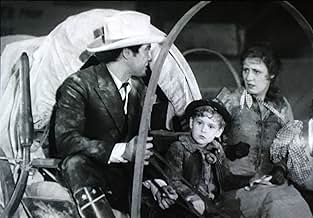
"Sprawling" is the adjective most often associated with novels and movies-from-novels by Edna Ferber. Her stories span geographical locations, family generations and economic strata, usually with a strong female at the center. In the case of CIMARRON it's the story of how Oklahoma became a state seen through the life of Sabra Cravat (Irene Dunne), demure wife of gun-totin' macho dude Yancey Cravat (Richard Dix). It's a fascinating and not pleasant relationship: He always hankering for another risky adventure and she wanting to settle down and be respectable. He is also politically minded, a fighter for the underdog, defender of the prostitute ("victim of the social order") and the Indians (robbed of their land and cheated thereafter), dispenser of frontier justice against the bad guys (but only when provoked to the limit) and literate to boot (frequently quoting Shakespeare, Milton and the Bible). The film is splendidly produced with well staged action sequences (particularly the opening Oklahoma land rush which puts even DeMille's exodus to the Red Sea to shame) and realistic recreation of a filthy, crowded, violent and anarchic boom town which gradually gentrifies as the decades pass. Interiors are similarly authentic. Wesley Ruggles directs multiple crowd scenes with great mastery. And the whole film is structured in fully realized episodes beginning with a title card and a year (1889 to start, 1930 to finish) and ending with a close up on the character at hand as the screen slowly fades to black. The Dix character is heroic in the old style and though many modern viewers find his acting preposterous, I disagree. I think he is the perfect actor for the character he is playing. Yes, such a person would definitely be out of place in today's urban world, but so what? We aren't watching a contemporary story anyway. The supporting cast, particularly George E. Stone as a Jewish peddler who is defended against ruffians by Dix, Edna May Oliver as the pushy, judgmental neighbor and Stanley Fields as a grizzled sociopath are my favorites.
Ferber's feelings about intolerance always informed her stories and make us think. Seeing a film like this 78 years after it was made also reminds us that although the US has come a long way, the consciousness that all was not well was firmly operating even back then and available for wide public consumption. CIMARRON works as pure entertainment as well as history; in fact the film and novel themselves are now history and have been folded into the larger history of this country.
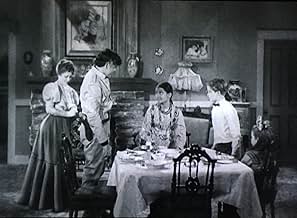
The only problem technically is the soundtrack which has become fuzzy. Maybe a pristine print is lurking around somewhere. And the supporting character of a black house servant played by Eugene Jackson will raise PC hackles from the early scene in which he is perched on a platform above the family dinner table fanning the white employers with bird feathers through one degrading interaction after another with whites. But this film was made in the age when most black actors (and black people) played servile or childlike roles, so it is not a surprise to see the practice here.
Ferber's feelings about intolerance always informed her stories and make us think. Seeing a film like this 78 years after it was made also reminds us that although the US has come a long way, the consciousness that all was not well was firmly operating even back then and available for wide public consumption. CIMARRON works as pure entertainment as well as history; in fact the film and novel themselves are now history and have been folded into the larger history of this country.
The only problem technically is the soundtrack which has become fuzzy. Maybe a pristine print is lurking around somewhere. And the supporting character of a black house servant played by Eugene Jackson will raise PC hackles from the early scene in which he is perched on a platform above the family dinner table fanning the white employers with bird feathers through one degrading interaction after another with whites. But this film was made in the age when most black actors (and black people) played servile or childlike roles, so it is not a surprise to see the practice here.
Best Picture? Not Really
Despite it's awards for best picture and best adapted screenplay, this first film version of the popular soap-opera/western novel is badly dated and with plenty of overacting, though it's really a handsome-looking production. The best thing about this, is the atmospheric cinematography and the fantastic costumes and sets, particularly in the exterior scenes of the growing town of Osage.
Richard Dix certainly has great screen presence, but here he's kind of hammy, acting in a manner more suitable to silent film or the stage.
I can't help but compare this to the 1960 remake, of which this version is actually quite preferable. The remake starts out vastly superior, but squanders it's entertainment value when it turns into the cinematic equivalent of nails on a blackboard, while this version starts out as a mixed-bag and stays pretty much consistent the whole way through.
Still, much like the remake, this suffers greatly after Dix takes a hike the first time around and the picture becomes rambling, winding down to an unsatisfying conclusion.
Richard Dix certainly has great screen presence, but here he's kind of hammy, acting in a manner more suitable to silent film or the stage.
I can't help but compare this to the 1960 remake, of which this version is actually quite preferable. The remake starts out vastly superior, but squanders it's entertainment value when it turns into the cinematic equivalent of nails on a blackboard, while this version starts out as a mixed-bag and stays pretty much consistent the whole way through.
Still, much like the remake, this suffers greatly after Dix takes a hike the first time around and the picture becomes rambling, winding down to an unsatisfying conclusion.
Quantity - not quality
This gargantuan war-horse of a western epic won the Oscar as the Best Film of 1930/31 proving from the earliest days of the Academy it was quantity not quality that mattered and that big equalled best. Of course there wasn't much in the way competition, ("East Lynne", "The Front Page", "Skippy" and "Trader Horn"). Much better films like "Morocco", "The Criminal Code" and "Little Caesar" failed to make the short-list. But it is still surprisingly robust and enjoyable in the way that these kind of movies sometimes are, (it's certainly a lot less po-faced than the dire 1960 remake), and it has some really good things in it; a great church meeting sequence and a very well staged hold-up culminating in a great moment when a young black boy is killed and is ignored in the general mêlée and is a brave scene for the period, and a sequence probably deemed too contentious for the remake.
The acting, too, is a cut above the average for the time. A young, fresh-faced Irene Dunne is lovely and shows considerable promise here and Richard Dix has a kind of screen presence. It's ham and he plays to the gallery but he's very likable. Estelle Taylor is touching as the whore with the obligatory heart of gold and Edna May Oliver is very funny but in too small a role.
It runs out of steam before the end. It's top heavy in the plot department, (based, as it is, on an Edna Ferber door-stopper), and characters come and go without making much of an impression. Often listed in polls of the worst films to win the Best Picture Oscar it has vigour and a complete lack of pretension. I'll take it any day over "A Beautiful Mind".
The acting, too, is a cut above the average for the time. A young, fresh-faced Irene Dunne is lovely and shows considerable promise here and Richard Dix has a kind of screen presence. It's ham and he plays to the gallery but he's very likable. Estelle Taylor is touching as the whore with the obligatory heart of gold and Edna May Oliver is very funny but in too small a role.
It runs out of steam before the end. It's top heavy in the plot department, (based, as it is, on an Edna Ferber door-stopper), and characters come and go without making much of an impression. Often listed in polls of the worst films to win the Best Picture Oscar it has vigour and a complete lack of pretension. I'll take it any day over "A Beautiful Mind".
Oscars Best Picture Winners, Ranked
Oscars Best Picture Winners, Ranked
See the complete list of Oscars Best Picture winners, ranked by IMDb ratings.


Did you know
- TriviaThe celebrated land rush sequence took a week to film, using 5,000 extras, 28 cameramen, six still photographers, and 27 camera assistants. The scene is so iconic that, three decades later, when MGM remade the film, the camera angles for the land rush sequence remained almost identical to the original.
- GoofsDuring the period of the film set in 1907, Yancey is the Progressive Party's candidate for governor of Oklahoma. The Progressive Party did not form until 1912, and then disbanded after Theodore Roosevelt's unsuccessful third party candidacy that year.
- Quotes
Mrs. Tracy Wyatt: One of my ancestors was a signer of the Declaration of Independence.
Sol Levy: That's all right. A relative of mine, a fellow named Moses, wrote the Ten Commandments.
- ConnectionsEdited into Land of the Open Range (1942)
- How long is Cimarron?Powered by Alexa
Details
Box office
- Budget
- $1,433,000 (estimated)
- Runtime
- 2h 3m(123 min)
- Color
Contribute to this page
Suggest an edit or add missing content