IMDb RATING
7.2/10
3.9K
YOUR RATING


An alcoholic ex-boxer struggles to provide a good living for his son.An alcoholic ex-boxer struggles to provide a good living for his son.An alcoholic ex-boxer struggles to provide a good living for his son.
- Won 2 Oscars
- 5 wins & 3 nominations total
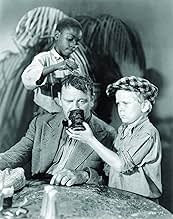


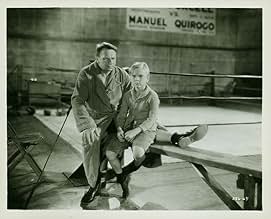



Roscoe Ates
- Sponge
- (as Rosco Ates)


Dannie Mac Grant
- Boy Taunting Dink
- (uncredited)

Frank Hagney
- Manuel Quiroga - Mexican Champ
- (uncredited)

Dell Henderson
- The Doctor
- (uncredited)

Tom McGuire
- Los Angeles Promoter
- (uncredited)

Walter Percival
- Los Angeles Promoter
- (uncredited)

Lee Phelps
- Louie - the Bartender
- (uncredited)

Andy Shuford
- Boy at Racetrack
- (uncredited)

Dan Tobey
- Ring Announcer
- (uncredited)
- Director
- Writers
- All cast & crew
- Production, box office & more at IMDbPro
7.23.9K
1
2
3
4
5
6
7
8
9
10
Featured reviews
a cinematic punch to the gut
this is one touching,heartwarming movie.it's all about the love a father has for his son and vice versa.Wallace Beery is good as the dad,but it's Jackie Cooper(nine years old,at the time)who steals the show)as the son.as a nine year old child,Cooper showed acting ability and maturity way beyond his years.this film has little to do with boxing,and in fact,the one big boxing scene is quite comical,and not in a good way.thank goodness,it secondary,and doesn't lesson the overall impact of the movie.the ending is unexpected and hit me like a punch to the gut.it's a powerful moment,and deeply affecting.for me,The Champ(1931)is a 7/10
Film with a ton of heart.
Former heavyweight champ Andy Purcell goes down to Tijuana in hopes of getting a fight. Andy's son, Dink, watches his father train, but Andy gives into his vices of gin and gambling, which constantly gets him in trouble. Andy wins Dink a race horse, which is entered in a race, where Andy meets his ex-wife Linda (with her current husband Tony) at the track and wants to be reunited with her son (Dink) and give him a better life outside of the one Andy gives him. Andy gets arrested and thrown in jail, where he decides that Dink would be best living with his mother, which devastates Dink (who idolizes his father). Andy is released from jail (thanks to Tony & Linda)and gets a bout with the Mexican heavyweight champ, where Dink runs back to his father to watch him hopefully win the fight, even though he is out of shape and not at the level of his opponent. The film is a toughing piece of cinematic brilliance, despite the static camera-work (very uncharacteristic of King Vidor). Beery and Cooper work so well together and their performances are what makes this film a classic. The script does not lose anything in the 70 plus years since its release. If the ending doesn't make you shed tears, you have to be a robot. Rating, 8.
Top Father/Son Movie Gets Beery Best Actor Award (Tied)
Father/son movies were nothing new when November 1931's "The Champ" was released. But its ending is what struck movie audiences as unique, one of cinema's most potent tear jerkers ever projected on the screen. "The Champ is one of the greatest love stories ever put to film, the story of a man who wants to do right but fails and a son who never gives up on him," film reviewer Jerry Roberts writes. "(Wallace) Beery is what gives the film its foundation."
Beery performance was so powerful he won the 5th Academy Awards' Best Actor in a virtual tie with Frederic March for his role in 1931's "Dr. Jekyll and Mr. Hyde." After receiving the statuette, Berry, in the middle of renegotiating his contract with MGM, demanded he be paid one dollar more than the studio's highest paid actor. The agreement made him the richest salaried Hollywood actor at that time. Francis Marion wrote "The Champ's" screenplay especially with Beery in mind. It proved to be a great inspiration since she won the Academy Award's Best Story for her work on bringing bucketful of tears to millions of viewers.
Her tale has Andy "Champ" Purcell (Beery), a former world heavyweight title holder, down on his luck and turns to drink and gambling. Through his divorce, Andy was able to keep his son, Dink (Jackie Cooper), until his mother Linda (Irene Rich), sees him at the racetrack with his father. Remarried into wealth, Linda gets the court to gain custody of Dink. In a classic highly emotional separation scene, Andy, in prison, says goodbye to his loyal son, only to have Dink jump off the train transporting him to his mother's home. He wants to see his father fight one more match facing off against the Mexican champion in what turns out to be a brutal match. A preview audience loved the movie, except for the ending. MGM's head of production, Irving Thalberg, had the match reshot, ending with one of the most emotional 18-handkerchief scenes in cinema.
Despite the warmth displayed on the screen between the two actors, Beery and Cooper did not get along. Beery hated childhood actors, and it was evident he didn't enjoy his time with the nine-year-old Jackie. Publicly, he diplomatically described Cooper as "a great kid," but the boy claimed the actor treated him like "an unkempt dog." In retrospect, Cooper said it was pure jealousy that made Beery, in scene after scene, try to upstage him. Beery was so fed up with the director calling for tight shots of Cooper's teary face, he demanded in his new MGM contract that no juvenile actor could ever have a close-up in any picture with him. Beery vowed he would never appear in another movie with Cooper again after "The Champ" wrapped. But so popular was the acting duo that he took back his promise in the mid-1930s, sharing screen time again with Cooper in three more films.
Besides Beery's tied win, the Academy nominated "The Champ" for Best Picture as well as its director, King Vidor for Best Director. Francis Marion's award-winning script was so brilliant Red Skelton adapted it into his 1952 film, "The Clown," where he plays the Andy character as a has-been clown rather than a boxer. Later generations are more familiar with director Franco Zeffirelli's 1979 version of "The Champ" with Jon Voight, Faye Dunaway and Ricky Schroder as the son. This film was actress Joan Blondell's last movie.
Beery performance was so powerful he won the 5th Academy Awards' Best Actor in a virtual tie with Frederic March for his role in 1931's "Dr. Jekyll and Mr. Hyde." After receiving the statuette, Berry, in the middle of renegotiating his contract with MGM, demanded he be paid one dollar more than the studio's highest paid actor. The agreement made him the richest salaried Hollywood actor at that time. Francis Marion wrote "The Champ's" screenplay especially with Beery in mind. It proved to be a great inspiration since she won the Academy Award's Best Story for her work on bringing bucketful of tears to millions of viewers.
Her tale has Andy "Champ" Purcell (Beery), a former world heavyweight title holder, down on his luck and turns to drink and gambling. Through his divorce, Andy was able to keep his son, Dink (Jackie Cooper), until his mother Linda (Irene Rich), sees him at the racetrack with his father. Remarried into wealth, Linda gets the court to gain custody of Dink. In a classic highly emotional separation scene, Andy, in prison, says goodbye to his loyal son, only to have Dink jump off the train transporting him to his mother's home. He wants to see his father fight one more match facing off against the Mexican champion in what turns out to be a brutal match. A preview audience loved the movie, except for the ending. MGM's head of production, Irving Thalberg, had the match reshot, ending with one of the most emotional 18-handkerchief scenes in cinema.
Despite the warmth displayed on the screen between the two actors, Beery and Cooper did not get along. Beery hated childhood actors, and it was evident he didn't enjoy his time with the nine-year-old Jackie. Publicly, he diplomatically described Cooper as "a great kid," but the boy claimed the actor treated him like "an unkempt dog." In retrospect, Cooper said it was pure jealousy that made Beery, in scene after scene, try to upstage him. Beery was so fed up with the director calling for tight shots of Cooper's teary face, he demanded in his new MGM contract that no juvenile actor could ever have a close-up in any picture with him. Beery vowed he would never appear in another movie with Cooper again after "The Champ" wrapped. But so popular was the acting duo that he took back his promise in the mid-1930s, sharing screen time again with Cooper in three more films.
Besides Beery's tied win, the Academy nominated "The Champ" for Best Picture as well as its director, King Vidor for Best Director. Francis Marion's award-winning script was so brilliant Red Skelton adapted it into his 1952 film, "The Clown," where he plays the Andy character as a has-been clown rather than a boxer. Later generations are more familiar with director Franco Zeffirelli's 1979 version of "The Champ" with Jon Voight, Faye Dunaway and Ricky Schroder as the son. This film was actress Joan Blondell's last movie.
Only someone with ice water in their veins could fail to be moved
The central relationship of the adoring street-wise kid (Cooper) and his devoted, boozing, gambling ex-champ Dad (Beery) is astonishing. We are observing behavior here, not acting. Cooper gives the best child performance I've ever seen and Beery is utterly human, flawed and unforgettable.
This film is full of terrific moments - comedy and heartbreak. The friendship between Cooper and his black pal is beautifully color-blind. When Cooper states, "He's colored," it's with a child's open, untainted honesty. I find King Vidor's films to always resonate with humanity and compassion. He was one of our greatest filmmakers as Frances Marion was one of our greatest screenwriters.
This film is full of terrific moments - comedy and heartbreak. The friendship between Cooper and his black pal is beautifully color-blind. When Cooper states, "He's colored," it's with a child's open, untainted honesty. I find King Vidor's films to always resonate with humanity and compassion. He was one of our greatest filmmakers as Frances Marion was one of our greatest screenwriters.
10Steffi_P
"What do we care if they're watching?"
In the worst years of the depression, the most popular stars were not the most glamorous or attractive. As revealed in the highly respected Quigley poll (which surveyed movie theatre owners on who their audiences were most likely to come and see), the biggest draws in the early 30s were friendly, earthy types whom audiences could relate to at a time of poverty and desperation. These included genial comic Will Rogers, middle-aged frump Marie Dressler, and burly pug-face Wallace Beery, who played his greatest role in 1931 feature The Champ.
Beery's physique meant he was often cast as villainous thugs, but he had demonstrated enough acting prowess to get a decent number of "gentle giant" lead roles. In The Champ he gets to combine the two, one minute the swaggering pugilist, the next a devoted father. He gives a performance full of tiny gestures, expertly dancing from one expression to another. When he gets to show his character's emotional vulnerability, the scene is doubly poignant coming after the macho confidence he normally displays. The knowledge that off the set Beery was reputedly a wife-beating brute who bullied everyone around him perhaps spoils the effect slightly, but even with this in mind his performance is captivating, believable and utterly flawless.
Supporting Beery behind the camera is a director who was both a poet and a craftsman of the cinema – King Vidor. Vidor excelled at coaxing naturalism from his players at a time when theatrical hamming was the par. His camera focuses on Beery for long takes, allowing the actor to potter about doing his little bits of business and developing the character. Vidor also gives the picture bite with some neat tracking shots. These are usually in the field of depth, so in other words we are either backing away from the actors or following them. The former kind, with the players advancing on the camera as in the shot that opens the picture, gives the characters presence and show them as a force to be reckoned with. The latter kind, where the camera follows the character, physically pulls us into their world. Vidor used these kinds of shot a lot, and they are a neat way of making the audience feel involved without drawing too much attention to the artificiality of the form.
It may come as a surprise that this story of male bonding was written by a woman, Frances Marion. But like Beery, Marion defied expectations simply by being very good at what she did. Her plot for The Champ earned her the second of her two Oscars. It does not perhaps describe the most realistic of situations, but the emotional content is very sincere, and its depiction of determination and human feeling during hard times must have struck a chord with audiences of the day. The dialogue, which is credited to three separate people, is appropriately punchy with lines that sound believable yet are memorable and evocative.
Aside from Beery, the rest of the cast are a good bunch. Of all the lead players, Irene Rich is the only one who doesn't stand out, and she seems simply there to fill the wealthy, motherly type. But having said that she is not at all bad and her presence doesn't harm the picture. The Champ also sees Roscoe Ates in one of his largest roles, and for once getting to appear as a normal person rather than the stuttering fool he was usually required to play. Finally there is Jackie Cooper, one of the greatest child stars of his or indeed any era. While it seems clear that fame has gone to the youngster's head (he's not quite as good as he thinks he is), he is certainly up to the task of carrying his end of the picture. He plays a genuine child when with Beery, but when he is around others he deepens his voice and adopts mannerisms as if trying to be an adult. It's a touching and appropriate performance and very suited to the tone of the picture. And this was perhaps also the only time in which a child actor like Cooper could become a personality in his own right. As the popularity of Beery, Dressler et al proves, this was the age of the unconventional superstar.
Beery's physique meant he was often cast as villainous thugs, but he had demonstrated enough acting prowess to get a decent number of "gentle giant" lead roles. In The Champ he gets to combine the two, one minute the swaggering pugilist, the next a devoted father. He gives a performance full of tiny gestures, expertly dancing from one expression to another. When he gets to show his character's emotional vulnerability, the scene is doubly poignant coming after the macho confidence he normally displays. The knowledge that off the set Beery was reputedly a wife-beating brute who bullied everyone around him perhaps spoils the effect slightly, but even with this in mind his performance is captivating, believable and utterly flawless.
Supporting Beery behind the camera is a director who was both a poet and a craftsman of the cinema – King Vidor. Vidor excelled at coaxing naturalism from his players at a time when theatrical hamming was the par. His camera focuses on Beery for long takes, allowing the actor to potter about doing his little bits of business and developing the character. Vidor also gives the picture bite with some neat tracking shots. These are usually in the field of depth, so in other words we are either backing away from the actors or following them. The former kind, with the players advancing on the camera as in the shot that opens the picture, gives the characters presence and show them as a force to be reckoned with. The latter kind, where the camera follows the character, physically pulls us into their world. Vidor used these kinds of shot a lot, and they are a neat way of making the audience feel involved without drawing too much attention to the artificiality of the form.
It may come as a surprise that this story of male bonding was written by a woman, Frances Marion. But like Beery, Marion defied expectations simply by being very good at what she did. Her plot for The Champ earned her the second of her two Oscars. It does not perhaps describe the most realistic of situations, but the emotional content is very sincere, and its depiction of determination and human feeling during hard times must have struck a chord with audiences of the day. The dialogue, which is credited to three separate people, is appropriately punchy with lines that sound believable yet are memorable and evocative.
Aside from Beery, the rest of the cast are a good bunch. Of all the lead players, Irene Rich is the only one who doesn't stand out, and she seems simply there to fill the wealthy, motherly type. But having said that she is not at all bad and her presence doesn't harm the picture. The Champ also sees Roscoe Ates in one of his largest roles, and for once getting to appear as a normal person rather than the stuttering fool he was usually required to play. Finally there is Jackie Cooper, one of the greatest child stars of his or indeed any era. While it seems clear that fame has gone to the youngster's head (he's not quite as good as he thinks he is), he is certainly up to the task of carrying his end of the picture. He plays a genuine child when with Beery, but when he is around others he deepens his voice and adopts mannerisms as if trying to be an adult. It's a touching and appropriate performance and very suited to the tone of the picture. And this was perhaps also the only time in which a child actor like Cooper could become a personality in his own right. As the popularity of Beery, Dressler et al proves, this was the age of the unconventional superstar.


Did you know
- TriviaWallace Beery actually got one less vote than Fredric March in the 1931/1932 Academy Awards voting for best actor, but the rules at the time considered anyone with one or two votes less than the leader as being in a tie. So both got Academy Awards.
- GoofsAs Dink plays on the balcony awaiting his meeting with Linda, he steals chewing gum and candy for himself off of a table on the balcony. He then steals the contents of a box of cigarettes, saying that he'll "bring some home for the Champ", and stuffs them into his right jacket pocket. However, during the ride home, Andy reaches into Dink's right jacket pocket and finds cigars rather than the cigarettes which we clearly saw Dink steal.
- Quotes
[Dink compares the swanky home to his own]
Dink Purcell: The Champ and I ain't fixed up swell as this, but our joint's more lively.
- ConnectionsEdited into The Our Gang Story (1994)
- SoundtracksThe Monkeys Have No Tails in Pago Pago
(uncredited)
Composer uncertain
Sung a cappella by Wallace Beery
- How long is The Champ?Powered by Alexa
Details
- Runtime
- 1h 26m(86 min)
- Color
- Aspect ratio
- 1.20 : 1
Contribute to this page
Suggest an edit or add missing content