Release calendarTop 250 moviesMost popular moviesBrowse movies by genreTop box officeShowtimes & ticketsMovie newsIndia movie spotlight
    What's on TV & streamingTop 250 TV showsMost popular TV showsBrowse TV shows by genreTV news
    What to watchLatest trailersIMDb OriginalsIMDb PicksIMDb SpotlightFamily entertainment guideIMDb Podcasts
    OscarsBest Of 2025Holiday Watch GuideGotham AwardsCelebrity PhotosSTARmeter AwardsAwards CentralFestival CentralAll events
    Born todayMost popular celebsCelebrity news
    Help centerContributor zonePolls
For industry professionals
  • Language
  • Fully supported
  • English (United States)
    Partially supported
  • Français (Canada)
  • Français (France)
  • Deutsch (Deutschland)
  • हिंदी (भारत)
  • Italiano (Italia)
  • Português (Brasil)
  • Español (España)
  • Español (México)
Watchlist
Sign in
  • Fully supported
  • English (United States)
    Partially supported
  • Français (Canada)
  • Français (France)
  • Deutsch (Deutschland)
  • हिंदी (भारत)
  • Italiano (Italia)
  • Português (Brasil)
  • Español (España)
  • Español (México)
Use app
  • Cast & crew
  • User reviews
  • Trivia
  • FAQ
IMDbPro

The Threepenny Opera

Original title: Die 3 Groschen-Oper
  • 1931
  • Not Rated
  • 1h 44m
IMDb RATING
7.2/10
2.7K
YOUR RATING
The Threepenny Opera (1931)
GermanSatireComedyCrimeDramaMusical

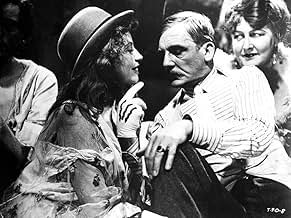
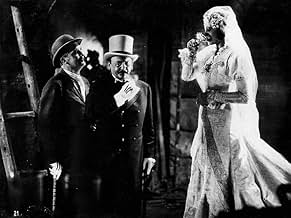
The Gangster Macheath secretly marries the daughter of beggar king Peachum. When Peachum finds out, he instructs the police chief Brown to arrest and hang Macheath. If not, all the beggars o... Read allThe Gangster Macheath secretly marries the daughter of beggar king Peachum. When Peachum finds out, he instructs the police chief Brown to arrest and hang Macheath. If not, all the beggars of Soho will disturb the upcoming coronation.The Gangster Macheath secretly marries the daughter of beggar king Peachum. When Peachum finds out, he instructs the police chief Brown to arrest and hang Macheath. If not, all the beggars of Soho will disturb the upcoming coronation.

  • Director
    • Georg Wilhelm Pabst
  • Writers
    • Bertolt Brecht
    • Léo Lania
    • Ladislaus Vajda
  • Stars
    • Rudolf Forster
    • Lotte Lenya
    • Carola Neher
  • See production info at IMDbPro
  • IMDb RATING
    7.2/10
    2.7K
    YOUR RATING
    • Director
      • Georg Wilhelm Pabst
    • Writers
      • Bertolt Brecht
      • Léo Lania
      • Ladislaus Vajda
    • Stars
      • Rudolf Forster
      • Lotte Lenya
      • Carola Neher
    • 34User reviews
    • 36Critic reviews
  • See production info at IMDbPro
  • See production info at IMDbPro
    • Awards
      • 1 win total

    Photos73

    View Poster
    View Poster
    View Poster
    View Poster
    View Poster
    View Poster
    + 67
    View Poster

    Top Cast29

    Edit
    Rudolf Forster
    Rudolf Forster
    • Mackie Messer
    Lotte Lenya
    Lotte Lenya
    • Jenny
    • (as Lotte Lenja)
    Carola Neher
    Carola Neher
    • Polly
    Albert Préjean
    Albert Préjean
    • Mackie
    Florelle
    Florelle
    • Polly Peachum
    • (as Mlle. Florelle)
    Gaston Modot
    Gaston Modot
    • Peachum
    Reinhold Schünzel
    Reinhold Schünzel
    • Tiger-Brown
    Margo Lion
    Margo Lion
    • Jenny
    Fritz Rasp
    Fritz Rasp
    • Peachum
    Valeska Gert
    Valeska Gert
    • Frau Peachum
    Vladimir Sokoloff
    Vladimir Sokoloff
    • Smith
    • (as Wladimir Sokoloff)
    Lucy de Matha
    • Mme Peachum
    Jacques Henley
    • Tiger Brown
    Bill Bocket
    • Chanteur de rues
    • (as Bill-Bocketts)
    Ernst Busch
    Ernst Busch
    • Der Straßensänger
    Hermann Thimig
    Hermann Thimig
    • Pasteur
    Antonin Artaud
    Antonin Artaud
    • Nouveau mendant
    Roger Gaillard
    • Mendiant
    • (as Gaillard)
    • Director
      • Georg Wilhelm Pabst
    • Writers
      • Bertolt Brecht
      • Léo Lania
      • Ladislaus Vajda
    • All cast & crew
    • Production, box office & more at IMDbPro

    User reviews34

    7.22.7K
    1
    2
    3
    4
    5
    6
    7
    8
    9
    10

    Featured reviews

    7TheLittleSongbird

    Pabst takes on Brecht

    GW Pabst was a master director of German cinema, especially excelling at his direction of actresses and developing their acting skills (i.e. Louise Brooks being a primary example). Bertholt Brecht's play is a classic and have always hugely appreciated the music of Kurt Weill (i.e. 'Street Scene'). Lotte Lenya left a huge impression on me when introduced to her as one of the great Bond villains in 'From Russia With Love' and she was every bit as talented a singer. So there was so much potential for 'The Threepenny Opera' to work.

    And it mostly does work, quite well. 'The Threepenny Opera' may not be for those that prefer their stage to film adaptations to be one hundred percent faithful, which they seldom are in general. The anti-capitalist content is toned down, which left Brecht incensed, and it is a shame that several of the songs are cut and the order of the songs intact is at times re-arranged. It is not one of Pabst's best films, it's no 'Diary of a Lost Girl' for example, but his not so masterful films still always had interest value and so does 'The Threepenny Opera'. A film most notable for its incredible visuals and Lenya.

    'The Threepenny Opera' has a lot of great things. Visually, the film is an absolute triumph. Not just the very evocative and at times elaborate sets and the at times eerie lighting, but especially the absolutely superb cinematography (some of the very best of that year, the best of it making the jaw drop). While some of the placement was questionable, the songs included are wonderful. "Mack the Knife" is considered a classic for very good reason and one can understand how today it is a big band favourite.

    Dialogue is emotionally complex and while wordy it doesn't ramble. The story may be toned down politically, but is mostly compelling and the bold mood of the play is intact. Complete with some greatly executed scenes. The ending still astounds. The message still resonates and while it makes its point it doesn't overdo it in my view. Pabst's direction at its best is masterly, especially visually. Lenya re-creates the role that she portrayed on stage to legendary effect and her performance is utterly bewitching, her major solo is unforgettably performed and staged. Rudolf Forster makes Mackie a hard to dislike rogue. Carola Neher is a charming Polly and Fritz Rasp is formidable as Peachum.

    Not everything works though. There are pacing problems where the film does at times badly lag. A primary example being the wedding scene, which goes on for far too long and feels very drawn out. The slapstick is not particularly amusing this time and comes over as clownish and not always merging with the atmosphere.

    Some of the story is slightly disorganised too and the re-ordering of the songs doesn't always come off. "The Cannon Song" for instance feels very out of place and makes very little sense being placed at that point in the drama.

    Overall though, impressive but to be taken on its own terms. 7/10
    7J. Steed

    CLASSIC FAILURE

    This adaptation of Brecht/Weill's Musikspiel is considered by many a classic masterpiece. Classic it may be (and as such historically important), but a masterpiece it is not. I am not interested in the changes vis-a vis the play: recent research has found out that most changes were already proposed by Brecht himself and other research has found out that Brecht was not the writer at all, but Elisabeth Hauptmann. Nor am I interested in the fact that Weill's music is reduced and that not all songs are performed, which was unavoidable.

    The point is that although there was real potential for a masterpiece (set designer, cast, director, cameraman etc.), Pabst never succeeds in making this adaptation into a real filmic adaptation. Scenes are presented in order, but never there is a feeling of a close and tightly held drama; the film is more or less subdivided. This may have been on purpose (considering the structure of the play), but for me it just does not work as film. It seems if no real choice was made between a documentation of the play or a truly filmic adaptation; what we are left with is something that lies in between, and that never comes alive. Are we seeing the result of all the (judicial) troubles director and writers had with Brecht and Weill? Or were the makers just too involved in making a masterpiece?

    So, is this a mediocre or even bad picture? Certainly not. Individual scenes are fine due to sets and cast and the way in which Wagner and Pabst know how to use them (no room here to analyze this). But, on the other hand: do we really see or feel a menacing threat from the army of beggars? Do we really need Ernst Busch as the street singer?; do his scenes really add something? And are most songs not just registered as if they were performed on a stage? And is the editing not just adequate?

    Today was my 5th or 6th viewing. I still cannot see why this film ever could be acclaimed a masterpiece.
    10lreynaert

    First grub, then morals

    G.W. Pabst's version of 'The 3penny Opera' is simply sublime with a formidable casting and a magnificent cast with: Ernst Busch as a street singer, Carola Neher, who died in a soviet prison, as Polly and Lotte Lenya as Jenny. The mass scenes (without the help of computer games) are nothing less than masterful. But, above all are the texts of Bertolt Brecht and the magical songs by Kurt Weill; just delicious stuff.

    This eternal masterpiece doesn't paint a rosy picture of human affairs, with a city (pars pro toto – the world) in the hands of people with shark teeth, venal civil servants and a corrupt police force. Bertolt Brecht formulates in simple words the rules of the game, the basics of human society: first grub, then morals. If the primary conditions for human survival (food, safety) are not available, then there is absolutely no ground for any kind of morality. For Bertolt Brecht, in a 'free for all' society the poor, the vast majority of the population, can only survive by (organized) begging and stealing, by dirty works ('Missetat'). After fighting one another, the crime bosses find a far better solution for the consolidation of their power. They make a super deal, pool their resources and create a financial syndicate of criminals, in other words, a bank, with the former corrupt police chief as CEO. What an awesome prophetic idea! With brilliant theatrical histrionics and a perfect 'London' atmosphere, G.W. Pabst shot an ageless movie masterpiece based on an everlasting opera. A must see.
    10returning

    Ensemble genius

    Great musicals always have great people working at every different level in a united way. The script, the songs, the actors, the camera-movements all must stand on their own while contributing to the musical proper. We have classic cases of this where all those involved went their separate ways and were never able to recreate that magic. Instead of this somewhat accidental result, we have here a carefully calculated masterpiece. It was recognised that this was an important social work, and there were a number of things that needed to happen in its execution. They needed Brecht's (a dramatist becoming increasingly fascinated with cinema) cooperation, they got it. They needed a capable expressionistic director, they got it. They needed creative writers to narrow the work down to a typical film length, they got them. They needed strong powerful actors to circumvent any possible lingering sentimentality, they got them as well. This was an age where film was becoming run by the studios, but in creative ways striving to create great art, and we have stunning works like this to prove it.

    5 out of 5 - Essential
    8Spondonman

    Life is Money, Food, Sex, Nothing

    Sometimes, if I ever feel especially depressed at something going off in the world I like to trot this one out to make me take an even more jaundiced view of things. This surely would be no. 1 in the Top 100 Most Cynical Movies Ever, even after all these years (the simultaneous French version is not so earthy, a more flowery artiness coming out instead). For me, it's the best movie I've seen of Pabst's, most of his post-WW2 stuff has eluded me so far.

    The Guild Of Thieves' leader gets married to the Guild of Beggars' leader's daughter, causing friction between the two highly organised and respected professions, but inertia in the police who are in the Thieves' power. Prostitution, aberration, bigamy, thievery, extortion, bribery, corruption (and complete cynically cheerful indifference to it all), you name it it's here - after all it is all that Man can do! Laconic-looking Ernst Busch's searing inter-ditties leave you with the distinct impression that someone was rather tired with the world! The savage sounding German words spew out, whilst reading the English subtitles is sometimes heavy going in digesting all of the conceptual opinions in time to digest the next. Would that Bobby Darin had got his tonsils round a few more of the extraordinary gossamer Brecht/Weill songs from this! Lotte Lenya sparkled doing her Pirate Jenny number, being just a part of my favourite bit in the idling whorehouse.

    All of the people involved in 3G are "lost to sight", except to the handful of Artheads who occasionally hold cultural revivals of Weill, Brecht or Pabst. There was a memorable series of events in London in 2000 to mark the 50th anniversary of Weill's death, but 99.99% of the general public passed it by.

    Soon we will all be lost to sight too, along with all of our fractious opinions and silly vices.

    More like this

    Comradeship
    7.5
    Comradeship
    The Joyless Street
    7.1
    The Joyless Street
    Westfront 1918
    7.3
    Westfront 1918
    Pandora's Box
    7.7
    Pandora's Box
    Three Penny Opera
    5.2
    Three Penny Opera
    Diary of a Lost Girl
    7.8
    Diary of a Lost Girl
    The Big Parade
    7.9
    The Big Parade
    The Children Are Watching Us
    7.7
    The Children Are Watching Us
    Morocco
    7.0
    Morocco
    Playing at Love
    7.5
    Playing at Love
    Beauty and the Beast
    7.9
    Beauty and the Beast
    Kuhle Wampe or Who Owns the World?
    6.6
    Kuhle Wampe or Who Owns the World?

    Related interests

    Peter Lorre in M (1931)
    German
    Peter Sellers in Dr. Strangelove or: How I Learned to Stop Worrying and Love the Bomb (1964)
    Satire
    Will Ferrell in Anchorman: The Legend of Ron Burgundy (2004)
    Comedy
    James Gandolfini, Edie Falco, Sharon Angela, Max Casella, Dan Grimaldi, Joe Perrino, Donna Pescow, Jamie-Lynn Sigler, Tony Sirico, and Michael Drayer in The Sopranos (1999)
    Crime
    Naomie Harris, Mahershala Ali, Janelle Monáe, André Holland, Herman Caheej McGloun, Edson Jean, Alex R. Hibbert, and Tanisha Cidel in Moonlight (2016)
    Drama
    Julie Andrews in The Sound of Music (1965)
    Musical

    Storyline

    Edit

    Did you know

    Edit
    • Trivia
      The film was banned by the Nazi Party in 1933 and prints of the film were destroyed. The film was restored and reconstructed in the 1960s.
    • Quotes

      Peachum: You too wish to be part of this splendid occasion. You, poorest of the poor, who'd long ago have perished in the sewers of Turnbridge if I hadn't spent sleepless nights devising a way to wring a few pence out of your poverty. For I've shown that the rich of this world have no qualms about causing misery but can't bear the sight of it. They have hard hearts but weak nerves. Well, we won't spare their nerves today! By the thousands we'll tear at their nerves, for our rags do not conceal our wounds!

    • Alternate versions
      There is an Italian edition of this film on DVD, distributed by DNA srl, "L'OPERA DA TRE SOLDI (1931) + HANGMEN ALSO DIE (Anche i boia muoiono, 1943)" (2 Films on a single DVD), re-edited with the contribution of film historian Riccardo Cusin. This version is also available for streaming on some platforms.
    • Connections
      Featured in Portrait of Valeska Gert (1977)
    • Soundtracks
      La Complainte de Mackie
      (Die Moritat von Mackie Messer)

      Music by Kurt Weill

      German lyrics by Bertolt Brecht

      French lyrics by André Mauprey

      Performed by Florelle

    Top picks

    Sign in to rate and Watchlist for personalized recommendations
    Sign in

    FAQ16

    • How long is The Threepenny Opera?Powered by Alexa

    Details

    Edit
    • Release date
      • December 8, 1933 (United States)
    • Countries of origin
      • Germany
      • United States
    • Languages
      • German
      • French
    • Also known as
      • The 3 Penny Opera
    • Filming locations
      • Staaken Studio, Berlin, Germany
    • Production companies
      • Tobis Filmkunst
      • Nero-Film AG
      • Warner Bros.
    • See more company credits at IMDbPro

    Tech specs

    Edit
    • Runtime
      • 1h 44m(104 min)
    • Color
      • Black and White
    • Aspect ratio
      • 1.20 : 1
      • 1.33 : 1

    Contribute to this page

    Suggest an edit or add missing content
    • Learn more about contributing
    Edit page

    More to explore

    Recently viewed

    Please enable browser cookies to use this feature. Learn more.
    Get the IMDb App
    Sign in for more accessSign in for more access
    Follow IMDb on social
    Get the IMDb App
    For Android and iOS
    Get the IMDb App
    • Help
    • Site Index
    • IMDbPro
    • Box Office Mojo
    • License IMDb Data
    • Press Room
    • Advertising
    • Jobs
    • Conditions of Use
    • Privacy Policy
    • Your Ads Privacy Choices
    IMDb, an Amazon company

    © 1990-2025 by IMDb.com, Inc.