
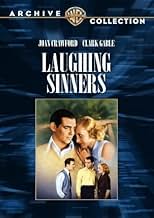
A Salvation Army worker recruits a suicidal cafe dancer.A Salvation Army worker recruits a suicidal cafe dancer.A Salvation Army worker recruits a suicidal cafe dancer.
- Director
- Writers
- Stars
- Awards
- 1 win total


Henry Armetta
- Tony
- (uncredited)
Jack Baxley
- Waiter
- (uncredited)

Clara Blandick
- Salvation Army Woman
- (uncredited)
Sherry Hall
- Poker-Playing Salesman
- (uncredited)

Tenen Holtz
- Poker-Playing Salesman
- (uncredited)

Mary Ann Jackson
- Betty
- (uncredited)

Karen Morley
- Estelle Seldon (photo in newspaper)
- (uncredited)
- Director
- Writers
- All cast & crew
- Production, box office & more at IMDbPro
5.6901
1
2
3
4
5
6
7
8
9
10
Featured reviews
Temptation / Salvation
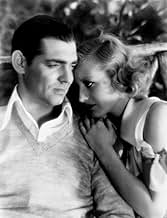
"Laughing sinners" was a pleasant surprise to me. I never knew what a good actress Joan Crawford was until I saw this film. I saw her rather exaggerating performance in "Grand Hotel", and a better performance in 1931's "Possessed", but here she is totally convincing and real. There are moments of great beauty, especially the scenes between Crawford and Clark Gable, moments when the film shows a timeless quality. Gable and Crawford are completely believable as the Salvation Army officers : sincere, vulnerable and intense. Clark Gable in a very unusual role - wise, calm, sensitive and understanding - It makes him powerful in a subtle way. Neil Hamilton is terrific especially in the scene - a very long uninterrupted take ! - when he tries to persuade and seduce Joan Crawford - for a night of bliss. Can he offer her salvation ?
See this for Joan's "farmer" dance! Incredible!
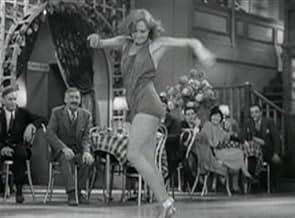
This may not be the greatest of the Crawford/Gable pairings, but their affinity for each other is obvious, and as always what is unsaid between them speaks volumes about their off-screen relationship. The film's other highlights include Joan's singularly eccentric "farmer" dance, for which she sports a false nose and beard! This was surely the inspiration for the Soggy Bottom Boys' "disguises" and dancing in the climax of 'O Brother Where Art Thou?'. In any event, the phenomenal originality of her performance provides another dimension to Crawford's enduring film legacy.
An Early Look At Crawford, Gable & Hamilton
Like a lot of early '30s film, I found this a pretty interesting short (72 minutes) story. This one is about a chorus girl-type who gets jilted, hooks up with a Salvation Army man, then is enticed back to the old sinful ways for a night with the man who jilted her and finally realizes she is better off with the good guy and the good morals.
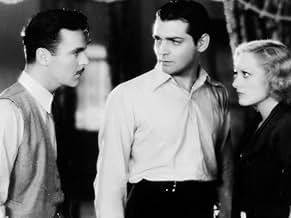
This is an early look at Joan Crawford, who is blonde here with huge eyes. Clark Gable is sans mustache and really looks young. Neil Hamilton, the third lead, is the same man who went on to play Commissioner Gordon in the Batman TV series three decades later. In here, he's the pagan bad guy.
This film goes a long way in portraying traveling salesmen as morally bankrupt people. Now why would they do that?!!
This is an early look at Joan Crawford, who is blonde here with huge eyes. Clark Gable is sans mustache and really looks young. Neil Hamilton, the third lead, is the same man who went on to play Commissioner Gordon in the Batman TV series three decades later. In here, he's the pagan bad guy.
This film goes a long way in portraying traveling salesmen as morally bankrupt people. Now why would they do that?!!
Follow The Fold And Stray No More
The second film that had Clark Gable and Joan Crawford together didn't start out that way. Laughing Sinners started out with Johnny Mack Brown as the Salvation Army Worker who saves Crawford and the film was completed when Louis B. Mayer saw the film and said reshoot it with Gable. This was after having seen them together in Dance Fools Dance where Gable was a villain and had only a couple of scenes with Crawford. This is according to Joan herself in a tribute she wrote in the Citadel Film Series Book, The Films of Clark Gable.
Crawford is definitely in her element as singer/dancer and good time Prohibition party girl who falls for the charms of Neil Hamilton, a traveling salesman. You know what a bunch of party animals they are, just ask Arthur Miller. Anyway Hamilton decides though he thinks Joan's great in the hay, he wants to marry the boss's daughter and does, leaving her flat and despondent.
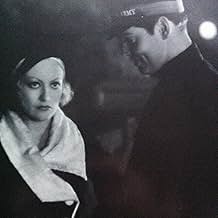
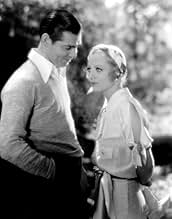
One night as she's ready to throw herself off a bridge, Salvation Army worker Clark Gable stops her. She likes him, but still has a yen for Hamilton and he, her.
Given Clark Gable's later image the casting of him as a Salvation Army worker is ludicrous. Mayer knew that and during the course of the film he gives him a nice prison background before he joined Edwin Booth's Army. The only way Gable could possibly fit the part. Anyway Mayer did it for the obvious chemistry between Gable and Crawford.
It's more Joan's picture than his though. Later on her talents as a dancer which brought her to film in the first place would be not seen at all. So Laughing Sinners is a treat in that way.
The film is based on a Broadway play Torch Song which ran for 87 performances the year before and starred Mayo Methot, Reed Brown, and Russell Hicks in the parts that Crawford, Hamilton, and Gable have. Coming over from the Broadway cast is Guy Kibbee in the role of another salesman, the only one to repeat his role from Broadway. Roscoe Karns and Cliff Edwards play another pair of salesmen and Marjorie Rambeau is Crawford's party girl friend.
Russell Hicks is definitely more my idea of a Salvation Army worker, but Gable's more my idea of a leading man opposite Joan Crawford.
Crawford is definitely in her element as singer/dancer and good time Prohibition party girl who falls for the charms of Neil Hamilton, a traveling salesman. You know what a bunch of party animals they are, just ask Arthur Miller. Anyway Hamilton decides though he thinks Joan's great in the hay, he wants to marry the boss's daughter and does, leaving her flat and despondent.
One night as she's ready to throw herself off a bridge, Salvation Army worker Clark Gable stops her. She likes him, but still has a yen for Hamilton and he, her.
Given Clark Gable's later image the casting of him as a Salvation Army worker is ludicrous. Mayer knew that and during the course of the film he gives him a nice prison background before he joined Edwin Booth's Army. The only way Gable could possibly fit the part. Anyway Mayer did it for the obvious chemistry between Gable and Crawford.
It's more Joan's picture than his though. Later on her talents as a dancer which brought her to film in the first place would be not seen at all. So Laughing Sinners is a treat in that way.
The film is based on a Broadway play Torch Song which ran for 87 performances the year before and starred Mayo Methot, Reed Brown, and Russell Hicks in the parts that Crawford, Hamilton, and Gable have. Coming over from the Broadway cast is Guy Kibbee in the role of another salesman, the only one to repeat his role from Broadway. Roscoe Karns and Cliff Edwards play another pair of salesmen and Marjorie Rambeau is Crawford's party girl friend.
Russell Hicks is definitely more my idea of a Salvation Army worker, but Gable's more my idea of a leading man opposite Joan Crawford.
A few excellent scenes make up for slow pace, predictable plot
Joan Crawford is a café dancer whose long term, long distance affair with traveling salesman Neil Hamilton comes crashing to a finish when he dumps her by leaving her a goodbye note written on the back of a menu. Despondent, she sets out to jump into the river, only to be stopped and saved (in more than one sense) by mustache-less Salvation Army officer Clark Gable. Next thing you know, Joan is sporting an Army uniform herself and singing hymns
.but sooner or later, Hamilton is bound to show up again. And what then?
The plot isn't much, but Crawford's performance is excellent as her character veers wildly from joyous flapper to reformed sinner. The scene where she reads Hamilton's note is stunningly sad. Gable never looks quite natural but does seem to contain a reservoir of strength and energy that lurks just beneath the surface of his peaceful character. –At least that's my view from this time and place; hard to imagine what effect his performance would have had on a 1931 audience just becoming familiar with that face, that screen presence.
The highlight of the film is almost certainly Joan's dance in an opening scene—donning a fake nose and beard and a farmer outfit, she humorously bounces around for a couple of minutes before shedding the costume and really cutting loose, to her audience's delight and her own obvious joy. It has to be said that Joan as flapper is quite a bit more exciting than Joan as saved woman.
Hamilton is superb in a thoroughly despicable role. Roscoe Karns and Guy Kibbee are fellow salesman and together they certainly portray the kind of sleazy crew who inspire good people to lock up their daughters.
Overall—no surprises but Crawford is certainly worth watching, especially the opening and closing minutes.
The plot isn't much, but Crawford's performance is excellent as her character veers wildly from joyous flapper to reformed sinner. The scene where she reads Hamilton's note is stunningly sad. Gable never looks quite natural but does seem to contain a reservoir of strength and energy that lurks just beneath the surface of his peaceful character. –At least that's my view from this time and place; hard to imagine what effect his performance would have had on a 1931 audience just becoming familiar with that face, that screen presence.
The highlight of the film is almost certainly Joan's dance in an opening scene—donning a fake nose and beard and a farmer outfit, she humorously bounces around for a couple of minutes before shedding the costume and really cutting loose, to her audience's delight and her own obvious joy. It has to be said that Joan as flapper is quite a bit more exciting than Joan as saved woman.
Hamilton is superb in a thoroughly despicable role. Roscoe Karns and Guy Kibbee are fellow salesman and together they certainly portray the kind of sleazy crew who inspire good people to lock up their daughters.
Overall—no surprises but Crawford is certainly worth watching, especially the opening and closing minutes.


Did you know
- TriviaModern sources state that a preview of the film had such a bad reception that M-G-M production head Irving Thalberg decided to re-shoot part of the picture, dropping Johnny Mack Brown as Carl and re-shoot it with Clark Gable. At that point, Brown's career in mainstream feature films at MGM ended and he transitioned to 'B' westerns.
- GoofsOne year after Howard marries his wealthy boss's daughter he is still a traveling salesman, staying in cheap hotels. The only reason for him to do so is in order for him to meet Ivy again, but it is absurd that his socialite wife would want her husband doing such a job. He could have encountered Ivy in some other way.
- Quotes
Man Boarding Train: [annoyed and impatiently waiting to get by a kissing Ivy and Howdy] Well, anytime you get through.
Ivy 'Bunny' Stevens: Mister, we never get through.
- ConnectionsFeatured in Fast Workers (1933)
- Soundtracks(What Can I Do?) I Love That Man
(uncredited)
Music by Martin Broones
Lyrics by Arthur Freed
Sung by Joan Crawford at the cabaret
Details
- Release date
- Country of origin
- Languages
- Also known as
- Complete Surrender
- Filming locations
- Production company
- See more company credits at IMDbPro
Box office
- Budget
- $338,000 (estimated)
- Runtime
- 1h 12m(72 min)
- Color
Contribute to this page
Suggest an edit or add missing content