
Rich party girl sets her eyes on a young attorney.Rich party girl sets her eyes on a young attorney.Rich party girl sets her eyes on a young attorney.
- Director
- Writers
- Stars


Sayre Dearing
- Kay's Friend
- (uncredited)

Geraldine Dvorak
- Party Guest
- (uncredited)

Jay Eaton
- Party Guest
- (uncredited)

Adolph Faylauer
- Party Guest
- (uncredited)

Dick Gordon
- Party Guest
- (uncredited)

Thelma Hill
- Friend
- (uncredited)

Lloyd Ingraham
- Judge Drake
- (uncredited)
Jane Keckley
- Office Cleaning Woman
- (uncredited)

Fred Kelsey
- Policeman
- (uncredited)

Marian Marsh
- Kay's Friend
- (uncredited)
- Director
- Writers
- All cast & crew
- Production, box office & more at IMDbPro
5.7471
1
2
3
4
5
6
7
8
9
10
Featured reviews
What could have been
While not a particularly good film, "The Naughty Flirt" does have some enjoyable moments. Traces of director Cline's comedy short background can be found in several scenes--most of the comedy being visual. Myrna Loy is good as the scheming one, with her best movie years still ahead. Alice White does well in a role more suited to her talents. The studio tried to turn her into this big song and dance star with the advent of talkies but she was much more comfortable in comic roles, as she displays in this movie and later ones. This was her last First-National film and by this time nobody cared. She did make a reasonably successful comeback a few years later, in comedy roles, which she should have been given from the start. The supporting players also do well but the film, as a whole, does not. The cast tries hard but is overcome by weak material. Still, it's worth a peek.
Early Myrna Loy supporting Alice White
Spoiled rich girl Kay Elliott (Alice White) can't settle down, or even settle on one guy. In Naughty Flirt, she battles with Alan Ward (Paul Page -only made a few films) and Linda Gregory (Myrna Loy, three years before the Thin Man series) Alice White made many films, but none seem to be well known. She had been in the original, silent "Gentlemen Prefer Blondes" 1928. White appeared in more than her share of movies with suggestive names (Naughty Baby, Hot Stuff, Lingerie, Playing Around) This is a good story, but you can tell it was made just as sound was coming in play - they were heavy on the eye makeup, and they even use subtitle cards several times. Also a music track playing under most of the dialogue. Keep an eye out for Fred Kelsey as the cop at the beginning - made a career out of playing the policeman (the Man Who Came to Dinner, Larceny Inc, the Bride Walks Out)
What a delightful time capsule!
This was flapper Alice White's last starring role at Warner Brothers as the roaring twenties have ceased to roar and the Great Depression rolls in. This seems to be, in fact, the roaring twenties' last hurrah a year out from that decade.
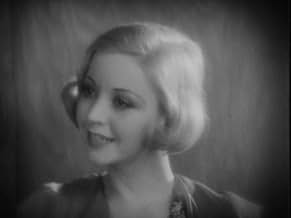
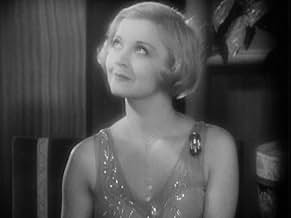
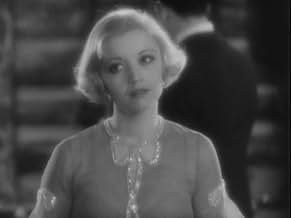
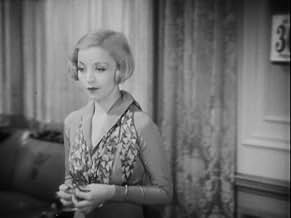
Alice White plays rich spoiled party girl Kay Elliott who pals around with a likewise rich partying crowd. One night she and her friends are arrested for disorderly conduct and taken to night court. There young attorney Alan Ward is observing the proceedings of the night court as part of his own continuing education when Kay and her friends are brought in. The judge gives Kay a small fine, and then she is about to marry fellow idler Jack Gregory when Alan intervenes and whisks her away. This is partly because he is attracted to her and partly because he works for Kay's dad and doesn't want her to make a big mistake. Gregory is upset about this for more reason than just love - he and his sister (Myrna Loy) are broke, and they want to get their hands on the Gregory millions. Complications ensue.
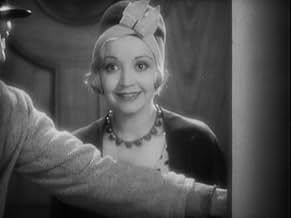
The reason to watch this is not the plot, although it was better than I anticipated, or the acting - the only person in the cast who will have an acting career in three years will be Myrna Loy, and she is very much supporting cast here. It is all of the things that were so very Jazz Age or just plain obsolete that show up here - ink wells, dictaphones with cylinders, the ubiquitous fox stoles and cloche hats, and men wearing tuxedos at every public event.
This is also the death rattle of the Vitaphone sound on disc system. Cameras could not move when using Vitaphone, so everything is a series of still shots. But sometimes the director would want motion or want a distance shot. For example, at one point Alan Ward is retiring for the night and there is a long tracking shot that takes the camera from down the hall up to Ward. He is heard singing from a distance, but his lips are not moving! That was because, to get this shot, silent film had to be used and in that case it was improperly done. There are other such shots and those are made with peoples' heads turned so that you cannot see their mouths move out of sync with obviously dubbed conversation.
It's all a very light and airy confection and I'd recommend it, especially if you are a film history buff.
Alice White plays rich spoiled party girl Kay Elliott who pals around with a likewise rich partying crowd. One night she and her friends are arrested for disorderly conduct and taken to night court. There young attorney Alan Ward is observing the proceedings of the night court as part of his own continuing education when Kay and her friends are brought in. The judge gives Kay a small fine, and then she is about to marry fellow idler Jack Gregory when Alan intervenes and whisks her away. This is partly because he is attracted to her and partly because he works for Kay's dad and doesn't want her to make a big mistake. Gregory is upset about this for more reason than just love - he and his sister (Myrna Loy) are broke, and they want to get their hands on the Gregory millions. Complications ensue.
The reason to watch this is not the plot, although it was better than I anticipated, or the acting - the only person in the cast who will have an acting career in three years will be Myrna Loy, and she is very much supporting cast here. It is all of the things that were so very Jazz Age or just plain obsolete that show up here - ink wells, dictaphones with cylinders, the ubiquitous fox stoles and cloche hats, and men wearing tuxedos at every public event.
This is also the death rattle of the Vitaphone sound on disc system. Cameras could not move when using Vitaphone, so everything is a series of still shots. But sometimes the director would want motion or want a distance shot. For example, at one point Alan Ward is retiring for the night and there is a long tracking shot that takes the camera from down the hall up to Ward. He is heard singing from a distance, but his lips are not moving! That was because, to get this shot, silent film had to be used and in that case it was improperly done. There are other such shots and those are made with peoples' heads turned so that you cannot see their mouths move out of sync with obviously dubbed conversation.
It's all a very light and airy confection and I'd recommend it, especially if you are a film history buff.
Fun, Flapper Comedy with Charming Alice White
"The Naughty Flirt" is a delightful period piece that evokes the (relatively) care-free life many of the very rich maintained even in aftermath of the 1929 stock market crash.
Alice White plays the spoiled socialite Miss Katherine 'Kay' Elliott and does a very charming comic turn. This is a Pre-Code film in which the figures of all the female beauties are provocatively shown off in revealing attire in the party scenes. While the sex - including a somewhat surprising spanking scene - is played up, the prohibition age drinking is can only be suggested.
The film starts with a gay gang of young socialites in the back of a Police Paddy Wagon headed to the police station to be booked on creating a public nuisance. It seems pretty obvious they've all been drinking as well as dancing at a riotous rooftop party.
White as Kay is quite the unflappable flapper, a Daddy's girl with an income of $100,000 a year. Imagine what that could buy in 1931! She's been kicked out of every fine private school her father could get her into and is the dedicated decadent until her world is turned around by a straight-laced country-boy-turned lawyer who happens to work for her Dad's firm.
It's a classic case of opposites attract - with a dash of Taming of the Shrew. The two are instantly drawn to each other starting when the lawyer, Alan Ward (Paul Page), - studiously attending a session of night court at the police station - first lays eyes on the naughty platinum blonde.
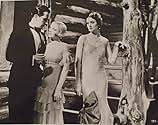
Their romance is tested by a scheme masterminded by Linda Gregory (Myrna Loy) and her brother Jack (Douglas Gilmore) who wants to marry her for money. These dark characters hope to recover from the loss of their fortune in the stock market crash.
There are also trust issues as regular guy Alan attempts to gage the loyalty of this 'belle of the ball' while taking stock of her seemingly countless admirers.
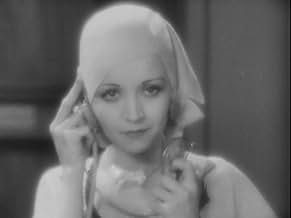
I saw this on TCM which has a very high technical standard. I'm always impressed at how quickly sound movies progressed. Just four years into the sound era, there's a scene with a wax cylinder Dictaphone in which we listen in as White puts on headphones and hears the recording of Alan speaking for dictation and then get sidetracked into another far more personal conversation with a friend drops into his office unexpectedly. The sound is played back in the scratchy Dictaphone mode - differentiating it from the regular sound.
This is a fun and funny story, providing a glimpse into a fascinating age (especially if you were rich) where Jazz Age attitudes intersected with an elite American Anglophile culture.
Alice White plays the spoiled socialite Miss Katherine 'Kay' Elliott and does a very charming comic turn. This is a Pre-Code film in which the figures of all the female beauties are provocatively shown off in revealing attire in the party scenes. While the sex - including a somewhat surprising spanking scene - is played up, the prohibition age drinking is can only be suggested.
The film starts with a gay gang of young socialites in the back of a Police Paddy Wagon headed to the police station to be booked on creating a public nuisance. It seems pretty obvious they've all been drinking as well as dancing at a riotous rooftop party.
White as Kay is quite the unflappable flapper, a Daddy's girl with an income of $100,000 a year. Imagine what that could buy in 1931! She's been kicked out of every fine private school her father could get her into and is the dedicated decadent until her world is turned around by a straight-laced country-boy-turned lawyer who happens to work for her Dad's firm.
It's a classic case of opposites attract - with a dash of Taming of the Shrew. The two are instantly drawn to each other starting when the lawyer, Alan Ward (Paul Page), - studiously attending a session of night court at the police station - first lays eyes on the naughty platinum blonde.
Their romance is tested by a scheme masterminded by Linda Gregory (Myrna Loy) and her brother Jack (Douglas Gilmore) who wants to marry her for money. These dark characters hope to recover from the loss of their fortune in the stock market crash.
There are also trust issues as regular guy Alan attempts to gage the loyalty of this 'belle of the ball' while taking stock of her seemingly countless admirers.
I saw this on TCM which has a very high technical standard. I'm always impressed at how quickly sound movies progressed. Just four years into the sound era, there's a scene with a wax cylinder Dictaphone in which we listen in as White puts on headphones and hears the recording of Alan speaking for dictation and then get sidetracked into another far more personal conversation with a friend drops into his office unexpectedly. The sound is played back in the scratchy Dictaphone mode - differentiating it from the regular sound.
This is a fun and funny story, providing a glimpse into a fascinating age (especially if you were rich) where Jazz Age attitudes intersected with an elite American Anglophile culture.
Lively Alice White Vehicle
.... that showcases her comedic skills and vibrant personality is eventually sunk by poor script and blah costar Paul Page (who resembles Fredric March). Miss White and Myrna Loy, however, are fun. White was saddled with lousy scripts in her brief starring career. She could have and should have been a rival to Clara Bow or Jean Harlow. She was terrific in Employees' Entrance but continued to slide anyway. Such is Hollywood. Catch her in Show Girl in Hollywood---she's good in that one too!!


Did you know
- Quotes
Invitation: Miss Kay Elliott / requests the honor of your presence / at an informal party given / in Honor of her Annual Expulsion / from Miss Baynor's Select School / for Young Ladies // Embassy Roof / Saturday May third / ten P. M. until?---
- SoundtracksUntitled Song
(uncredited)
Composer unknown (probably Sam H. Stept)
Played during the opening credits and often as background music
Played as dance music at the country club and sung ("I often wonder if you cared ...") by an unidentified trio
Hummed by Paul Page
Details
- Runtime
- 56m
- Color
Contribute to this page
Suggest an edit or add missing content