
Rich party girl sets her eyes on a young attorney.Rich party girl sets her eyes on a young attorney.Rich party girl sets her eyes on a young attorney.
- Director
- Writers
- Stars


Sayre Dearing
- Kay's Friend
- (uncredited)

Geraldine Dvorak
- Party Guest
- (uncredited)

Jay Eaton
- Party Guest
- (uncredited)

Adolph Faylauer
- Party Guest
- (uncredited)

Dick Gordon
- Party Guest
- (uncredited)

Thelma Hill
- Friend
- (uncredited)

Lloyd Ingraham
- Judge Drake
- (uncredited)
Jane Keckley
- Office Cleaning Woman
- (uncredited)

Fred Kelsey
- Policeman
- (uncredited)

Marian Marsh
- Kay's Friend
- (uncredited)
- Director
- Writers
- All cast & crew
- Production, box office & more at IMDbPro
5.7471
1
2
3
4
5
6
7
8
9
10
Featured reviews
Early Myrna Loy supporting Alice White
Spoiled rich girl Kay Elliott (Alice White) can't settle down, or even settle on one guy. In Naughty Flirt, she battles with Alan Ward (Paul Page -only made a few films) and Linda Gregory (Myrna Loy, three years before the Thin Man series) Alice White made many films, but none seem to be well known. She had been in the original, silent "Gentlemen Prefer Blondes" 1928. White appeared in more than her share of movies with suggestive names (Naughty Baby, Hot Stuff, Lingerie, Playing Around) This is a good story, but you can tell it was made just as sound was coming in play - they were heavy on the eye makeup, and they even use subtitle cards several times. Also a music track playing under most of the dialogue. Keep an eye out for Fred Kelsey as the cop at the beginning - made a career out of playing the policeman (the Man Who Came to Dinner, Larceny Inc, the Bride Walks Out)
What a delightful time capsule!
This was flapper Alice White's last starring role at Warner Brothers as the roaring twenties have ceased to roar and the Great Depression rolls in. This seems to be, in fact, the roaring twenties' last hurrah a year out from that decade.
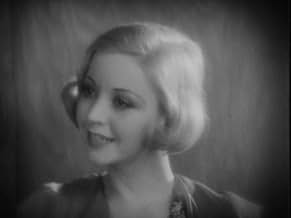
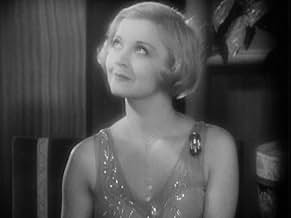
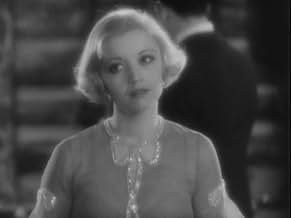
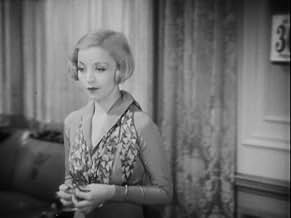
Alice White plays rich spoiled party girl Kay Elliott who pals around with a likewise rich partying crowd. One night she and her friends are arrested for disorderly conduct and taken to night court. There young attorney Alan Ward is observing the proceedings of the night court as part of his own continuing education when Kay and her friends are brought in. The judge gives Kay a small fine, and then she is about to marry fellow idler Jack Gregory when Alan intervenes and whisks her away. This is partly because he is attracted to her and partly because he works for Kay's dad and doesn't want her to make a big mistake. Gregory is upset about this for more reason than just love - he and his sister (Myrna Loy) are broke, and they want to get their hands on the Gregory millions. Complications ensue.
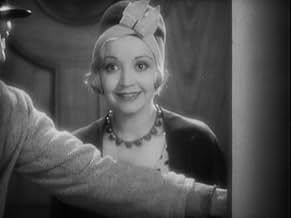
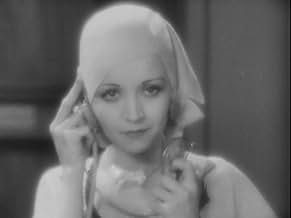
The reason to watch this is not the plot, although it was better than I anticipated, or the acting - the only person in the cast who will have an acting career in three years will be Myrna Loy, and she is very much supporting cast here. It is all of the things that were so very Jazz Age or just plain obsolete that show up here - ink wells, dictaphones with cylinders, the ubiquitous fox stoles and cloche hats, and men wearing tuxedos at every public event.
This is also the death rattle of the Vitaphone sound on disc system. Cameras could not move when using Vitaphone, so everything is a series of still shots. But sometimes the director would want motion or want a distance shot. For example, at one point Alan Ward is retiring for the night and there is a long tracking shot that takes the camera from down the hall up to Ward. He is heard singing from a distance, but his lips are not moving! That was because, to get this shot, silent film had to be used and in that case it was improperly done. There are other such shots and those are made with peoples' heads turned so that you cannot see their mouths move out of sync with obviously dubbed conversation.
It's all a very light and airy confection and I'd recommend it, especially if you are a film history buff.
Alice White plays rich spoiled party girl Kay Elliott who pals around with a likewise rich partying crowd. One night she and her friends are arrested for disorderly conduct and taken to night court. There young attorney Alan Ward is observing the proceedings of the night court as part of his own continuing education when Kay and her friends are brought in. The judge gives Kay a small fine, and then she is about to marry fellow idler Jack Gregory when Alan intervenes and whisks her away. This is partly because he is attracted to her and partly because he works for Kay's dad and doesn't want her to make a big mistake. Gregory is upset about this for more reason than just love - he and his sister (Myrna Loy) are broke, and they want to get their hands on the Gregory millions. Complications ensue.
The reason to watch this is not the plot, although it was better than I anticipated, or the acting - the only person in the cast who will have an acting career in three years will be Myrna Loy, and she is very much supporting cast here. It is all of the things that were so very Jazz Age or just plain obsolete that show up here - ink wells, dictaphones with cylinders, the ubiquitous fox stoles and cloche hats, and men wearing tuxedos at every public event.
This is also the death rattle of the Vitaphone sound on disc system. Cameras could not move when using Vitaphone, so everything is a series of still shots. But sometimes the director would want motion or want a distance shot. For example, at one point Alan Ward is retiring for the night and there is a long tracking shot that takes the camera from down the hall up to Ward. He is heard singing from a distance, but his lips are not moving! That was because, to get this shot, silent film had to be used and in that case it was improperly done. There are other such shots and those are made with peoples' heads turned so that you cannot see their mouths move out of sync with obviously dubbed conversation.
It's all a very light and airy confection and I'd recommend it, especially if you are a film history buff.
Alice White is adorable
What a delightful little bit of pre-Code confectionery this is. Alice White is simply adorable, there are lots of playful moments, and Myrna Loy schemes in a supporting role. White plays the wild child of a rich lawyer, partying late and having romances with a lot of different men. When she's on the verge of marrying one of them on the spur of the moment, he has one of his employees (Paul Page) get her out of there. The two of them hit it off, but face challenges in not only her playgirl past, but also in a brother/sister duo (Douglas Gilmore and Myrna Loy) plotting to have Gilmore marry her for her money.
The innuendo in this film is pretty innocent, but as in other pre-Code films, I like the acknowledgement of women's sexuality. That has an honesty about that, even if it was also meant to sell tickets. The plot is simple and the run-time is a brisk 56 minutes, but to me that was a good thing. The flapper scenes - being hauled in by the police after a late night party, with playful defiance of authority in the dialogue - were entertaining. The party scenes - the 'Cinderella dance', and then later dancing the night away to forget heartache - were as well. The clothing, hats, and cars are all beautiful. It's White's movie, but the scene where Loy hatches a scheme to get Page up into her room and into a compromising position is a good one.
In a scene that may define whether you'll like or dislike this movie, White gets a spanking from Page when he discovers she'd made a bet that she could get him to go home with her before midnight, and that she has a history of doing that kind of thing. I found it an amusing little window into the period as the tone was light, then literally laughed out loud at the intertitle which followed, which said "A good old fashioned spanking was the turning point in the life of an ultra-modern girl." However, if that sort of thing is likely to bother you, I'd recommend skipping this film. On the other hand, if you like Alice White, or pre-Code silliness in general, you'll probably like it enough to warrant spending an hour.
The innuendo in this film is pretty innocent, but as in other pre-Code films, I like the acknowledgement of women's sexuality. That has an honesty about that, even if it was also meant to sell tickets. The plot is simple and the run-time is a brisk 56 minutes, but to me that was a good thing. The flapper scenes - being hauled in by the police after a late night party, with playful defiance of authority in the dialogue - were entertaining. The party scenes - the 'Cinderella dance', and then later dancing the night away to forget heartache - were as well. The clothing, hats, and cars are all beautiful. It's White's movie, but the scene where Loy hatches a scheme to get Page up into her room and into a compromising position is a good one.
In a scene that may define whether you'll like or dislike this movie, White gets a spanking from Page when he discovers she'd made a bet that she could get him to go home with her before midnight, and that she has a history of doing that kind of thing. I found it an amusing little window into the period as the tone was light, then literally laughed out loud at the intertitle which followed, which said "A good old fashioned spanking was the turning point in the life of an ultra-modern girl." However, if that sort of thing is likely to bother you, I'd recommend skipping this film. On the other hand, if you like Alice White, or pre-Code silliness in general, you'll probably like it enough to warrant spending an hour.
What could have been
While not a particularly good film, "The Naughty Flirt" does have some enjoyable moments. Traces of director Cline's comedy short background can be found in several scenes--most of the comedy being visual. Myrna Loy is good as the scheming one, with her best movie years still ahead. Alice White does well in a role more suited to her talents. The studio tried to turn her into this big song and dance star with the advent of talkies but she was much more comfortable in comic roles, as she displays in this movie and later ones. This was her last First-National film and by this time nobody cared. She did make a reasonably successful comeback a few years later, in comedy roles, which she should have been given from the start. The supporting players also do well but the film, as a whole, does not. The cast tries hard but is overcome by weak material. Still, it's worth a peek.
An Adorable Flirt
Alice White was an adorable flapper, whose career was over before it started. She was First National's answer to Clara Bow but she didn't have the longevity of the red headed "It" girl. 1931 started with "The Naughty Flirt", one of her best films and ended with "Murder at Midnight", in which, although billed prominently, she was only given about two decent scenes.
The plot is 60 minutes of frivolous fun with White doing what she does best - being adorably flirty and making every man her slave. When Kay (Alice White) and her gang are hauled into night court for disorderly conduct, she meets Alan Ward (Paul Page) an associate with her father's law firm and it doesn't take him long to fall under her spell. She already has a persistent suitor in Jack Gregory (Douglas Gilmore) who is always asking Kay to marry him. He, along with his scheming sister, Linda (Myrna Loy) have ulterior motives - they have been wiped out in the stock market crash and hope that if Jack can marry Kay their financial worries will be at an end.
The "Cinderella Dance" is one of the film's highlights - all the girls take off one of their shoes, put it in the middle of the ballroom and then the boys have to pick one and dance with it's owner. White, who made her name with a couple of excellent musicals from the early talkie era ("Broadway Babies" (1929) and "Show Girl in Hollywood" (1930)) is not asked to sing or dance here which is a pity. She also gets a run for her money from Myrna Loy as the sultry Linda. Why it took so long for Loy to "make it" (1933's "Animal Kingdom" was her big break) is one of Hollywood's real mysteries. However White's cutie pie acting wins through - she is impossible to resist.
Although she had a very hectic private life, maybe what happened to Alice White were films like "The Naughty Flirt". 1931 was one of the worst years of the depression and with a title like "The Naughty Flirt", reminiscent of a jazzy, carefree past, the movie going public may have been turned off. In this year of unemployment and breadlines, if films started out with scenes of high living ("Bad Company" and "Dance Fools, Dance") audiences wanted to see stars really suffer before realising that the simple life was the best.
Highly Recommended.
The plot is 60 minutes of frivolous fun with White doing what she does best - being adorably flirty and making every man her slave. When Kay (Alice White) and her gang are hauled into night court for disorderly conduct, she meets Alan Ward (Paul Page) an associate with her father's law firm and it doesn't take him long to fall under her spell. She already has a persistent suitor in Jack Gregory (Douglas Gilmore) who is always asking Kay to marry him. He, along with his scheming sister, Linda (Myrna Loy) have ulterior motives - they have been wiped out in the stock market crash and hope that if Jack can marry Kay their financial worries will be at an end.
The "Cinderella Dance" is one of the film's highlights - all the girls take off one of their shoes, put it in the middle of the ballroom and then the boys have to pick one and dance with it's owner. White, who made her name with a couple of excellent musicals from the early talkie era ("Broadway Babies" (1929) and "Show Girl in Hollywood" (1930)) is not asked to sing or dance here which is a pity. She also gets a run for her money from Myrna Loy as the sultry Linda. Why it took so long for Loy to "make it" (1933's "Animal Kingdom" was her big break) is one of Hollywood's real mysteries. However White's cutie pie acting wins through - she is impossible to resist.
Although she had a very hectic private life, maybe what happened to Alice White were films like "The Naughty Flirt". 1931 was one of the worst years of the depression and with a title like "The Naughty Flirt", reminiscent of a jazzy, carefree past, the movie going public may have been turned off. In this year of unemployment and breadlines, if films started out with scenes of high living ("Bad Company" and "Dance Fools, Dance") audiences wanted to see stars really suffer before realising that the simple life was the best.
Highly Recommended.


Did you know
- Quotes
Invitation: Miss Kay Elliott / requests the honor of your presence / at an informal party given / in Honor of her Annual Expulsion / from Miss Baynor's Select School / for Young Ladies // Embassy Roof / Saturday May third / ten P. M. until?---
- SoundtracksUntitled Song
(uncredited)
Composer unknown (probably Sam H. Stept)
Played during the opening credits and often as background music
Played as dance music at the country club and sung ("I often wonder if you cared ...") by an unidentified trio
Hummed by Paul Page
Details
- Runtime
- 56m
- Color
Contribute to this page
Suggest an edit or add missing content