
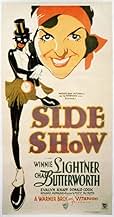
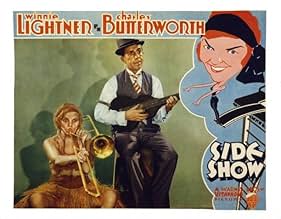
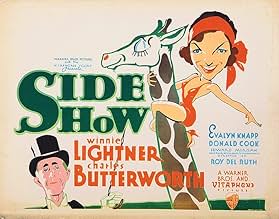
A sideshow performer attempts to prevent her little sister from joining the circus life.A sideshow performer attempts to prevent her little sister from joining the circus life.A sideshow performer attempts to prevent her little sister from joining the circus life.
- Director
- Writers
- Stars



Matthew Betz
- Tom Whalen
- (as Mathew Betz)


Vince Barnett
- The Great Santini
- (uncredited)

Louise Carver
- Dolores - Bearded Lady
- (uncredited)

Bobby Dunn
- Little Man
- (uncredited)

June Gittelson
- Fat Girl Getting Weight Estimated
- (uncredited)

Lew Harvey
- Masher
- (uncredited)
Tommy Hicks
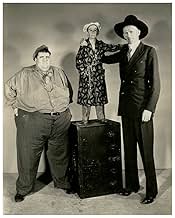
- Fat Boy
- (uncredited)

Otto Hoffman
- Otto - Seated on Sheriff's Left
- (uncredited)

Arthur Hoyt
- Dr. Martin
- (uncredited)
Bynunsky Hyman
- Fire Eater
- (uncredited)

George Magrill
- Roustabout
- (uncredited)
- Director
- Writers
- All cast & crew
- Production, box office & more at IMDbPro
5.2201
1
2
3
4
5
6
7
8
9
10
Featured reviews
Circus picture with personal drama
Guy Kibbee runs a traveling circus that barely makes any money. Since Kibbee is usually drunk, the whole show is really run by versatile circus assistant Winnie Lightner, who fills in wherever needed, including doing the flaming high dive into a shallow pool when the regular diver is out sick.
Lightner has an understanding with long time boyfriend Donald Woods, who works as a barker. Fellow circus employee Charles Butterworth has the hots for Lightner himself, although she considers him strictly low comic relief.
The action really starts when Lightner's kid sister Evelyn Knapp shows up and is immediately drawn to dangerously attractive Woods. Will Woods take advantage of her youthful crush? Or stay true to his devoted girl Winnie?
The plot isn't that great but at least the picture doesn't take itself too seriously. Butterworth has a few funny lines but his humorous moments are mainly rather tame bits like appearing in his nightgown while still wearing his hat. Woods is manly, Knapp is very cute, Kibbee is blustery as the boss who is generally overruled.
Winnie Lightner is clearly our heroine, the talented and dedicated woman holding the whole show together - and while she does fine, neither the plot nor the dialog really give her much to work with.
Mildly entertaining but mostly interesting for the cast.
Lightner has an understanding with long time boyfriend Donald Woods, who works as a barker. Fellow circus employee Charles Butterworth has the hots for Lightner himself, although she considers him strictly low comic relief.
The action really starts when Lightner's kid sister Evelyn Knapp shows up and is immediately drawn to dangerously attractive Woods. Will Woods take advantage of her youthful crush? Or stay true to his devoted girl Winnie?
The plot isn't that great but at least the picture doesn't take itself too seriously. Butterworth has a few funny lines but his humorous moments are mainly rather tame bits like appearing in his nightgown while still wearing his hat. Woods is manly, Knapp is very cute, Kibbee is blustery as the boss who is generally overruled.
Winnie Lightner is clearly our heroine, the talented and dedicated woman holding the whole show together - and while she does fine, neither the plot nor the dialog really give her much to work with.
Mildly entertaining but mostly interesting for the cast.
Doesn't Hold Up Well
Winnie Lightner seems very game. She looks like someone who'd be a lot of fun. She's likable and seems up to pretty much any task. But she doesn't come across as someone who could carry a movie -- though she's called to here.
Donald Cook, on the other hand, seems very modern as her shiftless boyfriend. He was an interesting leading man who never really made it big. One wonders why.
The rest of the cast includes many character performers such as Guy Kibbee who worked in Hollywood for decades. I think I a caught a glimpse of the straying husband from "Freaks" (a totally different and infinitely better movie also with a circus theme.)
Donald Cook, on the other hand, seems very modern as her shiftless boyfriend. He was an interesting leading man who never really made it big. One wonders why.
The rest of the cast includes many character performers such as Guy Kibbee who worked in Hollywood for decades. I think I a caught a glimpse of the straying husband from "Freaks" (a totally different and infinitely better movie also with a circus theme.)
The Barker Reimagined as a Vaudeville Star Vehicle
Film buffs know that there were three official film versions of the play THE BARKER, namely THE BARKER (1928), HOOP-LA (1933) and DIAMOND HORSESHOE (1945), and real film buffs know that Japanese director Yasujiro Ozu made two unofficial remakes, A STORY OF FLOATING WEEDS (1934) and FLOATING WEEDS (1959). But do they know about SIDE SHOW?
Consider this: SIDE SHOW features a traveling carny show called Col. Gowdy's Big City Shows. The barker (Donald Cook) is going with a girl in the show (Winnie Lightner) who he promises to marry but never does. Lightner is putting her younger sister (Evalyn Knapp) through school, and one day Knapp shows up unexpectedly at the show. Lightner tells Cook that while Knapp is around, they have to pretend that they don't have a relationship. She tells the innocent young Knapp that she can not stay with the show, even though Knapp points out that it's summer and there is no school. Lightner is called away for a moment, and while she's gone Knapp asks Col. Gowdy if she can stay, and he says it's OK with him, and when Lightner returns this endorsement from the Colonel is enough for her to relent. Cook starts to fool around with Knapp in a cynical way but then falls in love for real. Later, Knapp is doing a hoochie coochie dance while Cook shills for the show, when a local boy gets fresh with her. Cook starts a fight with the local, all the carny folks yell, "Hey, Rube!" and there's a royal free-for-all involving the whole carny. When the affair between Cook and Knapp is discovered, Lightner makes a big stink, and the two lovers leave the show. Wow. You'll find all these details, some slightly recast, in THE BARKER (and in the close remake HOOP-LA), even the name of the show. This isn't quite a remake of THE BARKER, and the very perfunctory and tacked-on ending here isn't similar to the original film (or the later HOOP-LA alternate), but there are an amazing number of similarities. The explanation is that THE BARKER was made by Warners and so they were free to cannibalize it. The name of the show may have been reused so that existing footage or props showing the name could be reused.
But this film isn't primarily a romantic drama, but more an excuse as a vehicle for three stars, only one of which is part of the love triangle. There's Charles Butterworth, who is given a lot of amusing business, and also has a number of lines that he can only have written himself. Some examples (said more-or-less apropos of nothing): "I know all about love. I learned about love from the state highway commissioner." "Well, Colonel, take it or leave it, I'm going for a bus ride." And "I believe I'd like to have a nice bag of stuffed figs." At one point he reads a long self-composed love poem to Lightner, which gets sidetracked into describing a sandwich.
Then, of course, there's Winnie Lightner, the supposed star of the film, who does some rather raw routines not related to the plot. She sings a long song in a hula outfit. (Hawaiian music is used as background music throughout the film to fairly good effect, another carryover from THE BARKER.) The song is about a girl whose smile says "Take a look at this," with Lightner (filmed from the navel up) raising her grass skirt at this repeated line. In another scene she impersonates a high diver and so as not to reveal her (supposedly) feminine voice, she talks in deaf-and-dumb hand signals. These are performed very fast, but one can catch a glimpse of not only "the finger" but the classic symbol of the forefinger of one hand poked through the circled thumb and forefinger of the other. Another scene has her playing a geek in black-face, making amusing geek noises.
Kibbee, the third star player, is Colonel Gowdy, and though he has no vaudeville routines as the others do, the character is built up to give him the sort of scenes that he does best; drunk scenes, and a heart-to-heart with Lightner, who is like a daughter to him.
Then there's Vince Barnett (a journeyman doofus I always enjoy) in a small part as The Great Santini. Yup, The Great Santini. One has to ask, was Pat Conroy, the author of the novel on which the film of that name was based, thinking of this film when he used the name, or was that name used in various early films and/or plays as a generic character name. Finally, the film has a nice carnival atmosphere, crowds on the midway, etc. There's a great shot taken from the Ferris wheel as it swings down and reveals the actors on the side-show stage. Visually, there is no stinting.
This is one of those early-Thirties programmers where an anemic plot is used as a background for a few musical numbers, some comedy routines and anything else that comes to mind, all jammed into 65 minutes. In this case, the combination is very agreeable.
Consider this: SIDE SHOW features a traveling carny show called Col. Gowdy's Big City Shows. The barker (Donald Cook) is going with a girl in the show (Winnie Lightner) who he promises to marry but never does. Lightner is putting her younger sister (Evalyn Knapp) through school, and one day Knapp shows up unexpectedly at the show. Lightner tells Cook that while Knapp is around, they have to pretend that they don't have a relationship. She tells the innocent young Knapp that she can not stay with the show, even though Knapp points out that it's summer and there is no school. Lightner is called away for a moment, and while she's gone Knapp asks Col. Gowdy if she can stay, and he says it's OK with him, and when Lightner returns this endorsement from the Colonel is enough for her to relent. Cook starts to fool around with Knapp in a cynical way but then falls in love for real. Later, Knapp is doing a hoochie coochie dance while Cook shills for the show, when a local boy gets fresh with her. Cook starts a fight with the local, all the carny folks yell, "Hey, Rube!" and there's a royal free-for-all involving the whole carny. When the affair between Cook and Knapp is discovered, Lightner makes a big stink, and the two lovers leave the show. Wow. You'll find all these details, some slightly recast, in THE BARKER (and in the close remake HOOP-LA), even the name of the show. This isn't quite a remake of THE BARKER, and the very perfunctory and tacked-on ending here isn't similar to the original film (or the later HOOP-LA alternate), but there are an amazing number of similarities. The explanation is that THE BARKER was made by Warners and so they were free to cannibalize it. The name of the show may have been reused so that existing footage or props showing the name could be reused.
But this film isn't primarily a romantic drama, but more an excuse as a vehicle for three stars, only one of which is part of the love triangle. There's Charles Butterworth, who is given a lot of amusing business, and also has a number of lines that he can only have written himself. Some examples (said more-or-less apropos of nothing): "I know all about love. I learned about love from the state highway commissioner." "Well, Colonel, take it or leave it, I'm going for a bus ride." And "I believe I'd like to have a nice bag of stuffed figs." At one point he reads a long self-composed love poem to Lightner, which gets sidetracked into describing a sandwich.
Then, of course, there's Winnie Lightner, the supposed star of the film, who does some rather raw routines not related to the plot. She sings a long song in a hula outfit. (Hawaiian music is used as background music throughout the film to fairly good effect, another carryover from THE BARKER.) The song is about a girl whose smile says "Take a look at this," with Lightner (filmed from the navel up) raising her grass skirt at this repeated line. In another scene she impersonates a high diver and so as not to reveal her (supposedly) feminine voice, she talks in deaf-and-dumb hand signals. These are performed very fast, but one can catch a glimpse of not only "the finger" but the classic symbol of the forefinger of one hand poked through the circled thumb and forefinger of the other. Another scene has her playing a geek in black-face, making amusing geek noises.
Kibbee, the third star player, is Colonel Gowdy, and though he has no vaudeville routines as the others do, the character is built up to give him the sort of scenes that he does best; drunk scenes, and a heart-to-heart with Lightner, who is like a daughter to him.
Then there's Vince Barnett (a journeyman doofus I always enjoy) in a small part as The Great Santini. Yup, The Great Santini. One has to ask, was Pat Conroy, the author of the novel on which the film of that name was based, thinking of this film when he used the name, or was that name used in various early films and/or plays as a generic character name. Finally, the film has a nice carnival atmosphere, crowds on the midway, etc. There's a great shot taken from the Ferris wheel as it swings down and reveals the actors on the side-show stage. Visually, there is no stinting.
This is one of those early-Thirties programmers where an anemic plot is used as a background for a few musical numbers, some comedy routines and anything else that comes to mind, all jammed into 65 minutes. In this case, the combination is very agreeable.
Carnival Story
SIDE SHOW (Warner Brothers, 1931), directed by Roy Del Ruth, is vintage circus comedy featuring the antics of comedienne Winnie Lightner. A plump size performer better known for her rowdiness and outburst singing style, SIDE SHOW finds Lightner slimmer, restrained and in glamorous fashion. Aside from that, she's still in character for which she is famous. Sharing equal billing is the droll Charles Butterworth, who's quips and responses appear to be taken from tried and true material acquired from old vaudeville routines. Overall, the major asset for this 64 minute production is Lightner playing the self sacrificing woman always doing something for somebody else, and getting hurt in the process.
Forward: "The special train of Colonel Gowdy's big city shows rambles through the night - a city on wheels - a world in itself." The story begins with Colonel "Pop" Gowdy (Guy Kibbee), a good-natured circus owner, leading his circus troupe by train to the next town. Pat (Winnie Lightner), a circus gal since childhood, assumes many responsibilities in the side show. Aside from ticket booth collector, she takes time assisting Gowdy to bed after one of his many drunken binges. Because Gowdy owes back salary, Tom Whalen (Matthew Betz), the newest member of the troupe, stirs up trouble by talking others to leave the show, and having Pat to either get them back or go on in their place. Pat is madly in love with Joe Palmer (Donald Cook), circus barker and compulsive gambler who takes her for granted. Sidney (Charles Butterworth), a philosopher, loves Pat, but gets the same treatment as Pat gets from Joe. Later, Irene (Evalyn Knapp), Pat's kid sister, having dropped out of school, and leaving both her boyfriend, Jimmy (Edward Morgan), and Aunt Sara (Lucille Ward) behind, decides she wants to join the circus and be near Pat again. All goes well until Joe starts giving Irene his undivided attention.
The plot element of having two sisters loving the same man, causing a strain on their relationship, is nothing new considering a similar theme was previously used for the Academy Award winning backstage musical, "The Broadway Melody" (MGM, 1929). One can very well see some similarities of Lightner, Knapp and Cook in the roles originally played by Melody stars of Bessie Love, Anita Page and Charles King, with the exception of King's character being more sincere than Cook's. Though not an intentional remake, both films do include one crucial moment where the self-sacrificing sister has her face slapped by younger sibling followed by an "I hate you!" outburst. As much as "The Broadway Melody" has its share of now classic songs, SIDE SHOW features only one tune, a likable tune, "What Do You Think of Me Now?" wonderfully sung by Lightner.
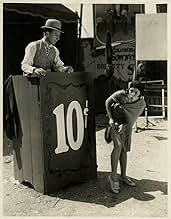
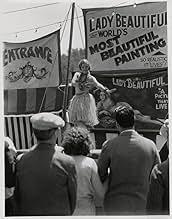
In between Lightner's character keeping the carnival from falling apart and some dramatic moments involving her sister, she does provide some side show antics of her own, such as dressing up as a male side show barker; being Princess Mauna, a Hawaiian hula dancer; a female figure posing inside a picture frame while trying to keep her posture; and that of a wild black-face cannibal from Borneo involved in a riot. Lightner's best scene comes where she substitutes for high diver, The Great Santini (Vince Barnett), and getting up the nerve to dive 110 feet through circular fire and into a tank with four feet of water. Lightner's diver disguise, from pencil drawn mustache and wide grin smile, is often hilarious, especially when her face resembles that of comedian, Groucho Marx. On screen, Lightner does everything except flying on a trapeze or getting shot out of a cannon. She may do some clowning, but never gets to play a clown. A pity none of these was considered for additional comedy material. Even Butterworth's participation in Lightner's antics helps make them better than anticipated.
While SIDE SHOW was never remade, one can imagine slapstick queens as Martha Raye or Betty Hutton assuming the role originated by Lightner in a product produced in or about the 1940s with added songs and Technicolor. As for other Lightner comedies made between 1930-33, they're as forgotten as Lightner herself. Many of them can be seen and rediscovered whenever shown again on on Turner Classic Movies cable network. "Hey Rube!" (**)
Forward: "The special train of Colonel Gowdy's big city shows rambles through the night - a city on wheels - a world in itself." The story begins with Colonel "Pop" Gowdy (Guy Kibbee), a good-natured circus owner, leading his circus troupe by train to the next town. Pat (Winnie Lightner), a circus gal since childhood, assumes many responsibilities in the side show. Aside from ticket booth collector, she takes time assisting Gowdy to bed after one of his many drunken binges. Because Gowdy owes back salary, Tom Whalen (Matthew Betz), the newest member of the troupe, stirs up trouble by talking others to leave the show, and having Pat to either get them back or go on in their place. Pat is madly in love with Joe Palmer (Donald Cook), circus barker and compulsive gambler who takes her for granted. Sidney (Charles Butterworth), a philosopher, loves Pat, but gets the same treatment as Pat gets from Joe. Later, Irene (Evalyn Knapp), Pat's kid sister, having dropped out of school, and leaving both her boyfriend, Jimmy (Edward Morgan), and Aunt Sara (Lucille Ward) behind, decides she wants to join the circus and be near Pat again. All goes well until Joe starts giving Irene his undivided attention.
The plot element of having two sisters loving the same man, causing a strain on their relationship, is nothing new considering a similar theme was previously used for the Academy Award winning backstage musical, "The Broadway Melody" (MGM, 1929). One can very well see some similarities of Lightner, Knapp and Cook in the roles originally played by Melody stars of Bessie Love, Anita Page and Charles King, with the exception of King's character being more sincere than Cook's. Though not an intentional remake, both films do include one crucial moment where the self-sacrificing sister has her face slapped by younger sibling followed by an "I hate you!" outburst. As much as "The Broadway Melody" has its share of now classic songs, SIDE SHOW features only one tune, a likable tune, "What Do You Think of Me Now?" wonderfully sung by Lightner.
In between Lightner's character keeping the carnival from falling apart and some dramatic moments involving her sister, she does provide some side show antics of her own, such as dressing up as a male side show barker; being Princess Mauna, a Hawaiian hula dancer; a female figure posing inside a picture frame while trying to keep her posture; and that of a wild black-face cannibal from Borneo involved in a riot. Lightner's best scene comes where she substitutes for high diver, The Great Santini (Vince Barnett), and getting up the nerve to dive 110 feet through circular fire and into a tank with four feet of water. Lightner's diver disguise, from pencil drawn mustache and wide grin smile, is often hilarious, especially when her face resembles that of comedian, Groucho Marx. On screen, Lightner does everything except flying on a trapeze or getting shot out of a cannon. She may do some clowning, but never gets to play a clown. A pity none of these was considered for additional comedy material. Even Butterworth's participation in Lightner's antics helps make them better than anticipated.
While SIDE SHOW was never remade, one can imagine slapstick queens as Martha Raye or Betty Hutton assuming the role originated by Lightner in a product produced in or about the 1940s with added songs and Technicolor. As for other Lightner comedies made between 1930-33, they're as forgotten as Lightner herself. Many of them can be seen and rediscovered whenever shown again on on Turner Classic Movies cable network. "Hey Rube!" (**)
A pleasant diversion
Winnie Lightner, who I remember liking as a supporting player in Dancing Lady, brings her affable personality to the lead role in this comedy centered around the goings-on in a traveling circus. Although rather episodic, there is a narrative throughline dealing with a love triangle between her, another guy named Joe, and her sister, who visits during the summer when she's out of school. While there wasn't a really memorable arc for anyone, the performances were generally good and there were a couple of standout moments for Winnie Lightner. The first was a bawdy musical number; and the other was late in the film when she really lets one guy have it (Go off, Winnie!). I found the narrative resolution to be rushed, and a bad example of the "Hollywood ending," but I found this Side Show a pleasant diversion.


Did you know
- TriviaLuis Alberni was in studio records/casting call lists and reviews for the role of "The Great Santini," but that role was played by Vince Barnett. One may wonder what other changes were made, since Tom Ricketts is credited onscreen, but is seen for 1 or 2 seconds sitting next to the sheriff during Pat's flaming high dive. On the other side of the sheriff sits Otto Hoffman. Neither Ricketts nor Hoffman have any lines in the Turner library print, which ran 64 minutes.
- GoofsIn the train, when Pat has put the Colonel to bed, his left arm is visible sticking out of the blanket. The next shot shows his arm is under the blanket.
- ConnectionsFeatured in Taxi (1931)
Details
- Runtime
- 1h 6m(66 min)
- Color
Contribute to this page
Suggest an edit or add missing content