
A young Russian girl is forced into a life of prostitution in Czarist Russia, and she and a British journalist find their lives endangered when she reveals to him information regarding the s... Read allA young Russian girl is forced into a life of prostitution in Czarist Russia, and she and a British journalist find their lives endangered when she reveals to him information regarding the social crimes rampant in her country.A young Russian girl is forced into a life of prostitution in Czarist Russia, and she and a British journalist find their lives endangered when she reveals to him information regarding the social crimes rampant in her country.
- Director
- Writers
- Stars
- Awards
- 1 nomination total


Oscar Apfel
- British Embassy Butler
- (uncredited)
Frederick Burt
- Minor Role
- (uncredited)

Emile Chautard
- Headwaiter
- (uncredited)

Gilbert Emery
- Sir Hubert, British Ambassador
- (uncredited)
Ruth Feldman
- Woman at Passportcheck
- (uncredited)

Esther Howard
- Prisoner
- (uncredited)

Boris Karloff
- Drunken Orderly
- (uncredited)

Henry Kolker
- Passport Clerk
- (uncredited)

Anne Kunde
- Prison Matron
- (uncredited)

Ivan Linow
- Wrestler
- (uncredited)
- Director
- Writers
- All cast & crew
- Production, box office & more at IMDbPro
6.4293
1
2
3
4
5
6
7
8
9
10
Featured reviews
Lionel Barrymore Back To Back!
It was probably just fate, but within the space of less than a year--Lionel Barrymore created two very vivid but quite different villains who functioned in pre-revolutionary Czarist Russia. In The Yellow Ticket (TYT) (1931), he plays a corrupt amoral nobleman who is also a powerful law enforcement official. And in Rasputin And The Empress (RATE) (1932), Barrymore assumes the role of Rasputin--the Mad Monk who actually manipulated himself into the Romanoff royal household and ended up becoming a historically significant person operating at the highest level of the Russian government.
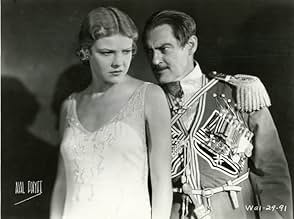
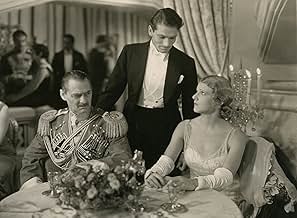
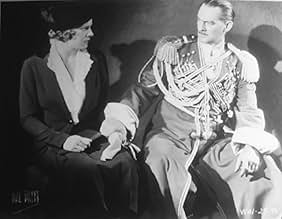
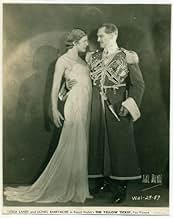
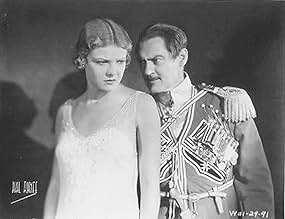
TYT is a product of the Fox Studios, and is the lesser known of the two films. Other than featuring a strong menacing role for Barrymore as the personification of pure evil, TYT also starred lovely Elissa Landi as the young Jewish heroine who must assume the disguise of a prostitute to be able to move freely within Russia. TYT also co-stars a young Laurence Olivier in one of his earliest screen roles as an English journalist and Landi's love interest. Directed by Raoul Walsh, this pre-code effort is dominated by Barrymore as the unrelentingly nasty bureaucrat who physically covets Landi and is in a position to actually realize what he covets.
RATE was made at MGM in 1932, and directed by Richard Boleslawski. As is well known, it is the only film that featured the three Barrymores (Lionel, Ethel and John). It was also a pre-code movie, although that fact seems less noticable there than in TYT, with its scenes of partial nudity and blatant sexuality. In RATE, Lionel Barrymore's part is based on a real person. Therefore his many truly negative qualities are suggested by historical evidence, although a number of liberties were taken by MGM in the course of bringing this character to the screen.
How did it happen that Lionel Barrymore played these two dislikable Czarist-era Russian villains almost back to back? It really does seem to be mere coincidence--but it is nonetheless remarkable. While the Rasputin part is much better known and far more flamboyant, his unscrupulous Count In TYT has greater complexity and is more subtle. When Barrymore is stalking Landi almost like a feline predator in search of its prey, it is impossible not to be caught up in the terror inherent in this situation. Interestingly, when TYT earlier appeared as a play, the Count character was then portrayed on the stage by John Barrymore!
Neither of these two films would qualify as a true classic--although RATE is certainly famous for its Barrymore casting situation.. But given how Lionel Barrymore evolved into an actor playing many more benign characters as he aged in the late 1930s, it is certainly interesting to see him so successfully performing in these two rather repulsive roles at this stage of his career.
TYT is a product of the Fox Studios, and is the lesser known of the two films. Other than featuring a strong menacing role for Barrymore as the personification of pure evil, TYT also starred lovely Elissa Landi as the young Jewish heroine who must assume the disguise of a prostitute to be able to move freely within Russia. TYT also co-stars a young Laurence Olivier in one of his earliest screen roles as an English journalist and Landi's love interest. Directed by Raoul Walsh, this pre-code effort is dominated by Barrymore as the unrelentingly nasty bureaucrat who physically covets Landi and is in a position to actually realize what he covets.
RATE was made at MGM in 1932, and directed by Richard Boleslawski. As is well known, it is the only film that featured the three Barrymores (Lionel, Ethel and John). It was also a pre-code movie, although that fact seems less noticable there than in TYT, with its scenes of partial nudity and blatant sexuality. In RATE, Lionel Barrymore's part is based on a real person. Therefore his many truly negative qualities are suggested by historical evidence, although a number of liberties were taken by MGM in the course of bringing this character to the screen.
How did it happen that Lionel Barrymore played these two dislikable Czarist-era Russian villains almost back to back? It really does seem to be mere coincidence--but it is nonetheless remarkable. While the Rasputin part is much better known and far more flamboyant, his unscrupulous Count In TYT has greater complexity and is more subtle. When Barrymore is stalking Landi almost like a feline predator in search of its prey, it is impossible not to be caught up in the terror inherent in this situation. Interestingly, when TYT earlier appeared as a play, the Count character was then portrayed on the stage by John Barrymore!
Neither of these two films would qualify as a true classic--although RATE is certainly famous for its Barrymore casting situation.. But given how Lionel Barrymore evolved into an actor playing many more benign characters as he aged in the late 1930s, it is certainly interesting to see him so successfully performing in these two rather repulsive roles at this stage of his career.
Such an interesting story
You would think Elissa Landi would be the biggest silent star, whom audiences forgave when talkies came around. Her expressions are overdone, her gestures hammy, and her delivery in need of coaching. Imagine my surprise to learn she only made a handful of silent pictures - she was a trained actress from the stage and even acted with Laurence Olivier. Her acting style really doesn't translate well on the silver screen, and she threatens to ruin The Yellow Ticket. Stick with it though; it has such an interesting story that you'll be engrossed despite the leading lady.
Speaking of Laurence Olivier, he plays her love interest in this Russian-set drama. And he's gorgeous! The first movie - unfortunately - I saw him in was A Little Romance, and I would have never guessed he was this handsome in his youth. Also, his acting style in this movie is completely different. He's so contemporary, casual, and confident. Life hadn't beaten him down yet, and even the way he moves is more carefree. Lionel Barrymore, the lecherous villain, is not different from usual. He has his mustache-twirling, cackling, eye-bulging, hands-on-suspenders (even when he's not wearing any), waist-hinging mannerisms as he always has, but it all works. He's a real baddie in this one, and it's very easy to root against him (as it should be in a melodrama).
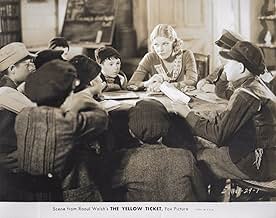
You might not have heard of The Yellow Ticket, but try to find a copy. It takes place in pre-WWI Russia, when Jewish citizens were being arrested, prevented from getting passports, and abused. When Elissa's father is imprisoned, beaten, and prevented from getting medical attention, she's anxious to visit him. She's not allowed to travel, however, and soon learns there's only one way for a Jewish girl to get a passport: by securing a yellow ticket, a prostitution license. Hooked already, right? That's only the beginning.
Speaking of Laurence Olivier, he plays her love interest in this Russian-set drama. And he's gorgeous! The first movie - unfortunately - I saw him in was A Little Romance, and I would have never guessed he was this handsome in his youth. Also, his acting style in this movie is completely different. He's so contemporary, casual, and confident. Life hadn't beaten him down yet, and even the way he moves is more carefree. Lionel Barrymore, the lecherous villain, is not different from usual. He has his mustache-twirling, cackling, eye-bulging, hands-on-suspenders (even when he's not wearing any), waist-hinging mannerisms as he always has, but it all works. He's a real baddie in this one, and it's very easy to root against him (as it should be in a melodrama).
You might not have heard of The Yellow Ticket, but try to find a copy. It takes place in pre-WWI Russia, when Jewish citizens were being arrested, prevented from getting passports, and abused. When Elissa's father is imprisoned, beaten, and prevented from getting medical attention, she's anxious to visit him. She's not allowed to travel, however, and soon learns there's only one way for a Jewish girl to get a passport: by securing a yellow ticket, a prostitution license. Hooked already, right? That's only the beginning.
Lionel Barrymore and Boris Karloff
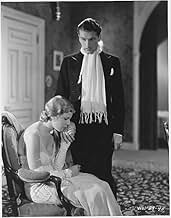
1931's "The Yellow Ticket" was adapted from a 1914 play set in 1913 Czarist Russia, with second billed Lionel Barrymore replacing younger brother John in the scenery chewing role of Baron Andreeff, persecuting the young Jewish beauty Marya Kalish (Elissa Landi), whose only means of travel is the Baron's dreaded 'yellow ticket,' branding this virginal schoolteacher a prostitute. 24 year old Laurence Olivier, in only his fourth feature (second in Hollywood), plays British newspaperman Julian Rolfe, who has spent two pleasant months in Russia, but now has his eyes opened to the degradations endured by Marya; his subsequent negative articles incur the wrath of the furious Baron. The luminous Elissa Landi would soon star in her best known vehicle, "The Sign of the Cross," and there are tiny parts for native Russians such as Mischa Auer and Michael Mark. Boris Karloff, just two films away from "Frankenstein," remains typecast as a lecherous drunken orderly, whose unwelcome ministrations get him arrested (his best lecherous drunk came 3 months earlier in "Five Star Final"). This was his third film working with Lionel Barrymore, co-starring in the 1926 silent "The Bells," and in 1929 directed by Lionel in "The Unholy Night."
Laurence Olivier to the rescue of a Jewish Russian in distress
Raoul Walksh was never a favourite of mine, I often found his pictures revolting in character and almost inhuman, and this is a particularly disturbing story but the more important for its ruthless realism. It deals with prostitution in tzarist Russia the year before the first world war, it exposes an abyss of social problems and abuse, as the main character Marya Kalish (Elissa Landi) and her family are Jewish and exposed to the tzar's pogroms. Her father ends up in jail and is placed in a dungeon in St. Petersburg, where he gets ill, and the only way for his only daughter to visit him is to acquire a "yellow ticket", a passport for prostitutes, which allows them to go around everywhere, while they have to regularly report to the police. She only avails herself of the ticket to visit her father and never works as a prostitute, although she is troubled enough especially by militaries and Lionel Barrymore as the abominable chief of police. In a critical moment Laurence Olivier as nothing less than a downright Englishman appears as a newspaper man to save her from even worse troubles to come. The finale is tremendous in its chaotic scenes of the outbreak of the war, but it is a good story efficiently told and extremely interesting for its exposure of the conditions of prostitutes in the Russia before the wars, - that only made everything even worse in Russia.
And down the road from Dr Zhivago's house....
The fact that this was made in 1931 is irrelevant because this is as virtually good as any adventure romance you'd get made now. Set amongst one of the many sorry episodes in Russian history it has a particular resonance today.
This might very well be the best film that beautiful Austrian actress Elissa Landi ever made. Allegedly the granddaughter of the famous celebrity Empress Sissi of Austria, she projects an almost regal purity and restrained emotion which is perfect for the innocent yet cynical role of Marya. One wonders how she felt when the script mentioned that her grandmother's husband, Franz Josef of Austria had just signed that memo to 'start' the First World War?
If there are any Lionel Barrymore fans left - which there should be - this picture is for them. Not sure whether his portrayal of the sinister head of Nikolai II's secret police is that accurate but who cares - he's a fantastic Hollywood villain. Although manically over the top, his less than subtle performance is simply explosive. Like all the best Hollywood villains, he creates the perfect character to instantly hate.
And there's also young Larry! In early thirties movies you often see soon to be 'great' actors struggling to learn the ropes but not with young Mr Olivier. It's not quite his first film and he's not the lead but somehow this guy already seems to be at the top of his game.
This isn't one of those old films which you think could have been better if it was made today - everyone and everything in this is as good as you can imagine. When they put their minds to it, Fox Films really could make something superb. Atmospheric set design and innovative cinematography (James Wong Howe again) make this a proper work of art. But not a stuffy, cold piece you'd find in a museum - this is dynamic, buzzing with life. Raoul Walsh's direction never lets the tension falter, he gives this a break-neck sense of intensity to ensure your interest doesn't wane.
And I didn't even mention the naked ladies!
This might very well be the best film that beautiful Austrian actress Elissa Landi ever made. Allegedly the granddaughter of the famous celebrity Empress Sissi of Austria, she projects an almost regal purity and restrained emotion which is perfect for the innocent yet cynical role of Marya. One wonders how she felt when the script mentioned that her grandmother's husband, Franz Josef of Austria had just signed that memo to 'start' the First World War?
If there are any Lionel Barrymore fans left - which there should be - this picture is for them. Not sure whether his portrayal of the sinister head of Nikolai II's secret police is that accurate but who cares - he's a fantastic Hollywood villain. Although manically over the top, his less than subtle performance is simply explosive. Like all the best Hollywood villains, he creates the perfect character to instantly hate.
And there's also young Larry! In early thirties movies you often see soon to be 'great' actors struggling to learn the ropes but not with young Mr Olivier. It's not quite his first film and he's not the lead but somehow this guy already seems to be at the top of his game.
This isn't one of those old films which you think could have been better if it was made today - everyone and everything in this is as good as you can imagine. When they put their minds to it, Fox Films really could make something superb. Atmospheric set design and innovative cinematography (James Wong Howe again) make this a proper work of art. But not a stuffy, cold piece you'd find in a museum - this is dynamic, buzzing with life. Raoul Walsh's direction never lets the tension falter, he gives this a break-neck sense of intensity to ensure your interest doesn't wane.
And I didn't even mention the naked ladies!


Did you know
- TriviaThe film takes place from 1913 to August 4, 1914.
- GoofsThe monoplane which spirits Marya and Rolfe out of Russia is of a much later date than 1914.
- ConnectionsEdited from The Red Dance (1928)
Details
- Release date
- Country of origin
- Language
- Also known as
- El pasaporte amarillo
- Production company
- See more company credits at IMDbPro
- Runtime
- 1h 28m(88 min)
- Color
Contribute to this page
Suggest an edit or add missing content