IMDb RATING
6.4/10
7.4K
YOUR RATING


An American ambulance driver and an English nurse fall in love in Italy during World War I.An American ambulance driver and an English nurse fall in love in Italy during World War I.An American ambulance driver and an English nurse fall in love in Italy during World War I.
- Won 2 Oscars
- 7 wins & 2 nominations total







Alice Adair
- Cafe Girl
- (uncredited)

Henry Armetta
- Bonello
- (uncredited)

Herman Bing
- Swiss Postal Clerk
- (uncredited)

Agostino Borgato
- Giulio
- (uncredited)
Robert Cauterio
- Gordini
- (uncredited)

Marcelle Corday
- Swiss Nurse
- (uncredited)

Gino Corrado
- Italian Soldier
- (uncredited)
Peggy Cunningham
- Molly
- (uncredited)
George Humbert
- Piani
- (uncredited)

William Irving
- Frustrated Opera Singer
- (uncredited)
6.47.4K
1
2
3
4
5
6
7
8
9
10
Featured reviews
A romance in World War One Italy
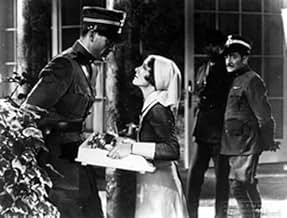
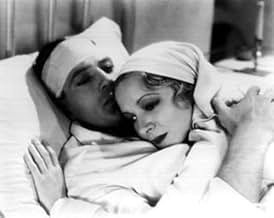
This film tells the story of Lt Frederic Henry, an American who has enlisted as an ambulance driver in the Italian Army during the First World War. One day he and his friend Major Rinaldi date a pair of English Nurses; Fredric and Nurse Catherine Barkley get on well and quickly fall in love. He is soon returned to the action but following an injury he is hospitalised in the Milan hospital where Catherine works. Here their love deepens. When he returns to the front again they write to each other but Rinaldi ensures their letters don't get through leading to Fredric making some drastic and dangerous choices.
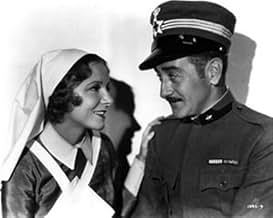
While this film is set in the war, and features some impressive battle scenes it is at its heart a love story. This plays out well and there is a good chemistry between Gary Cooper and Helen Hayes as Fredric and Catherine. Adolphe Menjou is solid as Rinaldi; a slightly ambiguous character who serves to bring the two protagonists together and later keep them apart. While the battle scenes may not be brutal and large scale as those in more modern films they are intense thanks to the way it focuses on Fredric and those around him. The camera work is very inventive; a highlight being the way we see Catherine from Frederic's point of view as she enters his hospital room and kisses him. Overall I'd definitely recommend this to fans of classic cinema.
While this film is set in the war, and features some impressive battle scenes it is at its heart a love story. This plays out well and there is a good chemistry between Gary Cooper and Helen Hayes as Fredric and Catherine. Adolphe Menjou is solid as Rinaldi; a slightly ambiguous character who serves to bring the two protagonists together and later keep them apart. While the battle scenes may not be brutal and large scale as those in more modern films they are intense thanks to the way it focuses on Fredric and those around him. The camera work is very inventive; a highlight being the way we see Catherine from Frederic's point of view as she enters his hospital room and kisses him. Overall I'd definitely recommend this to fans of classic cinema.
Classy movie based on a self-biographic novel by Ernest Hemingway with a great cast and well paced by Frank Borzage
This story about a doomed love affair during the Italian campaign of WWI results to be the original and the best film version of Ernest Hemingway's novel. It deals with an American soldier, Gary Cooper, and a good English nurse, Helen Hayes, both of whom fall in love on the Italian front during WWI. He is an ambulance driver while braverly risking his life in the line of duty he is wounded and ends up in the hospital where he falls for the attending nurse who is caring him. In the midst of war the intimate pair of lovers fight to stay together and to survive the massacres around them. At the end Austria capitules and armistice is declared. Let's love tonight she said, there may be no tomorrow. Every woman who has loved will understand.
Sensitive and romantic story about a deep and thunderous love story set in the horrors of the WWI when were developing the bloody battles of Marne and Piave. However, the novelist Hemingway disavowed the ambiguous final, but the public all around the world loved the movie. Both protagonists, Gary Cooper and Helen Hayes give awesome acting in one of the great love stories of all time. They are finely accompanied by a nice support cast at the time, such as : Adolphe Menjou, Jack La Rue, Mary Philips, Mary Forbes, among others.
The motion picture shot in Paramount studios was well directed by Frank Borzage and it won Oscars 1933 to Cinematography : Charles Lang Jr and Sound. Filmmaker Frank Borzage was a notorious actor and director who made a lot of decent films from Silent cinema to Sound one , such as : Street angel, Flight command, Big city , Bad fire, The mortal storm, Billy the Kid, The big fisherman, being his greatest hit : The 7th Heaven. Rating 7/10 . Better than average. Well worth watching. The picture will appeal to Gary Cooper fans.
Other version about this famous story are as follows : A farewell to arms 1957 by Charles Vidor and John Huston with Rock Hudson, Jennifer Jones, Vittorio de Sica, Oscar Homolka. A farewell to arms 1966 by Tucker with Vanessa Redgrave and George Hamilton. In love and war 1996 by Richard Attenborough with Chris O'Donnell, Sandra Bullock , Mackenzie Astin.
Sensitive and romantic story about a deep and thunderous love story set in the horrors of the WWI when were developing the bloody battles of Marne and Piave. However, the novelist Hemingway disavowed the ambiguous final, but the public all around the world loved the movie. Both protagonists, Gary Cooper and Helen Hayes give awesome acting in one of the great love stories of all time. They are finely accompanied by a nice support cast at the time, such as : Adolphe Menjou, Jack La Rue, Mary Philips, Mary Forbes, among others.
The motion picture shot in Paramount studios was well directed by Frank Borzage and it won Oscars 1933 to Cinematography : Charles Lang Jr and Sound. Filmmaker Frank Borzage was a notorious actor and director who made a lot of decent films from Silent cinema to Sound one , such as : Street angel, Flight command, Big city , Bad fire, The mortal storm, Billy the Kid, The big fisherman, being his greatest hit : The 7th Heaven. Rating 7/10 . Better than average. Well worth watching. The picture will appeal to Gary Cooper fans.
Other version about this famous story are as follows : A farewell to arms 1957 by Charles Vidor and John Huston with Rock Hudson, Jennifer Jones, Vittorio de Sica, Oscar Homolka. A farewell to arms 1966 by Tucker with Vanessa Redgrave and George Hamilton. In love and war 1996 by Richard Attenborough with Chris O'Donnell, Sandra Bullock , Mackenzie Astin.
Hasn't aged well
Based on the Ernest Hemingway novel and starring Gary Cooper, this has the potential to be a classic. The setting and sentiment are reasonably original, especially for their time, and the movie is reasonably gritty.
Yet, it doesn't feel like a classic. The romance seems trite and contrived. Overly schmaltzy and sometimes just plain dull.
The acting is patchy. Gary Cooper is okay, but Helen Hayes' performance is quite flat. Most entertaining performance comes from Adolphe Menjou as Rinaldi.
It was probably quite good in its time, and might well be regarded as one of the first anti-war movies, but it now feels quite dated.
Yet, it doesn't feel like a classic. The romance seems trite and contrived. Overly schmaltzy and sometimes just plain dull.
The acting is patchy. Gary Cooper is okay, but Helen Hayes' performance is quite flat. Most entertaining performance comes from Adolphe Menjou as Rinaldi.
It was probably quite good in its time, and might well be regarded as one of the first anti-war movies, but it now feels quite dated.
A good war/romance movie
A Farewell to Arms features the expected good performances from Gary Cooper, Helen Hayes, and Adolphe Menjou. For its time, it also features impressive sets. The dialogue also does justice to its source material, the Hemingway novel of the same name. This movie must've been appreciated much more at the time of its release, given the imminence of war sentiment and Hitler's rising power in Germany. All in all, a very good, though not great film, 7/10.
Ernie Goes To Hollywood
Frank Borzage's 1932 version of "A Farewell To Arms" has the distinction of being the first film adaptation of an Ernest Hemingway novel. It's more Hollywood than Hemingway: Long blankets of dialogue are condensed, sharp edges softened, and the romance between Lt. Henry and Catherine made into something more befitting Douglas Sirk than the unsentimental Papa. Yet a surprising amount of the novel's spirit does survive the transition.
In a story not much different than what you might have read in high school, Lt. Henry (Gary Cooper) is an American ambulance corpsman serving with the Italian Army as it fights the Austrians along the Piave, a bloody backwater campaign of World War I. Henry meets nurse Catherine Barkley (Helen Hayes) and they quickly fall in love. But the violence of war, and the interference of friends like Capt. Rinaldi (Adolphe Menjou), threaten to tear them apart.
The differences between book and movie are more in the matter of treatment than storyline. When Catherine and Lt. Henry first meet, they talk about her former lover, a war casualty. In the film, she says "If I had to do it all over again, I'd marry him". In the book, though, Catherine wasn't regretting sending him off to war unmarried, but without their having had sex.
Yet a minute later, her lines come directly from the book, Catherine noting her daydreams about her old lover turning up at her hospital with a saber cut, then adding: "He didn't have a saber cut, they blew him to bits." For Hollywood, violence was always easier material than sex.
Since this is a film made before the inhibiting Hays Code (Will, not Helen), Borzage and his writers are able to get away with a bit more than they would have just a couple of years later. Catherine and Henry still make love, and she gets pregnant.
There IS a lot of Hemingway here. Catherine is a still somewhat mixed-up woman who hates the rain "because I see myself dead in it". The folly of war is openly expressed. "If nobody would attack, the war would be over," one soldier muses. Lt. Henry is wounded, and embarrassed because it happened while he was eating cheese. Even some small exchanges survive, like one between Lt. Henry and a nasty nurse.
She: "Pity is wasted on you."
He: "Thank you."
But the film also strikes out for its own territory, successfully in the case of building up the role of Capt. Rinaldi. Menjou, who had been a real ambulance corps captain in World War I, creates a marvelously ambiguous figure, a cheerful cynic who befriends Henry and is put out by the romance with Catherine. "Why don't you be like me?" Rinaldi asks his "war brother". "All fire and smoke. Nothing inside."
Rinaldi's role here is a change from the original story, a gamble by Borzage and writers Benjamin Glazer and Oliver H. P. Garrett that pays off, devising some needed tension to the central storyline and underscoring the core message of the rottenness of war. If it wasn't for war, Rinaldi might value something more than his next bottle or bedpartner, and Menjou, in a final triumphant moment, lets you know it.
Pacifism, in movies as in life, only takes one so far. The film makes a mistake near the end by more consciously making a stand as an anti-war film, with much hysteria, bells ringing, even Cooper chanting "Peace...peace". It made those points much better as sidenotes, like an opening tracking shot where a seemingly sleeping soldier is revealed to be dead, or later on when Cooper trudges through a muddy path and notices the corpse everyone's been walking on. By contrast, too much of the movie's finale is played for the cheaper seats, and doesn't stand up today.
But the film does stand up better than many later Hemingway adaptations, with its strong cast, inspired tracking shots, and a mostly successful effort by Borzage to translate Hemingway's terse prose style into film. What you get is a short but deep examination of life during wartime.
In a story not much different than what you might have read in high school, Lt. Henry (Gary Cooper) is an American ambulance corpsman serving with the Italian Army as it fights the Austrians along the Piave, a bloody backwater campaign of World War I. Henry meets nurse Catherine Barkley (Helen Hayes) and they quickly fall in love. But the violence of war, and the interference of friends like Capt. Rinaldi (Adolphe Menjou), threaten to tear them apart.
The differences between book and movie are more in the matter of treatment than storyline. When Catherine and Lt. Henry first meet, they talk about her former lover, a war casualty. In the film, she says "If I had to do it all over again, I'd marry him". In the book, though, Catherine wasn't regretting sending him off to war unmarried, but without their having had sex.
Yet a minute later, her lines come directly from the book, Catherine noting her daydreams about her old lover turning up at her hospital with a saber cut, then adding: "He didn't have a saber cut, they blew him to bits." For Hollywood, violence was always easier material than sex.
Since this is a film made before the inhibiting Hays Code (Will, not Helen), Borzage and his writers are able to get away with a bit more than they would have just a couple of years later. Catherine and Henry still make love, and she gets pregnant.
There IS a lot of Hemingway here. Catherine is a still somewhat mixed-up woman who hates the rain "because I see myself dead in it". The folly of war is openly expressed. "If nobody would attack, the war would be over," one soldier muses. Lt. Henry is wounded, and embarrassed because it happened while he was eating cheese. Even some small exchanges survive, like one between Lt. Henry and a nasty nurse.
She: "Pity is wasted on you."
He: "Thank you."
But the film also strikes out for its own territory, successfully in the case of building up the role of Capt. Rinaldi. Menjou, who had been a real ambulance corps captain in World War I, creates a marvelously ambiguous figure, a cheerful cynic who befriends Henry and is put out by the romance with Catherine. "Why don't you be like me?" Rinaldi asks his "war brother". "All fire and smoke. Nothing inside."
Rinaldi's role here is a change from the original story, a gamble by Borzage and writers Benjamin Glazer and Oliver H. P. Garrett that pays off, devising some needed tension to the central storyline and underscoring the core message of the rottenness of war. If it wasn't for war, Rinaldi might value something more than his next bottle or bedpartner, and Menjou, in a final triumphant moment, lets you know it.
Pacifism, in movies as in life, only takes one so far. The film makes a mistake near the end by more consciously making a stand as an anti-war film, with much hysteria, bells ringing, even Cooper chanting "Peace...peace". It made those points much better as sidenotes, like an opening tracking shot where a seemingly sleeping soldier is revealed to be dead, or later on when Cooper trudges through a muddy path and notices the corpse everyone's been walking on. By contrast, too much of the movie's finale is played for the cheaper seats, and doesn't stand up today.
But the film does stand up better than many later Hemingway adaptations, with its strong cast, inspired tracking shots, and a mostly successful effort by Borzage to translate Hemingway's terse prose style into film. What you get is a short but deep examination of life during wartime.


Did you know
- TriviaErnest Hemingway hated this interpretation of his novel, as he felt it was overly romantic. That didn't stop him, however, from becoming lifelong friends with Gary Cooper, whom he met several years later. In fact, it was Hemingway who would insist that Cooper be cast in the lead of the adaptation of his novel For Whom the Bell Tolls (1943) 11 years later. However, the two made a point of never discussing this film.
- GoofsA night attack is shown. During World War I there was very little flying at night and the night attacks that did occur were limited to big cities. It was almost impossible for a plane to attack specific targets in a large city, so effectively attacking people on a road in the dark was not possible, and did not happen.
- Quotes
Frederic: We've never been apart, really. Not since we met.
Catherine: Not since we met.
Frederic: And never can be.
Catherine: Never apart.
Frederic: In life and in death. Say it Cat.
Catherine: In life and in death, we'll never be parted.
Frederic: You do believe that, don't you, Cat?
Catherine: I believe it, and I'm not afraid.
- Crazy creditsIn the original 1932 credits, the credits are punctuated by aerial bomb blasts, and every time there is a blast, a credit disappears to be replaced by the next one.
- Alternate versionsSPOILER: Paramount decided, after much disagreement, to keep Hemingway's original ending and fade out after the death of Catherine Barkley. This ending was kept for the European release, but a new ending in which Barkley lives was later added to the U.S. release.
- ConnectionsEdited into Your Afternoon Movie: Farewell to Arms (2023)
Details
- Release date
- Country of origin
- Official site
- Languages
- Also known as
- Adiós a las armas
- Filming locations
- Production company
- See more company credits at IMDbPro
Box office
- Budget
- $799,520 (estimated)
- Runtime
- 1h 20m(80 min)
- Color
- Aspect ratio
- 1.37 : 1
Contribute to this page
Suggest an edit or add missing content