IMDb RATING
7.2/10
4.3K
YOUR RATING

A jealous stump threatens two trees that are in love by starting a forest fire. When the rain comes and puts out the fire the forest revives and celebrates the wedding.A jealous stump threatens two trees that are in love by starting a forest fire. When the rain comes and puts out the fire the forest revives and celebrates the wedding.A jealous stump threatens two trees that are in love by starting a forest fire. When the rain comes and puts out the fire the forest revives and celebrates the wedding.
- Won 1 Oscar
- 2 wins total




Esther Campbell
- Birds
- (uncredited)

Pinto Colvig
- Evil Hollow Tree
- (uncredited)

Marion Darlington
- Birds
- (uncredited)

Walt Disney
- Owl Sirens
- (uncredited)
Purv Pullen
- Birds
- (uncredited)
7.24.2K
1
2
3
4
5
6
7
8
9
10
Featured reviews
Considering when it was made, it is still a beautifully-animated unforgettable gem.
The first Silly Symphony to to be made in Technicolour, Flowers and Trees remains my favourite of the Silly Symphonies. It has a certain charm that is almost irresistible. Flowers and Trees is beautifully animated, with vibrant colours, and considering when it was made, I was most impressed. The characters, although they never speak, are very lovable, especially the Mushrooms. Even the evil tree stump was an engaging character in his own right. The music was wonderfully lyrical, and reminded me of the sort of music you'll find in a ballet. It was so charming and pleasant, it plays a significant role in justifying the undeniable charm of this gem. The story is very simple, and is fairly unrealistic, but everything else that is so good, more than compensate, and it is meant to be silly. The result is a beautiful and imaginative short, with a 10/10. Bethany Cox.
The first full colour cartoon.
This is worth watching - only if you are over 14. I do not recommend this cartoon for anyone under that age. It is slightly disturbing (especially for young people) and I do not think they would find it interesting anyhow.
People over 14, this is a delight to watch. This is basically a very old cartoon where there are trees and plants leaving their roots (literally) and moving around, creating a storyline. You will have to see at least a little snippet of this cartoon to understand what I mean. The animation and music is very beautiful, some of the storyline is very beautiful as well.
Basically the whole cartoon is about two trees falling in love. The girl tree resembles a 1930's posh "lady". There is a horrible, evil gnarled tree who tries to capture her, but the slightly dopey looking tree will not let him have her...
This is one of a great amount of cartoons called "Silly Symphonies". This is, almost beyond doubt, the most beautiful and heartwarming collection of cartoon shorts ever made (they were all made by Disney around the time this was made). I recommend you watch at least one of them, as far as I know they are all worth watching.
I recommend this to people who are interested in historical cartoons and who like something a little different (infact - a LOT different!). Enjoy "Flowers and Trees"! :-)
People over 14, this is a delight to watch. This is basically a very old cartoon where there are trees and plants leaving their roots (literally) and moving around, creating a storyline. You will have to see at least a little snippet of this cartoon to understand what I mean. The animation and music is very beautiful, some of the storyline is very beautiful as well.
Basically the whole cartoon is about two trees falling in love. The girl tree resembles a 1930's posh "lady". There is a horrible, evil gnarled tree who tries to capture her, but the slightly dopey looking tree will not let him have her...
This is one of a great amount of cartoons called "Silly Symphonies". This is, almost beyond doubt, the most beautiful and heartwarming collection of cartoon shorts ever made (they were all made by Disney around the time this was made). I recommend you watch at least one of them, as far as I know they are all worth watching.
I recommend this to people who are interested in historical cartoons and who like something a little different (infact - a LOT different!). Enjoy "Flowers and Trees"! :-)
Very well done! Solid 8 Stars!
Indeed a very nice work of art on this one! I enjoyed it immensely. I'm certain you will too. It is definitely worth every bit of the few minutes to watch. More than flowers and trees though, even though that's just the title.
Fun bit of weirdness
Disney's first Silly Symphonies cartoon made with three-strip Technicolor is a trippy bit of business that won the first Oscar for animated short. Basically the plot to the cartoon is that the trees, flowers, mushrooms, and forest creatures are all exercising and dancing and whatever when a fight breaks out between two male trees over a female tree. Yeah I just typed that. From there things get even weirder as we get arson, bird rainmakers, and a character burning to death! It's bizarre but in an awesome way. The animation is excellent for its time. The Technicolor pops as much today as I would imagine it did when it was first released. Disney has really done a marvelous job at maintaining and restoring their old cartoons. The music is upbeat and cheerful. It's a charming old short that's just offbeat enough to appeal even to today's audiences, I think. By the way, early in the short when the mushrooms first pop up through the ground, take notice of what they look like and tell me the animators didn't slide a little dirty joke in there.
Cinema's First Technicolor Three-Strip Full Color Spectrum Film
After years of experimentation and development to deliver the primary colors of green, red and blue onto one film-strip, the Technicolor company finally arrived at the moment theater-goers were breathlessly anticipating. Walt Disney's 29th installment in his "Silly Symphony" series, July 1932's "Flowers and Trees," became the first film to be shot and projected by Technicolor's new 'three-strip' process to the public, showing cinema's first true realistic colors onto the screen.
Technicolor's camera, introduced in 1931, captured the entire color spectrum, a goal its researchers had been working on since 1924. Labeled 'Process 4' by insiders, three black-and-white film strips wound their way through the camera, using a prism to separate the primary colors, and then were fused in the lab onto one strip for playback on any projector. The technology was a gigantic leap from the company's previous 'two-strip' process of capturing only yellow and green.
Technicolor felt an animated short was the simplest way to present its newly enhanced color process. Disney was in the middle of making the black-and-white "Flowers and Trees" when the two companies connected and agreed the cartoon would be the first to introduce the public to Technicolor's advanced technology. But in its early stages, the process was prohibitively more expensive to produce than black-and-white cartoons. As an incentive, Technicolor gave Disney a three-year exclusivity in the animation field for its vivid, true-color film, expiring on September 1935. It was a gamble on Walt's part since if the cartoon failed to generate a profit because of the high costs, his studio could potentially be bankrupt.
Fortunately for Disney, "Flowers and Tress" became an enormous success. His "Silly Symphony" series, monopolizing the three-strip color process for cartoons for three years, easily made money for Walt and company. The entire film industry was impressed. Producer/director Merian C. Cooper, in production with 1933's "King Kong," said he saw "Flowers and Trees" and claimed he never wanted to make another black-and-white picture again. He was instrumental in getting the first three-strip Technicolor feature film, 1935's "Becky Sharp," produced.
Technicolor slowly rolled out their new cameras and film stock to Hollywood studios for live action. Some studios inserted short Technicolor segments embedded into their black-and-white feature films while others produced full-color two-reeler shorts before the arrival of "Becky Sharp." The years Disney animators worked with color proved to be invaluable when Walt began production of cinema's first color animation feature film, 1937's "Snow White and the Seven Dwarfs."
Technicolor's camera, introduced in 1931, captured the entire color spectrum, a goal its researchers had been working on since 1924. Labeled 'Process 4' by insiders, three black-and-white film strips wound their way through the camera, using a prism to separate the primary colors, and then were fused in the lab onto one strip for playback on any projector. The technology was a gigantic leap from the company's previous 'two-strip' process of capturing only yellow and green.
Technicolor felt an animated short was the simplest way to present its newly enhanced color process. Disney was in the middle of making the black-and-white "Flowers and Trees" when the two companies connected and agreed the cartoon would be the first to introduce the public to Technicolor's advanced technology. But in its early stages, the process was prohibitively more expensive to produce than black-and-white cartoons. As an incentive, Technicolor gave Disney a three-year exclusivity in the animation field for its vivid, true-color film, expiring on September 1935. It was a gamble on Walt's part since if the cartoon failed to generate a profit because of the high costs, his studio could potentially be bankrupt.
Fortunately for Disney, "Flowers and Tress" became an enormous success. His "Silly Symphony" series, monopolizing the three-strip color process for cartoons for three years, easily made money for Walt and company. The entire film industry was impressed. Producer/director Merian C. Cooper, in production with 1933's "King Kong," said he saw "Flowers and Trees" and claimed he never wanted to make another black-and-white picture again. He was instrumental in getting the first three-strip Technicolor feature film, 1935's "Becky Sharp," produced.
Technicolor slowly rolled out their new cameras and film stock to Hollywood studios for live action. Some studios inserted short Technicolor segments embedded into their black-and-white feature films while others produced full-color two-reeler shorts before the arrival of "Becky Sharp." The years Disney animators worked with color proved to be invaluable when Walt began production of cinema's first color animation feature film, 1937's "Snow White and the Seven Dwarfs."


Did you know
- TriviaThe first animated short in full color and the first one to win an Academy Award - Walt Disney's first of twenty-two. Also the first film (animated or otherwise) to use the three-strip Technicolor process.
- GoofsWhile playing the makeshift harp, the shorter "strings" should produce the higher-pitched tones, while the longer "strings" should produce the lower-pitched tones. However, when the tree plays, the opposite is true.
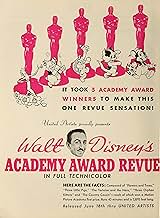
- ConnectionsEdited into Academy Award Review of Walt Disney Cartoons (1937)
Details
- Release date
- Country of origin
- Official site
- Language
- Also known as
- Trees and Flowers
- Production companies
- See more company credits at IMDbPro
- Runtime
- 8m
- Sound mix
- Aspect ratio
- 1.37 : 1
Contribute to this page
Suggest an edit or add missing content