
A maid's dreams come true - except they are not quite what she expected.A maid's dreams come true - except they are not quite what she expected.A maid's dreams come true - except they are not quite what she expected.
- Awards
- 1 win total


Ted Billings
- Napoleon
- (uncredited)

Walter Brennan
- Cigar Stand Proprietor
- (uncredited)

Elspeth Dudgeon
- Neighbor
- (uncredited)

Francis Ford
- Insane Asylum Warden
- (uncredited)
6.2290
1
2
3
4
5
6
7
8
9
10
Featured reviews
Will Hayes Makes GOOD in Hollywood
Clara Bow, the famous sexy flapper, was on her way down as a movie star. Universal was able to arrange with Paramount to get her on loan. Universal had bought the rights to a novel, 'The Impatient Virgin", which, back then, was very juicy, practically pornographic. (It wouldn't be now). Universal expected to make a fortune with that combination.
When she saw the script, La Bow bowed out. Too sexy. The script was made especially for her. Bow was a oner. Exeunt Bow, exeunt the story.
When the script, which followed the book closely, was submitted to the MPPDA, the self-censoring body of the major studios, the organization immediately banned the word 'virgin'. They suggested 'maiden' instead.
They advised against nearly the entire script. The film was assigned to two other directors before James Whale was forced to direct it. He didn't want to, he wasn't interested in it.
The Hays office, which is the MPPDA, advised them to take the heat out of the script. They did. It became a different story, and there was not a single scene in it which was actually hot. (There is a seduction. I won't say if it came off or not).
Whale didn't get along with the star, Lew Ayres. Ayres had made a bunch of movies in the last two years, but he still didn't know his craft. Whale never gave him any advice. He hardly spoke to Ayres.
Still the film garnered some friction. A censor board cut out the main part of the appendectomy scene. It said the seduction was all right.
The film died a quick death, did not get much business in the big city venues, was not re-released, and never made it into Europe.
The review from the New York Times, titled 'A Naive Melodrama', by A. D. S., March 4, 1932 says in part:
Everything it has to say is in the title.
On the whole there seems nothing James Whale, the talented director of "Frankenstein" and "Journey's End," could have done about this one.
When she saw the script, La Bow bowed out. Too sexy. The script was made especially for her. Bow was a oner. Exeunt Bow, exeunt the story.
When the script, which followed the book closely, was submitted to the MPPDA, the self-censoring body of the major studios, the organization immediately banned the word 'virgin'. They suggested 'maiden' instead.
They advised against nearly the entire script. The film was assigned to two other directors before James Whale was forced to direct it. He didn't want to, he wasn't interested in it.
The Hays office, which is the MPPDA, advised them to take the heat out of the script. They did. It became a different story, and there was not a single scene in it which was actually hot. (There is a seduction. I won't say if it came off or not).
Whale didn't get along with the star, Lew Ayres. Ayres had made a bunch of movies in the last two years, but he still didn't know his craft. Whale never gave him any advice. He hardly spoke to Ayres.
Still the film garnered some friction. A censor board cut out the main part of the appendectomy scene. It said the seduction was all right.
The film died a quick death, did not get much business in the big city venues, was not re-released, and never made it into Europe.
The review from the New York Times, titled 'A Naive Melodrama', by A. D. S., March 4, 1932 says in part:
Everything it has to say is in the title.
On the whole there seems nothing James Whale, the talented director of "Frankenstein" and "Journey's End," could have done about this one.
Extremely odd.
What an odd film for James Whale to follow up "Frankenstein" with!
This is a strange little romantic drama, about a woman in love with a young doctor. Because he can't support her financially he leaves her,and she becomes a "kept" woman when she takes up with her wealthy lawyer boss.
At once cynical and romantic, it's hard to work out what the point of the whole thing is. Una Merkel is lots of fun though, and Ethel Griffies nearly steals the picture. And the young and beautiful Lew Ayres is lovingly filmed by Whale. The film also demonstrates what a fine actress Mae Clarke was, and how she deserved better material as she grew older.
In all an unusual and entertaining film from a great director, but also a baffling one.
This is a strange little romantic drama, about a woman in love with a young doctor. Because he can't support her financially he leaves her,and she becomes a "kept" woman when she takes up with her wealthy lawyer boss.
At once cynical and romantic, it's hard to work out what the point of the whole thing is. Una Merkel is lots of fun though, and Ethel Griffies nearly steals the picture. And the young and beautiful Lew Ayres is lovingly filmed by Whale. The film also demonstrates what a fine actress Mae Clarke was, and how she deserved better material as she grew older.
In all an unusual and entertaining film from a great director, but also a baffling one.
You could find better....
Although I have always thought Lew Ayres was a fine actor, here he's one of his worst films...mostly because the script is rather second- rate. I also found Una Merkel (again, someone I usually like in films) played a rather annoying character. As a result, I think it's a movie you could easily just skip.
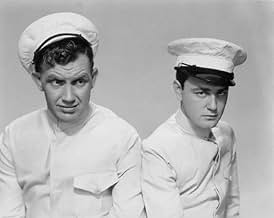
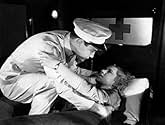
When the film begins, Ruth (Mae Clark) and her dopey friend (Merkel) meet a dopey ambulance driver (Andy Devine) and a young doctor working on his internship at the hospital (Ayres). The Doc and Ruth fall for each other...but their relationship later sours. Towards the end of the film, Ruth is dying and apparently there's no one else in the entire hospital who can operate on her other than her ex-boyfriend, the Doc (it was JUST an inflamed appendix)!! Will she pull through...and will we care?
Una is clearly there as comic relief and her character just comes on way too strong with the stupid act. Fortunately, she's mostly in the first half of the film. As for Devine, he's actually pretty restrained and much better in the same sort of role. But the plot is so soapy and silly that I never found myself caring much about what happened to Ruth or any of them. A misfire.
When the film begins, Ruth (Mae Clark) and her dopey friend (Merkel) meet a dopey ambulance driver (Andy Devine) and a young doctor working on his internship at the hospital (Ayres). The Doc and Ruth fall for each other...but their relationship later sours. Towards the end of the film, Ruth is dying and apparently there's no one else in the entire hospital who can operate on her other than her ex-boyfriend, the Doc (it was JUST an inflamed appendix)!! Will she pull through...and will we care?
Una is clearly there as comic relief and her character just comes on way too strong with the stupid act. Fortunately, she's mostly in the first half of the film. As for Devine, he's actually pretty restrained and much better in the same sort of role. But the plot is so soapy and silly that I never found myself caring much about what happened to Ruth or any of them. A misfire.
Cheap but...fine
This feels...cheap. There's no way around it. It feels like dirt-poor independent fare from the 50s. Simple sets, minimal storytelling, short running time, and long, dull takes with no real life to them. What happened to the engaged director who could get compelling performances from his actors in Journey's End or the wrangler of minimal funds to get fantastic sights in Frankenstein? Information on the film is minimal, but I suspect this, released five months after Whale's previous film for Carl Laemmle Jr. And Universal, was essentially a B-movie in intention, something to fill lower parts of bills, made quickly, and thrown out the door just to keep the gears of the studio moving.
Based on the novel The Impatient Virgin by Donaldson Clarke, it tells the story of Ruth (Mae Clarke), a nineteen-year-old secretary to the lawyer Albert (John Halliday) who has to work through her generalized resistance to the idea of marriage when she meets the young, handsome, and weirdly controlling Dr. Myron Brown (Lew Ayres). The film begins with her and her roommate, the flower girl Betty (Una Merkel), going home to their small tenement in San Fransico as they witness older, married men wanting noting to do with their wives, in particular their neighbors Mr. And Mrs. Gillman (Bert Roach and Helen Eddy) with the man walking out on the pregnant woman because, as he puts it, no man should have to settle with one woman.
It's when Mrs. Gillman has a scare with a gas leak that Dr. Brown and the paramedic Clarence (Andy Devine) enter Ruth and Betty's lives.
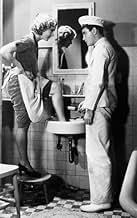
The film is largely a milquetoast romantic comedy. The characters are just well enough drawn to be distinctive without being particularly memorable or compelling. The situations are understandable and human enough to carry the film for a few minutes at a time. There's even a bit of actually good comedy when Clarence shows off his new straightjacket design to Betty, accidentally not being able to get her out, and the head doctor of the psyche ward section of the hospital assuming she's a new, crazy patient.
However, it's never compelling enough to get invested at all. When Ruth and Dr. Brown have their falling out (because it's a romantic comedy and there has to be some kind of obstacle), it feels, driven by a screenwriting need, rather than a conflict of visions between the two about their future. I mean, the dude orders for her on their first little date (was this far more common in the early 30s? I don't know, it was almost a hundred years ago), but she stays with him anyway until she decides that she just can't have a serious relationship. He even offers to give up his whole life of medicine for her.
So, she runs to Albert who goes from understanding older gentleman to a bit creepy by taking advantage of her emotional state to get closer to her. And then her appendix bursts, and we're set for her needing a young, handsome, weirdly controlling doctor to save the day.
Really, the actual story barely holds together, and I don't think Whale really gave the film any real attention as he brought it to screen. Most scenes are just these long, flat takes with too much space between lines like he was barely even directing. I again have to note that this came out a grand five months after Frankenstein. That's five months to go from, presumably, an already completed script, through casting (which, in the studio system wouldn't have taken too long), shooting, editing, and any kind of rudimentary post-production, assuming Whale got a break at all in there. That's a fairly quick turnaround for a complete film, again assuming Whale had no say on things like scripting.
And I think it shows. This isn't bad insofar as it's completely unremarkable. It functions competently with one fun scene thrown in at the middle (the straightjacket stuff), but ultimately this is a film with no passion and no real reason for being other than greasing the skids of Universal's cash flow machine.
Based on the novel The Impatient Virgin by Donaldson Clarke, it tells the story of Ruth (Mae Clarke), a nineteen-year-old secretary to the lawyer Albert (John Halliday) who has to work through her generalized resistance to the idea of marriage when she meets the young, handsome, and weirdly controlling Dr. Myron Brown (Lew Ayres). The film begins with her and her roommate, the flower girl Betty (Una Merkel), going home to their small tenement in San Fransico as they witness older, married men wanting noting to do with their wives, in particular their neighbors Mr. And Mrs. Gillman (Bert Roach and Helen Eddy) with the man walking out on the pregnant woman because, as he puts it, no man should have to settle with one woman.
It's when Mrs. Gillman has a scare with a gas leak that Dr. Brown and the paramedic Clarence (Andy Devine) enter Ruth and Betty's lives.
The film is largely a milquetoast romantic comedy. The characters are just well enough drawn to be distinctive without being particularly memorable or compelling. The situations are understandable and human enough to carry the film for a few minutes at a time. There's even a bit of actually good comedy when Clarence shows off his new straightjacket design to Betty, accidentally not being able to get her out, and the head doctor of the psyche ward section of the hospital assuming she's a new, crazy patient.
However, it's never compelling enough to get invested at all. When Ruth and Dr. Brown have their falling out (because it's a romantic comedy and there has to be some kind of obstacle), it feels, driven by a screenwriting need, rather than a conflict of visions between the two about their future. I mean, the dude orders for her on their first little date (was this far more common in the early 30s? I don't know, it was almost a hundred years ago), but she stays with him anyway until she decides that she just can't have a serious relationship. He even offers to give up his whole life of medicine for her.
So, she runs to Albert who goes from understanding older gentleman to a bit creepy by taking advantage of her emotional state to get closer to her. And then her appendix bursts, and we're set for her needing a young, handsome, weirdly controlling doctor to save the day.
Really, the actual story barely holds together, and I don't think Whale really gave the film any real attention as he brought it to screen. Most scenes are just these long, flat takes with too much space between lines like he was barely even directing. I again have to note that this came out a grand five months after Frankenstein. That's five months to go from, presumably, an already completed script, through casting (which, in the studio system wouldn't have taken too long), shooting, editing, and any kind of rudimentary post-production, assuming Whale got a break at all in there. That's a fairly quick turnaround for a complete film, again assuming Whale had no say on things like scripting.
And I think it shows. This isn't bad insofar as it's completely unremarkable. It functions competently with one fun scene thrown in at the middle (the straightjacket stuff), but ultimately this is a film with no passion and no real reason for being other than greasing the skids of Universal's cash flow machine.
Definitely Whales, cynical and elusive.
A fascinating curio, Impatient Maiden reveals director James Whales' cinema style as well as his personal evasiveness.
This slice-of-life romantic drama concerns one Ruth Robbins, effectively portrayed by Mae Clark. By day, a secretary to a divorce attorney, Ruth brushes up against life one broken marriage at a time. At home, a neighbor's wife attempts suicide when her husband leaves her and it's left to Ruth to summon an ambulance. So when ambulance driver Myron Brown sparks Ruth's interest, Ruth's own cynical attitudes become her biggest obstacle. Distain for marriage and having personal obstacles were themes which may have found resonance to the personally challenged James Whale. He presents his tableau in matter-of-fact style, without undue emphases: Ruth's lonely plight is just something she does everyday.
Lew Ayers as Myron Brown displays a natural ease in his role, and with Whale blocking for him he'll never look better. Supporting roles are well cast. An early Andy Devine keeps the dramatic tone from sinking. On the distaff side, an ebullient Una Merkel is on hand to perk up Ruth. Great casting and solid performances maintain a balance that makes this film more "accessible" than others of this ilk.
The presentation is smartly handled, too. A Whale trademark was a scene transition that followed characters from room to room by tracking the camera through the wall. Though the end of the wall gets a close-up, the viewer's perception is priority. Rose walks from one end of her apartment to the other and in one shot the limits of her 3 room flat are established. Indeed, the film opens with an establishing sequence when Rose leaves for work. In a location shot, she quits her flat into a rundown neighborhood and boards Angel's Flight. She continues her conversation as Arthur Edeson's camera boards and rides down a piece of history. The viewer gets a real feel for what Ruth's life is like.
The attraction between Ruth and Myron is advanced and retracted like waves on the beach. Love can't catch a break until the last reel. Elusive love, what fun the chase is, especially in this film. Recommended.
This slice-of-life romantic drama concerns one Ruth Robbins, effectively portrayed by Mae Clark. By day, a secretary to a divorce attorney, Ruth brushes up against life one broken marriage at a time. At home, a neighbor's wife attempts suicide when her husband leaves her and it's left to Ruth to summon an ambulance. So when ambulance driver Myron Brown sparks Ruth's interest, Ruth's own cynical attitudes become her biggest obstacle. Distain for marriage and having personal obstacles were themes which may have found resonance to the personally challenged James Whale. He presents his tableau in matter-of-fact style, without undue emphases: Ruth's lonely plight is just something she does everyday.
Lew Ayers as Myron Brown displays a natural ease in his role, and with Whale blocking for him he'll never look better. Supporting roles are well cast. An early Andy Devine keeps the dramatic tone from sinking. On the distaff side, an ebullient Una Merkel is on hand to perk up Ruth. Great casting and solid performances maintain a balance that makes this film more "accessible" than others of this ilk.
The presentation is smartly handled, too. A Whale trademark was a scene transition that followed characters from room to room by tracking the camera through the wall. Though the end of the wall gets a close-up, the viewer's perception is priority. Rose walks from one end of her apartment to the other and in one shot the limits of her 3 room flat are established. Indeed, the film opens with an establishing sequence when Rose leaves for work. In a location shot, she quits her flat into a rundown neighborhood and boards Angel's Flight. She continues her conversation as Arthur Edeson's camera boards and rides down a piece of history. The viewer gets a real feel for what Ruth's life is like.
The attraction between Ruth and Myron is advanced and retracted like waves on the beach. Love can't catch a break until the last reel. Elusive love, what fun the chase is, especially in this film. Recommended.


Did you know
- Trivia[According to Lew Ayres in a 1985 interview] Mr. Whale had a reputation as an outstanding director, but I feel he was more or less accustomed to actors with considerable more polish than I possessed at the time. Yet, I was the young man under contract to the studio, and he had me thrust upon him... I tried to do my job, and he said little or anything to me one way or other. Frankly, I don't think he thought I was correctly cast for the part.
Details
Box office
- Budget
- $225,000 (estimated)
- Runtime
- 1h 20m(80 min)
- Color
- Aspect ratio
- 1.37 : 1
Contribute to this page
Suggest an edit or add missing content