IMDb RATING
7.3/10
6.6K
YOUR RATING

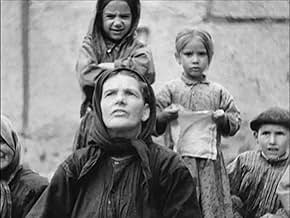
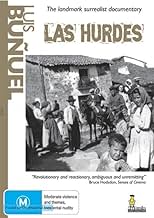
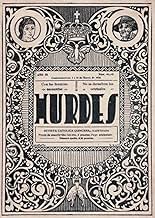
A surrealist film, a pseudo-documentary portrait of Las Hurdes, a remote region of Spain where civilisation has barely developed, showing how the local peasants try to survive without even t... Read allA surrealist film, a pseudo-documentary portrait of Las Hurdes, a remote region of Spain where civilisation has barely developed, showing how the local peasants try to survive without even the most basic utilities and skills.A surrealist film, a pseudo-documentary portrait of Las Hurdes, a remote region of Spain where civilisation has barely developed, showing how the local peasants try to survive without even the most basic utilities and skills.
- Director
- Writers
- Stars
Abel Jacquin
- Self
- (voice)
Alexandre O'Neill
- Self
- (voice)
- Director
- Writers
- All cast & crew
- Production, box office & more at IMDbPro
7.36.5K
1
2
3
4
5
6
7
8
9
10
Featured reviews
Amazing documentary.
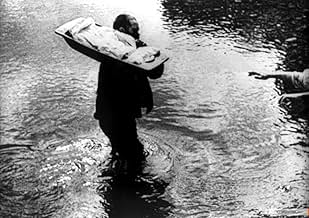
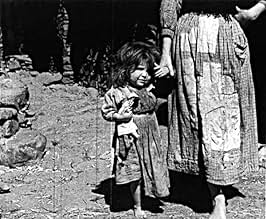
This is a fascinating documentary from Luis Bunuel about a little known people called the Hurdanos, who live primitive miserable lives in a remote region of Spain. Its hard to imagine that even in the early 20th century when this film was made, there were still people living in "civilized" Europe under the conditions shown in this film. Only a few years before this film was made did these people know of bread. They have only rudimentary farming skills. The narrator states that at no time did the film crew hear anyone sing or play music, so perhaps music is unknown to them. Malnutrition, pestilence, genetic disorders from inbreeding, and lack of proper hygiene plague these poor wretched people. This film shows them dying off in such high numbers, that one has wonder why these people didn't all die off or migrate to more hospitable terrain long ago.
Like so many other documentaries, some scenes were obviously staged for the camera, like the now notorious donkey falling off a cliff. We see the donkey falling in several different shots taken from different angles, which makes it unlikely the cameramen just happened to be there when the donkey fell.
Some people claim this film is an attack on Franco, but Franco didn't come to power until 1936. Actually I don't think this film was trying attack anyone. It merely does what I think its makers set out to do; try to capture the lives of a people who are very different from the rest of us.
Like so many other documentaries, some scenes were obviously staged for the camera, like the now notorious donkey falling off a cliff. We see the donkey falling in several different shots taken from different angles, which makes it unlikely the cameramen just happened to be there when the donkey fell.
Some people claim this film is an attack on Franco, but Franco didn't come to power until 1936. Actually I don't think this film was trying attack anyone. It merely does what I think its makers set out to do; try to capture the lives of a people who are very different from the rest of us.
Unusual, Interesting, & Unsettling - As You Would Expect From Buñuel
Luis Buñuel's approach to film-making was so unusual, and his intentions so hard to decipher, that you can never be quite sure what his movies were meant to convey. So it should probably not be too surprising that even when he makes a documentary it is still hard to tell exactly what he was doing. While this gives every initial appearance of being a straightforward documentary, it is not long before Buñuel's detailed yet surrealistic approach begins to show in subtle ways.
Whatever else may be true, it is an unusual film, and a generally interesting one. It is also unsettling - at times, very much so. It depicts a civilization that, though located in the midst of Spain just before the Franco era, could almost be from pre-historic times. Many of the images and much of the commentary are disturbing and uncomfortable to watch, to say the least. Yet the tone is far from emotional, and in fact it seems to be deliberately withdrawn, even unsympathetic, much of the time.
At the same time, it's easy to see why there are those who suggest that Buñuel was not filming a strictly objective documentary. While there are no outlandish or fantastical images, his distinctive style shows up in less obvious ways, through odd details and sequences. There also seem to be a number of different versions of the narration, which do not always cast events in the same light. So, as so often tends to be the cast with Buñuel, all that you can do is to watch it for yourself and then make your best guess as to what it all means.
Whatever else may be true, it is an unusual film, and a generally interesting one. It is also unsettling - at times, very much so. It depicts a civilization that, though located in the midst of Spain just before the Franco era, could almost be from pre-historic times. Many of the images and much of the commentary are disturbing and uncomfortable to watch, to say the least. Yet the tone is far from emotional, and in fact it seems to be deliberately withdrawn, even unsympathetic, much of the time.
At the same time, it's easy to see why there are those who suggest that Buñuel was not filming a strictly objective documentary. While there are no outlandish or fantastical images, his distinctive style shows up in less obvious ways, through odd details and sequences. There also seem to be a number of different versions of the narration, which do not always cast events in the same light. So, as so often tends to be the cast with Buñuel, all that you can do is to watch it for yourself and then make your best guess as to what it all means.
Bread and water
"Las Hurdes" may be the Surrealist documentary par excellence, a tendentious film discourse about poverty shot in Las Hurdes Altas, a human settlement out of a nightmare, among steep precipices, in an almost deserted landscape. Even based on Maurice Legendre's 1927 anthropological text "Las Jurdes: A Study of Human Geography", Buñuel forced into the harsh situations his own obsessions with insects and donkeys that would appall today any society for the protection of animals. Done at a time when Spain was among the nine countries with the highest level of economic development, by contrast this work shows the state of misery of a community marginalized by landowners, forgotten by authorities, and living in the cruelest of conditions. The cynic commentary makes the facts more striking, but the music score by Darius Milhaud is an obtrusive element. Although banned by the authorities, it was re-released with a Spanish narration read by actor Francisco Rabal.
Europa 1932.
Bunuel had always been a visionary man,his cinema had never stopped trying from "un chien andalou" to "le fantôme de la liberté"."las Hurdes " was a documentary ,but it made the genre explode.And,to think it was seventy years ago!
Near the Portuguese border,there's a part of Spain where a doomed humanity used to live.The beginning of "las hurdes" deals with a feast in a village,last stop before the Hurdes country.
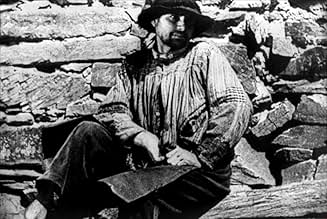
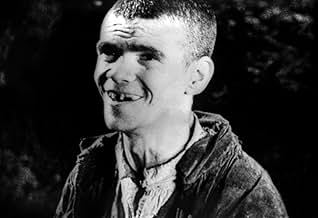
Then Bunuel begins his unthinkable depiction of this subhumanity:morons,maimed persons,monsters with twelve fingers,living in a filth you could not imagine.They drink in the brook/sewer!Springtime which everybody enjoys elsewhere is the worst season for the "Hurdes":all that remains for them to eat is cherries.But they cannot wait that they ripen,so they contract dysentery and they fall like flies.
And ,however,in a world that God seems to have completely forgotten,the children learn at school that the sum of the angles of a triangle is 180 degrees.And chiefly,they must respect the property of others(!). On the wall of the classroom,you can see a picture,showing an eighteen century marchioness!
Irony and surrealism are always here .After these horrors,out of the blue,Bunuel begins a lecture on the anopheles mosquito,complete with anatomical charts.
Banned by the Spanish government in 1933-1935,it took the Popular front(1936)to release what was the first social and political documentary.
Near the Portuguese border,there's a part of Spain where a doomed humanity used to live.The beginning of "las hurdes" deals with a feast in a village,last stop before the Hurdes country.
Then Bunuel begins his unthinkable depiction of this subhumanity:morons,maimed persons,monsters with twelve fingers,living in a filth you could not imagine.They drink in the brook/sewer!Springtime which everybody enjoys elsewhere is the worst season for the "Hurdes":all that remains for them to eat is cherries.But they cannot wait that they ripen,so they contract dysentery and they fall like flies.
And ,however,in a world that God seems to have completely forgotten,the children learn at school that the sum of the angles of a triangle is 180 degrees.And chiefly,they must respect the property of others(!). On the wall of the classroom,you can see a picture,showing an eighteen century marchioness!
Irony and surrealism are always here .After these horrors,out of the blue,Bunuel begins a lecture on the anopheles mosquito,complete with anatomical charts.
Banned by the Spanish government in 1933-1935,it took the Popular front(1936)to release what was the first social and political documentary.
Version important
I have been frustrated by the version of the film that is available in my area, entitled "Unpromised Land". The original "Tierra sin Pan" has a completely different commentary which is made "politically correct" in the "Unpromised" version. Avoid "Unpromised Land" as it censors and alters the original intent of the film as conceived by Bunuel!


Did you know
- TriviaLuis Buñuel was not above slaughtering several animals to deliver his message; he ordered the ailing donkey to be spread with honey so he could film it being stung to death by bees. Nor was the mountain goat falling off the mountain an accident, shot by Buñuel's crew for the desired sequence.
- GoofsIn the sequence where the mountain goat falls to its death, a puff of smoke can be seen on the side of the screen. This is from a gunshot by a crew member, who shot the goat so that it would fall and be filmed as if it 'accidentally' fell off of the mountain.
- ConnectionsFeatured in Histoire(s) du cinéma: Les signes parmi nous (1999)
Details
- Release date
- Country of origin
- Language
- Also known as
- Земля без хліба
- Filming locations
- La Alberca, Salamanca, Castilla y León, Spain(main town, on location)
- Production company
- See more company credits at IMDbPro
- Runtime
- 30m
- Color
- Sound mix
- Aspect ratio
- 1.37 : 1
Contribute to this page
Suggest an edit or add missing content