IMDb RATING
6.8/10
1.4K
YOUR RATING

After losing his hearing, a musician uses lip-reading to help others.After losing his hearing, a musician uses lip-reading to help others.After losing his hearing, a musician uses lip-reading to help others.
- Awards
- 1 win total
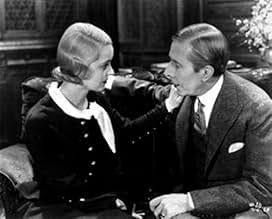
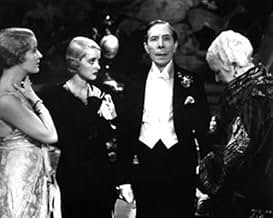
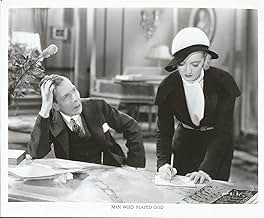
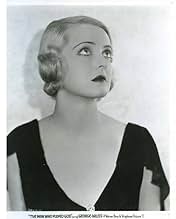

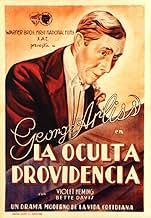

George Arliss
- Montgomery Royle
- (as Mr. George Arliss)


André Luguet
- The King
- (as Andre Luguet)


Ivan F. Simpson
- Battle
- (as Ivan Simpson)

Charles E. Evans
- The Doctor
- (as Charles Evans)


Fred Howard
- Man
- (scenes deleted)


Symona Boniface
- Woman in Audience
- (uncredited)

Wade Boteler
- Detective
- (uncredited)

Elspeth Dudgeon
- Would-Be Ticket Buyer
- (uncredited)

Grace Durkin
- Kit - First Girl
- (uncredited)

Helena Phillips Evans
- Music Fan with Boy
- (uncredited)
6.81.3K
1
2
3
4
5
6
7
8
9
10
Featured reviews
Great story...Pivotal Bette Davis movie
In 1932 many actors were still rather new to sound pictures and the great majority of them were theatre trained and while some would stay on in Hollywood, many would return to the stage to stay. Bette Davis was a young actress in the midst of making that decision to aty in Hollywood or return to New York and the stage. She had made several low buget pictures, but things just were not clicking for her. The success of this movie and the attention she received convinced her to stay on and make movies and we are all thankful for that. George Arliss was a grand old man of the stage and his artistry is well portrayed here. His makeup is a little heavy, making him look a little like the Phantom of The Opera with lipstick and darkened nostrils, but soon you get beyond that. The acting is almost strictly stage-style here, this MUST have been a play before it was filmed. The blocking and angles of the actors and the way they seem to talk "at" each other rather than to each other shows the stage acting. Great story, nice escapism... who wouldnt like to help others? We can do that through George Arliss in this movie.
marvelous early Bette Davis
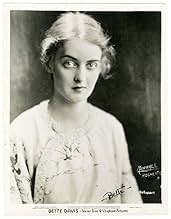
I get so sick of people claiming that Bette Davis wasn't a beauty. She is so lovely in this 1932 film - those huge, gorgeous blue eyes, radiant smile, cute figure - she looks like a doll.
This is a wonderful melodrama which was re-made with, of all people, Liberace years later as "Sincerely Yours." All I can remember about the Liberace film is that he soft-shoed off the stage at the end, and I have a vague impression of him starting to go deaf while playing the piano.
If you can get past that the embalmed-looking George Arliss is supposed to be only 50 years old in this film (he was 64 and looks 80), it should be clear sailing from then on. Arliss was a marvelous actor, and his strong theatrical training is obvious here, as is Davis', with her clipped voice and large gestures. Film as a medium was still being learned by these actors who came from theater.
Man Who Played God is a truly beautiful story about a world-famous pianist who goes deaf and turns against his music and his religious beliefs, only to discover that every tragedy in life has meaning. 73 years later, it's still a great life lesson.
Look for Ray Milland in an uncredited role.
This is a wonderful melodrama which was re-made with, of all people, Liberace years later as "Sincerely Yours." All I can remember about the Liberace film is that he soft-shoed off the stage at the end, and I have a vague impression of him starting to go deaf while playing the piano.
If you can get past that the embalmed-looking George Arliss is supposed to be only 50 years old in this film (he was 64 and looks 80), it should be clear sailing from then on. Arliss was a marvelous actor, and his strong theatrical training is obvious here, as is Davis', with her clipped voice and large gestures. Film as a medium was still being learned by these actors who came from theater.
Man Who Played God is a truly beautiful story about a world-famous pianist who goes deaf and turns against his music and his religious beliefs, only to discover that every tragedy in life has meaning. 73 years later, it's still a great life lesson.
Look for Ray Milland in an uncredited role.
Central Park benefactor
Although George Arliss made several of the roles he did on stage into films both sound and silent The Man Who Played God was not one of them. Another stage legend Otis Skinner originated that role on Broadway although Arliss filmed it twice both as a silent and with sound.
We can only speculate about what Skinner did with the part, but Arliss because we have him on film can truly be said to make the part his own. His is a style that many find old fashioned, but I find most compelling when he's performing.
The story is that of a famous concert pianist who was born into a wealthy family so he's never in danger of missing a meal. A bomb set off at a private performance has left him stone deaf and in a great deal of despair. But he learns the art of lip reading and from his Central Park penthouse with opera glasses in hand spies on a lot of ordinary people and becomes their anonymous benefactor.
Bette Davis made her Warner Brothers debut and the first of two films with George Arliss. Davis who was not exactly shy about criticizing her colleagues had nothing but praise for this man. She credited him with being the first to realize the potential she had as an actress. She plays a student of his who mistakes romantic love for an admiration as an artist she feels. She's not given much to work with in the role, but she does far more than could be expected.
Louise Closser Hale as Arliss's sister and Ivan Simpson as his butler who has a wonderful scene preventing Arliss from suicide also stand out. Look also for Ray Milland in a small part as another man on the verge of suicide.
The Man Who Played God is old fashioned in its presentation, but still holds up well after 80 years.
We can only speculate about what Skinner did with the part, but Arliss because we have him on film can truly be said to make the part his own. His is a style that many find old fashioned, but I find most compelling when he's performing.
The story is that of a famous concert pianist who was born into a wealthy family so he's never in danger of missing a meal. A bomb set off at a private performance has left him stone deaf and in a great deal of despair. But he learns the art of lip reading and from his Central Park penthouse with opera glasses in hand spies on a lot of ordinary people and becomes their anonymous benefactor.
Bette Davis made her Warner Brothers debut and the first of two films with George Arliss. Davis who was not exactly shy about criticizing her colleagues had nothing but praise for this man. She credited him with being the first to realize the potential she had as an actress. She plays a student of his who mistakes romantic love for an admiration as an artist she feels. She's not given much to work with in the role, but she does far more than could be expected.
Louise Closser Hale as Arliss's sister and Ivan Simpson as his butler who has a wonderful scene preventing Arliss from suicide also stand out. Look also for Ray Milland in a small part as another man on the verge of suicide.
The Man Who Played God is old fashioned in its presentation, but still holds up well after 80 years.
A unique premise plus the talent of Arliss and Bette Davis
This is an unusual little film starring George Arliss as master concert musician Monty Royale whose young pupil Grace (Bette Davis) confesses her love to him. He's of course flattered but unsure of what the coming years will bring considering their age difference. He agrees to marry her if she feels the same in six months. However, near the beginning of the six month period something happens that leaves Monty unable to enjoy his own music - he is left completely deaf from an explosion. He becomes a bitter man who shuts himself away from everyone. He does take some training in learning to read lips so that he can deal with the world in his new condition, and this training leads him to realize that he now has the means to bring happiness to people in a different and more individualized way than he could as a musician. With the aid of some powerful binoculars left behind by Grace, he can read the lips of the people in the park across the street, learn their troubles, and with his large family fortune and influence, save lives or maybe just bring someone some welcome happiness.
Soon the joy of living has reentered Monty's life, and he is happy that the six month waiting period is soon to end and Grace will be returning from California - they can be wed. He's people watching at his window when Grace suddenly appears in the park across the street. She sits down with someone and begins to have a conversation. Monty "listens in". What will he discover and how will he react? Watch and find out.
In addition to the fine work of George Arliss and Bette Davis, the supporting roles are well played here too. Ivan Simpson is great as Monty's gentleman's gentleman who has no trouble sternly lecturing his master when he needs it, yet is such a formal person that he cannot leave the house -even on an urgent errand - without his hat, and there is even a very small part played by a very young Ray Milland. Highly recommended for fans of early 30's films. It has some precode elements in it, particularly the part where Monty is wrestling with God and his loss of belief, but I would not call it a precode at all.
Soon the joy of living has reentered Monty's life, and he is happy that the six month waiting period is soon to end and Grace will be returning from California - they can be wed. He's people watching at his window when Grace suddenly appears in the park across the street. She sits down with someone and begins to have a conversation. Monty "listens in". What will he discover and how will he react? Watch and find out.
In addition to the fine work of George Arliss and Bette Davis, the supporting roles are well played here too. Ivan Simpson is great as Monty's gentleman's gentleman who has no trouble sternly lecturing his master when he needs it, yet is such a formal person that he cannot leave the house -even on an urgent errand - without his hat, and there is even a very small part played by a very young Ray Milland. Highly recommended for fans of early 30's films. It has some precode elements in it, particularly the part where Monty is wrestling with God and his loss of belief, but I would not call it a precode at all.
This (1932) Motion Picture is the One that Made Bette Davis
"Of Human Bondage," (1934) by RKO, to whom Bette Davis was 'loaned' by Warner Brothers, is most often given credit for the beginning of the Queen of the Silver Screen's magnificent acting career. That's not the historical fact, however; this movie, "The Man Who Played God," (1932) must be credited for bringing Bette Davis the recognition as an actor who could hold her own in the lead next to the great screen legend, George Arliss.
Davis was only 23 years of age when filming the show that earned her enough screen status for RKO to even desire her to play the leading, (dare I say) 'lady' next to leading man, Leslie Howard in "...Bondage." Arliss is to be credited for having, more or less, discovered Bette Davis; phoned her & the rest of her acclaimed acting career began.
So many of the critiquers repeat the myth that "... Bondage" is the film that made the world recognize how great an actor Davis was. But, if it was, RKO would have never even wanted her so badly that they 'got her on loan' from the Warners! RKO recognized the talent of Bette Davis in this film: "The Man Who Played God." So should we.
Never underestimate what young adult & teen women can achieve. After all, Mary Shelley wrote "Frankenstein," when she was only 19 years of age in a bet with great poets, Lord Byron & her husband Percy Bysche Shelley. Ann & Nancy Wilson of the rock band "Heart," composed many of their best songs when they were 13 years of age! Davis had already been on Broadway before taking her role in this movie. In fact, her acting career began when she was 15 (in 1923). Davis went on (& on!) to co-lead with Lillian Gish in "Whales of August," (1987), having been in over 100 movies; was the first woman to receive an Oscar at Warner Brothers (for "Dangerous"); the first person to be nominated for an Oscar 5 years in a row; the first woman to receive the AFI's Lifetime Achievement Award; the first person to be nominated for 10 Oscars; the highest paid woman during her prime. She was the epitome of a trail blazer who had to do it "the hard way."
Today, Robert Wagner, Miss Davis's son, Michael, & Miss Davis's closest assistant are key figures who keep Bette Davis's acting excellence alive, through the foundation named after her. Meryl Streep was the first actor to benefit from Davis's foundation. Obviously, the foundation board is taking Davis's acting acumen as a serious measure by which to select recipients of foundation awards & scholarships. Davis herself was the one to recognize Streep's acting abilities.
That's what kind of lady she was: she'd take a step back on the set to boost someone else's acting career; she'd take steps forward to seek out great scriptwriters, directors, cinematographers, etc. She strove to not only circulate her own gifts, but wanted to help others people do so with theirs--and still does so. Her reputation on the set was not as a "star," struck with ego maniacal lights in her fabulously expressive eyes. Instead, she was known to be a pleasure to work with amongst the team workers; and a real tough lady to contend with when she sensed something was amiss in a line, scene, lighting, direction, or co-worker. But, as Robert Wagner tells of Davis, she was truly a fun person to work with because she "always" came to work prepared to put on her very best performance. And when she goofed, she did so with a kind of cute humility that was full of wit enough to crack-up the co-workers she liked.
There's a huge difference between striving for perfection and believing we're perfect. Davis did the former. By the way, she gave her "Jezebel" Oscar to her son, Michael. Steven Spielberg bought her "Dangerous" one that was auctioned (for the second highest price ever) to benefit her foundation. This says to me that Davis herself knew she'd really earned her "Jezebel" Oscar; whereas it was no secret that the masses believed she got the "Dangerous" Oscar as a "consolation prize" for not even being nominated for, "Of Human Bondage."
By my standards, Davis was robbed of her third Oscar for playing the role of Charlotte Vale in "Now, Voyager." In Davis's mind, she was robbed of (what would have been her fourth) Oscar for playing Baby Jane Hudson in, "What Ever Happened to Baby Jane?"
Davis herself credited George Arliss & this movie for jump starting her into untouchable acting achievements. This movie is the movie to own if we want to say we've got a copy of Bette Davis's first great one.
Davis was only 23 years of age when filming the show that earned her enough screen status for RKO to even desire her to play the leading, (dare I say) 'lady' next to leading man, Leslie Howard in "...Bondage." Arliss is to be credited for having, more or less, discovered Bette Davis; phoned her & the rest of her acclaimed acting career began.
So many of the critiquers repeat the myth that "... Bondage" is the film that made the world recognize how great an actor Davis was. But, if it was, RKO would have never even wanted her so badly that they 'got her on loan' from the Warners! RKO recognized the talent of Bette Davis in this film: "The Man Who Played God." So should we.
Never underestimate what young adult & teen women can achieve. After all, Mary Shelley wrote "Frankenstein," when she was only 19 years of age in a bet with great poets, Lord Byron & her husband Percy Bysche Shelley. Ann & Nancy Wilson of the rock band "Heart," composed many of their best songs when they were 13 years of age! Davis had already been on Broadway before taking her role in this movie. In fact, her acting career began when she was 15 (in 1923). Davis went on (& on!) to co-lead with Lillian Gish in "Whales of August," (1987), having been in over 100 movies; was the first woman to receive an Oscar at Warner Brothers (for "Dangerous"); the first person to be nominated for an Oscar 5 years in a row; the first woman to receive the AFI's Lifetime Achievement Award; the first person to be nominated for 10 Oscars; the highest paid woman during her prime. She was the epitome of a trail blazer who had to do it "the hard way."
Today, Robert Wagner, Miss Davis's son, Michael, & Miss Davis's closest assistant are key figures who keep Bette Davis's acting excellence alive, through the foundation named after her. Meryl Streep was the first actor to benefit from Davis's foundation. Obviously, the foundation board is taking Davis's acting acumen as a serious measure by which to select recipients of foundation awards & scholarships. Davis herself was the one to recognize Streep's acting abilities.
That's what kind of lady she was: she'd take a step back on the set to boost someone else's acting career; she'd take steps forward to seek out great scriptwriters, directors, cinematographers, etc. She strove to not only circulate her own gifts, but wanted to help others people do so with theirs--and still does so. Her reputation on the set was not as a "star," struck with ego maniacal lights in her fabulously expressive eyes. Instead, she was known to be a pleasure to work with amongst the team workers; and a real tough lady to contend with when she sensed something was amiss in a line, scene, lighting, direction, or co-worker. But, as Robert Wagner tells of Davis, she was truly a fun person to work with because she "always" came to work prepared to put on her very best performance. And when she goofed, she did so with a kind of cute humility that was full of wit enough to crack-up the co-workers she liked.
There's a huge difference between striving for perfection and believing we're perfect. Davis did the former. By the way, she gave her "Jezebel" Oscar to her son, Michael. Steven Spielberg bought her "Dangerous" one that was auctioned (for the second highest price ever) to benefit her foundation. This says to me that Davis herself knew she'd really earned her "Jezebel" Oscar; whereas it was no secret that the masses believed she got the "Dangerous" Oscar as a "consolation prize" for not even being nominated for, "Of Human Bondage."
By my standards, Davis was robbed of her third Oscar for playing the role of Charlotte Vale in "Now, Voyager." In Davis's mind, she was robbed of (what would have been her fourth) Oscar for playing Baby Jane Hudson in, "What Ever Happened to Baby Jane?"
Davis herself credited George Arliss & this movie for jump starting her into untouchable acting achievements. This movie is the movie to own if we want to say we've got a copy of Bette Davis's first great one.


Did you know
- TriviaThis was the first movie Bette Davis made under her contract to Warner Bros., the studio under which she did most of her best-known work of the 1930s and '40s. Her earlier six films were made for various studios, (including Universal, RKO and Columbia) all of which let her go.
- GoofsWhen Royle goes to his desk after observing the couple in the park, the shadow of the boom microphone dips onto the window curtain behind him.
- Quotes
Grace Blair: You're my ideal!
Montgomery Royle: I shall always be... your friend.
- ConnectionsFeatured in Hollywood: The Great Stars (1963)
- SoundtracksFantaisie-Impromptu in C sharp minor, Op. 66
(1834) (uncredited)
Written by Frédéric Chopin
Played on piano by George Arliss (dubbed by Salvatore Santaella) at the concert
Details
- Release date
- Country of origin
- Languages
- Also known as
- Covek koji se dopao Bogu
- Filming locations
- Production company
- See more company credits at IMDbPro
Box office
- Budget
- $237,000 (estimated)
- Runtime
- 1h 20m(80 min)
- Color
- Sound mix
- Aspect ratio
- 1.37 : 1
Contribute to this page
Suggest an edit or add missing content