
A young woman's financial problems continue through a troubled marriage to a gambler.A young woman's financial problems continue through a troubled marriage to a gambler.A young woman's financial problems continue through a troubled marriage to a gambler.



Sheila Bromley
- Wedding Girl
- (scenes deleted)

Betty Farrington
- Mrs. Braddock
- (scenes deleted)

Ralf Harolde
- Willie
- (scenes deleted)

Nat Pendleton
- Dance Hall Plumber
- (scenes deleted)

Harold Waldridge
- Messenger
- (scenes deleted)
Robert Bennett
- Floor Boy
- (uncredited)
Eileen Carlisle
- Rose, a Salesgirl
- (uncredited)

Eddy Chandler
- Delivery Man
- (uncredited)

Charles Coleman
- Floorwalker
- (uncredited)

Jack Curtis
- Carpenter in Hardware Department
- (uncredited)
5.9408
1
2
3
4
5
6
7
8
9
10
Featured reviews
Loretta the lovely
The title is meaningless, the story just as pointless, and whatever interest there is to be derived from this girl-loves-gambler weepie comes from the delicate beauty of Loretta Young. The film is a feast for the eyes (with nary a morsel of food for thought) as masterly cinematographer Gregg Toland captures the poetry of Young's huge, soulful peepers and full promising lips with one lovestruck close-up after another. The following year's "Zoo in Budapest" and "Man's Castle" would cement her position as the Depression's most desirable waif, the pin-up girl of the bread lines. With the barrelhouse comedienne Winnie Lightner as her wisecracking pal and Guy Kibbee, criminally wasted as Lightner's swain.
An odd one
One-third knockabout comedy, two-thirds weepie as mad Winnie Lightner gets top billing and chews up the scenery as Loretta Young's gal-pal, but is really incidental to the story and disappears for long segments. (She does get some good insults in, scrapping with fellow salesgirl Dorothy Burgess.) But the bulk of it is Loretta in distress, falling reluctantly for gambler Norman Foster, marrying him, quitting her job, getting pregnant, then throwing him out of the house when she mistakenly thinks he's returned to his gambling ways after getting an honest job as a garage mechanic. (Where'd he acquire the skill? No idea.) He returns at the darnedest time, just in time for a happy ending. The always dull direction of Ray Enright does nothing to enhance this, and it feels a little like two movies sewn into one one-hour feature, but Gregg Toland's cinematography is lovely, and Loretta in a quintessential suffering-Depression-gal role she played many times is worth watching.
You Can Bet on Loretta Young
Transfers at the "Mayfield Department Store" result in beautiful Loretta Young (as Buster "Bus" Green) being assigned to "Infants Wear" while comic relief pal Winnie Lightner (as Georgine Hicks) is sent to "Plumbing Supplies". The women, who share a bed, are unhappy with the new assignments. At home, they arrange a dancing date with Ms. Young's boyfriend James Ellison (as Elmer) and pal Norman Foster (as Wallace "Wally" Dennis), a "blind date" for Ms. Lightner. But, Mr. Foster thinks Young is "hot" and begins to pursue her. The two unexpectedly fall in love, but Foster has a dark secret. He's a compulsive gambler...
Meanwhile, sharp-tongued Lightner is romanced by older man Guy Kibbee (as "Finky" Finkelwald). This is a strange, carelessly scripted story about the effects of gambling. The heroine's problems, caused by her gambling husband, are alleviated by her own gambling; it doesn't make sense. An interesting point of characterization is that when Young's character was born, her mother died; for this reason, she is supposedly reluctant to marry, and have children. She is mistakenly called a "Play-Girl". But, Young and the cast are enjoyable. In real life, Young was close to co-star Foster; he married her sister, actress Sally Blane.
***** Play-Girl (3/12/32) Ray Enright ~ Loretta Young, Winnie Lightner, Norman Foster, James Ellison
Meanwhile, sharp-tongued Lightner is romanced by older man Guy Kibbee (as "Finky" Finkelwald). This is a strange, carelessly scripted story about the effects of gambling. The heroine's problems, caused by her gambling husband, are alleviated by her own gambling; it doesn't make sense. An interesting point of characterization is that when Young's character was born, her mother died; for this reason, she is supposedly reluctant to marry, and have children. She is mistakenly called a "Play-Girl". But, Young and the cast are enjoyable. In real life, Young was close to co-star Foster; he married her sister, actress Sally Blane.
***** Play-Girl (3/12/32) Ray Enright ~ Loretta Young, Winnie Lightner, Norman Foster, James Ellison
Are Husbands Necessary?
PLAY-GIRL (Warner Brothers, 1932) directed by Ray Enright, is an awkward title for a movie that opens with superimpose cast credits over horse racing focus. Play-girl is not the name of a horse nor is it about thoroughbreds and jockeys. It's a typical standard Depression era theme of best friends with different personalities. Starring comedienne Winnie Lightner as the wisecracking character with Loretta Young as the attractive yet dignified woman, it has enough plot elements resolved within an hour.
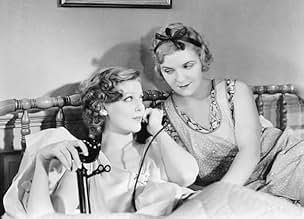
Set during the Depression era in New York City, Georgette Hicks (Winnie Lightner) and Buster (Loretta Young), two women sharing an apartment together, work as salesgirls for the Mayfield Department Store. Georgette, having the misfortune of working in hardware and later plumbing department, would rather be assigned to Buster's department of infant wear. Georgette, who happens to be older than Buster, is eager to get married. She has a prospect on nabbing a Mr. Finklewald (Guy Kibbee), but any man will do. Buster prefers never to marry, scared of dying in childbirth as did her mother. On an invite date with Elmer (James Ellison), who brings his friend, Wally Dennis (Norman Foster) from out of town as tagalong Georgette, Wally turns his affections towards Buster instead. After a brief courtship, Buster and Wally marry. As Georgette finally nabs Finklewald for her husband, Buster's marriage starts off well until she discovers Wally's weakness for gambling. Also in the cast are Dorothy Burgess (Edna); Noel Madison (Marty Happ); Edward Van Sloan (Mr. Mayfield); and Robert Emmett O'Connor (The Policeman).
Starting off in screwball comedy style in the favor of Lightner, once the Norman Foster character appears, the story shifts towards Loretta Young, with the romance between Lightner and Kibbee only secondary. In typical Warners's fashion, scenes play fast and brief, helping the plot elements without making it overlong and unnecessary. A fine singer in her own right, Lightner gets no songs to plug. Only her signature tune "Singing in the Bath-tub" introduced in THE SHOW OF SHOWS (1929) briefly gets some underscoring. Living up to her surname, Loretta Young is not only young but extremely attractive. While Norman Foster's role could have been played by Young's then frequent co-star, Douglas Fairbanks Jr., Foster is satisfactory as the husband. With Young's career on the way up and Lightner's on the way out, both teamed again for the final time and last for the studio for SHE HAD TO SAY YES (1933), with Young heading the cast and second-billed Lightner having little to do.
Never distributed on video cassette but available on DVD disc, PLAY-GIRL keeps from being a long-forgotten programmer with interesting superimposing of horse racing over face of subject matter with occasional broadcasts on Turner Classic Movies cable channel. (**1/2)
Set during the Depression era in New York City, Georgette Hicks (Winnie Lightner) and Buster (Loretta Young), two women sharing an apartment together, work as salesgirls for the Mayfield Department Store. Georgette, having the misfortune of working in hardware and later plumbing department, would rather be assigned to Buster's department of infant wear. Georgette, who happens to be older than Buster, is eager to get married. She has a prospect on nabbing a Mr. Finklewald (Guy Kibbee), but any man will do. Buster prefers never to marry, scared of dying in childbirth as did her mother. On an invite date with Elmer (James Ellison), who brings his friend, Wally Dennis (Norman Foster) from out of town as tagalong Georgette, Wally turns his affections towards Buster instead. After a brief courtship, Buster and Wally marry. As Georgette finally nabs Finklewald for her husband, Buster's marriage starts off well until she discovers Wally's weakness for gambling. Also in the cast are Dorothy Burgess (Edna); Noel Madison (Marty Happ); Edward Van Sloan (Mr. Mayfield); and Robert Emmett O'Connor (The Policeman).
Starting off in screwball comedy style in the favor of Lightner, once the Norman Foster character appears, the story shifts towards Loretta Young, with the romance between Lightner and Kibbee only secondary. In typical Warners's fashion, scenes play fast and brief, helping the plot elements without making it overlong and unnecessary. A fine singer in her own right, Lightner gets no songs to plug. Only her signature tune "Singing in the Bath-tub" introduced in THE SHOW OF SHOWS (1929) briefly gets some underscoring. Living up to her surname, Loretta Young is not only young but extremely attractive. While Norman Foster's role could have been played by Young's then frequent co-star, Douglas Fairbanks Jr., Foster is satisfactory as the husband. With Young's career on the way up and Lightner's on the way out, both teamed again for the final time and last for the studio for SHE HAD TO SAY YES (1933), with Young heading the cast and second-billed Lightner having little to do.
Never distributed on video cassette but available on DVD disc, PLAY-GIRL keeps from being a long-forgotten programmer with interesting superimposing of horse racing over face of subject matter with occasional broadcasts on Turner Classic Movies cable channel. (**1/2)
Very early Loretta Young film about the impact gambling has on a young couple...
Very early Loretta Young film: she's not even top billed. Winnie Lightner is - an interesting younger character actress. But it really is Loretta's movie. The plot involves Loretta's character falling in love with a gambler - and the complications which arise. Norman Foster plays the gambler: ironically, he married Miss Young's sister (Sally Blane) in 1937 - after being divorced from Claudette Colbert. Most memorable scenes in this movie are set in a department store circa 1932.
Movie is also notable as (apparently) the first movie of a very young James Ellison. Neither the title "Play Girl" or the alternate title "Love on a Budget" really describe this film. Entertaining melodrama from the early days of sound.
Movie is also notable as (apparently) the first movie of a very young James Ellison. Neither the title "Play Girl" or the alternate title "Love on a Budget" really describe this film. Entertaining melodrama from the early days of sound.


Did you know
- TriviaTeasing her boyfriend, Buster says to him, "Come on, Gable, get hot!" The line is startling because a few years later Loretta Young would make Call of the Wild (1935) with Clark Gable and have a child by him.
- GoofsNear the start there are brief glimpses of various store departments. In the plumbing department, Winnie Lightner is in the background perched on a sink. That makes no sense, as it is only later on in the story that her character is reassigned from hardware to plumbing. (One publicity still for the film is a closeup of Winnie on the sink, but there is no such scene in the movie; probably a sequence involving Winnie in the plumbing department was deleted, but then Warners decided to use that opening shot figuring nobody would notice Winnie in the background.)
- Quotes
Georgine Hicks: [Wind blows away a pair of panties hang drying in the window] Oh! Oh! Oh-oh-oh!
Buster 'Bus' Green Dennis: What's the matter?
Georgine Hicks: Oh, there goes my last panties!
Buster 'Bus' Green Dennis: Well, now what are you gonna do?
Georgine Hicks: Keep off of step ladders.
- SoundtracksThe Wedding March
(1843) (uncredited)
from "A Midsummer Night's Dream, Op. 61"
Music by Felix Mendelssohn
Played briefly when the passport is shown
Details
- Runtime
- 1h(60 min)
- Color
- Sound mix
- Aspect ratio
- 1.37 : 1
Contribute to this page
Suggest an edit or add missing content