IMDb RATING
7.1/10
4.8K
YOUR RATING


Although Vivian Revere is seemingly the most successful of a trio of reunited schoolmates, she throws it away by descending into a life of debauchery and drugs.Although Vivian Revere is seemingly the most successful of a trio of reunited schoolmates, she throws it away by descending into a life of debauchery and drugs.Although Vivian Revere is seemingly the most successful of a trio of reunited schoolmates, she throws it away by descending into a life of debauchery and drugs.
- Director
- Writers
- Stars






Anne Shirley
- Vivian Revere as a Child
- (as Dawn O'Day)

Joan Sheldon
- Ruth Westcott as a Child
- (as Betty Carse)

Herman Bing
- Prof. Irving Finklestein
- (uncredited)

Clara Blandick
- Mrs. Keaton
- (uncredited)
Dick Brandon
- Horace
- (uncredited)

Ann Brody
- Mrs. Goldberg
- (uncredited)

Spencer Charters
- Street Cleaner
- (uncredited)

Frankie Darro
- Bobby
- (uncredited)
- Director
- Writers
- All cast & crew
- Production, box office & more at IMDbPro
7.14.7K
1
2
3
4
5
6
7
8
9
10
Featured reviews
Lots of fun for fans of early 30s melodramas!
After viewing the video version of this movie again last night, I was surprised at how most of the movie stands up today. As with many "from the headlines" movies produced by Warner Brothers and First National in the early 1930s, the pace is rapid. I prefer the latter part of the movie to the earlier scenes, which provide a lengthy prologue to the main story. It is unfortunate that the lead actress, Ann Dvorak, is almost forgotten today, for she was a beautiful and talented actress, who more often than not was more capable than the material she was given. Hers is an unusual character, but an interesting and not too hysterical performance. It's also fun to watch future stars like Bette Davis and Humphrey Bogart in supporting roles, as well as to savour supporting performances by Jack LaRue, Allen Jenkins and Lyle Talbot. The climax is quite remarkable, although the tacked on happy ending jars with the mood of the movie as a whole. Well worth watching on the late show, cable, or if you find a copy of the video.
The Three Matchkateers
THREE ON A MATCH (First National Pictures, 1932), directed by Mervyn LeRoy, is a realistic account into the lives of three former classmates who meet again as adults, and how one of the three goes through her path of self destruction.
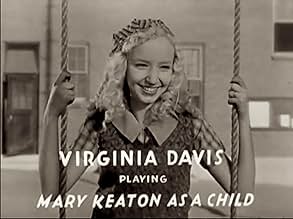
The story begins in 1919 where the song, "Smiles" is on top of the charts. Jack Dempsey wins his championship title by knocking out Jess Willard, and the advent of the Prohibition era. Three girls, Mary (Virginia Davis), Vivian (Dawn O'Day) and Ruth (Betty Carrs) are students at Public School 62. Mary is a wild girl who cuts class to smoke "cigarettes"; Ruth is a studious girl with the highest grades in her class; and Vivian is a snob voted the most popular girl in her class. Next segment: 1921, Warren G. Harding is elected as president of the United States with his campaign slogan, "the era of good feeling." The girls graduate and go on their separate ways, with the troublesome Mary, who will face her future serving time in reform school. 1925 starts with the underscoring of "The Prison Song," the debut of True Facts Magazine, and of how the youth of today has gone wild. The former classmates, now adults, are focused to what they are currently doing: Mary (Joan Blondell), serving time for grand larceny in a reform school; Vivian (Ann Dvorak), attending an exclusive school, and reading bedtime stories to youngsters; and Ruth (Bette Davis), in secretarial school. Next segment, 1930, with "Dancing With Tears in My Eyes" heading the musical charts. Mary Keaton, a struggling actress using Mary Bernard as her stage name, is reunited with Vivian, now married to a successful attorney, Robert Kirkwood (Warren William), and mother to a little boy, Junior (Buster Phelps). Although Vivian has everything to live for, she's unhappy, in fact, just plain bored. As for Ruth, she's a secretary with ambition. Upon their reunion in a restaurant, they talk over old times, light up their cigarettes from a single match and laugh off the superstition, "Three on a Match," where the third member to use the match is to become the unlucky one. Later, while on an ocean cruise alone with Junior, Vivian meets Mike Loftus (Lyle Talbot), a compulsive gambler whom she's immediately attracted. After going with this loser, she finds her new existence and illicit affair exciting, until realizing that too much partying, liquor and cigarettes is ruining her life as well as Junior's. Following a brief segment of 1931, the chapter concludes in 1932, showing what happens to the "three on a match."
Whenever THREE ON A MATCH is shown on television (presently on Turner Classic Movies) it plays as a Bette Davis movie, even though she's the one with limited screen time, least dialog and smoking scenes. Joan Blondell, the leading member of the trio, is good in her role, but it's Ann Dvorak giving a standout performance, in what's considered by many to be her best screen role. Of the trio, it's Bette Davis who worked herself to becoming the "Queen of Warner Brothers" before the end of the decade. As for Blondell, she's as memorable as Dvorak is underrated. Warren William, then groomed to stardom, is also given little screen opportunity in this production. This was to be his first of five films opposite Joan Blondell, and their combination together works quite well on screen. Betty Carrs, the child actress appearing as Ruth in the early portion of the story, has a striking resemblance to Bette Davis, giving the basic idea as to how Bette Davis herself looked during her childhood years; Dawn O'Day would later become known as Anne Shirley, leading adolescent actress for RKO Radio in the 1930s and early 1940s.; and Virginia Davis, the least known of the three, once known as the the live action character of Alice in cartoon shorts for Walt Disney in the 1920s.
With limited actors listed in the opening credits, there are many familiar faces from the Warners stock company to go around: Glenda Farrell (The reform school inmate); Grant Mitchell (The school principal); Clara Blandick (Mary's mother); Frankie Darro (Bobby); Hardie Albright (Philip Randall, Kirkwood's lawyer assistant); and Sidney Miller (Willie Goldberg). Allen Jenkins, Humphrey Bogart (in gangster debut) and Jack LaRue play the meanest looking thugs in screen history, with Edward Arnold as "Ace," their leader, who's introduced late in the story in front of the mirror pulling hairs from his nose with the tweezers.
Like most Warner Brothers Depression-era dramas of the 1930s, THREE ON A MATCH plays on the grim side. No nonsense, no glamor, heavy on melodrama and a touch of "film noir." Even Blondell and Dvorak play their own down-on-their luck characters in separate scenes without the use of makeup. It's quite grim, especially with a "too-close- for- comfort" scene involving child abduction. All in all, as depressing as it can be, it's quite watchable, particularly since it's a very short 63 minute production that plays like a novel with very short chapters. There's great moments of nostalgia, especially with it's newsreel-type opening of events that occurred during any given specific era of time giving this an added plus.
THREE ON A MATCH is also available on video cassette as part of the "FORBIDDEN Hollywood" series, hosted by respected film critic, Leonard Maltin. Over the years, THREE ON A MATCH has developed into a minor classic from the 1930s. It was remade by Warner Brothers in 1938 as Broadway MUSKETEERS with Ann Sheridan, Margaret Lindsay and Marie Wilson in the Blondell, Dvorak and Davis roles, with a little girl, Janet Chapman, filling in the role as the doomed girl's child. The original ranks the best and stronger of the two. They can both be seen and compared on Turner Classic Movies. (*** matches)
The story begins in 1919 where the song, "Smiles" is on top of the charts. Jack Dempsey wins his championship title by knocking out Jess Willard, and the advent of the Prohibition era. Three girls, Mary (Virginia Davis), Vivian (Dawn O'Day) and Ruth (Betty Carrs) are students at Public School 62. Mary is a wild girl who cuts class to smoke "cigarettes"; Ruth is a studious girl with the highest grades in her class; and Vivian is a snob voted the most popular girl in her class. Next segment: 1921, Warren G. Harding is elected as president of the United States with his campaign slogan, "the era of good feeling." The girls graduate and go on their separate ways, with the troublesome Mary, who will face her future serving time in reform school. 1925 starts with the underscoring of "The Prison Song," the debut of True Facts Magazine, and of how the youth of today has gone wild. The former classmates, now adults, are focused to what they are currently doing: Mary (Joan Blondell), serving time for grand larceny in a reform school; Vivian (Ann Dvorak), attending an exclusive school, and reading bedtime stories to youngsters; and Ruth (Bette Davis), in secretarial school. Next segment, 1930, with "Dancing With Tears in My Eyes" heading the musical charts. Mary Keaton, a struggling actress using Mary Bernard as her stage name, is reunited with Vivian, now married to a successful attorney, Robert Kirkwood (Warren William), and mother to a little boy, Junior (Buster Phelps). Although Vivian has everything to live for, she's unhappy, in fact, just plain bored. As for Ruth, she's a secretary with ambition. Upon their reunion in a restaurant, they talk over old times, light up their cigarettes from a single match and laugh off the superstition, "Three on a Match," where the third member to use the match is to become the unlucky one. Later, while on an ocean cruise alone with Junior, Vivian meets Mike Loftus (Lyle Talbot), a compulsive gambler whom she's immediately attracted. After going with this loser, she finds her new existence and illicit affair exciting, until realizing that too much partying, liquor and cigarettes is ruining her life as well as Junior's. Following a brief segment of 1931, the chapter concludes in 1932, showing what happens to the "three on a match."
Whenever THREE ON A MATCH is shown on television (presently on Turner Classic Movies) it plays as a Bette Davis movie, even though she's the one with limited screen time, least dialog and smoking scenes. Joan Blondell, the leading member of the trio, is good in her role, but it's Ann Dvorak giving a standout performance, in what's considered by many to be her best screen role. Of the trio, it's Bette Davis who worked herself to becoming the "Queen of Warner Brothers" before the end of the decade. As for Blondell, she's as memorable as Dvorak is underrated. Warren William, then groomed to stardom, is also given little screen opportunity in this production. This was to be his first of five films opposite Joan Blondell, and their combination together works quite well on screen. Betty Carrs, the child actress appearing as Ruth in the early portion of the story, has a striking resemblance to Bette Davis, giving the basic idea as to how Bette Davis herself looked during her childhood years; Dawn O'Day would later become known as Anne Shirley, leading adolescent actress for RKO Radio in the 1930s and early 1940s.; and Virginia Davis, the least known of the three, once known as the the live action character of Alice in cartoon shorts for Walt Disney in the 1920s.
With limited actors listed in the opening credits, there are many familiar faces from the Warners stock company to go around: Glenda Farrell (The reform school inmate); Grant Mitchell (The school principal); Clara Blandick (Mary's mother); Frankie Darro (Bobby); Hardie Albright (Philip Randall, Kirkwood's lawyer assistant); and Sidney Miller (Willie Goldberg). Allen Jenkins, Humphrey Bogart (in gangster debut) and Jack LaRue play the meanest looking thugs in screen history, with Edward Arnold as "Ace," their leader, who's introduced late in the story in front of the mirror pulling hairs from his nose with the tweezers.
Like most Warner Brothers Depression-era dramas of the 1930s, THREE ON A MATCH plays on the grim side. No nonsense, no glamor, heavy on melodrama and a touch of "film noir." Even Blondell and Dvorak play their own down-on-their luck characters in separate scenes without the use of makeup. It's quite grim, especially with a "too-close- for- comfort" scene involving child abduction. All in all, as depressing as it can be, it's quite watchable, particularly since it's a very short 63 minute production that plays like a novel with very short chapters. There's great moments of nostalgia, especially with it's newsreel-type opening of events that occurred during any given specific era of time giving this an added plus.
THREE ON A MATCH is also available on video cassette as part of the "FORBIDDEN Hollywood" series, hosted by respected film critic, Leonard Maltin. Over the years, THREE ON A MATCH has developed into a minor classic from the 1930s. It was remade by Warner Brothers in 1938 as Broadway MUSKETEERS with Ann Sheridan, Margaret Lindsay and Marie Wilson in the Blondell, Dvorak and Davis roles, with a little girl, Janet Chapman, filling in the role as the doomed girl's child. The original ranks the best and stronger of the two. They can both be seen and compared on Turner Classic Movies. (*** matches)
Fast-moving and somewhat racy
The title is based on a saying that if three people share a match tragedy follows.
Story of three woman--Mary (Joan Blondell), Vivian (Ann Dvorak) and Ruth (Bette Davis). They are friends in grade school but go their own separate ways--Mary ends up in jail, Vivian marries a wealthy husband and Ruth becomes a stenographer. Ten years after school they meet and share a match--and tragedy follows. There's a LOT more to this but I won't spoil it by giving it away.
This moves VERY quickly--so fast that you don't have time to question some of the more silly aspects of the story. It's also pretty potent (this was made pre-Code) with some fairly graphic scenes toward the end. The acting is basically pretty good except for Davis. She's pretty terrible--but this was one of her first films. Even she dismissed this in later years. Blondell however is great and Dvorak is just perfect. She has some difficult scenes to play and pulls them off. Lyle Talbot is also very good (and very handsome) as Michael. There's also a pre-stardom Humphrey Bogart (looking surprisingly young) playing a vicious hood.
Fast, racy and loads of fun. Just don't think about it too much afterwards. I give it an 8.
Story of three woman--Mary (Joan Blondell), Vivian (Ann Dvorak) and Ruth (Bette Davis). They are friends in grade school but go their own separate ways--Mary ends up in jail, Vivian marries a wealthy husband and Ruth becomes a stenographer. Ten years after school they meet and share a match--and tragedy follows. There's a LOT more to this but I won't spoil it by giving it away.
This moves VERY quickly--so fast that you don't have time to question some of the more silly aspects of the story. It's also pretty potent (this was made pre-Code) with some fairly graphic scenes toward the end. The acting is basically pretty good except for Davis. She's pretty terrible--but this was one of her first films. Even she dismissed this in later years. Blondell however is great and Dvorak is just perfect. She has some difficult scenes to play and pulls them off. Lyle Talbot is also very good (and very handsome) as Michael. There's also a pre-stardom Humphrey Bogart (looking surprisingly young) playing a vicious hood.
Fast, racy and loads of fun. Just don't think about it too much afterwards. I give it an 8.
Short Film Full Of Surprises
This was a fast-paced 63-minute story that was a combination women's film and film noir. With a cast that included Joan Blondell, Warren William, Ann Dvorak, Lyle Talbot, Bette Davis, Edward Arnold and Anne Shirley, you know it isn't going to be boring.
Dvorak has the principal role, playing a "dame" who is bored with her husband and her life and flies the coop. She winds up with a petty crook who needs money to pay off off his evil crime boss. The couple winds up in a kidnapping scheme which goes bad in a scene that is quite shocking.
The lingo of the day is interesting to hear as is Davis' youthful face. Arnold also looks really young, far more than I remember seeing him in other movies. Speaking of young, did I mention Humphrey Bogart and Glenda Farrell were also in this? Yes, it's full of surprises for classic film buffs. In another note: Shirley is billed under the name "Dawn O'Day."
I am glad this is now available on DVD. It looks great!
Dvorak has the principal role, playing a "dame" who is bored with her husband and her life and flies the coop. She winds up with a petty crook who needs money to pay off off his evil crime boss. The couple winds up in a kidnapping scheme which goes bad in a scene that is quite shocking.
The lingo of the day is interesting to hear as is Davis' youthful face. Arnold also looks really young, far more than I remember seeing him in other movies. Speaking of young, did I mention Humphrey Bogart and Glenda Farrell were also in this? Yes, it's full of surprises for classic film buffs. In another note: Shirley is billed under the name "Dawn O'Day."
I am glad this is now available on DVD. It looks great!
Mom's Not Quite Herself Today
Another neglected eye-opener from the pre-Code era. No doubt, this cynical essay on wanton motherhood helped bring down the wrath of the censors two years hence. Ann Dvorak is a bored upper-class matron who flees to Europe with toddler son in tow, seeking excitement and a sexual adventure she can't admit to herself. She finds them in the person of shady character Lyle Talbott, with whom she shacks-up neglecting her boy in the process. Dvorak shines in those scenes that graphically chart her growing degradation, which I take from her appearance to include heavy drug use. The ending is frankly pretty predictable, Code or no Code.
The movie is no unmixed triumph. The Blondell--William relationship seems highly improbable, while Bette Davis's contrived role as the third girl on the match remains largely a waste. In fact, the movie's second half comes nowhere near the vitality or subtlety of the first half-- note the nuances of that early bedroom scene where we become privy to Dvorak's failing marriage. It's a little gem. The second half, on the other hand, is not helped by the caricatured gangsters, especially in their final scene which unlike the rest of the movie is also poorly directed. Nonetheless, the 60 minutes comes as a revelation to those of us accustomed to the conventions of a 30-year Code period.
Thanks be to TCM for rescuing these sleepers. I doubt they were shown anytime during the censorship era, and by the time they could be shown, they were too dated and obscure. But now film buffs have a chance to discover a Hollywood era most of us didn't know existed. Three on a Match may not be the most compelling product of that time, but it does prove one thing-- despite the opinion of some, sex was not an invention of the 1960's.
The movie is no unmixed triumph. The Blondell--William relationship seems highly improbable, while Bette Davis's contrived role as the third girl on the match remains largely a waste. In fact, the movie's second half comes nowhere near the vitality or subtlety of the first half-- note the nuances of that early bedroom scene where we become privy to Dvorak's failing marriage. It's a little gem. The second half, on the other hand, is not helped by the caricatured gangsters, especially in their final scene which unlike the rest of the movie is also poorly directed. Nonetheless, the 60 minutes comes as a revelation to those of us accustomed to the conventions of a 30-year Code period.
Thanks be to TCM for rescuing these sleepers. I doubt they were shown anytime during the censorship era, and by the time they could be shown, they were too dated and obscure. But now film buffs have a chance to discover a Hollywood era most of us didn't know existed. Three on a Match may not be the most compelling product of that time, but it does prove one thing-- despite the opinion of some, sex was not an invention of the 1960's.


Did you know
- TriviaFirst film released where Humphrey Bogart plays a hoodlum.
- GoofsAt their first lunch, Mary notes Vivian's limo outside "with a Russian grand duke for a chauffeur". However, when the three go to split up outside the restaurant, Vivian's driver is an African-American.
- Quotes
Miss Blazer: Willie Goldberg, will you be quiet?
[Louder]
Miss Blazer: Willie Goldberg!
[Frustrated]
Miss Blazer: Oh, I'd like to be your mother for just about two minutes!
Willie Goldberg: [Sarcastically] I'll speak to father about that.
- ConnectionsEdited from The Public Enemy (1931)
- How long is Three on a Match?Powered by Alexa
Details
Box office
- Budget
- $444,000 (estimated)
- Runtime
- 1h 3m(63 min)
- Color
- Aspect ratio
- 1.37 : 1
Contribute to this page
Suggest an edit or add missing content