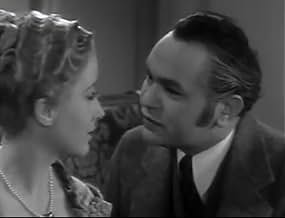
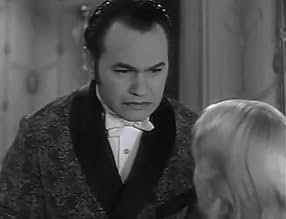
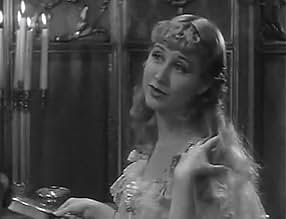
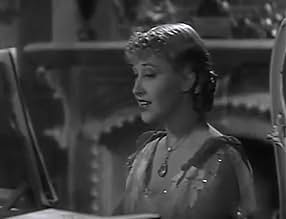
Art student John Hayden interrupts his studies in Greece to head his father's meat packing business on his father's death. He marries social climber Martha who taunts him for his ideals rega... Read allArt student John Hayden interrupts his studies in Greece to head his father's meat packing business on his father's death. He marries social climber Martha who taunts him for his ideals regarding worker happiness and meat purity. He begins supporting the musical career of singer ... Read allArt student John Hayden interrupts his studies in Greece to head his father's meat packing business on his father's death. He marries social climber Martha who taunts him for his ideals regarding worker happiness and meat purity. He begins supporting the musical career of singer Laura. During the Spanish American war he sells the Army tainted meat. Martha puts detecti... Read all
- Director
- Writers
- Stars
- Awards
- 2 wins total
- Banker
- (uncredited)
- Doctor
- (uncredited)
- Banker
- (uncredited)
- Hayden's First Butler
- (uncredited)
- Voting Returns Announcer
- (uncredited)
- Director
- Writers
- All cast & crew
- Production, box office & more at IMDbPro
Featured reviews
Edward G. Robinson as an Early Meat-Packing Version of Charles Foster Kane!
Nonetheless, ILAW is entertaining and absorbing with its often rambling tale of a Chicago robber baron loosely modeled after real life meat-packer Samuel Insull. And while the romantic scenes between Robinson and his leading ladies Kay Francis and Genevieve Tobin may lack appropriate chemistry or credibility, it cannot be denied that in ILAW Robinson delivered a robust and commanding performance. He was a powerful actor in this early pre-code effort, and certainly gave us every indication that he would evolve into the superb character actor that became his future destiny.
As for veteran director Alfred E. Green, he would go on to direct The Jolson Story, The Fabulous Dorseys and The Eddie Cantor Story among many other films.
ILAW is little known today. That is too bad, because it provides an excellent time capsule that captured three accomplished actors as they were moving into their peak career period, as well as just how the Warner Brothers Studio System actually worked in practice. Next time TCM shows ILAW, check it out!
Worth looking for
There are some unfortunate sequences in which the dialog becomes florid, stilted, and too much in the manner of a lesser Victorian romance. And the use of "Home On The Range" as a Rosebud motif comes across as ludicrous, to put it charitably. Such flaws, however, do not seriously lessen the impact and entertainment value of this undeservedly obscure picture.
Worth It to See Robinson and Francis in 1933
It's still worth it to see Robinson, Francis, and the other actors as they appeared in 1933.
The plot was not perfect and needed some paring down, and the ending left something to be desired, but this is a film you should see.
Beware of pre-code films that run for 90 minutes
But when they reach an hour and a half, they sometimes bog down and become as dull as the inane films the Production Code later foisted on us.
This film is a good example. The history of Edward G. Robinson's transformation from a young idealist inheriting his father's meat-packing business to a ruthless capitalist defies credulity both for his naivete and the ease of his rise to the top when he discards his scruples. The characters are mostly one-dimensional stereotypes. The character of his opera star mistress, a somewhat miscast Kay Francis, who eggs him on with Nietzschean pep talks about dominating the world, sounds like Ayn Rand on steroids.
All this is fine for the first hour or so, when the rapid succession of events keeps you guessing what will happen next and too busy to think about the logic of it all. The last half hour or so, about his well-deserved downfall, goes by much more slowly and grinds to an undramatic ending.
Still worth a look for pre-code fans for Robinson, Francis and other fine actors, but don't put it at the top of your list.
The versatile EG Robinson at his best
And how lucky we are that a film company like First National existed in the early 30's, pumping out films with stars like EG Robinson at a rate that would leave a current studio breathless. What an exciting time it must have been. We are the beneficiaries of this fascinating time, when studios had to release new films in a rapid succession, such was the hunger for new films.
"I Loved a Woman" takes place over a 40 year period, taking us from late Victorian Chicago of 1892 to industrial Chicago of just a few decades later. The fashions change subtly over the 90 minutes this film takes. While some of the romantic scenes with Kay Francis are a bit dated, and the lovers' dialogue a little stilted, Robinson never fails to captivate us when he is on screen. If anybody can carry this stuff off, it is him (Robinson even sings in this movie, though happily not too much).
The supporting cast is strong and full of First National perennials, such as Robert Barrat, playing EGR's father-in-law. A special treat is the speaking appearance of one of John Ford's silent screen favorites, J. Farrel MacDonald.
This movie also features a speaking role for Theodore Roosevelt, who personally threatens to destroy the meat packer Hayden for selling rotten meat to the soldiers of the Spanish-American War.
Perhaps the only annoyance is having to put up with Kay Francis repeatedly singing Home on the Range in an opera voice while playing an upright piano. Once, maybe, but three times?....
One funny thing to look for early in the film: Robinson returns home from abroad after hearing of his father's death. A painting of dad hangs on the office wall - looking exactly like EG Robinson with full whiskers! A very nice touch.
This is a strong entry from First National Films, and a great way to get know the many sides of Edward G. Robinson. I highly recommend this one.
Did you know
- TriviaAlthough a novel by David Karsner is credited onscreen as the source, none has been located; it may not have been published. However, David Karsner's biography "Silver Dollar: The Story of the Tabors" was made into a film the previous year, also starring Edward G. Robinson named Silver Dollar (1932).
- GoofsThe newspaper item "10 Years Ago Today" near the end of the film stated that Hayden fled to Greece on the same day that the Chicago White Sox defeated Detroit, 10-6. But an item next to it noted that it was the 50th anniversary of the death of Scottish physicist James Clerk-Maxwell, which occurred in November 1879. Because the baseball season in 1919 ended in September, the anniversary of the White Sox-Tigers game could not have been on the same date as the anniversary of Maxwell's death.
- Quotes
Charles Lane: John, you're mad!
John Mansfield Hayden: Yes. Maybe I am mad. But it's madmen who run the world today.
- SoundtracksHome on the Range
(1904) (uncredited)
Music by Daniel E. Kelley (1904)
Lyrics by Brewster M. Higley (1873)
Played during the opening credits and at the end
Played on piano and sung by Kay Francis
Whistled and sung a cappella by Edward G. Robinson twice
Reprised by Kay Francis twice
Played by a band at the election celebration
Played as background music often as a love theme for John and Laura
Details
- Runtime
- 1h 30m(90 min)
- Color
- Sound mix
- Aspect ratio
- 1.37 : 1