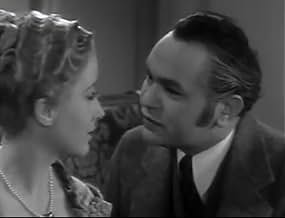
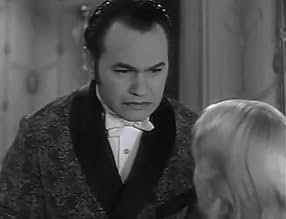
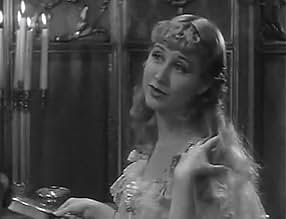
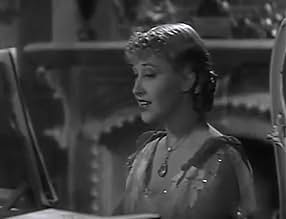
Art student John Hayden interrupts his studies in Greece to head his father's meat packing business on his father's death. He marries social climber Martha who taunts him for his ideals rega... Read allArt student John Hayden interrupts his studies in Greece to head his father's meat packing business on his father's death. He marries social climber Martha who taunts him for his ideals regarding worker happiness and meat purity. He begins supporting the musical career of singer ... Read allArt student John Hayden interrupts his studies in Greece to head his father's meat packing business on his father's death. He marries social climber Martha who taunts him for his ideals regarding worker happiness and meat purity. He begins supporting the musical career of singer Laura. During the Spanish American war he sells the Army tainted meat. Martha puts detecti... Read all
- Director
- Writers
- Stars
- Awards
- 2 wins total
- Banker
- (uncredited)
- Doctor
- (uncredited)
- Banker
- (uncredited)
- Hayden's First Butler
- (uncredited)
- Voting Returns Announcer
- (uncredited)
- Director
- Writers
- All cast & crew
- Production, box office & more at IMDbPro
Featured reviews
The versatile EG Robinson at his best
And how lucky we are that a film company like First National existed in the early 30's, pumping out films with stars like EG Robinson at a rate that would leave a current studio breathless. What an exciting time it must have been. We are the beneficiaries of this fascinating time, when studios had to release new films in a rapid succession, such was the hunger for new films.
"I Loved a Woman" takes place over a 40 year period, taking us from late Victorian Chicago of 1892 to industrial Chicago of just a few decades later. The fashions change subtly over the 90 minutes this film takes. While some of the romantic scenes with Kay Francis are a bit dated, and the lovers' dialogue a little stilted, Robinson never fails to captivate us when he is on screen. If anybody can carry this stuff off, it is him (Robinson even sings in this movie, though happily not too much).
The supporting cast is strong and full of First National perennials, such as Robert Barrat, playing EGR's father-in-law. A special treat is the speaking appearance of one of John Ford's silent screen favorites, J. Farrel MacDonald.
This movie also features a speaking role for Theodore Roosevelt, who personally threatens to destroy the meat packer Hayden for selling rotten meat to the soldiers of the Spanish-American War.
Perhaps the only annoyance is having to put up with Kay Francis repeatedly singing Home on the Range in an opera voice while playing an upright piano. Once, maybe, but three times?....
One funny thing to look for early in the film: Robinson returns home from abroad after hearing of his father's death. A painting of dad hangs on the office wall - looking exactly like EG Robinson with full whiskers! A very nice touch.
This is a strong entry from First National Films, and a great way to get know the many sides of Edward G. Robinson. I highly recommend this one.
"They didn't cut the boy's curls till he was 14. His mother wanted him to look like Little Lord Fauntleroy."
Slow-moving melodrama with moments of unintended hilarity. The romantic scenes are especially bad. Kay Francis hams it up, as was her tendency. You either like her or you don't. I dare you not to laugh when she sings "Home on the Range." Eddie Robinson does fine, except for the aforementioned romantic scenes. He has zero chemistry with Francis. Genevieve Tobin is badly miscast as the villainous wife. She was better suited playing likable characters. It's a pretty boring effort. Final line of the movie sums it up best: "I'm sleepy."
Worth looking for
There are some unfortunate sequences in which the dialog becomes florid, stilted, and too much in the manner of a lesser Victorian romance. And the use of "Home On The Range" as a Rosebud motif comes across as ludicrous, to put it charitably. Such flaws, however, do not seriously lessen the impact and entertainment value of this undeservedly obscure picture.
Early Edward G. Robinson
With his father's death, John Hayden (Robinson) cuts his trip to Greece short to go home and take over the company. A humanitarian, he is interested in making life better for the employees by cleaning up the packing house district where the employees live, and he is not interested in the cut-rate practices of his competitors.
John meets and falls in love with the pretty Martha Lane, whose father is just such a competitor and in need of money. Martha, too, is interested in causes. She and John marry, but they grow apart as she becomes more practical.
John is approached by an aspiring opera singer Laura McDonald (Francis) who wants him to back her studies; he agrees, and he falls in love with her. Laura, however, is ruthless and convinces John that he must be, too. He goes against everything he ever believed in to put his company back on top with disastrous results.
I have to admit I was less impressed with this film than the first person who commented. First of all, with all of the beautiful operatic music in the world, why is the only song Laura sings "Home on the Range" - many times? Okay, I get the cattle theme but it was too much.
And I didn't understand John suddenly becoming this ruthless man willing to send to soldiers overseas bad meat with fillers and other substances. Laura gives him one little lecture, and he turns into a third world dictator.
Robinson is very good, though he and Francis wear a lot of makeup. The characters, however, weren't especially likable or sympathetic. John does have the audience's sympathy at the beginning and at the very end, where Robinson's acting really stood out.
Clearly a pre-code flick from Warner Brothers
John Hayden (Edward G. Robinson) is the heir to a meatpacking fortune and has just learned that his father has died. Despite claiming to being the champion of improved working conditions, wages and cleanliness, he spends the next few years leaving the company to essentially run itself while he devotes his energy towards raising a family. However, he slowly realizes that his company is going bankrupt AND his wife couldn't care less, as her father is the head of a group of meatpackers who are opposed to Hayden's STATED ideals. I say stated because during his absence from the company, he pretty much ignored his fine talk of running a progressive company.
Now with a company in trouble and a marriage a bit rocky, Hayden decides to run the company like the rest....or worse. Cleanliness and safe hygience mean nothing to him. In addition, he's got a new sweetie (Kay Francis) and his energies are focused on her and making millions...his wife, well, she's expendable. When war breaks out, he's more than happy to sell the government tainted meat for the soldiers! Nice guy, huh? If you haven't guessed, he's essentially a jerk!
So what did I like and not like about this film? What I didn't like was that Hayden changed so dramatically...too dramatically to make any sense. One minute he's a champion of the little people and a good husband, the next he's the opposite. His change was just too abrupt to be believable. On the positive side, the acting is very nice and the film has all the polish you'd expect from a Warner Brothers epic...though I could have done without all the times the film used "Home on the Range". Overall, decent but hardly among Robinson's best...and much of it is because no one in this film is likable and so you lose interest along the way. Plus, it never seems to know when to quit...so it's overlong to boot.
Did you know
- TriviaAlthough a novel by David Karsner is credited onscreen as the source, none has been located; it may not have been published. However, David Karsner's biography "Silver Dollar: The Story of the Tabors" was made into a film the previous year, also starring Edward G. Robinson named Silver Dollar (1932).
- GoofsThe newspaper item "10 Years Ago Today" near the end of the film stated that Hayden fled to Greece on the same day that the Chicago White Sox defeated Detroit, 10-6. But an item next to it noted that it was the 50th anniversary of the death of Scottish physicist James Clerk-Maxwell, which occurred in November 1879. Because the baseball season in 1919 ended in September, the anniversary of the White Sox-Tigers game could not have been on the same date as the anniversary of Maxwell's death.
- Quotes
Charles Lane: John, you're mad!
John Mansfield Hayden: Yes. Maybe I am mad. But it's madmen who run the world today.
- SoundtracksHome on the Range
(1904) (uncredited)
Music by Daniel E. Kelley (1904)
Lyrics by Brewster M. Higley (1873)
Played during the opening credits and at the end
Played on piano and sung by Kay Francis
Whistled and sung a cappella by Edward G. Robinson twice
Reprised by Kay Francis twice
Played by a band at the election celebration
Played as background music often as a love theme for John and Laura
Details
- Runtime
- 1h 30m(90 min)
- Color
- Sound mix
- Aspect ratio
- 1.37 : 1