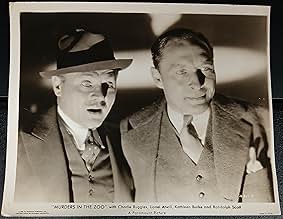
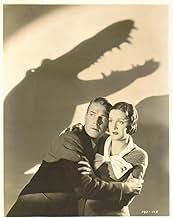
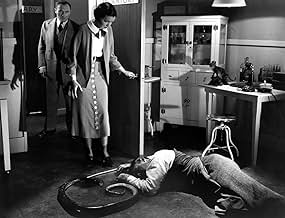
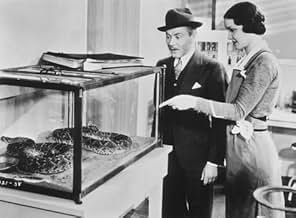
A monomaniacal zoologist is pathologically jealous of his beautiful but unfaithful wife Evelyn and will not stop short of murder to keep her.A monomaniacal zoologist is pathologically jealous of his beautiful but unfaithful wife Evelyn and will not stop short of murder to keep her.A monomaniacal zoologist is pathologically jealous of his beautiful but unfaithful wife Evelyn and will not stop short of murder to keep her.
- Director
- Writers
- Stars
- Awards
- 1 win total
Charles Ruggles
- Peter Yates
- (as Charlie Ruggles)
Nancy Crowley
- Little Girl at the Zoo
- (uncredited)
Jane Darwell
- Banquet Guest
- (uncredited)
Samuel S. Hinds
- Banquet Guest
- (uncredited)
Carmencita Johnson
- Little Girl at the Zoo
- (uncredited)
Cullen Johnson
- Little Boy at the Zoo
- (uncredited)
Ethan Laidlaw
- Policeman Reardon
- (uncredited)
Howard Leeds
- Telegraph Messenger
- (uncredited)
Edward McWade
- Dan Baker - Zoo Guard
- (uncredited)
Bert Moorhouse
- Apartment Desk Clerk
- (uncredited)
Edward Pawley
- Bob Taylor
- (uncredited)
Lee Phelps
- Banquet Photographer
- (uncredited)
- …
- Director
- Writers
- All cast & crew
- Production, box office & more at IMDbPro
6.42K
1
2
3
4
5
6
7
8
9
10
Featured reviews
A rather graphic but very good early horror film.
The opening scene from "Murders in the Zoo" is quite extreme for 1933 audiences . I shalln't say what happens but you can't miss it!
Lionel Atwill steals the show once again as the sadistic, cunning and evil proprietor of various dangerous animals that he plans to sell to a zoo. Little does anyone realise that he shall use his animals for other means........
You only have to observe the expression of Lionel Atwill to know he is a somewhat dodgy customer.
This gem was unfairly ignored for years but is very good on its own merits.
Lionel Atwill steals the show once again as the sadistic, cunning and evil proprietor of various dangerous animals that he plans to sell to a zoo. Little does anyone realise that he shall use his animals for other means........
You only have to observe the expression of Lionel Atwill to know he is a somewhat dodgy customer.
This gem was unfairly ignored for years but is very good on its own merits.
Cruel and nasty stuff for an early 30s film!
I'm extremely fond of ancient horror movies from the late twenties and early thirties, but admittedly they are usually rather soft and tame both in terms of tone and execution. A. Edward Sutherland's "Murders in the Zoo", however, is not! The concept of the film, and particularly Lionel Atwill's hunter/millionaire character are astonishingly crude and relentless for a 1933 production. Probably so crude, even, that the producers eventually backed off anyways and - unfortunately - decided to compensate the cruelty of the essential plot with far too much light-headed comical relief in the shape of contemporary popular jester Charlie Ruggles. Who knows, without Ruggles, "Murders in the Zoo" might have become as controversial and universally banished as "Freaks" was for several long decades, so I can certainly respect the producers' choice.
The opening sequence is as fiendish and twisted as they come. After he allegedly just 'wanted to kiss her', Eric Gorman (Atwill) blandly disposes of an admirer of his wife by stitching up his lips and leaving him behind in a dark jungle full of wild animals. Back in the US, the petrified wife still has plans to run off with another lover, but the diabolical Gorman uses the zoo to which he supplies exotic animals as a macabre disposal ground. In between, the hysterical Ruggles goofs around as the zoo's marketeer/PR-spokesperson who's afraid of animals. "Murders in the Zoo" benefices from several things, most notably the unpredictable script (you genuinely can't tell who will or won't survive), the classy cinematography of Oscar winner Ernest Haller and the bone-chilling performance of Lionel Atwill. This legendary underrated actor was an evil genius as Dr. Moriarty in "Hound of the Baskervillers" and a vicious psychopath in "Mystery of the Wax Museum", but he was never more terrifying as here in this 30s horror gem.
Fascinating and entertaining in parts
Released before the Hollywood Code began being reinforced, Murders in the Zoo is primarily interesting for how graphic a couple of the murders are and for the presence of Charlie Ruggles and Lionel Atwell.
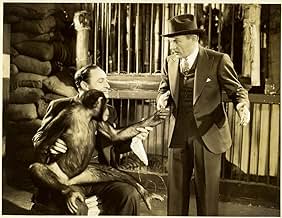
Ruggles provides the same kind of comic relief he would provide five years later in Bringing up Baby, coincidentally interacting comically with big cats in both films.
Objectively, Murders in the Zoo is fairly slow going, and even the presence of Atwell in a typically villainous role can't make it as entertaining as it ought to be. The pacing is slow, and the script doesn't provide enough suspense and action as, for instance, Mystery of the Wax Museum did the same year. In addition, Wax Museum gives Atwell more to do and has a far more clever script. Zoo is more or less devoid of witty dialogue, whereas Wax Museum is packed with it. I'm comparing the two movie because both are famous examples of movies produced before the enforcement of the Code and both are of the same comedy thriller genre popular at the time.
Despite its shortcomings Murders in the Zoo is well worth watching for people interested in so-called (and incorrectly named) pre-Code flicks, comedy thrillers from that era, and certainly for fans of Atwell.
Ruggles provides the same kind of comic relief he would provide five years later in Bringing up Baby, coincidentally interacting comically with big cats in both films.
Objectively, Murders in the Zoo is fairly slow going, and even the presence of Atwell in a typically villainous role can't make it as entertaining as it ought to be. The pacing is slow, and the script doesn't provide enough suspense and action as, for instance, Mystery of the Wax Museum did the same year. In addition, Wax Museum gives Atwell more to do and has a far more clever script. Zoo is more or less devoid of witty dialogue, whereas Wax Museum is packed with it. I'm comparing the two movie because both are famous examples of movies produced before the enforcement of the Code and both are of the same comedy thriller genre popular at the time.
Despite its shortcomings Murders in the Zoo is well worth watching for people interested in so-called (and incorrectly named) pre-Code flicks, comedy thrillers from that era, and certainly for fans of Atwell.
Lionel Atwill puts zoo specimens to use to carry out his murderous revenge...
This is a good pre-code example of a horror film that must have shocked audiences in the early '30s and still carries enough punch to find favor with today's horror addicts.
LIONEL ATWILL is at his wickedest as a cold-blooded owner of a zoo full of wild animals, everything from snakes to panthers. The story starts overseas with him doing an unusual sewing job on one of his victims after catching him kissing his wife, then switches to their return on a ship where his wife is fearful that a young man who has taken a shine to her (JOHN LODGE) will be his next victim.
Atwill catches them having an intimate chat and we know he's found a man he must eliminate in a cruel way. It goes on in this fashion with the criminal getting away with murder until a clever lab technician (RANDOLPH SCOTT) and his assistant (GAIL PATRICK) are able to turn the tables on him.
TCM features a good print of this little thriller, way ahead of its time in some of its subject matter, a film that any fan of Lionel Atwill's kind of villainy will want to catch. And incidentally, Randolph Scott and Gail Patrick are excellent in good supporting roles.
Only drawback is the "comic relief" given to CHARLES RUGGLES who gives his weak material a good try but becomes more of an annoyance than anything else in the role of the zoo's new publicity agent.
LIONEL ATWILL is at his wickedest as a cold-blooded owner of a zoo full of wild animals, everything from snakes to panthers. The story starts overseas with him doing an unusual sewing job on one of his victims after catching him kissing his wife, then switches to their return on a ship where his wife is fearful that a young man who has taken a shine to her (JOHN LODGE) will be his next victim.
Atwill catches them having an intimate chat and we know he's found a man he must eliminate in a cruel way. It goes on in this fashion with the criminal getting away with murder until a clever lab technician (RANDOLPH SCOTT) and his assistant (GAIL PATRICK) are able to turn the tables on him.
TCM features a good print of this little thriller, way ahead of its time in some of its subject matter, a film that any fan of Lionel Atwill's kind of villainy will want to catch. And incidentally, Randolph Scott and Gail Patrick are excellent in good supporting roles.
Only drawback is the "comic relief" given to CHARLES RUGGLES who gives his weak material a good try but becomes more of an annoyance than anything else in the role of the zoo's new publicity agent.
Definitely worth a look!
While not on the creepy level of Edgar Ulmer's "The Black Cat", this film shows that a studio OTHER THAN Universal was trying to make horror films in the early thirties. I will agree that Charlie Ruggles' tipsy clowning tends to diffuse the genuine horror of the situation, but this seems to almost have been a requirement of horror films of thirties, as this same type of character is found in "Mystery of the Wax Museum", and "Doctor X", both films starring Lionel Atwill. Maybe they just wanted to offset Atwill's natural creepiness, eh? At any rate, A big kudos to MCA/Universal for even releasing this film on home video, and for using one of the most beautiful prints I've ever seen! Now, if we can just get them to put out MURDER BY THE CLOCK...
Did you know
- TriviaOn its initial release, this film was banned in Germany, Sweden, Latvia, and Quebec, Canada. It could only be released with cuts in the United Kingdom, Australia, New York, Massachusetts, Pennsylvania, and Ontario.
- GoofsGorman invites Hewitt to the benefit dinner, which he says will be on Thursday. Moments later, we see a printed invitation, which says "Wednesday".
- Quotes
Eric Gorman: Mr. Gates, never be afraid of a wild animal. Let it alone, and it'll leave you alone. That's more than we can say of most humans.
Peter Yates: You mean that you really like these, eh?
Eric Gorman: Beasts? I love them. They're honest in their simplicity, their primative emotions... They love, they hate, they kill.
- ConnectionsFeatured in Svengoolie: Murders in the Zoo (2016)
- How long is Murders in the Zoo?Powered by Alexa
Details
- Release date
- Country of origin
- Language
- Also known as
- Murder at the Zoo
- Filming locations
- Production company
- See more company credits at IMDbPro
- Runtime
- 1h 2m(62 min)
- Color
- Sound mix
- Mono(Western Electric Noiseless Recording, original)
- Aspect ratio
- 1.37 : 1
Contribute to this page
Suggest an edit or add missing content