
An engaged attorney and a divorcee fall for each other in 1870s Manhattan.An engaged attorney and a divorcee fall for each other in 1870s Manhattan.An engaged attorney and a divorcee fall for each other in 1870s Manhattan.
- Awards
- 3 wins total




Barry O'Moore
- Mr. Welland
- (as Herbert Yost)


Lowden Adams
- Jenkins
- (uncredited)
Muriel Barr
- Miss Allison - Jenkins' Daughter
- (uncredited)

Harry Beresford
- Museum Guard
- (uncredited)

Lynn Browning
- Miss Archer
- (uncredited)

Herbert Bunston
- W.J. Letterblair
- (uncredited)

Bess Flowers
- Child's Mother
- (uncredited)
Alf James
- Man Who Comes with Chairs
- (uncredited)

John Merton
- John
- (uncredited)
6.2589
1
2
3
4
5
6
7
8
9
10
Featured reviews
Restrained Emotions
A lawyer attempting to obtain a divorce for a countess finds his growing love resisted by THE AGE OF INNOCENCE in which they lived.
Edith Wharton's celebrated novel, illustrating how personal happiness is often crushed by public propriety, is given a fine adaptation in this well-produced film from Radio Pictures. While the movie relentlessly features almost nothing but dialogue, it is always sophisticated and deals with matters still of some importance.
In a movie with so much talk the performances are paramount and they are all of a high order. Lovely Irene Dunne is radiant as the American countess restricted by society from following her heart. John Boles is very effective as the lawyer who must also either bow to convention or be crushed by it. Feisty Helen Westley steals nearly every scene she's in as Dunne's wealthy and outspoken Granny. Laura Hope Crews is perfectly cast as Westley's slightly flustered daughter, the mother of Boles' pretty fiancée, Julie Haydon. Herbert Yost is Crews' meek little husband, while splendid Lionel Atwill enjoys himself as a rich rascal operating on society's fringe.
Movie mavens will recognize Harry Beresford as a canny museum guard and Inez Palange as a stubborn Italian maid, both uncredited.
The jazzy montage which opens the film has virtually no relationship to anything that follows and serves only to wake the audience up.
Edith Wharton's celebrated novel, illustrating how personal happiness is often crushed by public propriety, is given a fine adaptation in this well-produced film from Radio Pictures. While the movie relentlessly features almost nothing but dialogue, it is always sophisticated and deals with matters still of some importance.
In a movie with so much talk the performances are paramount and they are all of a high order. Lovely Irene Dunne is radiant as the American countess restricted by society from following her heart. John Boles is very effective as the lawyer who must also either bow to convention or be crushed by it. Feisty Helen Westley steals nearly every scene she's in as Dunne's wealthy and outspoken Granny. Laura Hope Crews is perfectly cast as Westley's slightly flustered daughter, the mother of Boles' pretty fiancée, Julie Haydon. Herbert Yost is Crews' meek little husband, while splendid Lionel Atwill enjoys himself as a rich rascal operating on society's fringe.
Movie mavens will recognize Harry Beresford as a canny museum guard and Inez Palange as a stubborn Italian maid, both uncredited.
The jazzy montage which opens the film has virtually no relationship to anything that follows and serves only to wake the audience up.
Captures The Times
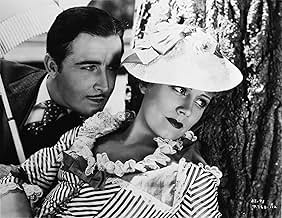
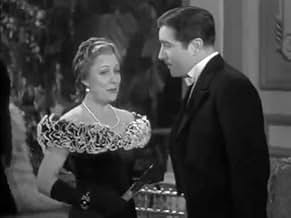
Irene Dunne and John Boles star in this adaptation of the Edith Wharton novel. A flashback takes the viewer back to the age of Victorian morals, when propriety and social order were the prime values of society.
Newland Archer (Boles) is engaged, but finds himself helplessly attracted to Ellen (Dunne), the cousin of his fiancée, May (Julie Haydon). The upper crust of polite society are constrained by even the appearances of impropriety, so he cannot act upon his feelings. But he must. More than the others in his circle, he dares think beyond what is expected of him. In this sense, the story is about the individual versus society.
But it is also about the agency of women. Ellen chastises herself continuously for even having her inappropriate feelings. Society, in the guise of protection, binds women to strictures. Newland asks if they must "bury" a woman just to protect her virtue.
Boles and Dunne are good in their roles. The surrounding cast is equally strong. Julie Haydon stands out; her portrayal of May is luminous and vulnerable: just the way it must be to create conflict within Newland and Ellen.
The emotions in the film are restrained in accordance with the story. But the viewer can still feel the passions that are expressed in small gestures and cloaked phrases.
Newland Archer (Boles) is engaged, but finds himself helplessly attracted to Ellen (Dunne), the cousin of his fiancée, May (Julie Haydon). The upper crust of polite society are constrained by even the appearances of impropriety, so he cannot act upon his feelings. But he must. More than the others in his circle, he dares think beyond what is expected of him. In this sense, the story is about the individual versus society.
But it is also about the agency of women. Ellen chastises herself continuously for even having her inappropriate feelings. Society, in the guise of protection, binds women to strictures. Newland asks if they must "bury" a woman just to protect her virtue.
Boles and Dunne are good in their roles. The surrounding cast is equally strong. Julie Haydon stands out; her portrayal of May is luminous and vulnerable: just the way it must be to create conflict within Newland and Ellen.
The emotions in the film are restrained in accordance with the story. But the viewer can still feel the passions that are expressed in small gestures and cloaked phrases.
We aren't innocent any longer
Of grand and velvety anachronism, The Age of Innocence is an orchestrated tale of romantic longing. A polished and elegant, if incomplete, period romance about the "innocent" wife of a wealthy New Yorker in love with another woman who, never going beyond flirtation, envelops him in layers of Victorian repression and traps him between the emotions of love- passion and bourgeois social ethics. This is a story set in the stifling atmosphere of upper-class turn of the 19th century New York. This is a rather interesting plot, though not as successful as a love story than as a social commentary. It was enjoyable to discover the vastly different generations that preceded us.
Set in the 1870s?
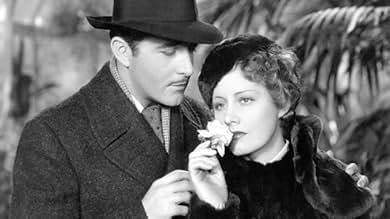
I just watched The Age of Innocence and although it is a good movie, I wish it were made in color. The Ladies costumes were great and Irene Dunn looks amazing. I have one question, did men in the 1870s wear clothing that were styled much later? John Boles' fedora and suits stepped right out of the 1930s.
Charming early film version of Wharton classic
THE AGE OF INNOCENCE (RKO 1934) (81 minutes)
There have been three film versions of Edith Wharton's most renowned novel, The Age of Innocence. The 1924 silent version is lost. We are left with Martin Scorcese's definitive 1993 version in wide screen and color, derived from the novel itself with its multitude of characters and subplots, and this charming early talkie, based on a play version of the book.
Although the plot and narrative have been pared down considerably, the meat of the matter is still here and it is given first class treatment. Irene Dunne is radiant (when was she not?) in the role of the expatriate family member, Ellen, married into European royalty, and returned to 1870s New York Society, and John Boles gives a solid reading of the tortured Newland, a young lawyer betrothed to marry May Mingott, an innocent ingenue, while falling in love with her cousin, the experienced Ellen. It is true melodrama, a touching and tragic love story, played out in lush Hollywood style.
The sets are excellent as is the detailed and creative costume design. Helen Westley, in but 9 scenes, steals the show as the wise and down to earth Granny Mingott, while Julie Haydon over emotes as the clueless May. Max Steiner's score relies heavily on Tchaikovsky, whose song, None But The Lonely Heart, serves as the main motif running throughout the film. Mason and Heerman, who had just won a Screenplay Oscar for Little Women, deliver a marvelous adaptation, as they would for many more novels, including Magnificent Obsession, Imitation of Life, Golden Boy, and Stella Dallas. There is a long and frantic montage at the film's beginning, establishing the mood of Jazz Age madness and scandalous headlines, against which the calm staidness of New York 19th century society will be played out.
Westley and Dunne would appear opposite each other two years later in SHOW BOAT, while Laura Hope Crewes (as Mrs. Welland) and costume designer, Walter Plunkett, would be paired for 1939's Gone With The Wind.
The available dvd print is impeccably crisp and clean. Although the categories had not yet been created in 1934, a supporting actress nod would be due Helen Westley and a costume design nomination is due Walter Plunkett, in my humble opinion.
If you love Wharton, you will enjoy both the Scorcese version and this lovely gem from Hollywood's golden decade.
There have been three film versions of Edith Wharton's most renowned novel, The Age of Innocence. The 1924 silent version is lost. We are left with Martin Scorcese's definitive 1993 version in wide screen and color, derived from the novel itself with its multitude of characters and subplots, and this charming early talkie, based on a play version of the book.
Although the plot and narrative have been pared down considerably, the meat of the matter is still here and it is given first class treatment. Irene Dunne is radiant (when was she not?) in the role of the expatriate family member, Ellen, married into European royalty, and returned to 1870s New York Society, and John Boles gives a solid reading of the tortured Newland, a young lawyer betrothed to marry May Mingott, an innocent ingenue, while falling in love with her cousin, the experienced Ellen. It is true melodrama, a touching and tragic love story, played out in lush Hollywood style.
The sets are excellent as is the detailed and creative costume design. Helen Westley, in but 9 scenes, steals the show as the wise and down to earth Granny Mingott, while Julie Haydon over emotes as the clueless May. Max Steiner's score relies heavily on Tchaikovsky, whose song, None But The Lonely Heart, serves as the main motif running throughout the film. Mason and Heerman, who had just won a Screenplay Oscar for Little Women, deliver a marvelous adaptation, as they would for many more novels, including Magnificent Obsession, Imitation of Life, Golden Boy, and Stella Dallas. There is a long and frantic montage at the film's beginning, establishing the mood of Jazz Age madness and scandalous headlines, against which the calm staidness of New York 19th century society will be played out.
Westley and Dunne would appear opposite each other two years later in SHOW BOAT, while Laura Hope Crewes (as Mrs. Welland) and costume designer, Walter Plunkett, would be paired for 1939's Gone With The Wind.
The available dvd print is impeccably crisp and clean. Although the categories had not yet been created in 1934, a supporting actress nod would be due Helen Westley and a costume design nomination is due Walter Plunkett, in my humble opinion.
If you love Wharton, you will enjoy both the Scorcese version and this lovely gem from Hollywood's golden decade.


Did you know
- TriviaThe original Broadway production starred Katharine Cornell as Ellen Olenska, and Franchot Tone as Newland Archer.
- GoofsAs evidenced by a dated letter, Newland assisted Ellen with her divorce case in August 1879. Newland and May were married just after the following Easter, which would make it 1879. After returning from their honeymoon, they receive an invitation for a party on Wednesday, October 2nd. That would be correct if it was still 1878, but in 1879, October 2nd was a Thursday.
- Quotes
Julius Beaufort: After all your exquisite associations over there, how do you think you're going to like it here?
Ellen: I think it quite like heaven.
Julius Beaufort: Yes, I have that feeling too sometimes. You mean, just some place to go after you're dead?
- ConnectionsReferences All Quiet on the Western Front (1930)
- SoundtracksNone But the Lonely Heart
(1869) (uncredited)
Music by Pyotr Ilyich Tchaikovsky
Played during the opening credits and often as background music
- How long is The Age of Innocence?Powered by Alexa
Details
- Release date
- Country of origin
- Languages
- Also known as
- La edad de la inocencia
- Filming locations
- Production company
- See more company credits at IMDbPro
- Runtime
- 1h 21m(81 min)
- Color
- Aspect ratio
- 1.37 : 1
Contribute to this page
Suggest an edit or add missing content