
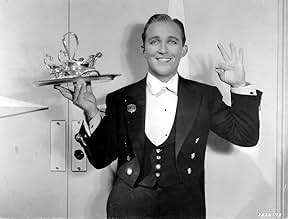
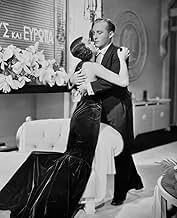
A rich and famous singer disguises himself as a waiter in order to be near the woman he loves, a European princess.A rich and famous singer disguises himself as a waiter in order to be near the woman he loves, a European princess.A rich and famous singer disguises himself as a waiter in order to be near the woman he loves, a European princess.


Charles Arnt
- Higgins - Paul's Valet
- (as Charles E. Arnt)

Louise Carter
- Charity Lady
- (uncredited)
Lorinne Crawford
- Dancer
- (uncredited)

Mary Flynn
- Young Yacht Guest
- (uncredited)

Donald Gray
- Young Yacht Guest
- (uncredited)
Robert Klein
- Cloche
- (uncredited)
Cromwell McKechnie
- Paul's Secretary
- (uncredited)
Albert Petit
- Paul's Waiter
- (uncredited)
6.5208
1
2
3
4
5
6
7
8
9
10
Featured reviews
A charming little musical romantic comedy - sadly, a forgotten classic.
Ever hear the phrase "They don't make 'em like that anymore"? Unfortunately, this delightful bit of charming musical whimsey is so far removed from our brutal, jaded, modern world that the recipe for making such films is probably lost forever. But then, that's part of what makes Here Is My Heart so appealing. It's a slice of movie past that to 21st century sensibilities may appear to come from some lovely, secluded, lost place in time.
Bing Crosby somehow deftly owns the film, despite sharing the screen with such veteran scene stealers as Roland Young and Reginald Owen, who are at their best here. The fact that Bing was arguably at his vocal peak as a singer certainly helps, as he proves why he was the number one male vocalist for two decades, flawlessly crooning "June In January" and "With Every Breath I Take". But it's the way he commands the screen with little visual bits of business that is a revelation. This type of love story was Der Bingle's stock in trade prior to his Father O'Malley days, and it's evident why he rose quickly to the list of top ten box office stars during the 1930s. Sadly, most of his films from this period are sitting in vaults somewhere, gathering dust.
Be sure to catch this charmer of a movie if and when the opportunity arises.
Bing Crosby somehow deftly owns the film, despite sharing the screen with such veteran scene stealers as Roland Young and Reginald Owen, who are at their best here. The fact that Bing was arguably at his vocal peak as a singer certainly helps, as he proves why he was the number one male vocalist for two decades, flawlessly crooning "June In January" and "With Every Breath I Take". But it's the way he commands the screen with little visual bits of business that is a revelation. This type of love story was Der Bingle's stock in trade prior to his Father O'Malley days, and it's evident why he rose quickly to the list of top ten box office stars during the 1930s. Sadly, most of his films from this period are sitting in vaults somewhere, gathering dust.
Be sure to catch this charmer of a movie if and when the opportunity arises.
Sophistication from the second team
A musical comedy from Paramount featuring one classically trained voice and one popular singer, set in Europe, built around a romance between an impoverished princess and a rich man posing as a waiter to be near her... this sounds to me exactly like the kind of movie that Paramount would have assigned to Maurice Chevalier, Jeanette MacDonald and director Ernst Lubitsch during the early thirties. I would bet my bottom dollar that this is exactly what Paramount planned to do with this musical remake of the 1926 silent comedy "The Grand Duchess and the Waiter." Unfortunately, none of them were available in 1934, so they gave it to Bing Crosby, Kitty Carlisle and director Frank Tuttle instead. In this case second best isn't good enough. Crosby holds his own reasonably well, making a surprisingly good substitute for Chevalier (or Adolphe Menjou, who played the part in the silent film); like Maurice, he has a breezy, easygoing charm, which fits his character, a common man who made good. But Carlisle is fatally miscast as the Russian princess. Jeanette MacDonald could play these snobbish aristocrats with an undertone of sympathy and humor; Carlisle can't, and she is so haughty that she becomes dislikable. She isn't a bad actress; this part just isn't meant for her. It would be hard for any movie to overcome that handicap. Maybe Lubitsch could have made something out of it, but Tuttle lacks his subtlety and his instinct for a clever gag.
The movie has virtues; the music is good, and the scene in which Bing sings "June in January" is imaginative. The supporting cast is solid, especially Roland Young and Reginald Owen as members of the royal family. The sets and the photography are attractive. I'm glad to see this movie emerge from the closet it had been hiding in for half a century, but it just isn't one of Crosby's best films.
The movie has virtues; the music is good, and the scene in which Bing sings "June in January" is imaginative. The supporting cast is solid, especially Roland Young and Reginald Owen as members of the royal family. The sets and the photography are attractive. I'm glad to see this movie emerge from the closet it had been hiding in for half a century, but it just isn't one of Crosby's best films.
The Princess and the Crooner
HERE IS MY HEART (Paramount, 1934), directed by Frank Tuttle, stars Bing Crosby in a fairy-tale type romance not so much in the Maurice Chevalier and Jeanette MacDonald flavor of LOVE ME TONIGHT (Paramount, 1932), but something re-platted from Alfred Sevoir's stage production, "The Grand Duchess and the Waiter," and the 1926 silent Paramount comedy featuring Adolphe Menjou and Florence Vidor. As with many silent movies, most were remade or recycled with sound. For this sound edition, the grand duchess is now a princess and the waiter not only sings but offers a flare for comedy as well.
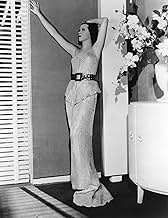
The story revolves around a 28-year-old John Paul Jones (Bing Crosby), songwriter and former radio singer who, after inheriting a million dollar fortune, makes a list of things to do, fulfilling his lifelong fantasies. Checked off is one where he rescues a damsel in distress, a damsel who happens to be Claire Hastings (Marian Mansfield), one of the guests upon his yacht, the S. S. Bon Homme Richard. His next check off on his "bucket list" is fishing right in the center of the Atlantic Ocean. Later that evening, J. Paul receives a telegram from his friend, James Smith (William Frawley), a reporter from the Paris Chronicle, notifying him that he's located the owner of the second pistol once owned by the American Revolutionary hero, John Paul Jones (whose name is, according to J. Paul, "a coincidence, not descendant"), the pistol he hopes to buy and add with the one he currently owns to present to the U. S. Naval Academy. Heading for Monte Carlo to make arrangements with the gun owner, J. Paul, after registering at the luxurious Hotel D'Athene, encounters an attractive but snobbish woman (Kitty Carlisle) in the elevator. He is later told by Smith that the woman in the elevator happens to be the Princess Alexandra, owner of the second pistol who refuses to sell the item to anyone who's not royalty. Because of J. Paul's background, he is told the princess refuses to sell it to him at any price. After a drunken waiter (Arthur Housman) loses consciousness while delivering a tray of food to the Princess's room, J. Paul, mistaken for the waiter, assumes the role so to be closer to the princess and her upperty family consisting of the Countess Ristova (Alison Skipworth), Prince Nicholas (Roland Young) Prince Vova Vladimir (Reginald Owen) and their talking parrot. J. Paul even goes to the extreme measures with every breath he takes by buying the hotel for himself. Learning the princess to be extremely bored with life, J. Paul also finds the royal family not what they seem to be Others featured in the cast are: Cecilia Parker (Suzette); Akim Tamiroff (The Hotel Manager); Charles Wilson (The Yacht Captain); and Charles Arnt (Higgins).
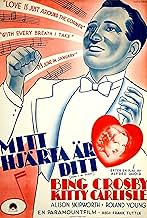
The musical soundtrack composed by Ralph Rainger, Leo Robin and Lewis Gensler include: "June in January" (sung by Bing Crosby); "Love is Just Around the Corner" (sung by Crosby and Marian Mansfield); "June in January" (reprise by Crosby while listening to his own recording); "Italian Opera Song" (sung by Kitty Carlisle); "With Every Breath I Take" (sung by Crosby); "With Every Breath I Take" (Crosby and Carlisle); "Love is Just Around the Corner," "With Every Breath I Take" and "June in January." Of the few songs written for the screen, "June in January" gets the most and best treatment here. As much as the title, HERE IS MY HEART might have some indication of this being a medical story involving heart transplants, or a romantic comedy set on Valentine's Day, it's a wonder whether or not such a song bearing its movie title might have been considered as another song interlude that was scrapped. Considering the movie title sounding more like a song tune than having any connection with the plot is somewhat typical for its time as movie titles go.
Unseen and unavailable for decades, HERE IS MY HEART has become the least known of all the Bing Crosby/Paramount musicals from the 1930s. Sometime in the 1980s during a pledge drive from WNET, Channel 13's New York City based public television station, it was Kitty Carlisle, Crosby's co-star from this and SHE LOVES ME NOT (Paramount, 1934), who mentioned in an interview that her second film with Crosby, HERE IS MY HEART "isn't around anymore." Though it wasn't fully expressed whether the movie was officially lost with no surviving prints available or not, HERE IS MY HEART has fortunately survived and available in full glory on DVD in 2000 as part of the "Bing Crosby Collection", with MISSISSIPPI (1935) on its flip side of the disc. Though Crosby seemed to have better on-screen chemistry with Mary Carlisle than he did with the sophisticated Kitty, HERE IS MY HEART, at 76 minutes, is a worthy rediscovery and one to check off your list of Bing Crosby movie titles to see. (***1/2)
The story revolves around a 28-year-old John Paul Jones (Bing Crosby), songwriter and former radio singer who, after inheriting a million dollar fortune, makes a list of things to do, fulfilling his lifelong fantasies. Checked off is one where he rescues a damsel in distress, a damsel who happens to be Claire Hastings (Marian Mansfield), one of the guests upon his yacht, the S. S. Bon Homme Richard. His next check off on his "bucket list" is fishing right in the center of the Atlantic Ocean. Later that evening, J. Paul receives a telegram from his friend, James Smith (William Frawley), a reporter from the Paris Chronicle, notifying him that he's located the owner of the second pistol once owned by the American Revolutionary hero, John Paul Jones (whose name is, according to J. Paul, "a coincidence, not descendant"), the pistol he hopes to buy and add with the one he currently owns to present to the U. S. Naval Academy. Heading for Monte Carlo to make arrangements with the gun owner, J. Paul, after registering at the luxurious Hotel D'Athene, encounters an attractive but snobbish woman (Kitty Carlisle) in the elevator. He is later told by Smith that the woman in the elevator happens to be the Princess Alexandra, owner of the second pistol who refuses to sell the item to anyone who's not royalty. Because of J. Paul's background, he is told the princess refuses to sell it to him at any price. After a drunken waiter (Arthur Housman) loses consciousness while delivering a tray of food to the Princess's room, J. Paul, mistaken for the waiter, assumes the role so to be closer to the princess and her upperty family consisting of the Countess Ristova (Alison Skipworth), Prince Nicholas (Roland Young) Prince Vova Vladimir (Reginald Owen) and their talking parrot. J. Paul even goes to the extreme measures with every breath he takes by buying the hotel for himself. Learning the princess to be extremely bored with life, J. Paul also finds the royal family not what they seem to be Others featured in the cast are: Cecilia Parker (Suzette); Akim Tamiroff (The Hotel Manager); Charles Wilson (The Yacht Captain); and Charles Arnt (Higgins).
The musical soundtrack composed by Ralph Rainger, Leo Robin and Lewis Gensler include: "June in January" (sung by Bing Crosby); "Love is Just Around the Corner" (sung by Crosby and Marian Mansfield); "June in January" (reprise by Crosby while listening to his own recording); "Italian Opera Song" (sung by Kitty Carlisle); "With Every Breath I Take" (sung by Crosby); "With Every Breath I Take" (Crosby and Carlisle); "Love is Just Around the Corner," "With Every Breath I Take" and "June in January." Of the few songs written for the screen, "June in January" gets the most and best treatment here. As much as the title, HERE IS MY HEART might have some indication of this being a medical story involving heart transplants, or a romantic comedy set on Valentine's Day, it's a wonder whether or not such a song bearing its movie title might have been considered as another song interlude that was scrapped. Considering the movie title sounding more like a song tune than having any connection with the plot is somewhat typical for its time as movie titles go.
Unseen and unavailable for decades, HERE IS MY HEART has become the least known of all the Bing Crosby/Paramount musicals from the 1930s. Sometime in the 1980s during a pledge drive from WNET, Channel 13's New York City based public television station, it was Kitty Carlisle, Crosby's co-star from this and SHE LOVES ME NOT (Paramount, 1934), who mentioned in an interview that her second film with Crosby, HERE IS MY HEART "isn't around anymore." Though it wasn't fully expressed whether the movie was officially lost with no surviving prints available or not, HERE IS MY HEART has fortunately survived and available in full glory on DVD in 2000 as part of the "Bing Crosby Collection", with MISSISSIPPI (1935) on its flip side of the disc. Though Crosby seemed to have better on-screen chemistry with Mary Carlisle than he did with the sophisticated Kitty, HERE IS MY HEART, at 76 minutes, is a worthy rediscovery and one to check off your list of Bing Crosby movie titles to see. (***1/2)
A movie with one glaring flaw...
Playing J. Paul Jones certainly was no stretch for Bing Crosby. After all, Jones is supposed to be a world famous crooner and radio star...just like he was. Hopefully, otherwise Crosby wasn't too much like this sap!
So why did I call Jones a sap? Well, while at a hotel, he sees and instantly falls in love with a Russian princess (Kitty Carlisle)...even thought she'd never give such a 'commoner' the time of day. So, he pretends to be a waiter and even buys the hotel to be near her and her band of moochers...a bunch of dirt poor ex-royals. Considering she's a bit haughty and these Russians don't pay their bills, you wonder why Jones is so smitten...which is THE big problem with the movie. If you love royalty and think they are somehow better than the rest of us, the film works much better. I just thought these folks were jerks and could never exactly understand why Jones cared about any of them...which is a problem with a romantic comedy. Crosby is fine in the role...but I just think the writing was fair at best.
So why did I call Jones a sap? Well, while at a hotel, he sees and instantly falls in love with a Russian princess (Kitty Carlisle)...even thought she'd never give such a 'commoner' the time of day. So, he pretends to be a waiter and even buys the hotel to be near her and her band of moochers...a bunch of dirt poor ex-royals. Considering she's a bit haughty and these Russians don't pay their bills, you wonder why Jones is so smitten...which is THE big problem with the movie. If you love royalty and think they are somehow better than the rest of us, the film works much better. I just thought these folks were jerks and could never exactly understand why Jones cared about any of them...which is a problem with a romantic comedy. Crosby is fine in the role...but I just think the writing was fair at best.
Bing was King
Someone once said that every singer who came after him either learnt, borrowed, or stole something from Bing Crosby. Here he is at his vocal peak, the man who virtually invented 'Pop' singing, in one of the many wonderful little musicals he churned out in the 1930's, all of which are a sheer pleasure to watch, several have still to make it onto DVD, we can only hope and pray they do! Here is My Heart take you back to another time, a time when life was simpler, and Hollywood was entering it's Golden Era, no messages, just enjoyment, pity it didn't stay that way!


Did you know
- TriviaOriginally developed as a vehicle for Gary Cooper and Elissa Landi, but Cooper changed his mind after deciding that a love story about a duchess and a waiter wasn't for him and turned down the role. The parts were eventually given to Bing Crosby and Kitty Carlisle.
- Quotes
Countess Rostova: Who do you think was in my bedroom?
Nicki, aka Prince Nickolas: I can't imagine.
- ConnectionsReferenced in Movie Melodies on Parade (1936)
Details
- Release date
- Country of origin
- Language
- Also known as
- The Duchess and the Waiter
- Filming locations
- Production company
- See more company credits at IMDbPro
- Runtime
- 1h 17m(77 min)
- Color
- Aspect ratio
- 1.37 : 1
Contribute to this page
Suggest an edit or add missing content