IMDb RATING
7.3/10
1.2K
YOUR RATING

The Great McGonigle and his troupe of third-rate vaudevillians manage to stay one step ahead of the bill collectors and the sheriff.The Great McGonigle and his troupe of third-rate vaudevillians manage to stay one step ahead of the bill collectors and the sheriff.The Great McGonigle and his troupe of third-rate vaudevillians manage to stay one step ahead of the bill collectors and the sheriff.
- Awards
- 2 wins total




Lona Andre
- Girl in Audience
- (uncredited)

Oscar Apfel
- Mr. Livingston
- (uncredited)
7.31.2K
1
2
3
4
5
6
7
8
9
10
Featured reviews
Vintage Fields
This is one of the top 2 or 3 movies I recommend when someone wants an introduction to the films of W. C. Fields. Classic wisecracking Fields, interaction with Baby LeRoy (including a well-placed kick), the Fields juggling act, and Fields classic costume as he gets off the train and leads (he thinks) a parade, the oversized, ballooning coat. Hi slines are priceless, his interaction with Jan Dugan as Cleopatra Pepperday, singing a song about gathering shells on the seashore brings tears to my eyes with laughter, Nora Cecil does very, very well as the hatchet-faced boarding room landlord Mrs Wendelschaeffer. Very good look at turn of the century melodrama as they present "The Drunkard" onstage. If you see one full-length W. C. Fields movie as an introduction to this comic genius, make it this one! Recommended highly!
W. C. Fields-- A Universally Funny Man, by Nelson Donley
There is very little that hasn't been said about the great W. C. Fields. "The Old Fashioned Way" would have been prosaic had it starred anyone else other than WCF. Fields was one of the few comic actors in the history of cinema who could produce priceless jocularity out of a boring script. Unlike perhaps 99% of all the other comic actors of his and our time, Fields never had to work very hard for a laugh. His humor was brought about through subtlety. Watch him very closely and you will discover in essence what natural humor is all about: his mutterings; his facial gestures; his body language; the inflection of his voice; his slight of hands. W. C. Fields doesn't just look and act funny-- he IS funny.
I saw "The Old Fashioned Way" about 30 years ago for the first time and, except for the juggling act and Baby Leroy scene, thought it was pretty innocuous. Of course, I was only a teenager back then and actually thought that "Billy Jack" was the greatest dramatic movie of the 20th century. I'm also ashamed to say that I thought Chevy Chase was actually funny. Ugh! As my tastes matured, I began to realize that so many aspects of life are beyond our control, and all one could ever hope to do was to learn not to take life so seriously. That, I believe, is why W. C. Fields' sense of humor is timeless and continues to relate to future generations.
The next time you watch a W. C. Fields movie, look closely and you may find certain aspects of yourself within Fields' character. Why do you think Homer Simpson has lasted so long??? If you take what has been said in this review into consideration, you will cherish this film for years to come. Fix yourself a dry Martini and enjoy the movie.
I saw "The Old Fashioned Way" about 30 years ago for the first time and, except for the juggling act and Baby Leroy scene, thought it was pretty innocuous. Of course, I was only a teenager back then and actually thought that "Billy Jack" was the greatest dramatic movie of the 20th century. I'm also ashamed to say that I thought Chevy Chase was actually funny. Ugh! As my tastes matured, I began to realize that so many aspects of life are beyond our control, and all one could ever hope to do was to learn not to take life so seriously. That, I believe, is why W. C. Fields' sense of humor is timeless and continues to relate to future generations.
The next time you watch a W. C. Fields movie, look closely and you may find certain aspects of yourself within Fields' character. Why do you think Homer Simpson has lasted so long??? If you take what has been said in this review into consideration, you will cherish this film for years to come. Fix yourself a dry Martini and enjoy the movie.
THE OLD FASHIONED WAY (William Beaudine, 1934) ***
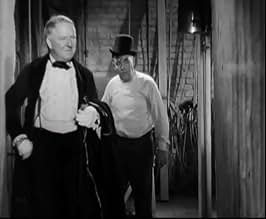
Quintessential W.C. Fields comedy (again, billed as Charles Bogle, he provided the story himself) boasting a pleasant period setting and a plot that revolves around a troupe of traveling players led by The Great McGonigle. The star is given yet another memorable introduction - being signaled by his daughter of the presence of the law, representing their creditors, on his way to the train which is to take them to the next town; here, again, we have a daughter who is willing to forgive her rascally father his every whim and foible.
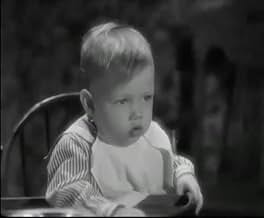
The film, as such, relies more on atmosphere than the typical Fields 'sketches' and this, perhaps, lends it a charm - and a freshness - that it wouldn't otherwise possess. Among its many notable scenes are: Fields thinking the military reception waiting at the train station is for his troupe's benefit; the dinner sequence with a rampaging, famished troupe and Fields' hilarious encounter with Baby LeRoy (who throws food at him and drops his watch into a jar of molasses) - Fields manages to get even with the child by kicking him when no one's watching!; the rich old lady's cringe-inducing singing audition, with the star reacting accordingly (he's hoping to secure her financial backing for the play the troupe will be presenting in town by promising her a role in it - this is eventually whittled down to a single line, which she's never even called upon to deliver!); Fields falling off the stage during rehearsals, etc.
"The Drunkard" set-piece occupies a good deal of the second half: a hoary melodrama which the troupe performs with gusto - with Fields as the mustachioed and hissable villain of the piece who, at one point, reprises the immortal line from his short THE FATAL GLASS OF BEER (1933) "'T ain't a fit night out for man nor beast". With the closing of each act, the curtain comes crashing down making a loud thumping sound; still, the film is clearly intended as a valentine to the days of vaudeville - and even includes a wonderful juggling routine towards the end that showcases Fields' amazing dexterity (in spite of his advancing age, corpulent physique and propensity for booze).
The final sequence finds The Great McGonigle keeping busy as a medicine showman - having left his daughter behind, so as not to interfere with her happiness alongside a stage-struck boy emanating from a respectable family. Typically, for comedies from this era, romance and songs have been incorporated into the narrative as much as a device by which to counterbalance the star's antics as for purely commercial reasons (since these films were largely intended for family consumption).
The film, as such, relies more on atmosphere than the typical Fields 'sketches' and this, perhaps, lends it a charm - and a freshness - that it wouldn't otherwise possess. Among its many notable scenes are: Fields thinking the military reception waiting at the train station is for his troupe's benefit; the dinner sequence with a rampaging, famished troupe and Fields' hilarious encounter with Baby LeRoy (who throws food at him and drops his watch into a jar of molasses) - Fields manages to get even with the child by kicking him when no one's watching!; the rich old lady's cringe-inducing singing audition, with the star reacting accordingly (he's hoping to secure her financial backing for the play the troupe will be presenting in town by promising her a role in it - this is eventually whittled down to a single line, which she's never even called upon to deliver!); Fields falling off the stage during rehearsals, etc.
"The Drunkard" set-piece occupies a good deal of the second half: a hoary melodrama which the troupe performs with gusto - with Fields as the mustachioed and hissable villain of the piece who, at one point, reprises the immortal line from his short THE FATAL GLASS OF BEER (1933) "'T ain't a fit night out for man nor beast". With the closing of each act, the curtain comes crashing down making a loud thumping sound; still, the film is clearly intended as a valentine to the days of vaudeville - and even includes a wonderful juggling routine towards the end that showcases Fields' amazing dexterity (in spite of his advancing age, corpulent physique and propensity for booze).
The final sequence finds The Great McGonigle keeping busy as a medicine showman - having left his daughter behind, so as not to interfere with her happiness alongside a stage-struck boy emanating from a respectable family. Typically, for comedies from this era, romance and songs have been incorporated into the narrative as much as a device by which to counterbalance the star's antics as for purely commercial reasons (since these films were largely intended for family consumption).
W.C. Fields at His Best!
There will never be another W.C. Fields in the entertainment world. He was one of a kind, an original, and unique in his style of comedy. He never played sympathetic characters like his peer comedians like Charlie Chaplin, Buster Keaton, or Harold Lloyd. In this film, he plays the head of a traveling theater company. They stop in a small town where his daughter falls in love. He often plays father figures to the young women. In order for his show to succeed, he conned a local widow which I thought was wrong in how it ended up. The film is a comedy and sometimes light-hearted. W.C. Fields was a comic genius and one of the great old time performers and movie stars of his day. It's worth watching this film at least once to appreciate his comedic genius.
Great Fields, Great Entertainment
If anything, this film is a must-see for two of W.C. Field's scenes: 1) Fields' first meeting with Baby Le Roy (who also appears in It's a Gift), which is easily one of the best comedy scenes in the movies, and 2) Fields' juggling routine, for which he was very famous when he was a vaudevillian, justly so. There are several other great moments of slightly lesser value. Also, the plot and the supporting characters are consistently entertaining and endearing, so this one's a real winner. 9/10


Did you know
- TriviaW.C. Fields recreates his famous vaudeville juggling routine with the cigar boxes.
- GoofsBetty is described as the leading lady of the troupe--as one would expect, since she is The Great McGonigle's daughter. But she takes no part in the show; another actress plays the female lead.
- Quotes
Dick Bronson: Mr. McGonigle, I've got to have some money.
The Great McGonigle: Yes, my lad, how much?
Dick Bronson: Two dollars.
The Great McGonigle: If I had two dollars, I'd start a number two company.
Dick Bronson: For two cents I'd quit.
The Great McGonigle: [to Marmaduke] Pay him off!
[Marmaduke gives him a two cent stamp]
- Crazy creditsThe end credits are in 2 parts; the first contain the actors and their character names in the film as a whole; The second contains the actors and their character names in the play, "The Drunkard." Five actors, therefore, are credited twice: W.C. Fields, Joe Morrison, Judith Allen, Samuel Ethridge and Ruth Marion.
- ConnectionsFeatured in W.C. Fields and Me (1976)
- SoundtracksWe're Just Poor Folks Rolling in Love
(1934) (uncredited)
Lyrics by Mack Gordon
Music by Harry Revel
Sung by Joe Morrison
Details
- Runtime
- 1h 11m(71 min)
- Color
- Aspect ratio
- 1.37 : 1
Contribute to this page
Suggest an edit or add missing content