IMDb RATING
7.0/10
2.3K
YOUR RATING

A group of down-on-their-luck workers combine their abilities to make a Gallafentian-style commune... and bread!A group of down-on-their-luck workers combine their abilities to make a Gallafentian-style commune... and bread!A group of down-on-their-luck workers combine their abilities to make a Gallafentian-style commune... and bread!
- Director
- Writers
- Stars
- Awards
- 1 win total





C.E. Anderson
- Schultz
- (uncredited)
Earl Askam
- Farmer
- (uncredited)
Lionel Backus
- Barber
- (uncredited)

Eddie Baker
- Deputy Sheriff
- (uncredited)
Jack Baldwin
- Motorcyclist
- (uncredited)

Marion Ballou
- Old Lady
- (uncredited)
- Director
- Writers
- All cast & crew
- Production, box office & more at IMDbPro
7.02.3K
1
2
3
4
5
6
7
8
9
10
Featured reviews
Flawed but spirited
Desperate people set in desperate Great Depression times try to eke out a living on an abandoned farm. Rousing for its "back to the land" pioneering spirit of people from all walks of life forced to help each other start a new life (or starve). The film preaches self-reliance (away from expecting government assistance), yet encourages people to help each other (in a somewhat Socialistic sense), so there are mixed messages here. There seems to be an undercurrent not to trust the various forms of government either.
Parts of this film are greater than the whole, with uneven performances and some hackneyed "girl tries to steal husband" scenes that make you want to fast-forward... Director King Vidor managed to get "OK" performances out of some of the lesser (amateur?) performers (some of which never made another film).
I've seen this film dozens of times for its most interesting scenes, tops of which include the famous ditch digging scene at the films end.
Unlike Grapes of Wrath, Our Daily Bread is overall optimistic that the individual can rise above dire straits to triumph through "work, work without stopping." Unfortunately, this film has enough flaws in story and acting to keep it from anywhere near the masterpiece status Grapes of Wrath has achieved.
Parts of this film are greater than the whole, with uneven performances and some hackneyed "girl tries to steal husband" scenes that make you want to fast-forward... Director King Vidor managed to get "OK" performances out of some of the lesser (amateur?) performers (some of which never made another film).
I've seen this film dozens of times for its most interesting scenes, tops of which include the famous ditch digging scene at the films end.
Unlike Grapes of Wrath, Our Daily Bread is overall optimistic that the individual can rise above dire straits to triumph through "work, work without stopping." Unfortunately, this film has enough flaws in story and acting to keep it from anywhere near the masterpiece status Grapes of Wrath has achieved.
Down on the Farm
King Vidor's "The Crowd" (1928) ended hopefully: James Murray and Eleanor Boardman (then playing John and Mary Sims) conquered the industrialized, impersonal City, with a new job and child replacing previous losses. But, the Sims' luck is, according to this film, cut short by the Great Depression. Tom Keene and Karen Morley (now playing John and Mary Sims) are sans job and money. With nothing to lose, the couple moves out to farm some country land owned by Ms. Morley's uncle. Mr. Keene organizes the locals into a communal society; but, nature and a woman threaten the Sims' success.
Although the lead characters resemble their namesakes from director Vidor's "The Crowd"; their tale, proclaimed as "Inspired by Headlines of Today", is derived from a "Reader's Digest" story. The characters do not share factual similarities with the original John and Mary Sims; for example, no reference is made to their children.
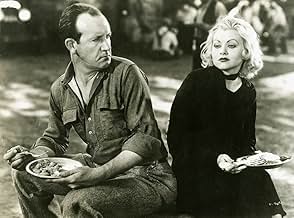
Vidor directed, and Keene acted, the "John" role inappropriately. Several of the supporting players are also unsuitable. Morley's Garbo-like "Mary" is a bright spot among the performances, though. Barbara Pepper answers "Garbo" with a Harlow-like "Sally". It's the closest you'll get to having Greta Garbo and Jean Harlow in the same film. However, the attempted "city girl" temptation of Keene, by Ms. Pepper, is not convincing. Interestingly, Pepper returned to country life in the 1960s, as the wife of "Fred Ziffel", on TV's "Green Acres".
The irrigating ending is unexpectedly exhilarating.
******* Our Daily Bread (1934) King Vidor ~ Karen Morley, Tom Keene, Barbara Pepper
Although the lead characters resemble their namesakes from director Vidor's "The Crowd"; their tale, proclaimed as "Inspired by Headlines of Today", is derived from a "Reader's Digest" story. The characters do not share factual similarities with the original John and Mary Sims; for example, no reference is made to their children.
Vidor directed, and Keene acted, the "John" role inappropriately. Several of the supporting players are also unsuitable. Morley's Garbo-like "Mary" is a bright spot among the performances, though. Barbara Pepper answers "Garbo" with a Harlow-like "Sally". It's the closest you'll get to having Greta Garbo and Jean Harlow in the same film. However, the attempted "city girl" temptation of Keene, by Ms. Pepper, is not convincing. Interestingly, Pepper returned to country life in the 1960s, as the wife of "Fred Ziffel", on TV's "Green Acres".
The irrigating ending is unexpectedly exhilarating.
******* Our Daily Bread (1934) King Vidor ~ Karen Morley, Tom Keene, Barbara Pepper
King Vidor translates the optimism of The Crowd to the Great Depression
To really appreciate this film you need to view King Vidor's 1928 silent classic "The Crowd". Both movies are the stories of John and Mary Sims. In the 1928 film, John is done in by his own mediocrity and dreaming during prosperous times overflowing with opportunity. Just six years later a couple by the same name is done in by the Great Depression. Although the two couples have the same name, this is not a sequel. It is King Vidor making a statement on the desperation of the times and how much difference just six years have made in the lives of average people. John actually shows quite a bit of leadership in this film versus "The Crowd". At the beginning, John and Mary are on the verge of being thrown into the street as John cannot find work. Mary's uncle saves the day by allowing them to move into and work a farm that has been foreclosed upon but that nobody wants due to the bad financial times. John, who says he could write a book about what he doesn't know about farming, is helped out by a Minnesota farmer whose own family has been kicked off their farm and is passing through. Pretty soon John gets the idea of turning the farm into a cooperative with people of all professions - plumbers, electricians, masons, etc. - joining in and setting up a system of bartering.
John Sims is voted the leader of the group, but there are obstacles along the way - a drought that threatens the crops and an ex-flapper who wants to lure John away from the cooperative and tries to convince him that it will never amount to anything.
This film is particularly relevant since the U.S. economy is facing challenges similar to those of the Great Depression again. However, people generally don't have the skills needed to live directly off of the land that they still had in the 1930's.
John Sims is voted the leader of the group, but there are obstacles along the way - a drought that threatens the crops and an ex-flapper who wants to lure John away from the cooperative and tries to convince him that it will never amount to anything.
This film is particularly relevant since the U.S. economy is facing challenges similar to those of the Great Depression again. However, people generally don't have the skills needed to live directly off of the land that they still had in the 1930's.
Film must be viewed from period perspective
The film, though socialistic in many ways, represents the drive to get back to nature as stressed by FDR. It represents the optimism believed by people that the current system had gotten too complex and that people were mere cogs. By creating a co-op, the characters essentially created a system focused on barter. This form of commerce could not become corrupted to an extent as a monetary based market did. Had the film been a propaganda film biased towards a socialist state, the emphasis of the importance of money would not have been as pivotal as it became partway through the movie. This film served not as propaganda, but as a solution to a common shared problem of a bleak time in American history. Because of this, this movie should not be viewed with the same biases of the 21st century.
If you love history...
At the time of this film's release, it was a pure novelty. Hollywood had paid little attention to the people in rural areas who had to deal with the Depression. The fact that this movie was made at all is somewhat miraculous since most people didn't want to see films about human struggle -even if they did have happy endings. They just wanted glamour and thrills (amazing how some things never change!). But the most miraculous thing was that Hollywood even allowed a film with a blatantly obvious socialist theme to be made. But then that's what most Americans called Franklin Roosevelt's policies anyway, despite that his 'New Deal' plan lifted the country up out of the mire of hopelessness. This film is hardly a documentary-like look at the effects of the New Deal (which in this scenario was basically co-op living and farming). Nor does it try to be propagandist, preachy or artistic, like Vidor's contemporaries in the Soviet Union. It was able to be made simply because it accepted the form of Hollywood populist cinema, which was basically: keep it melodramatic, cute, and non-threatening. It's sort of like 'Capra goes country', or like the Judy Garland-Mickey Rooney movies, only instead of everyone saying "hey, let's put on a show!", they build a farming community, and carry shovels instead of batons. It's a fascinating look at how people saw this country back then and how Hollywood approached The New Deal.
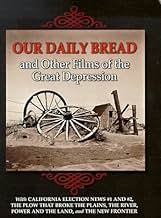
If you can, try to rent this on DVD because the DVD comes with four fascinating documentary shorts containing different viewpoints of The New Deal.
If you can, try to rent this on DVD because the DVD comes with four fascinating documentary shorts containing different viewpoints of The New Deal.


Did you know
- TriviaIn the early 1950s, Orson Welles chose this film as one of his 10 favorite movies of all time.
- ConnectionsEdited into Histoire(s) du cinéma: Une histoire seule (1989)
- How long is Our Daily Bread?Powered by Alexa
Details
Box office
- Budget
- $125,000 (estimated)
- Runtime
- 1h 20m(80 min)
- Color
- Aspect ratio
- 1.37 : 1
Contribute to this page
Suggest an edit or add missing content