
An efficient secretary at a department store marries her boss, but discovers that taking care of him at home is a lot different to taking care of him at work.An efficient secretary at a department store marries her boss, but discovers that taking care of him at home is a lot different to taking care of him at work.An efficient secretary at a department store marries her boss, but discovers that taking care of him at home is a lot different to taking care of him at work.
- Director
- Writers
- Stars
- Awards
- 1 win total


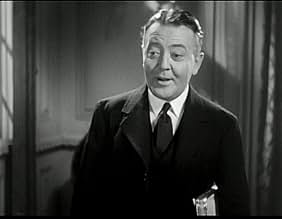

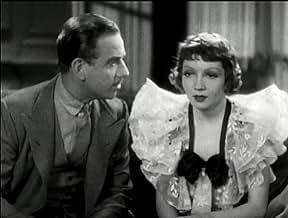
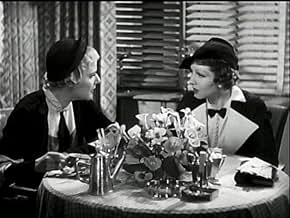
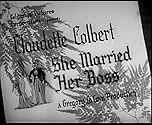


Grace Hayle
- Agnes Mayo
- (as Grace Hale)


Ernie Adams
- Passerby
- (uncredited)
William Arnold
- Department Head
- (uncredited)


Lynton Brent
- Assistant Window Dresser
- (uncredited)

Edmund Burns
- Newspaper Photographer
- (uncredited)

A.S. 'Pop' Byron
- Store Watchman
- (uncredited)
- Director
- Writers
- All cast & crew
- Production, box office & more at IMDbPro
6.5777
1
2
3
4
5
6
7
8
9
10
Featured reviews
Polished but not sparkling
This is Gregory LaCava's sanitised follow up to IT HAPPENED ONE NIGHT but here with a homely and surprisingly unsexy Claudette Colbert. It's not a funny comedy but rather one of those ok, "nice" wholesome feel-good movies.
Just a couple of generations ago it was virtually unthinkable for a woman to have a job after she'd got married. Then came the washing machine etc giving women the opportunity to do all the housework and also slog away from 9 to 5 as well. This is the normality of the age when this was made and this picture is about what happens when that unwritten law is broken.
There's no mistaking that this is 1935, a man's world, a time when men were men and women were ...just their wives. Despite its archaic attitudes, this is a light hearted effort. Comparisons are easily drawn with with Ruth Chatterton's FEMALE made a few years earlier which had lines such as: I am only a woman, business is no place for women and a woman's role is to have babies. This gentle comedy however is much less preachy. Whereas Ruth Chatterton's character "sees the error of her ways" and gives up trying to do a man's role, Colbert's Julia doesn't quite abandon her career but rather tries to balance having a job with being a proper little wife. For 1935 this is actually quite progressive.
The one aspect which is actually funny - in a weird, weird kind of way is Miss Colbert's crazy wardrobe. Robert Kalloch was Columbia's high profile dress designer but I think he must have been going through some sort of mid life crisis at the time. Claudette Colbert was one of the most beautiful and sexy actresses of Hollywood's golden age but not in this. Maybe this uncharacteristic dowdiness was a deliberate attempt to show her as a beacon of the new cleaned up, decent and morality upstanding Hollywood? Gone is that naughty twinkle in her eyes, gone are the suggestive glances, gone are the slinky silk dresses. This new "post code" Colbert is the model of modesty, the perfect example of how women in 1935 America should be.
Had this been made before the code, it might have had more bite. It might also have been more melodramatic like FEMALE but what 1935 gave us was just something fairly bland and undramatic but nevertheless generally pleasant.
Just a couple of generations ago it was virtually unthinkable for a woman to have a job after she'd got married. Then came the washing machine etc giving women the opportunity to do all the housework and also slog away from 9 to 5 as well. This is the normality of the age when this was made and this picture is about what happens when that unwritten law is broken.
There's no mistaking that this is 1935, a man's world, a time when men were men and women were ...just their wives. Despite its archaic attitudes, this is a light hearted effort. Comparisons are easily drawn with with Ruth Chatterton's FEMALE made a few years earlier which had lines such as: I am only a woman, business is no place for women and a woman's role is to have babies. This gentle comedy however is much less preachy. Whereas Ruth Chatterton's character "sees the error of her ways" and gives up trying to do a man's role, Colbert's Julia doesn't quite abandon her career but rather tries to balance having a job with being a proper little wife. For 1935 this is actually quite progressive.
The one aspect which is actually funny - in a weird, weird kind of way is Miss Colbert's crazy wardrobe. Robert Kalloch was Columbia's high profile dress designer but I think he must have been going through some sort of mid life crisis at the time. Claudette Colbert was one of the most beautiful and sexy actresses of Hollywood's golden age but not in this. Maybe this uncharacteristic dowdiness was a deliberate attempt to show her as a beacon of the new cleaned up, decent and morality upstanding Hollywood? Gone is that naughty twinkle in her eyes, gone are the suggestive glances, gone are the slinky silk dresses. This new "post code" Colbert is the model of modesty, the perfect example of how women in 1935 America should be.
Had this been made before the code, it might have had more bite. It might also have been more melodramatic like FEMALE but what 1935 gave us was just something fairly bland and undramatic but nevertheless generally pleasant.
Pleasant but Minor Claudette Colbert Vehicle
Sold as and considered a comedy, SHE MARRIED HER BOSS is actually a light-hearted "women's picture" with only occasional comic moments. Claudette Colbert stars as the executive secretary of department store owner Melvyn Douglas who has secretly been in love with him for seven years although he has never seen her as anything more than a very valuable assistant. Wealthy Douglas lives in a mansion with his frosty, hypochondriac sister Katherine Alexander and his bratty nine-year-old daughter Edith Fellows, product of his one unhappy marriage (it's never stated if Douglas was widowed or divorced but one presumes the latter given the hostile memories both he and Alexander have of his former wife).
Claudette's moneyed pal Jean Dixon is appalled how she is wasting her youth pining for this uninterested man and tries to break her away from him and toward rival store owner Michael Bartlett. When Dixon informs Douglas that Claudette is quitting her job to work for Barlett (untrue), Douglas is desperate to keep her and learns part of the reason is her desire to someday marry, he proposes to a surprised Colbert who happily accepts (the scene is curiously not filmed) only to learn shortly after the marriage that it basically remains little more than a business relationship. Meanwhile Bartlett is not giving in even with Claudette now a married lady (after all he himself is still legally wed!)
This is a pleasant film smoothly directed by Gregory LaCava but it really needed a rewrite and maybe revised casting. Claudette is perfection as always in this type of role but Douglas (whom often comes across as the "dull suitor who loses the girl" in the romantic comedies in which he is actually the "real love" in the picture) fails to show any hint of charm that might have bewitched her all these years although his poorly written character doesn't give him much to work with. The delightful comedienne Jean Dixon - so wonderful as the maid in La Cava's MY MAN GODFREY - is badly cast as Claudette's chic older, sardonic buddy in a part that cries for Helen Broderick.
Edith Fellows, however, is terrific as one of the most realistic brats on screen in the 1930's, a pathological liar who talks back to adults and bullies dogs. Edith's scenes with Claudette as a no-nonsense but warm stepmother tries to reach out to her are extremely believable and sensational. It's also a pleasure to see Grayce Hale, usually cast in unbilled bits as fat and stupid women, given a fairly sizable supporting role as Claudette's assistant at the office that completely lacks the ridicule she usually is given on-screen. Katherine Alexander is acceptable as Douglas' sister and comedian Raymond Walburn (unrecognizable in his early middle-age from his best known period a decade later in movies) is for the most part excellent as the long-suffering butler.
The movie has a shocking lapse of taste in it's use of drunk-driving (by Walburn) as "comedy" (in crowded city streets no less!!) although this may have been a period when the issue was not taken as seriously as it should have been. SHE MARRIED HER BOSS is definitely lesser Colbert but this is one actress who is always worth watching.
Claudette's moneyed pal Jean Dixon is appalled how she is wasting her youth pining for this uninterested man and tries to break her away from him and toward rival store owner Michael Bartlett. When Dixon informs Douglas that Claudette is quitting her job to work for Barlett (untrue), Douglas is desperate to keep her and learns part of the reason is her desire to someday marry, he proposes to a surprised Colbert who happily accepts (the scene is curiously not filmed) only to learn shortly after the marriage that it basically remains little more than a business relationship. Meanwhile Bartlett is not giving in even with Claudette now a married lady (after all he himself is still legally wed!)
This is a pleasant film smoothly directed by Gregory LaCava but it really needed a rewrite and maybe revised casting. Claudette is perfection as always in this type of role but Douglas (whom often comes across as the "dull suitor who loses the girl" in the romantic comedies in which he is actually the "real love" in the picture) fails to show any hint of charm that might have bewitched her all these years although his poorly written character doesn't give him much to work with. The delightful comedienne Jean Dixon - so wonderful as the maid in La Cava's MY MAN GODFREY - is badly cast as Claudette's chic older, sardonic buddy in a part that cries for Helen Broderick.
Edith Fellows, however, is terrific as one of the most realistic brats on screen in the 1930's, a pathological liar who talks back to adults and bullies dogs. Edith's scenes with Claudette as a no-nonsense but warm stepmother tries to reach out to her are extremely believable and sensational. It's also a pleasure to see Grayce Hale, usually cast in unbilled bits as fat and stupid women, given a fairly sizable supporting role as Claudette's assistant at the office that completely lacks the ridicule she usually is given on-screen. Katherine Alexander is acceptable as Douglas' sister and comedian Raymond Walburn (unrecognizable in his early middle-age from his best known period a decade later in movies) is for the most part excellent as the long-suffering butler.
The movie has a shocking lapse of taste in it's use of drunk-driving (by Walburn) as "comedy" (in crowded city streets no less!!) although this may have been a period when the issue was not taken as seriously as it should have been. SHE MARRIED HER BOSS is definitely lesser Colbert but this is one actress who is always worth watching.
In Complete Charge
She Married Her Boss is one of those films where the title says it all, no need for any elaboration. Of course the bride is Claudette Colbert who's been crushing out on boss Melvyn Douglas for years.
But before she's a bride Claudette is a secretary and a most efficient one at that. She's got the business well organized, but Douglas's home is something of a shambles with spoiled brat of a daughter Edith Fellows ruling the roost and some crooked household help ripping him off.
So it's a business arrangement that Douglas has in mind when he marries Colbert. But he's slow on the uptake to realize that Colbert has romance in mind. Playboy Michael Bartlett is not slow however and he's got a nice singing voice to go with some oily charm.
Colbert and Douglas get some nice support from folks like Raymond Walburn as the new butler who gets tanked with Douglas, Katharine Alexander as Douglas's snooty sister and Jean Dixon doing the Eve Arden part before Eve Arden was around.
Gregory LaCava directed She Married Her Boss and we're certainly not seeing a director's cut. Harry Cohn's editors at Columbia Pictures butchered this one, the film ends rather abruptly though in truth you know where it all is going. And people who've had loved ones killed by drunk drivers won't find Raymond Walburn careening drunkenly through the streets behind the wheel all that funny.
Still the stars and the planets do shine in She Married Her Boss.
But before she's a bride Claudette is a secretary and a most efficient one at that. She's got the business well organized, but Douglas's home is something of a shambles with spoiled brat of a daughter Edith Fellows ruling the roost and some crooked household help ripping him off.
So it's a business arrangement that Douglas has in mind when he marries Colbert. But he's slow on the uptake to realize that Colbert has romance in mind. Playboy Michael Bartlett is not slow however and he's got a nice singing voice to go with some oily charm.
Colbert and Douglas get some nice support from folks like Raymond Walburn as the new butler who gets tanked with Douglas, Katharine Alexander as Douglas's snooty sister and Jean Dixon doing the Eve Arden part before Eve Arden was around.
Gregory LaCava directed She Married Her Boss and we're certainly not seeing a director's cut. Harry Cohn's editors at Columbia Pictures butchered this one, the film ends rather abruptly though in truth you know where it all is going. And people who've had loved ones killed by drunk drivers won't find Raymond Walburn careening drunkenly through the streets behind the wheel all that funny.
Still the stars and the planets do shine in She Married Her Boss.
What a Difference a Year Makes
I've read the other comments that talked about aspects of this film that are dated, offensive, or just plain bizarre. I was rather surprised that no one brought up the movie's cringe-inducing gender stereotypes. Anyone who has seen Claudette Colbert or Melvyn Douglas in the films they made before the introduction of the Production Code(in mid-1934) would immediately recognize the heavy hand of the censors, who did their best to impose on Hollywood their narrow-minded idea of "family values." (On the basis of this film, it would appear that allowing married women to pursue a career would bring about the end of American society, but child abuse and drunk driving are just good clean fun!) Though the cast and plot look good on paper, the result is strained and uneven, as if the script had been written to Pre-Code standards and then hastily cleaned up so as not to offend the censors.
Claudette Colbert plays Julia Scott, a bright, capable, and confident executive assistant at a large department store. She runs the busy office like a well-oiled machine and clearly enjoys the work. It's hard to fathom why she's spent six years mooning over her boss, Richard Barclay. The way the role of Barclay is written, the usually charming Melvyn Douglas comes off as a humorless, sexless cipher. All the more jarring, then, to hear Julia talk about her desire to give up her terrific job and marry Barclay. Without a trace of irony, she describes marriage as "a woman's REAL career."
Okay, she wants to get married. But why on earth would the lovely and vivacious Julia want Barclay as a husband? Not only is he dull as ditch-water, he treats her as if she were a piece of super-efficient office equipment. Once they're married, he ridicules her for assuming the stereotypical role of housewife, despite the fact that she's set his chaotic home in order and tamed his obnoxious brat of a daughter. There's nothing in the movie to explain Barclay's eventual change of heart; apparently it's brought on by a quart of whiskey. So much for good old "family values." The film is so devoid of any hint of sexual attraction that we don't see a single cuddle or smooch--not even at the very end when it's clear that the newlyweds will finally get around to doing what newlyweds are famous for doing. Julia has more physical contact (and chemistry) with Leonard Rogers, her sweet-tempered playboy suitor, who's a lot more appealing as husband material than that cold fish Barclay.
Solid performances are turned in by familiar actors in some of the secondary roles: Raymond Walburn as the perfect butler; Katherine Alexander as Barclay's drama-queen sister; Edith Fellows as the evil daughter; and especially Jean Dixon as Julia's wise-cracking, matchmaking best friend.
Would love to have seen this film made just a year earlier, before the Hays Office started taking their moralizing hatchet to so many of the things that made movies of the 30s worth watching.
Claudette Colbert plays Julia Scott, a bright, capable, and confident executive assistant at a large department store. She runs the busy office like a well-oiled machine and clearly enjoys the work. It's hard to fathom why she's spent six years mooning over her boss, Richard Barclay. The way the role of Barclay is written, the usually charming Melvyn Douglas comes off as a humorless, sexless cipher. All the more jarring, then, to hear Julia talk about her desire to give up her terrific job and marry Barclay. Without a trace of irony, she describes marriage as "a woman's REAL career."
Okay, she wants to get married. But why on earth would the lovely and vivacious Julia want Barclay as a husband? Not only is he dull as ditch-water, he treats her as if she were a piece of super-efficient office equipment. Once they're married, he ridicules her for assuming the stereotypical role of housewife, despite the fact that she's set his chaotic home in order and tamed his obnoxious brat of a daughter. There's nothing in the movie to explain Barclay's eventual change of heart; apparently it's brought on by a quart of whiskey. So much for good old "family values." The film is so devoid of any hint of sexual attraction that we don't see a single cuddle or smooch--not even at the very end when it's clear that the newlyweds will finally get around to doing what newlyweds are famous for doing. Julia has more physical contact (and chemistry) with Leonard Rogers, her sweet-tempered playboy suitor, who's a lot more appealing as husband material than that cold fish Barclay.
Solid performances are turned in by familiar actors in some of the secondary roles: Raymond Walburn as the perfect butler; Katherine Alexander as Barclay's drama-queen sister; Edith Fellows as the evil daughter; and especially Jean Dixon as Julia's wise-cracking, matchmaking best friend.
Would love to have seen this film made just a year earlier, before the Hays Office started taking their moralizing hatchet to so many of the things that made movies of the 30s worth watching.
An underrated gem...although far from a diamond
First, I must respectfully disagree with one reviewer here who kept describing the film as a screwball comedy. Even in the 1930s, every comedy was not a screwball comedy, and this isn't one (despite one kinda goofy car episode). It's not a drawing room comedy either. It's simply a domestic comedy...in fact, is it really a comedy. Let's see, you have an obsessive boss that has no real personal life, a sister that's a terrible prude and suppresses any family joy in life, a young daughter who is so unhappy that she's become a terrible brat, a young lady (Colbert)who has her eyes on her boss but then finds herself in an unsatisfying marriage, and a little girl who then pines because the stepmother who has brought some joy into her life then leaves home. In many ways, this is a pretty serious story -- with some comedic moments.
Several reviewers have wondered why the Colbert character is interested in the Melvyn Douglas boss character to begin with. A fair criticism. The screenwriters and director sure haven't given us much of a clue about that. But how many of us have found ourselves in an unfulfilling relationship or marriage, ultimately realizing we made a mistake. And I tried to remember that this film was made in 1935. Films were not always very sophisticated back then...they were slowly growing up...and the story here is certainly more sophisticated than many other films from the same time.
Claudette Colbert is quite good here, though obviously not quite as well developed as an actress as she was in the 1940s. Melvyn Douglas was good in the role he played, although it's rather hard to like that role. Two standout performances were 12-year-old Edith Fellows as Douglas' bratty daughter (who develops into a rather nice child once the home situation improves), and Raymond Walburn as Douglas' butler (the scenes of Douglas and Walburn in a drunken state were among the better drunk scenes I've seen).
If you see this movie for what it is -- a drama story with comedy overtones -- you'll really enjoy it. It's far better than many other mid-30s productions...and 1939 was just around the corner.
Several reviewers have wondered why the Colbert character is interested in the Melvyn Douglas boss character to begin with. A fair criticism. The screenwriters and director sure haven't given us much of a clue about that. But how many of us have found ourselves in an unfulfilling relationship or marriage, ultimately realizing we made a mistake. And I tried to remember that this film was made in 1935. Films were not always very sophisticated back then...they were slowly growing up...and the story here is certainly more sophisticated than many other films from the same time.
Claudette Colbert is quite good here, though obviously not quite as well developed as an actress as she was in the 1940s. Melvyn Douglas was good in the role he played, although it's rather hard to like that role. Two standout performances were 12-year-old Edith Fellows as Douglas' bratty daughter (who develops into a rather nice child once the home situation improves), and Raymond Walburn as Douglas' butler (the scenes of Douglas and Walburn in a drunken state were among the better drunk scenes I've seen).
If you see this movie for what it is -- a drama story with comedy overtones -- you'll really enjoy it. It's far better than many other mid-30s productions...and 1939 was just around the corner.


Did you know
- TriviaThe beginning theme music is the same as the 1934 movie It Happened One Night.
- Quotes
Julia Scott: This is Grandma Scott. She knitted the Dred Scott decision on a piece of old burlap.
Details
- Release date
- Country of origin
- Language
- Also known as
- She Wanted Her Boss
- Production company
- See more company credits at IMDbPro
- Runtime
- 1h 25m(85 min)
- Color
- Aspect ratio
- 1.37 : 1
Contribute to this page
Suggest an edit or add missing content