IMDb RATING
6.0/10
1.1K
YOUR RATING
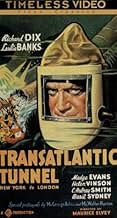
A team of international scientists and engineers attempts to build a tunnel under the ocean.A team of international scientists and engineers attempts to build a tunnel under the ocean.A team of international scientists and engineers attempts to build a tunnel under the ocean.
- Awards
- 2 wins total
George Arliss
- Prime Minister of Great Britain
- (as Mr. George Arliss)
Walter Huston
- President of the United States
- (as Mr. Walter Huston)
James Carew
- Jim Barton
- (uncredited)
Pat Fitzpatrick
- Geoffrey - As a young child
- (uncredited)
Jacqueline Giovanni
- Young Girl
- (uncredited)
Helen Haye
- Oil Magnate
- (uncredited)
Bryan Herbert
- American Reporter
- (uncredited)
Dennis Hoey
- Worker
- (uncredited)
6.01K
1
2
3
4
5
6
7
8
9
10
Featured reviews
Amazing idea, well-executed film
The concept of the movie is very basic: the building of a tunnel connecting the eastern United States with the island of Great Britain. If this were actually possible, it would probably have been done long before now -- but this film is an excellent portrayal of the possibilities. It's quite entertaining for not only fans of old movies, but for history buffs as well -- and even students of transportation should enjoy it!
A remarkable prediction of future techology.
A grimly realistic story, set in the future (as visualized in 1935), about the building of an undersea tunnel between England and America. The opening scene (a meeting of millionaires and engineers discussing the project) is reminiscent of a similar scene in `Destination Moon', though it lacks the patriotic enthusiasm.
The movie's basic message is also similar to `Destination Moon': determined men doing a big job despite colossal odds. The special effects are remarkable, the `futuristic' production designs are gorgeous, and the music is effective. There are some truly gripping moments in this fine motion picture. Especially memorable is the huge mechanism that drills the tunnel beneath the ocean.
Modern day tunneling machines are amazingly similar to the one portrayed in this 67-year-old movie. Watch the Discovery Channel's `Extreme Machines' episode about tunneling machines if you'd like to compare for yourself.
The final scene, showing cars entering the English entrance to the completed tunnel, is impressive when compared to the `chunnel' which now bridges England and Europe. `Transatlantic Tunnel' makes a great second feature for `Things to Come'.
The movie's basic message is also similar to `Destination Moon': determined men doing a big job despite colossal odds. The special effects are remarkable, the `futuristic' production designs are gorgeous, and the music is effective. There are some truly gripping moments in this fine motion picture. Especially memorable is the huge mechanism that drills the tunnel beneath the ocean.
Modern day tunneling machines are amazingly similar to the one portrayed in this 67-year-old movie. Watch the Discovery Channel's `Extreme Machines' episode about tunneling machines if you'd like to compare for yourself.
The final scene, showing cars entering the English entrance to the completed tunnel, is impressive when compared to the `chunnel' which now bridges England and Europe. `Transatlantic Tunnel' makes a great second feature for `Things to Come'.
Interesting, but disappointing
Finally saw this movie after many years of eager anticipation only to find myself bored. I have to agree with Maltin's summary of the two-dimensional characterization of the players in this movie. The characters in this movie do nothing more than bicker and argue.
The movie was released in Britain in 1935. A darkening time for Europe was on the horizon with Adolph Hitler's rise to power in Germany. The characters in the movie hint at using the tunnel for uniting the "English" speaking people of the world; not to mention the transportation of armaments to Britain should war break out! Perhaps this movie was supposed to quell the fears of the British by offering an avenue of escapism in the promise of new and revolutionary technology (ie. the Radium Drill!) to avert war.
Never the less the movie does utilize futuristic sets and models that were ahead of their time and still hold their own today. Transportation historians will find this movie interesting. 6.5 out 10.
The movie was released in Britain in 1935. A darkening time for Europe was on the horizon with Adolph Hitler's rise to power in Germany. The characters in the movie hint at using the tunnel for uniting the "English" speaking people of the world; not to mention the transportation of armaments to Britain should war break out! Perhaps this movie was supposed to quell the fears of the British by offering an avenue of escapism in the promise of new and revolutionary technology (ie. the Radium Drill!) to avert war.
Never the less the movie does utilize futuristic sets and models that were ahead of their time and still hold their own today. Transportation historians will find this movie interesting. 6.5 out 10.
early sci-fi from Great Britain
Quite similar to "Just Imagine" from 1930, where they try to give some insight into what the future will look like. Some cool inventions, like picture telephones, airplanes that can hover like the Osprey, and the "radium" tunnel drill. They even talk about the man who "built the Channel Tunnel in 1940" . Another viewer mentions that at the end, they saw cars driving into the tunnel, but I never saw that. I saw the 92 min, 40 sec version on TCM in March 2008, so it seems there's a minute or two missing from the TCM print. "Tunnel" stars Richard Dix and Leslie Banks, with various other co-stars. It combines the challenge of building a tunnel (where the shareholders keep pulling the financing) with a troubled family life. They even take a couple swipes at millionaires. George Arliss, star of the silents, appears as the British Prime Minister. The big shot shareholders take a minute to point out that the lead engineer is "just another employee, and he must remember that!" When he asked why they couldn't tell him what was wrong over the telephone, they insisted he come in person... I wondered if they were avoiding saying things over the air, but they don't indicate that (this was just prior to WW II) I also felt bad for the workers down in the tunnel -- heavy equipment is being pulled up on cable, but no-one is wearing hardhats. Fun to watch if you keep in mind that it was made in 1935. I could have done without the silly side portraits of the key characters at the last couple minutes, but someone must have felt that added something. Entertaining early science fiction.
Curt Siodmak Writes A Story...
A team of international scientists and engineers attempts to build a tunnel under the ocean.
The story was written by the amazing Curt Siodmak, based on the 1913 novel "Der Tunnel" by Bernhard Kellermann. Interestingly, "Der Tunnel" had already been filmed three times before, once as a German silent, "Der Tunnel" (1915), and then as two sound films "Der Tunnel" (German) and "Le Tunnel" (French), both released in 1933, and both directed by Curtis Bernhardt. The British version today remains the only one easily available.
Suggestions for such a structure actually go back to Michel Verne, son of Jules Verne, who wrote about it in 1888 in a story entitled "Un Express de l'avenir" (An Express of the Future). This story was published in English in Strand Magazine in 1895. As recently as the 1960s, the idea was again proposed, but then using vacuum tubes rather than more traditional modes of transport.
As for the film, it is worth seeing, if for no other reason than to get a feel for British science fiction in the 1930s. This approach seems much different than the boomin science fiction of the 1950s.
The story was written by the amazing Curt Siodmak, based on the 1913 novel "Der Tunnel" by Bernhard Kellermann. Interestingly, "Der Tunnel" had already been filmed three times before, once as a German silent, "Der Tunnel" (1915), and then as two sound films "Der Tunnel" (German) and "Le Tunnel" (French), both released in 1933, and both directed by Curtis Bernhardt. The British version today remains the only one easily available.
Suggestions for such a structure actually go back to Michel Verne, son of Jules Verne, who wrote about it in 1888 in a story entitled "Un Express de l'avenir" (An Express of the Future). This story was published in English in Strand Magazine in 1895. As recently as the 1960s, the idea was again proposed, but then using vacuum tubes rather than more traditional modes of transport.
As for the film, it is worth seeing, if for no other reason than to get a feel for British science fiction in the 1930s. This approach seems much different than the boomin science fiction of the 1950s.
Did you know
- TriviaOne of the plot elements that crops up in the movie is a volcanic area that the tunnelers run into about halfway across the Atlantic. This makes sense, as the Mid-Atlantic Ridge is a very active area. The neat part in relation to the movie is that while the existence of a "Ridge" on the seafloor was known at the time, it was not known that it was so active. It wasn't until the Heezen/Ewing/Tharp mapping of the ocean floor in the 1950s that people discovered that Seismic activity and "Seafloor Spreading" due to magma seepage were going on. That was about 20 years after the makers of the film surmised Magma pockets near the Mid-Atlantic.
- GoofsAlthough the story takes place over a period of about twenty years, none of the principal players shows any sign of aging, despite all the ordeals encountered.
- Quotes
Richard 'Mack' McAllan: There are bigger things than money.
Airways Magnate: We don't deal in 'em.
- Crazy creditsAt the end of the opening credits, a card comes up with "Gaumont-British Picture Corpn. Ltd. were fortunate in securing the services of Mr. George Arliss and Mr. Walter Huston for the parts of Prime Minister of Great Britain and President of the United States."
- ConnectionsEdited from Der Tunnel (1933)
Details
- Runtime
- 1h 34m(94 min)
- Color
- Aspect ratio
- 1.37 : 1
Contribute to this page
Suggest an edit or add missing content