IMDb RATING
6.5/10
3.4K
YOUR RATING

A scientist becomes murderous after discovering, and being exposed to the radiation of, a powerful new element called Radium X.A scientist becomes murderous after discovering, and being exposed to the radiation of, a powerful new element called Radium X.A scientist becomes murderous after discovering, and being exposed to the radiation of, a powerful new element called Radium X.
- Director
- Writers
- Stars
- Awards
- 1 win total

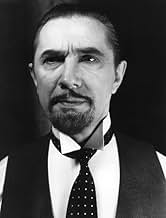





Boris Karloff
- Dr. Janos Rukh
- (as Karloff)


Georges Renavent
- Chief of the Surete
- (as Georges Renevant)

Ricca Allen
- Bystander
- (uncredited)

Charles Bastin
- French Newsboy
- (uncredited)

May Beatty
- Mme. LeGrand
- (uncredited)
Ted Billings
- Counterman
- (uncredited)
Ernest A. Bouveron
- French Newsboy
- (uncredited)
Helen Brown
- Blind Girl's Mother
- (uncredited)

Daisy Bufford
- Infant's Mother
- (uncredited)
André Cheron
- Surete Official Checking Names
- (uncredited)
- Director
- Writers
- All cast & crew
- Production, box office & more at IMDbPro
6.53.4K
1
2
3
4
5
6
7
8
9
10
Featured reviews
Sci Fi Caviar
One doesn't get to enjoy this gem, the 1936 Invisible Ray, often. But no can forget it. The story is elegant. Karloff, austere and embittered in his Carpathian mountain retreat, is Janos Rukh, genius science who reads ancient beams of light to ascertain events in the great geological past
particularly the crash of a potent radioactive meteor in Africa. Joining him is the ever-elegant Lugosi (as a rare hero), who studies "astro-chemistry." Frances Drake is the lovely, underused young wife; Frank Lawton the romantic temptation; and the divine Violet Kemble Cooper is Mother Rukh, in a performance worthy of Maria Ospenskya.
The story moves swiftly in bold episodes, with special effects that are still handsome. It also contains some wonderful lines. One Rukh restores his mother's sight, he asks, "Mother, can you see, can you see?" "Yes, I can see more clearly than ever. And what I see frightens me." Even better when mother Rukh says, "He broke the first law of science." I am not alone among my acquaintance in having puzzled for many many years exactly what this first law of science is.
This movie is definitely desert island material.
The story moves swiftly in bold episodes, with special effects that are still handsome. It also contains some wonderful lines. One Rukh restores his mother's sight, he asks, "Mother, can you see, can you see?" "Yes, I can see more clearly than ever. And what I see frightens me." Even better when mother Rukh says, "He broke the first law of science." I am not alone among my acquaintance in having puzzled for many many years exactly what this first law of science is.
This movie is definitely desert island material.
Very entertaining film with Karloff and Lugosi on top form
Perhaps The Invisible Ray isn't a great film, but there is much to enjoy still. The story is a little predictable, while the supporting characters are underdeveloped and not very interesting and I'm not sure whether some of the scientific ideas, while innovative at the time, are as easy to grasp or as relevant now as it was. These are just personal preferences though, and The Invisible Ray was still enjoyable even with those personal reservations. It is a very nice-looking film, original at the time and holds up now, with a great Gothic atmosphere, beautifully constructed sets and nicely done special effects(even from a present-day perspective). The photography fits with the mood very well as well. The Invisible Ray is atmospherically scored, the script is literate and the film moves quickly with few pacing lulls. The directing from Lambert Hillyer is efficient and neatly set-up, I also detected a little bit of a James Whale influence which I liked. There are some actors who don't really distinguish themselves in roles that don't really allow for them to shine properly. Frances Drake and Violet Kemble-Cooper are good though, while the top-notch performances of genre masters Boris Karloff and Bela Lugosi are the film's best asset. I do prefer their performances and chemistry in The Black Cat, but what really makes them worth watching here is how effortlessly charismatic they are and how they are in roles that actually suit them and their acting skills. In conclusion, very entertaining with great lead performances from Karloff and Lugosi. 7/10 Bethany Cox
Karloff/Lugosi...Need I Say More
The Invisible Ray is an exciting story about an overworked scientist who works effortlessly in his Carpathian castle looking for secrets of the universe. Boris Karloff plays the scientist Janos Ruhk who travels with a band of other scientists to Africa for the spot where an unidentified element landed centuries ago. Karloff is very good as the scientist who accidentally poisons himself with this new radioactive element. Karloff is obsessed with the idea that his fellow travelers, amongst them the stately Lugosi as Dr. Benet, are after his honors and secrets of this new find. Because of this, Karloff goes on a maniacal murdering spree of his former friends. There are many good elements in this film, most dealing with the rather interesting story of science gone amok. Lugosi is good too, although his role is not very big. I must agree with many that this pairing of the horrific duo is a second to The Black Cat. Nonetheless this is a fine Universal science fiction/horror film.
Early sci-fi horror film with good performances from Karloff and Lugosi...
THE INVISIBLE RAY is a highly enjoyable horror film that seems way ahead of its time, coming as it does in 1936 and making use of meteors and Radium X in its plot design. BORIS KARLOFF is the scientist whose ideas are "stolen", or so he believes, by others and goes about seeking an unusual method of revenge, killing off his intended victims one by one.
FRANK LAWTON and FRANCES DRAKE are the romantic leads with BEULAH BONDI playing an aristocratic Lady Arabella who is one of the victims. But the film is mainly a showcase for BORIS KARLOFF as the mad scientist, with BELA LUGOSI doing extremely well (and underplaying effectively) the role of a colleague among those on the "victim" list.
Universal obviously planned this as a low-budget feature, but the sets are impressive, all the technical credits are more than adequate, and the story is well-paced and effective throughout.
Well worth viewing and certainly one of the better Karloff/Lugosi joint ventures.
FRANK LAWTON and FRANCES DRAKE are the romantic leads with BEULAH BONDI playing an aristocratic Lady Arabella who is one of the victims. But the film is mainly a showcase for BORIS KARLOFF as the mad scientist, with BELA LUGOSI doing extremely well (and underplaying effectively) the role of a colleague among those on the "victim" list.
Universal obviously planned this as a low-budget feature, but the sets are impressive, all the technical credits are more than adequate, and the story is well-paced and effective throughout.
Well worth viewing and certainly one of the better Karloff/Lugosi joint ventures.
Delightfully Silly and Naive Sci-Fi
The scientist Janos Rukh (Boris Karloff) has been expelled from the scientific community due to the lack of credibility in his researches. Living isolated in a castle with his blind mother (Violet Kemble Cooper) and his wife Diane (Frances Drake), he makes a private presentation of the recently discovered invisible ray to his colleague Dr. Felix Benet (Bela Lugosi), and succeeds in being sponsored by Sir Francis Stevens (Walter Kingsford) and his wife Lady Arabella Stevens (Beulah Bondi) in an expedition to Nigeria, where he believe he could find a meteor with Radium X. Once in Africa, Janos leaves the expedition alone and finds the meteor, but is exposed to its radiation, acquiring a deadly touch that immediately kills anyone who is touched by him. Meanwhile, Diane falls in love for the son of Lady Arabella, Ronald Drake (Frank Lawton). Dr. Benet finds an antidote to control the effects of the radiation in Janos to be daily injected, but advises that the side effect could bring madness to him. Dr. Benet returns to Paris and steals the findings of Janos, exposing and using Janos's researches to the scientific community, while the deranged Janos seeks revenge against those that have betrayed him.
"The Invisible Ray" is a delightfully silly and naive sci-fi visibly inspired in H.G. Well's "The Invisible Man" of 1933. This minor film is a great opportunity to see Boris Karloff and Bela Lugosi acting together. The story is entertaining but with questionable ethical and moral behaviors of the lead characters. Dr. Felix Benet steals the research of his colleague that needed to recover the esteem together with the scientific community for self-profit and self- promotion. Diane Rukh has an affair with Ronald Drake in the absence of her husband in Africa. Mother Rukh breaks the only chance of survival of her only son that loved her and recovered and healed her vision. And Janos Rukh does not tell his wife that is sick and kills innocent people to reach his personal vendetta. In the end, all the characters are unpleasant. My vote is six.
Title (Brazil): "O Raio Invisível" ("The Invisible Ray")
"The Invisible Ray" is a delightfully silly and naive sci-fi visibly inspired in H.G. Well's "The Invisible Man" of 1933. This minor film is a great opportunity to see Boris Karloff and Bela Lugosi acting together. The story is entertaining but with questionable ethical and moral behaviors of the lead characters. Dr. Felix Benet steals the research of his colleague that needed to recover the esteem together with the scientific community for self-profit and self- promotion. Diane Rukh has an affair with Ronald Drake in the absence of her husband in Africa. Mother Rukh breaks the only chance of survival of her only son that loved her and recovered and healed her vision. And Janos Rukh does not tell his wife that is sick and kills innocent people to reach his personal vendetta. In the end, all the characters are unpleasant. My vote is six.
Title (Brazil): "O Raio Invisível" ("The Invisible Ray")


Did you know
- TriviaThe set for Dr. Rukh's laboratory appeared as that of Ming the Merciless in Flash Gordon (1936) and Countess Zelaska's castle in Dracula's Daughter (1936).
- GoofsThe film shows a clipping from a news magazine announcing that the principal characters have gone on an expedition to Nigeria to find the meteor containing Radium X. Yet in the earlier sequence showing the meteor landing on earth, it hit on the southwest coast of Africa over 1,000 miles away from Nigeria.
- Quotes
Ronald Drake: [discussing Benet's plan to invite unwitting scientists to a lecture intended as a trap for Rukh] Do you think it's fair to expose them to the danger?
Dr. Felix Benet: There are only two people he wants to destroy. Two, or perhaps... three.
- Crazy creditsThe character of "Professor Meiklejohn," correct in the opening credits, is listed as "Professor Mendelssohn" in the closing credits.
- ConnectionsEdited into Mondo Lugosi - A Vampire's Scrapbook (1987)
- SoundtracksBridal Chorus (Here Comes the Bride)
(1850) (uncredited)
from "Lohengrin"
Written by Richard Wagner
Played on an organ for the wedding
- How long is The Invisible Ray?Powered by Alexa
Details
- Release date
- Country of origin
- Languages
- Also known as
- El rayo invisible
- Filming locations
- Backlot, Universal Studios - 100 Universal City Plaza, Universal City, California, USA(Hunchback of Notre Dame church set)
- Production company
- See more company credits at IMDbPro
- Runtime
- 1h 20m(80 min)
- Color
- Aspect ratio
- 1.37 : 1
Contribute to this page
Suggest an edit or add missing content