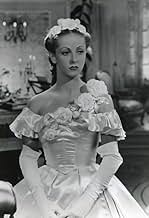
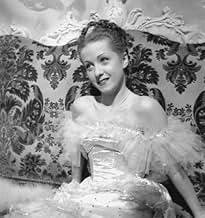
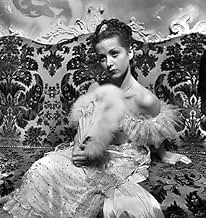
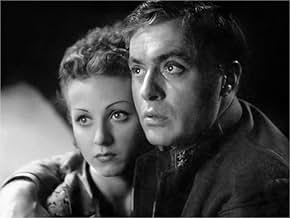
Rodolfe, Crown Prince of Austria, is fettered on all sides. He's bored; his father, the emperor, is domineering; his politics are more liberal than his father's, but he knows his views carry... Read allRodolfe, Crown Prince of Austria, is fettered on all sides. He's bored; his father, the emperor, is domineering; his politics are more liberal than his father's, but he knows his views carry no weight. He agrees to marry a princess to sire an heir, then spends his nights as a pla... Read allRodolfe, Crown Prince of Austria, is fettered on all sides. He's bored; his father, the emperor, is domineering; his politics are more liberal than his father's, but he knows his views carry no weight. He agrees to marry a princess to sire an heir, then spends his nights as a playboy. In 1888, he meets Marie Vetsera, 17, a baroness' daughter. She is resolute, smitten,... Read all
- Awards
- 3 wins & 1 nomination total
- La baronne Vetsera
- (as Marthe Regnier)
- La cousine de Marie
- (as Assia)
- Une fille
- (as Ribès)
- Szeps
- (as Bergeron)
- Le chef de la police
- (as Sokoloff)
- Le premier policier
- (as Aimos)
- Le second policier
- (as Siméon)
Featured reviews
True story
Well, it just didn't happen like that. It turned out to be a love story starring Charles Boyer and it gets very predictable from the moment we are introduced to Danielle Darrieux (Marie Vetsera). The films tells us early on exactly where this is heading with constant references to death. So, we wait to see how this is going to happen. This gets revealed right at the end - the only part of the film that holds any interest. Up until that point, it's a series of watching ballet, going to the fair, Morris dancing (the other standout moment of the film), etc whilst there are lavish sets and costumes to look at.
Once the film had finished, my wife asked if this was a true story and looked it up. Bingo! It's a true story. That makes a big difference and adds an extra point onto the score. This now holds an interest as the film describes a hugely significant moment in history. I wish I'd reminded myself of this before watching. I'll know for next time. The actual incident is a milestone as it changes the lineage of succession. Would there have been a World War 1 if the reforming, liberal Rudolf had acceded the throne? Would prostitution have become acceptably mainstream like it should be? The real story is interesting but the film not as interesting as it could have/should have been.
Superb historical love-drama.
Enchanting !!!
Recently, I was able to obtain a copy of the this movie and saw it again after 20 years. The movie did not disappoint and I can say that it is one of the best movies ever. It must have been such a sensation when first released in 1936.
Two Death Do They Part
In this French-language version by Ukranian director Anatole Litvak, we get a highly-romanticised version of the story with Charles Boyer and Danielle Darrieux as the star-crossed but ill-fated lovers.
The direction throughout is stylish and tasteful, Litvak impressing in his recreation of the Viennese Court with its surface splendour barely concealing the jostling for position and rumour-mongering beneath the facade. Boyer and Darrieux are excellent in their lead roles, his character the reforming, rebellious heir to the throne, unhappy in his arranged marriage and she the youthful, highly-impressionable innocent caught up in the first great passion of her life.
The concluding climax is sensitively and humanely depicted too with my only major criticisms of the film being an over-reliance on the use of the no-doubt in-vogue montage sequences and a tendency to slightly overstay the camera's welcome in certain scenes.
Nevertheless, this was a fine retelling of the notorious scandal and it's no surprise that its artistic and commercial success lured director Litvak to Hollywood where he enjoyed a distinguished career for many years.
Mayerling revised and updated by the seventh art.
Anatole Litvak does not pass over in silence Rudolph's dissoluteness, as two orgy scenes testify.Besides,Charles Boyer is a much better archduke than Omar Shariff.Ditto Danielle Darrieux who was about 20 (whereas Catherine Deneuve was nearing 25 when she played Mary),thus a more credible baroness Vetsera .Both versions,it's important to notice ,are from Claude Anet's NOVEL.It's not a historian's work and it should be not looked upon so.
However,Litvak is a better director than Terence Young.With a much smaller budget,and of course without the 1968 technical aids ,he works wonders :the tiny church where Rudolph meets Mary in half-light creates a mystical and heathen atmosphere at once.The night at the opera house is dazzling.To conclude the scene of the ball at the German embassy ,the artist uses a stunning tracking out which leaves the swirling twirling dancers,then stops on a glass door adorned with the Habsburg emblem.Rudolphe ,firing at his reflection in a mirror is an adequate metaphor.
A minor flaw:Gabrielle Dorziat is completely miscast as Sissi ,Rudolph's mother:she was one of the most beautiful women of her time (we can see the magnificent Winterhalter portraits at the beginning of the movie).At fifty,when the Mayerling tragedy occurred,her beauty was still incomparable.She had nothing to do with the aging dowager we see on the screen (in Young 's version,it's Ava Gardner!)
And hats off to Danielle Darrieux who ,sixty-four years after "Mayerling" ,recently triumphed in "8 femmes",a blockbuster in France.Any advance?
Did you know
- TriviaOne of the first foreign films with sound to become a hit in the United States. It made an international star out of Charles Boyer.
- ConnectionsFeatured in Scissors (1991)
Details
Box office
- Gross US & Canada
- $240,000
- Runtime
- 1h 36m(96 min)
- Color
- Aspect ratio
- 1.33 : 1