
Despite her mother's objections, the naive young daughter of a show boat captain is thrust into the limelight as the company's new leading lady.Despite her mother's objections, the naive young daughter of a show boat captain is thrust into the limelight as the company's new leading lady.Despite her mother's objections, the naive young daughter of a show boat captain is thrust into the limelight as the company's new leading lady.
- Director
- Writers
- Stars
- Awards
- 3 wins & 1 nomination total
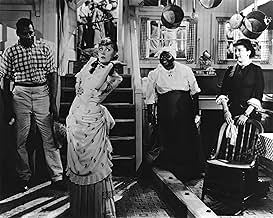
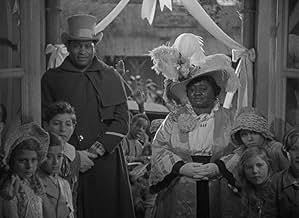
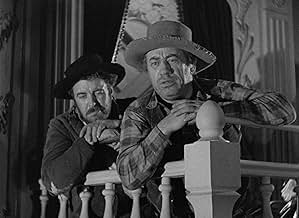
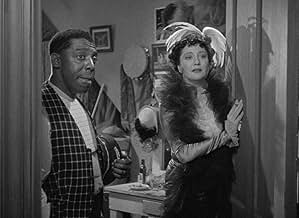
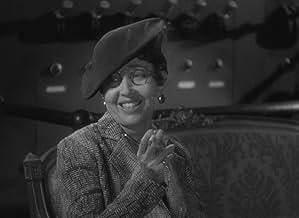


Maude Allen
- Fat Woman
- (uncredited)
- Director
- Writers
- All cast & crew
- Production, box office & more at IMDbPro
7.44K
1
2
3
4
5
6
7
8
9
10
Featured reviews
9B24
Best of the Best
I was too young to see this version until well after the 1951 one had fixed a certain standard in my brain. It took a TCM rerun to open my eyes. Mind you, I still like the 1951 production very well indeed, but there is a depth of story, song, and character in this one that makes it overall the better of the two (and the "best" of a larger lot).
First, you have Paul Robeson and Helen Morgan. Both are icons who needed no dubbing no matter where or when they sang standards like "Old Man River" and "Just My Bill." Then there is Hattie McDaniel in a role largely skipped in the 1951 movie. And a greater selection of minor songs prevails as well. Indeed, the inclusion of many black people who are missing from the later film give it a unique richness.
Black and white never looked so good.
First, you have Paul Robeson and Helen Morgan. Both are icons who needed no dubbing no matter where or when they sang standards like "Old Man River" and "Just My Bill." Then there is Hattie McDaniel in a role largely skipped in the 1951 movie. And a greater selection of minor songs prevails as well. Indeed, the inclusion of many black people who are missing from the later film give it a unique richness.
Black and white never looked so good.
The Mid 30's wins again
No question that this is the Show Boat with soul. The '51 version has some lovely chorus numbers, including a beautiful opening sequence, but it is entirely safe and a predictable piece of MGM-dom.
On this 1936 version, I found myself thinking "There isn't a dull moment in this thing".
The pacing is fast and most unsentimental. The editing is so curt as to be almost surreal, and songs are suddenly launched out of nowhere, which is curiously satisfying. To be truthful, the film's strongest cohesive stretch is its first third, after which the story-telling becomes a bit rushed (presumably) to keep the film to a tolerable length. Hattie McDaniel and Paul Robeson are magical. McDaniel's first scene is positively electric and Robeson is given to a pleasant, warm demeanor, and both he and McDaniel seem surprisingly modern during a time in which blacks were seldom portrayed as such, especially in a mixed cast.
Charles Winninger shows his Vaudeville roots here, and he does a most riveting take on the Show Boat stage, portraying a melodrama for two. His timing is perfect, and his energy is inspiring throughout the picture.
Magnolia's blackface peregrinations do ring true to the time (more 1870's, than 1930's), but the wince-worthy scenes are more those of the black river boat hands who must constantly be shown bucking and winging their way to the irresistible music, eyes rolling.
The ending has some satisfaction to it, and is lightened considerably by the fact that Gaylord Ravinal is not completely humiliated by story's end. This last scene must have somehow anticipated "A Star Is Born", with undying love and honor being its undercurrent theme.
George Gershwin once stated on network radio that Kern's [Show Boat] score was the finest light opera in American history. It may still be. Just the bridge to "Only Make Believe" is heart stopping stuff.
On this 1936 version, I found myself thinking "There isn't a dull moment in this thing".
The pacing is fast and most unsentimental. The editing is so curt as to be almost surreal, and songs are suddenly launched out of nowhere, which is curiously satisfying. To be truthful, the film's strongest cohesive stretch is its first third, after which the story-telling becomes a bit rushed (presumably) to keep the film to a tolerable length. Hattie McDaniel and Paul Robeson are magical. McDaniel's first scene is positively electric and Robeson is given to a pleasant, warm demeanor, and both he and McDaniel seem surprisingly modern during a time in which blacks were seldom portrayed as such, especially in a mixed cast.
Charles Winninger shows his Vaudeville roots here, and he does a most riveting take on the Show Boat stage, portraying a melodrama for two. His timing is perfect, and his energy is inspiring throughout the picture.
Magnolia's blackface peregrinations do ring true to the time (more 1870's, than 1930's), but the wince-worthy scenes are more those of the black river boat hands who must constantly be shown bucking and winging their way to the irresistible music, eyes rolling.
The ending has some satisfaction to it, and is lightened considerably by the fact that Gaylord Ravinal is not completely humiliated by story's end. This last scene must have somehow anticipated "A Star Is Born", with undying love and honor being its undercurrent theme.
George Gershwin once stated on network radio that Kern's [Show Boat] score was the finest light opera in American history. It may still be. Just the bridge to "Only Make Believe" is heart stopping stuff.
A pioneering work
Stunning, astounding achievement for 1930s Hollywood cinema. An early talkie musical that boasts excellent sound and breathtaking cinematography that points the way to the modern era of movies, including closeups and all sorts of rolling and perspective shots that were new in their time. This adaptation of the legendary Broadway musical (considered the first modern musical) is shortened somewhat to keep it around two hours, so the plot often seems to race through some pretty dramatic events. Veterans from the stage version appear in key roles, including Charlie Winninger as Captain Andy, Paul Robeson as Joe and Helen Morgan as Julie. While there are several cringe-worthy "Negro" moments, including Irene Dunne performing in black face, at the very least Robeson is handled with respect throughout. I must be honest and admit I am not crazy about Dunne as Magnolia, although Allan Jones makes a fine Gaylord Ravenal. I think Universal might have found someone a bit softer around the edges to play Magnolia, as much as I admire most of Dunne's film work. This is an almost perfect movie, and it is amazing that it was shot on back lots. As with Edna Ferber's stories, on which it is based, SHOW BOAT will transport you to another time and place, at least for two hours.
Seminal Musical Classic Well Worth Seeing Seventy Years Later
Sadly not available yet on DVD, the classic black-and-white 1936 version of the seminal 1927 Oscar Hammerstein-Jerome Kern musical is rarely seen these days since it's been overshadowed by the far more elaborate 1951 MGM color remake (which is on DVD). That's a shame since this one is like a piece of cameo jewelry from a bygone era, a sublimely entertaining piece of Americana so naïve in its approach that its pervasive use of racial stereotypes comes across more as quaint than demoralizing.
Directed by James Whale (the protagonist of 1998's "Gods and Monsters" and most famous for his 1931 classic, "Frankenstein"), it's a multi-generational story that starts with the Hawks family who runs a variety entertainment showboat in the 1880's. The jovial Captain Andy is the boat's impresario who is constantly goaded by his mean-spirited wife Parthy. They have a musically inclined daughter Magnolia who is best friends with the show's star, mulatto chanteuse Julie LaVerne. The local sheriff forces Julie out of the show for being half-black. Andy has Magnolia take her place just as gambler Gaylord Ravenal comes to town and becomes recruited as the show's leading man. Gaylord and Magnolia fall immediately in love, marry, move to Chicago and have a girl they named Kim. There, he gains and loses a fortune and then leaves Magnolia and Kim. Over the years, Magnolia becomes a big stage star and passes the torch to Kim.
The music, of course, is unbeatable with standards, chief among them "Make Believe", "Can't Help Lovin' That Man" and "You Are Love". Even though Irene Dunne was in her late thirties when she made this film, she amazingly gets away with the first half where she plays Magnolia as an ingénue. What's more, she was the rare actress who could act and sing (quite beautifully) at the same time, even when she is required to perform in blackface in "Gallivantin' Around". Allan Jones is a fine singer as Gaylord, though not as interesting an actor especially in the second half when misfortune takes over. When they sing "You Are Love" together, it's still quite magical.
What a treat to be able to see the redoubtable Paul Robeson as Joe singing "Ol' Man River" so powerfully (and filmed with an intriguing montage of woeful images), as well as legendary torch singer Helen Morgan play Julie and perform her signature song, "Bill", so touchingly. Familiar character actor Charles Winninger probably has his best role as Captain Andy, while Hattie McDaniel plays Joe's forceful wife Queenie in a performance as good as her Mammy in "Gone With the Wind". The film is really an intriguing mix of melodrama and great music with socially relevant observations regarding racism, alcoholism and gambling addiction.
Directed by James Whale (the protagonist of 1998's "Gods and Monsters" and most famous for his 1931 classic, "Frankenstein"), it's a multi-generational story that starts with the Hawks family who runs a variety entertainment showboat in the 1880's. The jovial Captain Andy is the boat's impresario who is constantly goaded by his mean-spirited wife Parthy. They have a musically inclined daughter Magnolia who is best friends with the show's star, mulatto chanteuse Julie LaVerne. The local sheriff forces Julie out of the show for being half-black. Andy has Magnolia take her place just as gambler Gaylord Ravenal comes to town and becomes recruited as the show's leading man. Gaylord and Magnolia fall immediately in love, marry, move to Chicago and have a girl they named Kim. There, he gains and loses a fortune and then leaves Magnolia and Kim. Over the years, Magnolia becomes a big stage star and passes the torch to Kim.
The music, of course, is unbeatable with standards, chief among them "Make Believe", "Can't Help Lovin' That Man" and "You Are Love". Even though Irene Dunne was in her late thirties when she made this film, she amazingly gets away with the first half where she plays Magnolia as an ingénue. What's more, she was the rare actress who could act and sing (quite beautifully) at the same time, even when she is required to perform in blackface in "Gallivantin' Around". Allan Jones is a fine singer as Gaylord, though not as interesting an actor especially in the second half when misfortune takes over. When they sing "You Are Love" together, it's still quite magical.
What a treat to be able to see the redoubtable Paul Robeson as Joe singing "Ol' Man River" so powerfully (and filmed with an intriguing montage of woeful images), as well as legendary torch singer Helen Morgan play Julie and perform her signature song, "Bill", so touchingly. Familiar character actor Charles Winninger probably has his best role as Captain Andy, while Hattie McDaniel plays Joe's forceful wife Queenie in a performance as good as her Mammy in "Gone With the Wind". The film is really an intriguing mix of melodrama and great music with socially relevant observations regarding racism, alcoholism and gambling addiction.
Truly a treasure – with great historical significance
This neglected gem is the closest rendering we have to what the authors originally intended to communicate in one of the most important musicals of the twentieth century.
It preserves performances by several of the original cast members, including the great Paul Robeson and Helen Morgan, singing their most famous signature tunes.
The American Musical Theater came of age with this show, which depicts domestic abuse, alcoholism & racial oppression and contains one of the most glorious musical scores ever written for any medium.
It's sad that this landmark production has not been remastered for DVD.
It preserves performances by several of the original cast members, including the great Paul Robeson and Helen Morgan, singing their most famous signature tunes.
The American Musical Theater came of age with this show, which depicts domestic abuse, alcoholism & racial oppression and contains one of the most glorious musical scores ever written for any medium.
It's sad that this landmark production has not been remastered for DVD.


Did you know
- TriviaSpecial permission had to be granted from the Hays Office in order to retain the famous miscegenation (interracial marriage) sequence in the movie. Miscegenation was banned as a film subject, and had been excluded from Show Boat (1929).
- GoofsWhen Joe begins to sing "Ol' Man River", he picks up a board and begins to whittle it. He slices off two pieces, and then the camera switches to an oblique shot, but now the board is whittled to a slender rod.
- Crazy creditsIn the opening credits, there is a cardboard cutout display of a show boat parade, with cutout paper townspeople watching it, on a moving turntable. The parade revolves past the camera carrying cardboard banners on which are printed the title and other credits. Most of the parade figures are simply figures, but among them cutouts of Paul Robeson and Helen Morgan can be seen. (The appearance of these figures does not coincide with the appearance of their names onscreen.) In the background shadows of a paddlewheel and a riverboat can be seen.
- ConnectionsFeatured in The All Talking, All Singing, All Dancing Show (1973)
- SoundtracksCotton Blossom
(1927) (uncredited)
Music by Jerome Kern
Lyrics by Oscar Hammerstein II
Sung by offscreen mixed chorus (during opening credits) and in opening scene by mixed chorus of dock workers
Details
- Release date
- Country of origin
- Language
- Also known as
- Edna Ferber's Show Boat
- Filming locations
- Production company
- See more company credits at IMDbPro
- Runtime
- 1h 53m(113 min)
- Color
- Aspect ratio
- 1.37 : 1
Contribute to this page
Suggest an edit or add missing content