
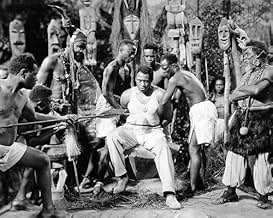
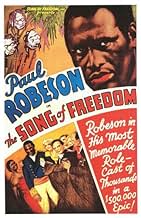
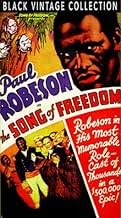
A black British dockworker named Johnny Zinga becomes a famous singer and learns that he is the rightful king of the African island of Casanga.A black British dockworker named Johnny Zinga becomes a famous singer and learns that he is the rightful king of the African island of Casanga.A black British dockworker named Johnny Zinga becomes a famous singer and learns that he is the rightful king of the African island of Casanga.

Elisabeth Welch
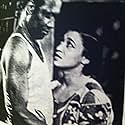
- Ruth Zinga
- (as Elizabeth Welch)


Bernard Ansell
- Sir James Pyrie
- (as Bernerd Ansell)
Cornelia Smith
- Queen Zinga
- (as Miss C. Smith)
Sydney Benson
- Gate-Keeper
- (uncredited)
Cathleen Cavanagh
- Woman
- (uncredited)
Alf Goddard
- Alf, the Bartender
- (uncredited)
6.4462
1
2
3
4
5
6
7
8
9
10
Featured reviews
Great 1936 Classic
This Hammer Studio, from London, England which is famous for its horror films surprised me with this great film from 1936 starring Paul Robeson, (John Zinga) who works as a London dock worker and sings songs all the time besides having a great bass voice for the opera and is discovered by a great opera director and producer from London, England. John is always wanting to go to Africa where he came from, but he does not know exactly where he was born, but he still remembers a song which he heard when he was very young. One day John happens to sing this song on stage in an opera performance and this song is recognized by an Englishman who tells him where it comes from and also a charm which John wears around his neck which helped determine its origin. John also has a wife and they both visit this Island and try to introduce themselves to these people and that is when the story gets very interesting. Don't miss this great film from the past, it is a gem in the rough. Enjoy
Remarkable for its time.
Although no-one could call this a great movie, it is of compelling historical interest. At a time when Black people in the movies were servants or scoundrels, Paul Robeson portrayed a London dock-worker who is discovered by an impresario and launches a great singing career; after that, he goes to Africa to bring education and enlightenment to the tribespeople.
It's easy to be harsh on this movie; it shows the people of Africa as benighted savages in need of guidance (only this time they get it from Robeson, playing an Afro-cockney). The whole second half plays in tropical-adventure mode, with all the clichés of the 1930s.
But you have to realize that the film's sympathies are with the London dock-workers, black and white; it goes to great lengths to show them treating each other with friendship and respect, and this is the most notable part of the story. Everyone else is a caricature - the impresario, the aristocratic explorer, the witch-doctor, and so on.
Anyone who has a tolerance for 1930s films will quickly realize that this is much better than most of them, and is worth a look for many reasons, not the least is the opportunity to hear Robeson's great singing voice. One curious fact is that this is from Hammer Studios, which later became identified with horror films.
A must see for anyone interested in cinema.
It's easy to be harsh on this movie; it shows the people of Africa as benighted savages in need of guidance (only this time they get it from Robeson, playing an Afro-cockney). The whole second half plays in tropical-adventure mode, with all the clichés of the 1930s.
But you have to realize that the film's sympathies are with the London dock-workers, black and white; it goes to great lengths to show them treating each other with friendship and respect, and this is the most notable part of the story. Everyone else is a caricature - the impresario, the aristocratic explorer, the witch-doctor, and so on.
Anyone who has a tolerance for 1930s films will quickly realize that this is much better than most of them, and is worth a look for many reasons, not the least is the opportunity to hear Robeson's great singing voice. One curious fact is that this is from Hammer Studios, which later became identified with horror films.
A must see for anyone interested in cinema.
10PWNYCNY
Another great Paul Robeson movie.
This movie is about how sheer chance and pure luck and can lead to fame and fortune. Paul Robeson is wonderful. His singing is comparable to that in the 1936 Show Boat, arguably the greatest musical ever made by Hollywood. Paul Robeson is such a commanding presence in this movie that without him this movie could not be made. Also the story is compelling as a man has a chance to fulfill his dream and in the process learn more about himself and his roots. Anyone who gives any thought to their own roots can relate to this movie. It's about a man's quest for cultural and spiritual fulfillment which this movie mots effectively portrays. Also impressive is Elizabeth Welch who plays Mr. Robeson's wife. A good story, well acted, excellent, inspirational songs, all combined to create a great movie.
A true original...
It's sad that this sort of film simply could not have been made in Paul Robeson's home country at the time due to racism. Instead, Robeson went to the UK and made a few films--too few. I say this because he had a wonderful screen presence and his singing was gorgeous.
Robeson plays 'John Zinga'--a London dockworker descended from royalty back in Africa. Oddly, he lacks a British accent (while Robeson was a brilliant and multi-talented man, apparently a British accent was beyond him) and he has a weird sort of consciousness of his people and Africa within him. It goes far deeper than his interest in his cultural homeland--Robeson's character is fixated on the place and seems to have bits and pieces in the back of his mind about his homeland--though no one apparently ever told him about this--at least as far as he can remember. So, after becoming a huge singing star and learning more about the exact place in Africa where his forebears came from, he takes off for the place to get in touch with his roots.
The second portion of the film takes place an Zananga, Africa. There, Robeson is eventually recognized as a descendant of kings and brings culture, medicine and western civilization to these people--but it is a hard fight to get them to abandon their ineffective ways. It's nice that it's NOT a case of whites bringing this to these 'dark' people but a black man bringing this knowledge to them--making it seem a little less paternalistic. In many ways, this portion of the film seems like a call to other black men and women to return and contribute to their ancestral lands.
Overall, while the film might seem a bit old fashioned today, it really is a remarkable film in many ways. The most obvious is because of its unusual subject mater, but more important aspects should not be lost on the viewer. To have a mainstream film starring a strong and talented black man was very progressive for its day. And, seeing Robeson liked and respected by all as a person--even by his white co-workers. In many ways the film comes off as a bit overly ideal--absent is racism and in this film a good black man can achieve practically anything--a message that must have resonated in the black communities in the UK as well as back home in the States. A daring film and a great chance to see and hear an amazingly gifted man. For more on this, read his biography on IMDb--you'll see what I mean.
Robeson plays 'John Zinga'--a London dockworker descended from royalty back in Africa. Oddly, he lacks a British accent (while Robeson was a brilliant and multi-talented man, apparently a British accent was beyond him) and he has a weird sort of consciousness of his people and Africa within him. It goes far deeper than his interest in his cultural homeland--Robeson's character is fixated on the place and seems to have bits and pieces in the back of his mind about his homeland--though no one apparently ever told him about this--at least as far as he can remember. So, after becoming a huge singing star and learning more about the exact place in Africa where his forebears came from, he takes off for the place to get in touch with his roots.
The second portion of the film takes place an Zananga, Africa. There, Robeson is eventually recognized as a descendant of kings and brings culture, medicine and western civilization to these people--but it is a hard fight to get them to abandon their ineffective ways. It's nice that it's NOT a case of whites bringing this to these 'dark' people but a black man bringing this knowledge to them--making it seem a little less paternalistic. In many ways, this portion of the film seems like a call to other black men and women to return and contribute to their ancestral lands.
Overall, while the film might seem a bit old fashioned today, it really is a remarkable film in many ways. The most obvious is because of its unusual subject mater, but more important aspects should not be lost on the viewer. To have a mainstream film starring a strong and talented black man was very progressive for its day. And, seeing Robeson liked and respected by all as a person--even by his white co-workers. In many ways the film comes off as a bit overly ideal--absent is racism and in this film a good black man can achieve practically anything--a message that must have resonated in the black communities in the UK as well as back home in the States. A daring film and a great chance to see and hear an amazingly gifted man. For more on this, read his biography on IMDb--you'll see what I mean.
It Seems To Me I've Heard That Song Before
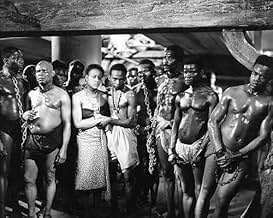
If you can possibly see The Song Of Freedom by all means do so. It's a chance to see Paul Robeson sing and give a fine acting performance in a story set partially in Africa. It's a mini-version of the famous American mini-series Roots. Paul in fact carries his roots with him both in a song that's been with him since birth and a medallion handed down to him from an ancestor who was sold into slavery and who was king of his people. That's all dealt with in a short prologue.
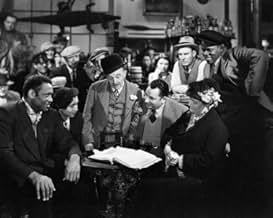
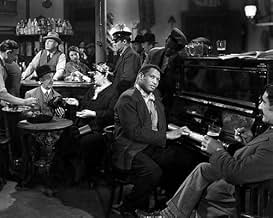
Fast forward to 1936 and Robeson is working on the London docks and also provides a bit of entertainment for his fellow stevedores. Impresario Esme Percy discovers him and turns Robeson into a concert/opera singer. But one night a backstage visitor tells Robeson that this melody which he has engraved in his soul is the chief's song from a particular tribe in Africa. Robeson and wife Elisabeth Welch go to that part of Africa where he attempts to reassert his royal prerogatives.
As a colonizing power in Africa, the British picked up knowledge about the place that Americans only gleaned from Edgar Rice Burroughs and other such pulp fiction authors. And in these years prior to World War II did film a lot of stories on location there such as The Four Feathers in the Sudan. Song Of Freedom was shot on location in Sierra Leone for the African part of the story. It's light years more real than anything you would get from Hollywood.
Incidentally the gambit of the 'lost song' may very well have been lifted from the Victor Herbert operetta Naughty Marietta. No matter, it's well done and provides Robeson with a number.
Elisabeth Welch who was a fine singer in her own right gets to do Sleepy Rivers. I wish she had been given more to do.
Seeing both Paul Robeson and a glimpse of the real Africa is a chance no one should pass up.
Fast forward to 1936 and Robeson is working on the London docks and also provides a bit of entertainment for his fellow stevedores. Impresario Esme Percy discovers him and turns Robeson into a concert/opera singer. But one night a backstage visitor tells Robeson that this melody which he has engraved in his soul is the chief's song from a particular tribe in Africa. Robeson and wife Elisabeth Welch go to that part of Africa where he attempts to reassert his royal prerogatives.
As a colonizing power in Africa, the British picked up knowledge about the place that Americans only gleaned from Edgar Rice Burroughs and other such pulp fiction authors. And in these years prior to World War II did film a lot of stories on location there such as The Four Feathers in the Sudan. Song Of Freedom was shot on location in Sierra Leone for the African part of the story. It's light years more real than anything you would get from Hollywood.
Incidentally the gambit of the 'lost song' may very well have been lifted from the Victor Herbert operetta Naughty Marietta. No matter, it's well done and provides Robeson with a number.
Elisabeth Welch who was a fine singer in her own right gets to do Sleepy Rivers. I wish she had been given more to do.
Seeing both Paul Robeson and a glimpse of the real Africa is a chance no one should pass up.


Did you know
- TriviaPaul Robeson performs a scene from Louis Gruenberg's operatic version of "The Emperor Jones". He earlier had starred in Eugene O'Neill's original play on Broadway (1923) and in the film version The Emperor Jones (1933).
- Quotes
Gabriel Donozetti: What's the matter the color of his skin, when he has color in his voice! Power! Beauty! I go fighting!
- ConnectionsFeatured in That's Black Entertainment (1990)
Details
- Release date
- Country of origin
- Languages
- Also known as
- Un trono por una canción
- Filming locations
- Production company
- See more company credits at IMDbPro
- Runtime
- 1h 6m(66 min)
- Color
- Aspect ratio
- 1.37 : 1
Contribute to this page
Suggest an edit or add missing content