IMDb RATING
6.8/10
1.5K
YOUR RATING

A railroad man from the city befriends a mountain girl in a Kentucky family feud.A railroad man from the city befriends a mountain girl in a Kentucky family feud.A railroad man from the city befriends a mountain girl in a Kentucky family feud.
- Nominated for 1 Oscar
- 5 wins & 2 nominations total
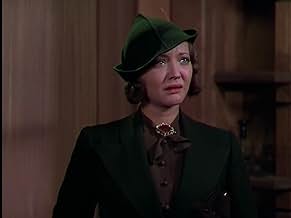
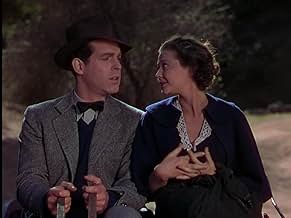


George 'Spanky' McFarland
- Buddie Tolliver
- (as Spanky McFarland)


Samuel S. Hinds
- Sheriff
- (as Samuel Hinds)


Henry Brandon
- Wade Falin
- (as Henry Kleinbach)

Jess Barker
- Merd Falin
- (as Philip Barker)


6.81.5K
1
2
3
4
5
6
7
8
9
10
Featured reviews
Feuding, A Blood Sport
This sound version of The Trail of the Lonesome Pine is actually the fourth and to date last version of this story. There were three silent films made from this novel by John Fox, Jr., including one done in 1916 by Cecil B. DeMille.
It's the story of a couple of Appalachian Mountain families who've had a decades old feud in which no one can quite recall how it all got started, but they sure do remember the latest outrage by the other crowd. There's a great temptation to treat this all humorously and it certainly has been done, I can recall Abbott and Costello's Comin' Round the Mountain with the same plot premise. But whole people's and whole nations act this way, who are we to judge the Tollivers and Falins of this story.
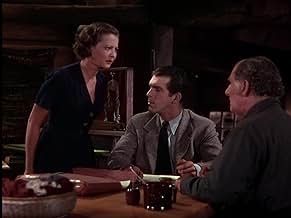
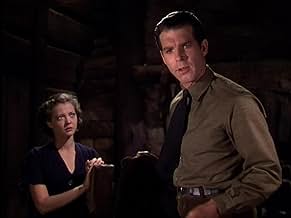
Sylvia Sidney and Henry Fonda are two Tolliver cousins, kissing cousins as they say in the mountains, distant enough to contemplate marriage. Into the picture comes railroad man Fred MacMurray who wants to build a railroad through the properties of both families. He interests Sylvia who starts to see that there is a whole world away from her family and their feud.
Of course when her little brother is killed the whole ugly business starts up again and it leaves tragedy again in both families.
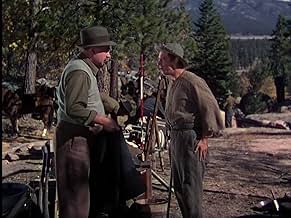
The Trail of the Lonesome Pine has its place in film history as the first outdoor as opposed to studio film shot in three strip technicolor. Color which is now standard was a big gimmick back in the day and Paramount raked in good box office.
Fuzzy Knight plays another rustic character, kind of a Tolliver satellite and he sings a couple of songs written for the film by Louis Alter and Sidney Mitchell, Twilight on the Trail and A Melody from the Sky. The latter got an Academy Award nomination for Best Song, losing to The Way You Look Tonight. The former however got a recording by Bing Crosby. This is a perfect example of the connection of film, and radio, and the recording industry. Bing was Paramount's number one box office attraction and the Paramount executives no doubt prevailed on him to record the song and sing it on his brand new Kraft Music Hall Radio Show in the interest of publicizing The Trail of the Lonesome Pine.
Fred MacMurray and Sylvia Sidney were also with Paramount at the time and Henry Fonda was at that time under contract to producer Walter Wanger who filmed this story. Those were the days way before agents and stars being their own producers. Such cozy arrangements as these were more easily done then.
This last to date version of The Trail of the Lonesome Pine probably is too old fashioned for a remake. Still I think today's audiences might still enjoy it.
It's the story of a couple of Appalachian Mountain families who've had a decades old feud in which no one can quite recall how it all got started, but they sure do remember the latest outrage by the other crowd. There's a great temptation to treat this all humorously and it certainly has been done, I can recall Abbott and Costello's Comin' Round the Mountain with the same plot premise. But whole people's and whole nations act this way, who are we to judge the Tollivers and Falins of this story.
Sylvia Sidney and Henry Fonda are two Tolliver cousins, kissing cousins as they say in the mountains, distant enough to contemplate marriage. Into the picture comes railroad man Fred MacMurray who wants to build a railroad through the properties of both families. He interests Sylvia who starts to see that there is a whole world away from her family and their feud.
Of course when her little brother is killed the whole ugly business starts up again and it leaves tragedy again in both families.
The Trail of the Lonesome Pine has its place in film history as the first outdoor as opposed to studio film shot in three strip technicolor. Color which is now standard was a big gimmick back in the day and Paramount raked in good box office.
Fuzzy Knight plays another rustic character, kind of a Tolliver satellite and he sings a couple of songs written for the film by Louis Alter and Sidney Mitchell, Twilight on the Trail and A Melody from the Sky. The latter got an Academy Award nomination for Best Song, losing to The Way You Look Tonight. The former however got a recording by Bing Crosby. This is a perfect example of the connection of film, and radio, and the recording industry. Bing was Paramount's number one box office attraction and the Paramount executives no doubt prevailed on him to record the song and sing it on his brand new Kraft Music Hall Radio Show in the interest of publicizing The Trail of the Lonesome Pine.
Fred MacMurray and Sylvia Sidney were also with Paramount at the time and Henry Fonda was at that time under contract to producer Walter Wanger who filmed this story. Those were the days way before agents and stars being their own producers. Such cozy arrangements as these were more easily done then.
This last to date version of The Trail of the Lonesome Pine probably is too old fashioned for a remake. Still I think today's audiences might still enjoy it.
Family Feud
THE TRAIL OF THE LONESOME PINE (Paramount, 1936), a Walter Wanger production, directed by Henry Hathaway, became the first sound version to the famous John Fox novel that was previously filmed during the silent movie era: (1914, with Dixie Compton); (1916, with Charlotte Walker, directed by Cecil B. DeMille), and (1923, with Mary Miles Minter). Aside from being its only known sound edition and notable title song used for WAY OUT WEST (1937) starring the comedy team of Laurel and Hardy, THE TRAIL OF THE LONESOME PINE become the first outdoors movie filmed entirely in Technicolor, by which a movie such as this with beautiful mountain scenery and trees would definitely cry for Technicolor anyway. For its new cast, this production features Paramount resident Sylvia Sidney, with two young rising actors in fine support, Henry Fonda and Fred MacMurray, in a story about mountain feud between two rival families and the intrusion between the families by an outsider city feller.
FORWARD: "Among the American mountains there are forgotten valleys where people dwell shut in old words, old wars, old codes have lived on unchanged. Each family is at war with the other over deadly feuds whose beginnings they cannot remember. But their hatred is their patriotism, their quaint customs are their religion such a feud has been carried on for generations by the Tollivers and the Falins." PROLOGUE: The hills of Kentucky showing a feuding families, the Tollivers and Falins, shooting at each other. Judd (Fred Stone), head of his family, is unable to run to his cabin to be with his wife, Melissa (Beulah Bondi) giving birth to their first child. With newborn baby in her arms, Melissa, wanting nothing to do with the feud, prays for peace and guidance. STORY: "Today another generation has grown to accept the code of the lonesome pine." Judd and Melissa Tolliver, having another child, Buddy (Spanky MacFarland, from the "Our Gang" comedy shorts), await for their eldest daughter, June (Sylvia Sidney) to marry her distant cousin, Dave (Henry Fonda), whom they have raised since childhood. Jack Hale (Fred MacMurray), a city engineer accompanied by his assistant, Mr. Thurber (Nigel Bruce), arrives to discuss matters with Judd about coal on his property followed by railroad construction to go through both his property and the neighboring Falins. Jack soon notices Dave lying in bed slowly dying by gangrene from a gunshot wound in the arm by one of the Falins. Saving his life. Jack gets a contract from Judd with promised check of $5,000. With the feud continuing between the Tollivers and the Falins, further complications ensue with June not only wanting to live in the city of Louisville to get an education, but showing more love interest towards Jack than to Dave. With the killing of one of the Tollivers by the vengeful Falins take place, and Melissa wanting nothing more than to end the feud before any more killings take place, Jack complicates matters further by getting himself involved in the feud where he doesn't rightfully belong. Others in the cast include: Robert Barrat (Buck Falin, head of the clan); Alan Baxter (Clay Tolliver); Samuel S. Hinds (The Sheriff); George Ernest (Dave, as a boy), and Clara Blandick (The Landlady). Fuzzy Knight, labeled "the walking phonograph" by Thurber (Nigel Bruce), sings several melodies through his mountain walks, including "Trail of the Twilight" and "Melody from the Sky."
Of its many versions to this famous story, this 1936 release is the most famous due to frequent television broadcasts from the 1960s to the 1980s. Sylvia Sidney gets cast against type as a mountain girl, while Henry Fonda is cast in type as the vengeful mountain boy. While Sidney teamed with Fonda again in YOU ONLY LIVE ONCE (United Artists, 1937), she wouldn't work with MacMurray again until her guest star appearance in the 1969 episode of his "My Three Sons" (CBS) television series many years later. Of its leading players, Fred Stone is agreeable as the mountain father while Beulah Bondi comes off best as the peaceful wife and mother. Regardless of its fine cast (with their names credited during its opening printed on tree pines), beautiful Technicolor is its focal point throughout its 102 minutes.
Having become available on both video cassette and DVD, THE TRAIL OF THE LONESOME PINE, consisted on few cable television broadcasts, including the Disney Channel (1990s) and years later on Encore Westerns. Happy Trails. (***1/2)
FORWARD: "Among the American mountains there are forgotten valleys where people dwell shut in old words, old wars, old codes have lived on unchanged. Each family is at war with the other over deadly feuds whose beginnings they cannot remember. But their hatred is their patriotism, their quaint customs are their religion such a feud has been carried on for generations by the Tollivers and the Falins." PROLOGUE: The hills of Kentucky showing a feuding families, the Tollivers and Falins, shooting at each other. Judd (Fred Stone), head of his family, is unable to run to his cabin to be with his wife, Melissa (Beulah Bondi) giving birth to their first child. With newborn baby in her arms, Melissa, wanting nothing to do with the feud, prays for peace and guidance. STORY: "Today another generation has grown to accept the code of the lonesome pine." Judd and Melissa Tolliver, having another child, Buddy (Spanky MacFarland, from the "Our Gang" comedy shorts), await for their eldest daughter, June (Sylvia Sidney) to marry her distant cousin, Dave (Henry Fonda), whom they have raised since childhood. Jack Hale (Fred MacMurray), a city engineer accompanied by his assistant, Mr. Thurber (Nigel Bruce), arrives to discuss matters with Judd about coal on his property followed by railroad construction to go through both his property and the neighboring Falins. Jack soon notices Dave lying in bed slowly dying by gangrene from a gunshot wound in the arm by one of the Falins. Saving his life. Jack gets a contract from Judd with promised check of $5,000. With the feud continuing between the Tollivers and the Falins, further complications ensue with June not only wanting to live in the city of Louisville to get an education, but showing more love interest towards Jack than to Dave. With the killing of one of the Tollivers by the vengeful Falins take place, and Melissa wanting nothing more than to end the feud before any more killings take place, Jack complicates matters further by getting himself involved in the feud where he doesn't rightfully belong. Others in the cast include: Robert Barrat (Buck Falin, head of the clan); Alan Baxter (Clay Tolliver); Samuel S. Hinds (The Sheriff); George Ernest (Dave, as a boy), and Clara Blandick (The Landlady). Fuzzy Knight, labeled "the walking phonograph" by Thurber (Nigel Bruce), sings several melodies through his mountain walks, including "Trail of the Twilight" and "Melody from the Sky."
Of its many versions to this famous story, this 1936 release is the most famous due to frequent television broadcasts from the 1960s to the 1980s. Sylvia Sidney gets cast against type as a mountain girl, while Henry Fonda is cast in type as the vengeful mountain boy. While Sidney teamed with Fonda again in YOU ONLY LIVE ONCE (United Artists, 1937), she wouldn't work with MacMurray again until her guest star appearance in the 1969 episode of his "My Three Sons" (CBS) television series many years later. Of its leading players, Fred Stone is agreeable as the mountain father while Beulah Bondi comes off best as the peaceful wife and mother. Regardless of its fine cast (with their names credited during its opening printed on tree pines), beautiful Technicolor is its focal point throughout its 102 minutes.
Having become available on both video cassette and DVD, THE TRAIL OF THE LONESOME PINE, consisted on few cable television broadcasts, including the Disney Channel (1990s) and years later on Encore Westerns. Happy Trails. (***1/2)
8tavm
The Trail of the Lonesome Pine features fine performances by Henry Fonda, Fred MacMurray, Sylvia Sidney, and Spanky McFarland
Just watched this Technicolor Paramount feature (The first of the kind that was shot outdoors) on YouTube. While it had stars like Fred MacMurray, Henry Fonda, and Sylvia Sidney, the main reason I was interested in this movie was because of one Spanky McFarland, who at the time was still a member of "Our Gang". This was a compelling story of a couple of feuding families and one outsider played by MacMurray who's trying to build a railroad around both respective groups' areas. There's also a romantic rivalry between Fonda and MacMurray for Sidney. Also appearing were Beulah Bondi, Nigel Bruce, and Samuel Hinds as the Sheriff. (If anyone is familiar with me, they know my favorite movie is It's a Wonderful Life and I like noting actors in that movie in other films like Bondi and Hinds who were married in the latter) Then there's Fuzzy Knight who's a charmer as something of a Greek chorus singing songs like "Twlight on the Trail" and the Oscar-nominated "A Melody from the Sky". Incidentally, while Knight sings the latter, Fonda whistles and Spanky hums and this was a couple of years before Spanky's "Our Gang" co-star Alfalfa sung part of this tune in the short The Little Ranger (which McFarland doesn't appear in). Anyway, this was a fine showcase for the Technicolor photography as kudos to director Henry Hathaway for making every scene count as this was a most entertaining drama with a couple of touching, though tragic, scenes at the end. So on that note, I highly recommend The Trail of the Lonesome Pine.
A landmark Technicolor film that is still effective.
THE TRAIL OF THE LONESOME PINE (1936) is a landmark color film of considerable dramatic power that has been neglected in Hollywood history. It was the second full-length feature to be produced in the newly-developed 3 strip Technicolor process. The first Technicolor feature, BECKY SHARP, had opened the previous year (1935) but did not find audience favor. There is strong evidence to suggest that THE TRAIL OF THE LONESOME PINE was the film that really popularized color.
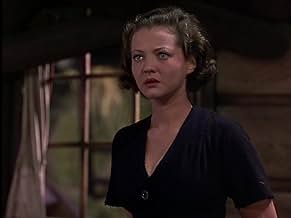
Aside from the superb color photography, the film has much to recommend it. There are very strong performances, particularly that of Sylvia Sidney as the backwoods mountain girl - a very convincing portrayal. She is supported by two handsome newcomers, Henry Fonda and Fred MacMurray, plus veterans such as Fred Stone, Beulah Bondi, and Spanky MacFarland. The story line is very compelling and there is the strong direction of Henry Hathaway (LIVES OF A BENGAL LANCER, KISS OF DEATH, TRUE GRIT). In its original release, audiences reportedly burst into applause while viewing some of the color scenes. The film was a box office smash for Paramount, playing to packed houses in both large and small towns. (This is well documented.) It remains compelling entertainment today. The high-quality color photography was very much in evidence in the VHS tape that MCA released in the Nineties. It is to be hoped that the same high quality will be seen in the projected 2009 DVD release of this beloved film.
Aside from the superb color photography, the film has much to recommend it. There are very strong performances, particularly that of Sylvia Sidney as the backwoods mountain girl - a very convincing portrayal. She is supported by two handsome newcomers, Henry Fonda and Fred MacMurray, plus veterans such as Fred Stone, Beulah Bondi, and Spanky MacFarland. The story line is very compelling and there is the strong direction of Henry Hathaway (LIVES OF A BENGAL LANCER, KISS OF DEATH, TRUE GRIT). In its original release, audiences reportedly burst into applause while viewing some of the color scenes. The film was a box office smash for Paramount, playing to packed houses in both large and small towns. (This is well documented.) It remains compelling entertainment today. The high-quality color photography was very much in evidence in the VHS tape that MCA released in the Nineties. It is to be hoped that the same high quality will be seen in the projected 2009 DVD release of this beloved film.
Great early color movie
I saw this movie when I was 15 years old and never forgot it; I now have a copy of it and watch it often and enjoy it as much as when it first came out in 1936.


Did you know
- TriviaParamount's first Technicolor feature and the first feature to be shot in Three-Strip Technicolor outside of a studio environment (on location).
- GoofsThe mud on June Tolliver changes thickness and shape between shots. It also changes from wet to dry and then back to wet.
- Quotes
Melissa Tolliver: I was born old...
- Crazy creditsThe opening credits (except for the Paramount logo) all appear as if they had been printed on tree barks.
- ConnectionsEdited into The Our Gang Story (1994)
- How long is The Trail of the Lonesome Pine?Powered by Alexa
Details
- Release date
- Country of origin
- Language
- Also known as
- Dekle s planin
- Filming locations
- Production companies
- See more company credits at IMDbPro
- Runtime
- 1h 42m(102 min)
- Aspect ratio
- 1.37 : 1
Contribute to this page
Suggest an edit or add missing content