
A young lawyer is unable to get the Pembertons to sign a land sale contract until their daughter falls in love with him.A young lawyer is unable to get the Pembertons to sign a land sale contract until their daughter falls in love with him.A young lawyer is unable to get the Pembertons to sign a land sale contract until their daughter falls in love with him.
- Director
- Writers
- Stars



- Director
- Writers
- All cast & crew
- Production, box office & more at IMDbPro
6.3394
1
2
3
4
5
6
7
8
9
10
Featured reviews
another nutty family
Crazy families was one type of film in the '30s, along with madcap heiresses. And sometimes there is a crazy family and a madcap heiress.
"Danger - Love at Work" is from 1937 and stars Ann Sothern, Jack Haley, John Carradine, Edward Everett Horton, Mary Boland, and Roger Catlett.
Haley plays Henry, an attorney who is charged with getting the eight members of the Pemberton finally to sign papers so that a hunt club can buy their farm property. He is actually taking over the job from another attorney whose nerves are shot and can't handle it any longer.
Henry has his work cut out for him, but he has help - the beautiful Pemberton daughter (Sothern). She is a half step or so above the others - she's engaged but doesn't like her fiance (Horton).
She is, however, engaged to him because he is forceful. He's as whacky as the rest of them, interrogating Henry and sure he's out to cheat them.
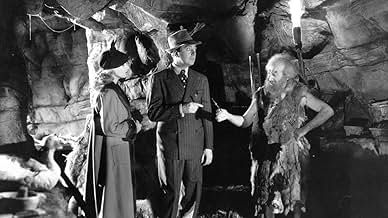
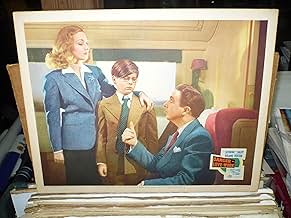
One of her relatives (Maurice Cass) has given up on society and lives like a neandrathal. Two aunts have a rifle in a setup on the front stairs to shoot criminals. Another relative (Carradine) paints everything in site. The child in the family is a ten-year-old high school graduate and makes Henry miserable. There are more.
This is a B film directed by Otto Preminger. Ann Sothern is delightful, as is Jack Haley. They're not Tracy and Hepburn, Loy and Powell, Lombard and Powell, but they're fun. The rest of the family is a little annoying after a while.
Not a classic, but Sothern is always watchable.
"Danger - Love at Work" is from 1937 and stars Ann Sothern, Jack Haley, John Carradine, Edward Everett Horton, Mary Boland, and Roger Catlett.
Haley plays Henry, an attorney who is charged with getting the eight members of the Pemberton finally to sign papers so that a hunt club can buy their farm property. He is actually taking over the job from another attorney whose nerves are shot and can't handle it any longer.
Henry has his work cut out for him, but he has help - the beautiful Pemberton daughter (Sothern). She is a half step or so above the others - she's engaged but doesn't like her fiance (Horton).
She is, however, engaged to him because he is forceful. He's as whacky as the rest of them, interrogating Henry and sure he's out to cheat them.
One of her relatives (Maurice Cass) has given up on society and lives like a neandrathal. Two aunts have a rifle in a setup on the front stairs to shoot criminals. Another relative (Carradine) paints everything in site. The child in the family is a ten-year-old high school graduate and makes Henry miserable. There are more.
This is a B film directed by Otto Preminger. Ann Sothern is delightful, as is Jack Haley. They're not Tracy and Hepburn, Loy and Powell, Lombard and Powell, but they're fun. The rest of the family is a little annoying after a while.
Not a classic, but Sothern is always watchable.
Masterful screwball comedy
Very gratifying to see that this very well-made film has gotten such excellent reviews on this site. Preminger himself, when interviewed, rarely tried to make a case for his films that were considered minor or unimportant, nor did he encourage looking back. Consequently, if foolishly, critics have tended to dismiss such films, and especially the few he made before "Laura." What a delight, then, to find that "Danger, Love at Work" is an especially effervescent and sophisticated screwball comedy. And it is a very legitimate example, based on the essential "crazy family" format. It completely ignores the social consciousness aspect of the classic screwball ("You Can't Take It With You" and "My Man Godfrey" are otherwise close relatives), and benefits perhaps from this narrow focus on plot and character. And what characters! Mary Boland, who can sometimes annoy, fits in here very nicely as Ann Sothern's mother; diminutive Etienne Girardot -- a fascinating and lively little actor (his nervous performance here, as in "Twentieth Century" is priceless) as her father (and has a charming counterpart -- equally diminutive -- in "Uncle Goliath," a "back-to-nature" type); brother John Carradine (as a "post-Surrealist" painter); Walter Catlett as a philatelist uncle -- all delightful. Miss Sothern herself is every bit as charming as Carole Lombard (and has a rather less annoying role than Lombard's) in "Godfrey," and, besides, has a lovely vocal duet with Jack Haley on the title song. She really can sing! And here we have Haley two years before "The Wizard of Oz" -- nicely done, though no Cary Grant of course. Edward Everett Horton is, as always, superb, though his straight-man adversarial role here doesn't point up his own best strengths. Even Benny Bartlett as an 11-year-old Princeton graduate, scores nicely. As is typical of Preminger, there is not a single bad performance ("My Man Godfrey," on the other hand, has its Gail Patrick - - ghastly). (In bit parts, we even have Franklin Pangborn and Elisha Cook, Jr.) So here we have, in this man's opinion, a screwball comedy truly worthy of entering The Canon (if such there be).
Zany comedy that doesn't match great screwball films
There's no doubt that this is a funny movie. It's madcap mayhem much of the time. It has a plot that ties it all together. And, it has a very good cast, all of whom do well in their parts. So, why do I give it only six stars? Well, for starters, it's very zany and funny at times – but not laughably funny most of the time. The ingredients for the screwball comedy are there in spades – the love triangle. But it isn't really a triangle because E.E. Horton's Howard Rogers "masterfully" became engaged to Ann Sothern's Toni Pemberton. She doesn't love the guy and there's no conflict between two suitors. And, there is very little comedy between the two leads – Sothern and Jack Haley's Henry MacMorrow.
What distinguishes the great screwball comedies is the interplay between the two leads. The exchanges of witty lines, the riotously funny give and take between the two, the hilarious mishaps and slapstick. There is none of that in this film. After a short encounter in their first meeting, the two leads become friends with a common pursuit. Now it's just a romance with them. The film does have many weird characters, and they have some lines that strain at humor. But mostly, they are engaged in individual eccentricities that are funny but that soon grow tiresome.
"Danger – Love at Work" has the feel of watching a variety show with one comedy skit – or attempted one – after another. The incidents and scenes are amusing, but that's it. A couple of other reviewers have noted that it would have been a better production with a top-line director of the day. That might have been so, but only with a major rewrite of the screenplay. It has to start with the screenplay, and this one doesn't have what it takes to make great comedy.
What distinguishes the great screwball comedies is the interplay between the two leads. The exchanges of witty lines, the riotously funny give and take between the two, the hilarious mishaps and slapstick. There is none of that in this film. After a short encounter in their first meeting, the two leads become friends with a common pursuit. Now it's just a romance with them. The film does have many weird characters, and they have some lines that strain at humor. But mostly, they are engaged in individual eccentricities that are funny but that soon grow tiresome.
"Danger – Love at Work" has the feel of watching a variety show with one comedy skit – or attempted one – after another. The incidents and scenes are amusing, but that's it. A couple of other reviewers have noted that it would have been a better production with a top-line director of the day. That might have been so, but only with a major rewrite of the screenplay. It has to start with the screenplay, and this one doesn't have what it takes to make great comedy.
Unsung screwball classic
Thirties comedy tends to zanier-than-thou smugness, even in official classics like It Happened One Night and Bringing Up Baby. So it's a pleasant surprise to find Preminger already applying his lawyerly objectivity to a boilerplate screwball script, giving the zanies and the normals their due but not endorsing either. When Jack Haley asks Ann Sothern to elope and she protests, "If I don't have a wedding my family will never speak to me again" he shoots back, "That settles it!" and whisks her off - in effect a shotgun wedding between the two camps. A delightful tidbit that deserves reconsideration for the canon. (And the title song will have your toes tapping for days.)
Overlooked Screwball Comedy
"Tin Man" Jack Hayley headlines here with Ann Sothern with an oddball family that makes "You Can't Take it With You" look like a day in church.
Hayley is a lazy young lawyer sent by his firm to get signatures to sign off on a land deal, who wanders into a regular asylum of eccentrics.
The eccentrics include the always reliable John Carradine as a crazy painter (whose art I actually like), Mary Boland as a woman who is too busy talking to get her facts straight, two older ladies so afraid of burglars they set up death traps and one old codger who claims he's given up society and dresses like a cave man (though he reads Esquire on the sly).
The one disappointment is that Edward Everett Horton plays the villain rather than one of the family. He's a likeable villain, but I'd liked to have seen what sort of eccentric he'd have made.
Warning, this movie can get VERY annoying and Sothern takes a cue from Carole Lombard in "My Man Godfrey" and cries and screams a lot. And there are moments that today would shock people as child abuse that, back then, would have been called "comeuppance." It doesn't bother me but it might trigger some hypersensitive souls.
Hayley is a lazy young lawyer sent by his firm to get signatures to sign off on a land deal, who wanders into a regular asylum of eccentrics.
The eccentrics include the always reliable John Carradine as a crazy painter (whose art I actually like), Mary Boland as a woman who is too busy talking to get her facts straight, two older ladies so afraid of burglars they set up death traps and one old codger who claims he's given up society and dresses like a cave man (though he reads Esquire on the sly).
The one disappointment is that Edward Everett Horton plays the villain rather than one of the family. He's a likeable villain, but I'd liked to have seen what sort of eccentric he'd have made.
Warning, this movie can get VERY annoying and Sothern takes a cue from Carole Lombard in "My Man Godfrey" and cries and screams a lot. And there are moments that today would shock people as child abuse that, back then, would have been called "comeuppance." It doesn't bother me but it might trigger some hypersensitive souls.


Did you know
- TriviaSimone Simon was originally hired to play "Toni Pemberton", but after a few days of shooting she was fired and replaced by Ann Sothern.
- Quotes
Wilbur - Butler: May I ask you a question, sir?
Henry MacMorrow: Certainly.
Wilbur - Butler: Was it a very severe kick that you gave to Master Junior?
Henry MacMorrow: Well, if he'd been a football, I'd have punted him 50 yards.
Wilbur - Butler: Please accept my congratulations, sir.
- SoundtracksDanger - Love at Work
(uncredited)
Music by Harry Revel
Lyrics by Mack Gordon
Sung by Ann Sothern and Jack Haley
Details
- Release date
- Country of origin
- Language
- Also known as
- Amor en la oficina
- Filming locations
- Production company
- See more company credits at IMDbPro
- Runtime
- 1h 24m(84 min)
- Color
- Aspect ratio
- 1.37 : 1
Contribute to this page
Suggest an edit or add missing content