IMDb RATING
6.7/10
1.3K
YOUR RATING


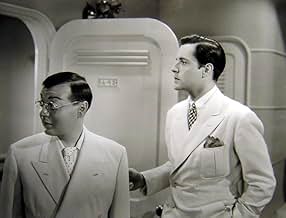
On a freighter going from San Francisco to Shanghai Mr. Moto solves mysteries caused by a gang of smugglers.On a freighter going from San Francisco to Shanghai Mr. Moto solves mysteries caused by a gang of smugglers.On a freighter going from San Francisco to Shanghai Mr. Moto solves mysteries caused by a gang of smugglers.


Sig Ruman
- Nicolas Marloff
- (as Sig Rumann)


Frederik Vogeding
- Curio Dealer
- (as Fredrik Vogeding)

Philip Ahn
- Switchboard Operator
- (uncredited)

Richard Alexander
- Ivan - Doorman
- (uncredited)
Lloyd Allen
- Nightclub Trombonist
- (uncredited)

William A. Boardway
- Ship Passenger
- (uncredited)
Dudley Brooks
- Nightclub Pianist
- (uncredited)

George 'Red' Callender
- Nightclub Bassist
- (uncredited)
Marcello Estorres
- Ship Passenger
- (uncredited)
6.71.3K
1
2
3
4
5
6
7
8
9
10
Featured reviews
Think Fast, Mr. Moto (1937) **1/2
This was the first by 20th Century-Fox in a series of several films which tried to emulate the success of their own popular Charlie Chan series. THINK FAST, MR. MOTO introduced us to Peter Lorre's portrayal of a seemingly meek and mild mannered Asian man in glasses who secretly becomes a very clever and rough and tumble detective, excelling in martial arts and physical combat. The story involves jewel smuggling aboard a cruise ship, and while it comes off a tad clumsy the film remains brisk and enjoyable mainly because of Lorre's characterization, but also through the use of some very good seasoned professional actors (in this case, Sig Ruman and J. Carrol Naish). **1/2 out of ****
Murder in the Orient
Ah! the 1930's! A time when it was generally perceived that anything that came out of the Orient was a threat. The Yellow Peril loomed over all of Western Europe and America, so it was to be believed, with the likes of Fu Manchu and his minions and other deadly men out to take over the world. Despite this generalized, popular stereotype, Hollywood made strings of films with Oriental detectives that, while still unfortunately maintaining certain Oriental prejudices and mannerisms, bucked this trend with the likes of the wise, sententious Charlie Chan, the inimitable Mr. Wong, and Mr. Moto of course. None of the series used Oriental actors, but the films gave the likes of Warner Oland, Sidney Toler, Boris Karloff, Bela Lugosi, and Peter Lorre jobs. The Mr. Moto series, based on the works of John Marquand, began with Think Fast, Mr. Moto. The film is somewhat confusing in spots, but generally a rousing success of creating an endearing screen character that went on to make several more films. Mr. Moto, unlike Chan or Wong, is Oriental yet very Western in many ways. He is quiet, circumspect, wearing very small rounded glasses. Lorre captured his character wonderfully. The story details how Moto is following the workings of a smuggling ring in Singapore. He travels from San Francisco to the Orient on a luxury liner, where he meets the son of the tycoon that owns the boat and who also may have information that can lead Moto to the smugglers. A pretty good mystery that was not real hard to figure out at the end. It's Lorre's portrayal that gives the film real life, and definitely has set me out to see the other films in the series. By the way, great character actor Sig Ruman plays the heavy...quite nicely!
A first impression that deserved to last
The shame of the Japanese-American concentration camps has cast a shadow over the Mr. Moto series, giving it a sorry reputation as an artifact of Hollywood racism. The truth is that as far as European-in-yellowface portrayals of Asians went, Peter Lorre's Moto was far less racist and considerably more sympathetic than the clownish, epigram-spouting Charlie Chan. In fact, it's easy to forget Moto's Japaneseness altogether and just view him as yet another wondrous manifestation of the white-linen-suited, Austrian-accented Lorreness so prevalent between the wars in films like "Strange Cargo," "Island of Doomed Men," und so wieter. Audiences certainly took to the little fellow in this first entry in the series, which introduces Moto in all his enigmatic glory--the bemused, politely ironical man of action with his love of kittycats, preference for cow's milk over whiskey, and disdainful conviction that beautiful women only confuse a man. Though Lorre reportedly had no idea what the whole thing was supposed to mean and spent his time offstage disconsolately listening to his archenemy Hitler on the radio, the eight Moto films established him as one of Hollywood's most beloved personalities and gave millions of small men who wore glasses the hope that they, too, could be strong and adorable.
First in the series of mysteries...
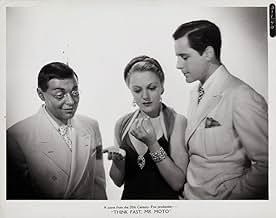
... loosely based on the books by John Marquand, from 20th Century Fox and director Norman Foster. After a series of murders occurs in San Francisco, the mysterious Mr. Moto (Peter Lorre) boards a cruise ship to China, where he befriends Bob Hitchings (Thomas Beck), the son of the owner of the cruise line. Bob has fallen for a moody passenger named Gloria (Virginia Field). Once they make landfall in China, things get dangerous for them all.
This initial outing in the series is different in at least one respect: Mr. Moto's motives and allegiances are kept a mystery for most of the picture. In fact, he's even presented as a possible suspect, or at least in league with the villains. Despite it being another regrettable instance of casting, Peter Lorre is outstanding as Moto, charming, funny, mischievous, and just a little creepy. His performance elevates what would have been just another routine mystery programmer of the day.
This initial outing in the series is different in at least one respect: Mr. Moto's motives and allegiances are kept a mystery for most of the picture. In fact, he's even presented as a possible suspect, or at least in league with the villains. Despite it being another regrettable instance of casting, Peter Lorre is outstanding as Moto, charming, funny, mischievous, and just a little creepy. His performance elevates what would have been just another routine mystery programmer of the day.
Clunky storyline and dated attitudes, but surprisingly fun
Ah, the Thirties. What could be more elegant and enjoyable than an ocean liner to the Orient, with two heartbreakingly beautiful people having a shipboard romance while criminal intrigue sort-of-kind-of goes on around them and they are watched over by a genial Japanese man who may or may not be a good guy? And that's really about all there is to the slapdash plot of the first movie in the Mr. Moto series. Yes, there's something about diamond smuggling and murder, but the main point of this story seems to be to introduce the world to the polite but dangerous gentleman from Japan.
And that is something that surprised me about this little movie (it clocks in at under 70 minutes) -- just how dangerous Mr. Moto is. Throughout the first hour he is presented as someone who's more interested in making an allegiance with the smugglers than stopping them. The movie begins with him in disguise looking into the San Francisco end of the smugglers, seeing -- but not reporting -- a murdered body and getting away so he can quietly head for Shanghai. He shows he's a black belt in jiu-jitsu by tossing a few disrespectful drunks around, including the son of the man who owns the ocean liner he's traveling on. And he kills a killer in such a way that no one can find the body...then calmly, albeit a bit sadly, continues his secretive journey. It's not until the last few minutes of the movie that his real purpose and superior intelligence is revealed. To have a Japanese man out-thinking all the sneaky Caucasian minds around him is really quite startling for 1937, considering the casual xenophobia of the time.
"Think Fast, Mr. Moto" may be an obvious attempt to capitalize on the hugely popular (and usually much better) "Charlie Chan" series of mysteries, but it works very well in its own right. Peter Lorre does a fine job (of course) pretending to be Japanese, but something that I've never understood is why Thomas Beck never got to be big in Hollywood. He has such a natural grace in front of the camera, and he's extremely good-looking. The same holds for Virginia Field, though she did have more of a career than he. The production values are above average for a "B" movie and the pace is relatively brisk. If they'd just done a better job with the script, it could have been on the same level as "Charlie Chan in Shanghai." But as it is, it's still surprisingly fun.
And that is something that surprised me about this little movie (it clocks in at under 70 minutes) -- just how dangerous Mr. Moto is. Throughout the first hour he is presented as someone who's more interested in making an allegiance with the smugglers than stopping them. The movie begins with him in disguise looking into the San Francisco end of the smugglers, seeing -- but not reporting -- a murdered body and getting away so he can quietly head for Shanghai. He shows he's a black belt in jiu-jitsu by tossing a few disrespectful drunks around, including the son of the man who owns the ocean liner he's traveling on. And he kills a killer in such a way that no one can find the body...then calmly, albeit a bit sadly, continues his secretive journey. It's not until the last few minutes of the movie that his real purpose and superior intelligence is revealed. To have a Japanese man out-thinking all the sneaky Caucasian minds around him is really quite startling for 1937, considering the casual xenophobia of the time.
"Think Fast, Mr. Moto" may be an obvious attempt to capitalize on the hugely popular (and usually much better) "Charlie Chan" series of mysteries, but it works very well in its own right. Peter Lorre does a fine job (of course) pretending to be Japanese, but something that I've never understood is why Thomas Beck never got to be big in Hollywood. He has such a natural grace in front of the camera, and he's extremely good-looking. The same holds for Virginia Field, though she did have more of a career than he. The production values are above average for a "B" movie and the pace is relatively brisk. If they'd just done a better job with the script, it could have been on the same level as "Charlie Chan in Shanghai." But as it is, it's still surprisingly fun.


Did you know
- TriviaMr. Moto's hangover remedy: lemon juice, pinch of salt, 1 egg, 4 dashes orange bitters, 1 jigger Worcestershire sauce, 2 tsp sugar, absinthe, fill to top with gin. Stir. Drink.
- GoofsWhen Mr. Moto photographs Gloria in Honolulu, she is looking directly into the camera, but when he shows the photograph to the police chief in Shanghai she is looking away from the camera at Bob who is obscuring half the photograph even though he was standing beside Mr. Moto, not in front him, and thus should not be in the photograph at all.
- Quotes
Kentaro Moto: Half the world spends its time laughing at the other half, and both are fools.
- ConnectionsFeatured in Mr. Moto Meets Mr. Chan: The Making of 'Mr. Moto's Gamble' (2007)
- How long is Think Fast, Mr. Moto?Powered by Alexa
Details
- Release date
- Country of origin
- Language
- Also known as
- Mr. Moto und der Schmugglerring
- Filming locations
- Production company
- See more company credits at IMDbPro
- Runtime
- 1h 10m(70 min)
- Color
- Aspect ratio
- 1.37 : 1
Contribute to this page
Suggest an edit or add missing content