IMDb RATING
7.2/10
8.2K
YOUR RATING
The public defender's secretary and an ex-convict get married and try to make a life together, but a series of disasters sends their lives spiraling out of control.The public defender's secretary and an ex-convict get married and try to make a life together, but a series of disasters sends their lives spiraling out of control.The public defender's secretary and an ex-convict get married and try to make a life together, but a series of disasters sends their lives spiraling out of control.
- Awards
- 3 wins total
Charles 'Chic' Sale
- Ethan
- (as Chic Sale)
Guinn 'Big Boy' Williams
- Rogers
- (as Guinn Williams)
Earl Askam
- Corridor Guard
- (uncredited)
Hooper Atchley
- Teletype Operator
- (uncredited)
Allen Black
- Baby Taylor
- (uncredited)
Stanley Blystone
- Rafferty - Guard
- (uncredited)
Ward Bond
- Casey - Guard
- (uncredited)
Wade Boteler
- Pat - Policeman with Package
- (uncredited)
- Director
- Writers
- All cast & crew
- Production, box office & more at IMDbPro
7.28.1K
1
2
3
4
5
6
7
8
9
10
Featured reviews
The Loyalist Gravida In Film History
In Fritz Lang's second American movie, 1937's "You Only Live Once" (not twice), Sylvia Sidney, aka "the Face of the Depression," plays what must be the loyalist girlfriend/wife in screen history. Her man, three-time loser Eddie Taylor (played by a pre-"Grapes" Henry Fonda), has just been released from prison, and wastes little time getting himself into all sorts of trouble again. But Sylvia is all forgiveness, and even takes it on the lam with him in her gravid condition, in one of Hollywood's earliest instances of criminal lovers on the lam...a genre that would later produce such classics as "They Live By Night" (1949), "Gun Crazy" (1949), "Badlands" (1973) and, of course, 1967's "Bonnie and Clyde." Although "You Only Live Once" creaks a bit here and there, I must say that this in one very involving film. Sidney and Fonda make a marvelous team, and it is nice to see Barton MacLane playing a nice guy for a change, instead of his usual growling bully. Lang's roots in German expressionism are evident here, as shown particularly in the design of Fonda's isolated prison cell, during a fog-enshrouded prison break, and in that final, heavenly shot. The film is a bit bleak and depressing, as decent characters fight futilely against their fates, but the filmmakers leave little doubt whose side they're on. And, to its credit, the film shows very vividly how dangerous it can be to give in to the temptation to purchase a pack of smokes! Oh...this DVD is in fair condition at best, revealing a damaged print source, and with zero extras to speak of. If ever a film warranted a restoration...
Light comedy and adorable romance give way to something darker in this hard-hitting melodrama
Joan Graham is the secretary for Stephen Witney, an honest and dedicated public defender, who succeeds in doing something he would almost rather not do: get Joan's sweetheart, Eddie Taylor, out of prison. Eddie is a good man, but Joan's sister, Bonnie, and Stephen both agree that he is no good for Joan. Eddie was born trouble. Joan and Eddie get married and set out to prove the naysayers wrong. Eddie gets a good, steady job as a truck driver; but a series of disasters sends his life spiraling out of control and the fiercely loyal Joan's along with it.
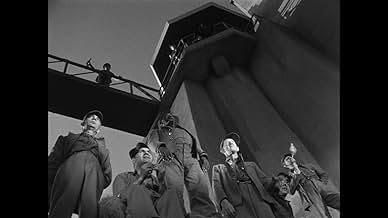
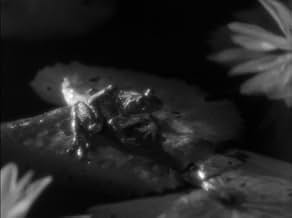
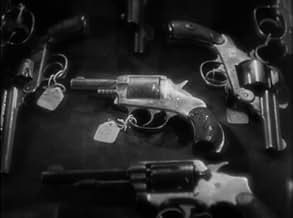
Fritz Lang directs this hard-hitting melodrama and, as always, fills it with striking images. The shot of Eddie (Henry Fonda) in his cell, with the shadows of the bars reaching out to meet the bored and uninterested guard, stands out. The shots of a wide-eyed and desperate Fonda asking Joan (Sylvia Sidney) for a gun are a triumph for Lang, Fonda and Lang's cinematographer, Leon Shamroy. Lang also gets excellent work out of his editor, Daniel Mandell, who helps Lang to juxtapose images in a suggestive way, e.g. the shots of the frogs with shots of Joan and Eddie.
Standing back from the film and looking at is as a whole makes it something of a marvel. We begin with light comedy, proceed to an adorable romance and then follow the characters as their lives - and the film itself - grows steadily darker.
Fritz Lang directs this hard-hitting melodrama and, as always, fills it with striking images. The shot of Eddie (Henry Fonda) in his cell, with the shadows of the bars reaching out to meet the bored and uninterested guard, stands out. The shots of a wide-eyed and desperate Fonda asking Joan (Sylvia Sidney) for a gun are a triumph for Lang, Fonda and Lang's cinematographer, Leon Shamroy. Lang also gets excellent work out of his editor, Daniel Mandell, who helps Lang to juxtapose images in a suggestive way, e.g. the shots of the frogs with shots of Joan and Eddie.
Standing back from the film and looking at is as a whole makes it something of a marvel. We begin with light comedy, proceed to an adorable romance and then follow the characters as their lives - and the film itself - grows steadily darker.
A superb commentary on the American judicial system and the romantic couple.
This film stands the test of time as the story of a man trying to become someone else and a woman's loss of faith in justice. Lang's comment on the difficulty of the romantic couple may stem from his former wife's transition to a Nazi, but the strong relationship between Eddie and Joan is both beautiful and disturbing. This film is meticulously shot, with perfect casting (who knew Henry Fonda was ever young?). It's always enjoyable to watch the old Hollywood movies with no blood, and very strange looking kisses.... Superb example of a Lang film and film noir. Worth watching on DVD for a quality restoration.
Bleak film for its time with fine direction.
Upon release from prison an ex-con (Henry Fonda) tries to go straight and start a decent life with his new wife (Sylvia Sidney). However, he is sacked by his former employer and increasingly desperate considers returning to a life of crime.
An impressive film with excellent direction by Fritz Lang who brings his unusual camera angles to bear on a bleak story. The film is said to be somewhat inspired by Bonnie and Clyde, but more than anything is an interesting exploration of how fate and circumstance can lead to disaster and tragedy. Moving at a crisp pace the film delivers plenty of suspense and surprises as Fonda is framed for murder not long after his release and, interestingly not long after he is fired, threatens to return to his miscreant ways. This keeps the viewer guessing as to whether Fonda's proclamations of innocence are true when he is arrested. The film is quite bleak for its time and contains quite an uncharacteristic performance from Fonda as a man desperate and disgusted by the callous treatment given him by society. Fonda doesn't entirely convince, but the film is still very good.
Compelling
Not a movie to see if you're feeling depressed. Arguably, this is the darkest entry in the doomed lovers genre, and also one of the most affecting. Three-time loser Eddie (Fonda) and his pregnant wife (Sidney) are on the run after killing a priest, and after Eddie has tried his best to go straight in the face of a hostile, uncaring society. As the fog closes in, the tender couple tries to make their way to the border and freedom. What they get instead is freedom of a different kind.
Anyone doubting that cinema is basically a medium of manipulation needs to examine this grim masterpiece of early noir. From an irresistibly tearful Sidney to an unyielding fate to a relentlessly bleak photography, we're caught up in Lang's carefully crafted artistic vision. The parts fit together inexorably, driving the lovers and us toward an inevitable conclusion. The only visual missing is an onrushing train. In my book, the movie's one of the purest examples of how visual artistry can overcome plot contrivance, for there are an unfortunate number of the latter.
Too bad the sad-faced Sidney is largely forgotten. It's really her marvelously expressive range that registers the tragedy and moves the audience. Far from glamorous, her talent remains nonetheless unusually poignant. All in all, the movie's in the same league as the transcendent They Live By Night (1947), and stands as possibly the polar opposite of the giddy Bonnie And Clyde (1967). In my little book, it's Lang's most compelling American film, despite the relative obscurity.
Anyone doubting that cinema is basically a medium of manipulation needs to examine this grim masterpiece of early noir. From an irresistibly tearful Sidney to an unyielding fate to a relentlessly bleak photography, we're caught up in Lang's carefully crafted artistic vision. The parts fit together inexorably, driving the lovers and us toward an inevitable conclusion. The only visual missing is an onrushing train. In my book, the movie's one of the purest examples of how visual artistry can overcome plot contrivance, for there are an unfortunate number of the latter.
Too bad the sad-faced Sidney is largely forgotten. It's really her marvelously expressive range that registers the tragedy and moves the audience. Far from glamorous, her talent remains nonetheless unusually poignant. All in all, the movie's in the same league as the transcendent They Live By Night (1947), and stands as possibly the polar opposite of the giddy Bonnie And Clyde (1967). In my little book, it's Lang's most compelling American film, despite the relative obscurity.
Did you know
- TriviaWhile his previous film Fury (1936) -- his first American film -- had gone down well with critics, the Hollywood brass were unsure what to make of Fritz Lang and his politicized films. To the rescue came his Fury star Sylvia Sidney, who loved working with him and urged her producer Walter Wanger to consider him for the directing job on this film. Ironically, Lang gained a reputation on this film for being difficult to work with, resulting in his not working for another 18 months.
- GoofsAt about the 30 minute mark, Eddie is looking out the window of the flophouse with a cigarette between the fingers of his right hand. A man enters, telling him that there's a phone call for him. Eddie flicks the cigarette out the window, but the next shot shows him running down the stairs with it still between the fingers of his right hand where it remains for the entire phone conversation until he drops it to the floor.
- Quotes
Joan Graham: Anywhere's our home. On the road. Out there on a cold star. Anywhere's our home.
- ConnectionsEdited into Dillinger (1945)
- How long is You Only Live Once?Powered by Alexa
Details
- Release date
- Country of origin
- Language
- Also known as
- Three Time Loser
- Production company
- See more company credits at IMDbPro
Box office
- Budget
- $575,000 (estimated)
- Runtime
- 1h 26m(86 min)
- Color
- Aspect ratio
- 1.37 : 1
Contribute to this page
Suggest an edit or add missing content