IMDb RATING
6.4/10
1.4K
YOUR RATING
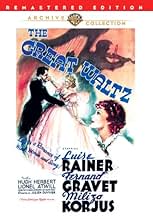
Johann Strauss II pursues his passion for waltzes in 1845 Vienna, facing societal resistance. His music gains popularity through opera singers, leading to fame and personal conflicts between... Read allJohann Strauss II pursues his passion for waltzes in 1845 Vienna, facing societal resistance. His music gains popularity through opera singers, leading to fame and personal conflicts between his wife and a passionate affair.Johann Strauss II pursues his passion for waltzes in 1845 Vienna, facing societal resistance. His music gains popularity through opera singers, leading to fame and personal conflicts between his wife and a passionate affair.
- Won 1 Oscar
- 2 wins & 3 nominations total
Fernand Gravey
- Johann Strauss
- (as Fernand Gravet)
Sig Ruman
- Wertheimer
- (as Sig Rumann)
Ernie Alexander
- Revolutionary
- (uncredited)
6.41.4K
1
2
3
4
5
6
7
8
9
10
Featured reviews
The Best MacDonald-Eddy Musical That Jeanette And Nelson Never Made.
If there is a genre in which even die-hard contemporary fans of old movies seldom care to delve, it is the once-popular musical operetta. I have steeled myself to watch several Jeanette MacDonald and Nelson Eddy movies, and have occasionally been pleasantly surprised, as in my first viewing of ROSE MARIE. I recently caught THE GREAT WALTZ on TCM as part of a festival of Luise Rainer movies, and despite myself I was won over by the skill of the director as well as the opulence of the production.
Miss Rainer's charms elude me. She was pretty and not a bad actress by any means and yet the clammy, self-congratulatory air of masochism and eye-brimming sadness of each of her performances is hard to take. Even when you have to admit that she isn't bad in a given scene, she is insufferable, sometimes almost unwatchable. And she had her most cringing, masochistic and melodramatic role in this picture as the long-suffering wife of a faithless Strauss as played by a puffy Fernand Gravey.
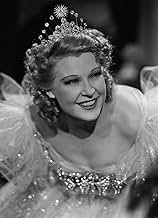
It is Gravey and Miliza Korjus that are the real stars of the film, and this is curious to a modern viewer since neither had the classic good looks of movie stars of the period. What they did have was a stars' confidence and because of the considerable imagination of Julien Duvivier, you believe them as a romantic couple and as stars intoxicated with their own love and talent.
But what is impressive about THE GREAT WALTZ is the way Duvivier transforms potentially dull and static numbers into surreal flights of fantasy. He isn't afraid to be delirious or silly so a few set-pieces unexpectedly catch your attention, make you laugh and then impress you with their theatricality and verve. Such is the orgasmic waltz sequence that takes place in and around a bandstand in the Vienna Woods in which Korjus decisively seduces Gravey. It is Duvivier's attention to detail that makes it: the way Korjus jackknifes to the ground in Gravey's arms and removes her organdy picture hat, the gorgeous line of trees hung with Japanese lanterns on a moonlit set, the way she staggers and tumbles onto the grass after her trilling climax, inviting greater liberties (despite the all-girl orchestra looking on), all of these images make the scene breathless, ludicrous, memorable.
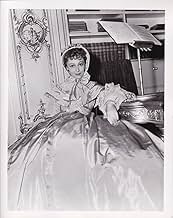
And just because we have blessedly forgotten Strauss's dreary wife, Duvivier concocts a spectacular scene for Rainer too: publicly confronted by her husband's faithlessness, she hurriedly dresses in silks and crinolines determined to kill herself or someone else on the night of his opera debut. Sweeping out of their huge house and down their long staircase to the strains of a waltz, sweeping into a baroque opera house and up an even longer set of steps, she stops, awestruck while several jump cuts reveal the enormity and grandeur of the theatre, the rapt audience and the triumph of her rival, who defiantly swirls into a lavish stage waltz. In contrast, Rainer's smiling-through-tears routine afterward seems an anti-climax, though it is an admirable piece of showmanship and hugely entertaining despite a shrill note of barely controlled hysteria she has cultivated throughout the sequence. Or maybe because of it. Rainer's few strengths as an actress are utterly linked to her considerable weaknesses.
So I'm now not surprised to learn of this film's great success at the time, though I do wonder why the Mac-Eddy productions never got as creative a craftsman as Duvivier to plan and film their pictures. If he had they might be more widely admired today beyond the group of fast-ageing fans who first loved them in the '30s. But maybe nothing can revive interest in this most unfashionable of movie genres.
Miss Rainer's charms elude me. She was pretty and not a bad actress by any means and yet the clammy, self-congratulatory air of masochism and eye-brimming sadness of each of her performances is hard to take. Even when you have to admit that she isn't bad in a given scene, she is insufferable, sometimes almost unwatchable. And she had her most cringing, masochistic and melodramatic role in this picture as the long-suffering wife of a faithless Strauss as played by a puffy Fernand Gravey.
It is Gravey and Miliza Korjus that are the real stars of the film, and this is curious to a modern viewer since neither had the classic good looks of movie stars of the period. What they did have was a stars' confidence and because of the considerable imagination of Julien Duvivier, you believe them as a romantic couple and as stars intoxicated with their own love and talent.
But what is impressive about THE GREAT WALTZ is the way Duvivier transforms potentially dull and static numbers into surreal flights of fantasy. He isn't afraid to be delirious or silly so a few set-pieces unexpectedly catch your attention, make you laugh and then impress you with their theatricality and verve. Such is the orgasmic waltz sequence that takes place in and around a bandstand in the Vienna Woods in which Korjus decisively seduces Gravey. It is Duvivier's attention to detail that makes it: the way Korjus jackknifes to the ground in Gravey's arms and removes her organdy picture hat, the gorgeous line of trees hung with Japanese lanterns on a moonlit set, the way she staggers and tumbles onto the grass after her trilling climax, inviting greater liberties (despite the all-girl orchestra looking on), all of these images make the scene breathless, ludicrous, memorable.
And just because we have blessedly forgotten Strauss's dreary wife, Duvivier concocts a spectacular scene for Rainer too: publicly confronted by her husband's faithlessness, she hurriedly dresses in silks and crinolines determined to kill herself or someone else on the night of his opera debut. Sweeping out of their huge house and down their long staircase to the strains of a waltz, sweeping into a baroque opera house and up an even longer set of steps, she stops, awestruck while several jump cuts reveal the enormity and grandeur of the theatre, the rapt audience and the triumph of her rival, who defiantly swirls into a lavish stage waltz. In contrast, Rainer's smiling-through-tears routine afterward seems an anti-climax, though it is an admirable piece of showmanship and hugely entertaining despite a shrill note of barely controlled hysteria she has cultivated throughout the sequence. Or maybe because of it. Rainer's few strengths as an actress are utterly linked to her considerable weaknesses.
So I'm now not surprised to learn of this film's great success at the time, though I do wonder why the Mac-Eddy productions never got as creative a craftsman as Duvivier to plan and film their pictures. If he had they might be more widely admired today beyond the group of fast-ageing fans who first loved them in the '30s. But maybe nothing can revive interest in this most unfashionable of movie genres.
Great Music providing Fine Entertainmant
Before I started these comments, I first read many of the others made by a wide range of people - I was amazed to find that some were reading far too much into the storyline,( which everyone who has seen the movie knows it is pure hokum) or belittling the film for its treatment of the life of Johann Strauss. Why not go and see it, and enjoy the sheer entertainment of the Music, the acting of Luise Rainer, the voice of Miliza Korjus (who will ever forget her rendition of "One Day When We Were Young" - who cares if Strauss did or did not write it!), So "The Tales from the Vienna Woods" was written overnight - does it matter that free licence was taken, surely the name of the game is to entertain, and this film does that. Hugh Herbert and Lionel Atwill add fun and spice to one of the more entertaining musicals of the 1930's.
Great music can sometimes send you to a place between Heaven and Earth
My wife and I viewed this picture on TV 9/20/02. The acting by all was so real and the music, the settings, and the singing by M. Korjus so incredibly beautiful it brought tears for the shear emotion as the story unfolded. I recommend this movie to anyone needing an uplifting of spirit, so poignant as to bring tears enough to cry away your troubles and to anyone who enjoys movies of such caliber as are so few these days. Bravo
10Esierra2
My opinion about the movie The Great Waltz.
I own a VHS copy of The Great Waltz. I have seen this movie I don't know how many times! I was very young when I saw the movie for the first time, and it made a great impact on me and ever since then, I feel the urge to look and hear the magnificent singer and actress that, in my opinion takes the first place in this movie: MILIZA KORJUS. I have managed to collect ALL her recordings, I think., but I never saw the movie as a political issue or as they say here, as anti Nazi film! Nothing of the sort! To me it's a delightful movie and a great vehicle for the display of the many talents of Miliza Korjus and also for the rest of the cast and the romanticism involved in the whole movie.
Duvivier's holiday homework.
Sandwiched,in Duvivier's oeuvre,between two absolute masterpieces "Un carnet de Bal" and the overlooked "La fin du Jour" (some kind of French "Sunset Blvd" ) where the director's pessimism reaches new heights ,"The great waltz " ,unlike another movie made in Hollywood "Flesh and fantasy" cannot be looked upon as a "film d' Auteur".
It's impersonal but it nevertheless displays Duvivier's extraordinary eclecticism."The great waltz" is a good work,made with care and taste and shows that Duvivier could have been a great musicals director,if he had wanted to.Half of the movie consists of instrumentals or songs,which makes sense,for it is a movie dealing with Strauss's life.His private life does not interest that much Duvivier who avoids the traps of a linear biography.However,there are snatches of melodrama towards the end,mainly in the scenes between the moving Luise Rainer and Miliza Korjus in the theater.Fernand Gravey (spelled "Gravet" in the cast and credits)is the only French actor here.He had begun his American career with Mervyn LeRoy in 1937.
All the musical scenes are dazzling ;the "blue Danube" treatment is excellent,a waltz which would be used by dozens of directors,from Renoir ("Boudu Sauvé des Eaux" ) to Kubrik ("2001" ) to Cimino ("Heaven's gate"). Other good sequence: Strauss composing a new tune while he is hearing a horse' s trot.
It's impersonal but it nevertheless displays Duvivier's extraordinary eclecticism."The great waltz" is a good work,made with care and taste and shows that Duvivier could have been a great musicals director,if he had wanted to.Half of the movie consists of instrumentals or songs,which makes sense,for it is a movie dealing with Strauss's life.His private life does not interest that much Duvivier who avoids the traps of a linear biography.However,there are snatches of melodrama towards the end,mainly in the scenes between the moving Luise Rainer and Miliza Korjus in the theater.Fernand Gravey (spelled "Gravet" in the cast and credits)is the only French actor here.He had begun his American career with Mervyn LeRoy in 1937.
All the musical scenes are dazzling ;the "blue Danube" treatment is excellent,a waltz which would be used by dozens of directors,from Renoir ("Boudu Sauvé des Eaux" ) to Kubrik ("2001" ) to Cimino ("Heaven's gate"). Other good sequence: Strauss composing a new tune while he is hearing a horse' s trot.
Did you know
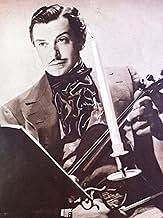
- TriviaToscha Seidel, the Russian virtuoso violinist, was hired especially to dub the solos on the soundtrack for Johann Strauss (Fernand Gravey) and began a new career working as a concert master at MGM and other studios.
- Quotes
Johann 'Schani' Strauss II: Thanks for firing me, Mr. Wertheimer. Goodbye, you worms!
- ConnectionsFeatured in Another Romance of Celluloid (1938)
- SoundtracksTales From the Vienna Woods, Op.325
(1868) (uncredited)
Music by Johann Strauss
Lyrics by Oscar Hammerstein II
Hummed by Fernand Gravey as it is being composed
Sung by Miliza Korjus
Played as background music often
- How long is The Great Waltz?Powered by Alexa
Details
- Release date
- Country of origin
- Language
- Also known as
- The Life of Johann Strauss
- Filming locations
- Production company
- See more company credits at IMDbPro
- Runtime
- 1h 44m(104 min)
- Color
- Aspect ratio
- 1.37 : 1
Contribute to this page
Suggest an edit or add missing content