
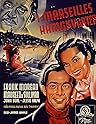
Madelon and Marius intend to marry but he finds the call of the ocean irresistible and leaves her and his father behind.Madelon and Marius intend to marry but he finds the call of the ocean irresistible and leaves her and his father behind.Madelon and Marius intend to marry but he finds the call of the ocean irresistible and leaves her and his father behind.
- Director
- Writers
- Stars
- Awards
- 3 wins total


Jerry Colonna
- Arab Rug Dealer
- (uncredited)
Corky
- The dog in the market
- (uncredited)

Henry Hull
- Uncle Elzear
- (uncredited)
George Humbert
- Organ Grinder
- (uncredited)
Jack Latham
- Bit Part
- (uncredited)

Doris Lloyd
- Customer
- (uncredited)

Fred Malatesta
- Bird Seller
- (uncredited)

Moy Ming
- Chinese Peddler
- (uncredited)

Paul Panzer
- Postman
- (uncredited)
Robert Spindola
- Boy
- (uncredited)
- Director
- Writers
- All cast & crew
- Production, box office & more at IMDbPro
5.8152
1
2
3
4
5
6
7
8
9
10
Featured reviews
Halfway decent melodrama
That's a rather prosaic title for a small melodrama, don't you think? Based on a series of works from French playwright Marcel Pagnol, Port of Seven Seas is really just a love triangle where one of the two men is absent for most of the story. It's not flashy. Despite being made at MGM, it's obviously a small, not terribly expensive production, and Whale's focus was more on his actors than anything else. It's fine, though. It doesn't move, though it tries, and I see it mostly as a showcase for Frank Morgan who actually was a decent actor.
Morgan plays Panisse, a lifetime bachelor and shop owner in Marseille who has affection for the much younger woman Madelon (Maureen O'Sullivan) who is, in turn, in love with Marius (John Beal), son of the owner of the local bar, Cesar (Wallace Beery). The story begins with Marius choosing between his love of Madelon and his love of the sea, going out on a three year tour on a scientific vessel, leaving Madelon behind to wait for him. The story is about Madelon having to choose between loyalty to the man she loves, the affections of the older, sweet man who pines after her, and the sudden need to find footing after she discovers that she's pregnant with Marius' child. (Just a note, the script for this film was rejected by the Hays Office a few years earlier from another studio, and then accepted without any changes for this production at MGM...bending to Mayer? I don't know).
It takes a bit of time to get there, though. We have some light comedy to fill the time, like Panisse getting kicked by a child on the street while he wears a tuxedo because the kid thought he was American (he lets the kid off because of the confusion). But things don't really get moving dramatically until Madelon discovers her pregnancy about halfway through the film. It's here where the meat of the film is, and it's actually surprisingly compelling, a lot of it falling Morgan's shoulders. His portrayal of the perennial bachelor who had cast off his dreams of family and being confronted with the possibility of having that dream is actually quite affecting. Morgan is the best part of the film which kind of surprised me. I've liked him in almost everything I've seen him in (especially with Lubitsch directing), but his previous performance in The Kiss Before the Mirror just felt off. He felt miscast, but he's actually quite wonderful here as the elderly but innocent man given what he's always wanted at long last instead of the hard-nosed lawyer in the previous film. Casting is so much in film.
Anyway, that was enough to get me on the film's side, and then it just kept going. It takes a simple situation and never really builds out on it, relegating drama to a couple of scenes (highlighting the stage bound nature of the source material) where people end up just kind of talking in circles. It's not as dramatically engaging as I think it should be, Panisse turning into something more of a meek simpering fool unwilling to fight for what he has, just waiting for people to discover his worth. It's such a deeply uncompelling ending that it just drags the whole thing down.
Which is unfortunate, I think. Panisse fighting for himself and for what's right would have been a compelling growth for him considering what he'd achieved. The ending of everyone just realizing that he's actually a better dad than Marius feels just limp in comparison to what could have been.
So, it's a melodrama with some good elements that just doesn't come together or have a proper ending. It definitely has an ending, it's just not all that good.
And that ends up creating an unfortunate end product where you can see the movie it could have been, but Whale, working off a script by Preston Sturges of all people, just can't bring it together. Perhaps it was the source material itself, the French origins not really lending themselves to actual drama, but no matter what, this is really a minor miss of a melodrama. It was pretty close to working.
Morgan plays Panisse, a lifetime bachelor and shop owner in Marseille who has affection for the much younger woman Madelon (Maureen O'Sullivan) who is, in turn, in love with Marius (John Beal), son of the owner of the local bar, Cesar (Wallace Beery). The story begins with Marius choosing between his love of Madelon and his love of the sea, going out on a three year tour on a scientific vessel, leaving Madelon behind to wait for him. The story is about Madelon having to choose between loyalty to the man she loves, the affections of the older, sweet man who pines after her, and the sudden need to find footing after she discovers that she's pregnant with Marius' child. (Just a note, the script for this film was rejected by the Hays Office a few years earlier from another studio, and then accepted without any changes for this production at MGM...bending to Mayer? I don't know).
It takes a bit of time to get there, though. We have some light comedy to fill the time, like Panisse getting kicked by a child on the street while he wears a tuxedo because the kid thought he was American (he lets the kid off because of the confusion). But things don't really get moving dramatically until Madelon discovers her pregnancy about halfway through the film. It's here where the meat of the film is, and it's actually surprisingly compelling, a lot of it falling Morgan's shoulders. His portrayal of the perennial bachelor who had cast off his dreams of family and being confronted with the possibility of having that dream is actually quite affecting. Morgan is the best part of the film which kind of surprised me. I've liked him in almost everything I've seen him in (especially with Lubitsch directing), but his previous performance in The Kiss Before the Mirror just felt off. He felt miscast, but he's actually quite wonderful here as the elderly but innocent man given what he's always wanted at long last instead of the hard-nosed lawyer in the previous film. Casting is so much in film.
Anyway, that was enough to get me on the film's side, and then it just kept going. It takes a simple situation and never really builds out on it, relegating drama to a couple of scenes (highlighting the stage bound nature of the source material) where people end up just kind of talking in circles. It's not as dramatically engaging as I think it should be, Panisse turning into something more of a meek simpering fool unwilling to fight for what he has, just waiting for people to discover his worth. It's such a deeply uncompelling ending that it just drags the whole thing down.
Which is unfortunate, I think. Panisse fighting for himself and for what's right would have been a compelling growth for him considering what he'd achieved. The ending of everyone just realizing that he's actually a better dad than Marius feels just limp in comparison to what could have been.
So, it's a melodrama with some good elements that just doesn't come together or have a proper ending. It definitely has an ending, it's just not all that good.
And that ends up creating an unfortunate end product where you can see the movie it could have been, but Whale, working off a script by Preston Sturges of all people, just can't bring it together. Perhaps it was the source material itself, the French origins not really lending themselves to actual drama, but no matter what, this is really a minor miss of a melodrama. It was pretty close to working.
PORT OF SEVEN SEAS (James Whale, 1938) ***
Though my James Whale retrospective was officially over, I managed to get my hands on yet another rarity (I am now only left with his last unreleased work, 1949's HELLO OUT THERE to catch up with) – so I opted to check it out instantly. This was his sole stint at MGM and, though the material is hardly typical of him, he manages to infuse it with great humanity and surprising depth. This is especially remarkable when considering that the 81-minute film is essentially a compression of three lengthy French ones – a particular characteristic of their creator Marcel Pagnol – whose cumulative length exceeds 7 hours (though this effectively tails off at the end of the second)!; interestingly, the adaptation/streamlining was done by none other than Preston Sturges!
As expected, the Marseille waterfront atmosphere is carefully evoked (courtesy of celebrated cinematographer Karl Freund) and the cast (mainly filled by MGM stalwarts) proves another definite trump card here: Wallace Beery plays gruff tavern-keeper Cesar, Frank Morgan is wealthy merchant Panisse (his best friend), Maureen O'Sullivan the market-seller Fanny (albeit awkwardly renamed Madelon!) and John Beal – essentially turning up at the extended finale – as the sailor Marius (Cesar's son). Also on hand is Etienne Girardot as a doddering crony of Beery and Morgan, with the trio's scenes together inserting a welcome dose of humor into the generally melodramatic proceedings.
For those unfamiliar with the narrative, we have Madelon and Marius intending to marry but he finds the call of the ocean irresistible and leaves her and his father behind. When it is discovered that the girl is pregnant, the much-older Panisse (a childless widower) offers to marry her – which is no sacrifice for him since he had repeatedly expressed his love for Madelon – and raise the kid as his own! However, Marius eventually re-appears and claims both for himself but he finds opposition from everyone (Panisse was willing to relinquish the girl but not the baby), including his own father! The plot, as it stands here, concludes in bittersweet fashion with Cesar persuading Marius to go back to his true love i.e. the sea; the last entry in Pagnol's original trilogy follows the adventures of the grown-up boy.
The film, then, is an underrated achievement – even more so in the face of the 1961 remake called FANNY (which, being an Oscar nominee and featuring the cream of Hollywood's French star imports, has rather stolen this one's thunder!) that actually originated as a stage musical but whose entire song score would ultimately be dropped for its transition to the screen!
As expected, the Marseille waterfront atmosphere is carefully evoked (courtesy of celebrated cinematographer Karl Freund) and the cast (mainly filled by MGM stalwarts) proves another definite trump card here: Wallace Beery plays gruff tavern-keeper Cesar, Frank Morgan is wealthy merchant Panisse (his best friend), Maureen O'Sullivan the market-seller Fanny (albeit awkwardly renamed Madelon!) and John Beal – essentially turning up at the extended finale – as the sailor Marius (Cesar's son). Also on hand is Etienne Girardot as a doddering crony of Beery and Morgan, with the trio's scenes together inserting a welcome dose of humor into the generally melodramatic proceedings.
For those unfamiliar with the narrative, we have Madelon and Marius intending to marry but he finds the call of the ocean irresistible and leaves her and his father behind. When it is discovered that the girl is pregnant, the much-older Panisse (a childless widower) offers to marry her – which is no sacrifice for him since he had repeatedly expressed his love for Madelon – and raise the kid as his own! However, Marius eventually re-appears and claims both for himself but he finds opposition from everyone (Panisse was willing to relinquish the girl but not the baby), including his own father! The plot, as it stands here, concludes in bittersweet fashion with Cesar persuading Marius to go back to his true love i.e. the sea; the last entry in Pagnol's original trilogy follows the adventures of the grown-up boy.
The film, then, is an underrated achievement – even more so in the face of the 1961 remake called FANNY (which, being an Oscar nominee and featuring the cream of Hollywood's French star imports, has rather stolen this one's thunder!) that actually originated as a stage musical but whose entire song score would ultimately be dropped for its transition to the screen!
See the 1961 version...this one is VASTLY inferior.
Begins with Marius leaving--with letter. CRAPPY--never see him until much later
American actors--not a good thing
lacks the beauty of the 61 version.
There's also a french made trilogy pagnol.
Until I stumbled upon this film on YouTube, I had no idea that Hollywood made a version of Marcel Pagnol's novel "Fanny" before the much more famous 1961 version. By comparison, this 1938 version is far inferior...and the same can be said when you compare it to the French-made trilogy from the 1930s.
This is a summary based on the Pagnol story: Young Marius is in love with Fanny (here called Madelon due to the Production Code!) and vice-versa. However, he also is obsessed with going off to the sea on a merchant ship and Marius chooses the former. Unbeknownst to him, Fanny is pregnant! Not wanting to raise an illegitimate child, she marries an old man, Panisse, who loves her and adores the son that he takes for his own. Eventually, much later, Marius returns and expects to pick up where he left off.
The 1938 film begins strangely. It starts at about the same place the 1961 version was at the 30 minute mark! Yes, all the wonderful set-up for the story is gone. And, oddly enough, they chose never to show Marius until much, much later in the story--instead using a poor plot device to summarize most of the missing 30 minutes...a letter from Marius!
Additionally, the Production Code was a problem as Madelon/Fanny is supposed to be pregnant and unmarried...something the Code simply wouldn't allow...especially in 1938 when it was at its most restrictive. So how does this film deal with it? They still include it, though they talk around it a bit...again, because of the Code.
This is a film which is a failure on so many levels. None of the actors act or talk as if they are French...and you wonder why they didn't get some French actors to play these roles. In particular, Wallace Beery plays himself (or at least his movie persona) instead of Marius' father! Additionally, the direction by James Whale, a good director but one more adept with directing "Frankenstein", was pedestrian. The 1961 version was directed in a much more poetic, beautiful manner by Joshua Logan and the color cinematography and legitimate French locations made it an incredibly artistic film. In the 1938 film, Madelon is just some girl...in the 1961 version you, the viewer, fall for Fanny...she is just so radiant. My advice to you is to skip this one unless you are a die-hard Pagnol or classic Hollywood fan. I love Pagnol and classic Hollywood...and I was still pretty disappointed.
By the way, the French trilogy is probably almost a good as the 1961 version. While not as pretty, it is definitely more the vision of the author and sticks close to the three plays he wrote about Fanny.
There's also a french made trilogy pagnol.
Until I stumbled upon this film on YouTube, I had no idea that Hollywood made a version of Marcel Pagnol's novel "Fanny" before the much more famous 1961 version. By comparison, this 1938 version is far inferior...and the same can be said when you compare it to the French-made trilogy from the 1930s.
This is a summary based on the Pagnol story: Young Marius is in love with Fanny (here called Madelon due to the Production Code!) and vice-versa. However, he also is obsessed with going off to the sea on a merchant ship and Marius chooses the former. Unbeknownst to him, Fanny is pregnant! Not wanting to raise an illegitimate child, she marries an old man, Panisse, who loves her and adores the son that he takes for his own. Eventually, much later, Marius returns and expects to pick up where he left off.
The 1938 film begins strangely. It starts at about the same place the 1961 version was at the 30 minute mark! Yes, all the wonderful set-up for the story is gone. And, oddly enough, they chose never to show Marius until much, much later in the story--instead using a poor plot device to summarize most of the missing 30 minutes...a letter from Marius!
Additionally, the Production Code was a problem as Madelon/Fanny is supposed to be pregnant and unmarried...something the Code simply wouldn't allow...especially in 1938 when it was at its most restrictive. So how does this film deal with it? They still include it, though they talk around it a bit...again, because of the Code.
This is a film which is a failure on so many levels. None of the actors act or talk as if they are French...and you wonder why they didn't get some French actors to play these roles. In particular, Wallace Beery plays himself (or at least his movie persona) instead of Marius' father! Additionally, the direction by James Whale, a good director but one more adept with directing "Frankenstein", was pedestrian. The 1961 version was directed in a much more poetic, beautiful manner by Joshua Logan and the color cinematography and legitimate French locations made it an incredibly artistic film. In the 1938 film, Madelon is just some girl...in the 1961 version you, the viewer, fall for Fanny...she is just so radiant. My advice to you is to skip this one unless you are a die-hard Pagnol or classic Hollywood fan. I love Pagnol and classic Hollywood...and I was still pretty disappointed.
By the way, the French trilogy is probably almost a good as the 1961 version. While not as pretty, it is definitely more the vision of the author and sticks close to the three plays he wrote about Fanny.
Before there was Fanny, there was Port of Seven Seas
The credits for this movie say that it is based on Marcel Pagnol's 1931 play Fanny, but that isn't true. It is a very close remake of Pagnol's 1932 movie adaptation of his play, an adaptation that, along with two other Pagnol movies, Marius (1931) and César (1936), served as the source for Joshua Logan's 1961 movie Fanny, which condenses all three of the French movies into one film. (Follow all that?) Because Port of Seven Seas is very much a remake of Pagnol's movie - Preston Sturges, who wrote the script, often simply translated Pagnol's French script - it is impossible not to compare the two. Since the French original is one of the classics of French cinema, something that gets run on French TV over and over, that sets the bar high.
And sometimes this movie comes up to that high bar, primarily with the performance of Frank Morgan (the Wizard of Oz) as Panisse. The original Panisse, Charpin, made this character complex, rich, and unforgettable, and I can honestly say that Frank Morgan performs at the same level. Some of his scenes, such as when he explains to Madelon (Pagnol's Fanny, the only character whose name is changed) why he is happy to marry her even though she is carrying someone else's child, are great moments in American cinema, and certainly worthy of a Best Supporting Actor Oscar. This film is worth seeing for his performance, and if you know Charpin's original you will not find Morgan any less wonderful.
Maureen O'Sullivan is also very fine in this movie as Madelon (Fanny). Given Oriane Demazias's melodramatic performance in the French original, some may even prefer O'Sullivan.
This movie's weak point is the star, however, Wallace Beery. In part he suffers from comparison with Raimu's performance in the French original; Raimu was one of the greatest actors of his age, and Beery did not have his depth and range. In part, however, this is not a good Wallace Beery performance: too often he seems to be just reciting the lines and sounds very unnatural. He had given and would continue to give far better performances in other movies. Even on its own terms, his performance in this movie is not a good. For anyone who knows Raimu's, Beery's is an almost complete loss.
John Beal as Marius drastically overacts, and Whale allows him to come off as too sympathetic in the confrontation scene near the end of the movie where the three male characters decide the fate of the child, which must have confused the first American audiences. Pierre Fresnay in the French original comes off as very unsympathetic, keeping the audience on the side of Panisse.
Cora Witherspoon's part, Honorine, has been shrunk from the French original, but she does a fine job with what she has left, and should have been billed over Beal.
In sum, this is a movie that is worth watching in its own right. If you know Logan's Fanny or Pagnol's, it is a must see and does not come in a poor third. Frank Morgan is definitely much better as Panisse than Maurice Chevalier, and Maureen O'Sullivan plays Madelon (Fanny) differently from Leslie Caron, but certainly every bit as well.
And sometimes this movie comes up to that high bar, primarily with the performance of Frank Morgan (the Wizard of Oz) as Panisse. The original Panisse, Charpin, made this character complex, rich, and unforgettable, and I can honestly say that Frank Morgan performs at the same level. Some of his scenes, such as when he explains to Madelon (Pagnol's Fanny, the only character whose name is changed) why he is happy to marry her even though she is carrying someone else's child, are great moments in American cinema, and certainly worthy of a Best Supporting Actor Oscar. This film is worth seeing for his performance, and if you know Charpin's original you will not find Morgan any less wonderful.
Maureen O'Sullivan is also very fine in this movie as Madelon (Fanny). Given Oriane Demazias's melodramatic performance in the French original, some may even prefer O'Sullivan.
This movie's weak point is the star, however, Wallace Beery. In part he suffers from comparison with Raimu's performance in the French original; Raimu was one of the greatest actors of his age, and Beery did not have his depth and range. In part, however, this is not a good Wallace Beery performance: too often he seems to be just reciting the lines and sounds very unnatural. He had given and would continue to give far better performances in other movies. Even on its own terms, his performance in this movie is not a good. For anyone who knows Raimu's, Beery's is an almost complete loss.
John Beal as Marius drastically overacts, and Whale allows him to come off as too sympathetic in the confrontation scene near the end of the movie where the three male characters decide the fate of the child, which must have confused the first American audiences. Pierre Fresnay in the French original comes off as very unsympathetic, keeping the audience on the side of Panisse.
Cora Witherspoon's part, Honorine, has been shrunk from the French original, but she does a fine job with what she has left, and should have been billed over Beal.
In sum, this is a movie that is worth watching in its own right. If you know Logan's Fanny or Pagnol's, it is a must see and does not come in a poor third. Frank Morgan is definitely much better as Panisse than Maurice Chevalier, and Maureen O'Sullivan plays Madelon (Fanny) differently from Leslie Caron, but certainly every bit as well.


Did you know
- TriviaMaureen O'Sullivan's character name was change from 'Fanny' to 'Madelon' because the studio bosses were not comfortable with the sexual connotation of the original name.
- ConnectionsRemade as Fanny (1961)
Details
- Release date
- Country of origin
- Language
- Also known as
- I Marseilles hamnkvarter
- Filming locations
- Production company
- See more company credits at IMDbPro
- Runtime
- 1h 21m(81 min)
- Color
- Aspect ratio
- 1.37 : 1
Contribute to this page
Suggest an edit or add missing content