IMDb RATING
7.3/10
5.8K
YOUR RATING
Twenty years after the murder of Alice Barlow, her house is finally occupied again. However, the husband from the couple who has moved in has a secret that he will do anything to keep hidden... Read allTwenty years after the murder of Alice Barlow, her house is finally occupied again. However, the husband from the couple who has moved in has a secret that he will do anything to keep hidden.Twenty years after the murder of Alice Barlow, her house is finally occupied again. However, the husband from the couple who has moved in has a secret that he will do anything to keep hidden.
- Director
- Writers
- Stars
Alfred Atkins
- Bit Role
- (uncredited)
Edwin Ellis
- Bit Role
- (uncredited)
Kathleen Harrison
- Bit Role
- (uncredited)
Katie Johnson
- Alice Barlow's Maid
- (uncredited)
Molly Raynor
- Bit Role
- (uncredited)
- Director
- Writers
- All cast & crew
- Production, box office & more at IMDbPro
7.35.8K
1
2
3
4
5
6
7
8
9
10
Featured reviews
Streamlined & Suspenseful
Let's face it - the British do psychological suspense VERY well! This 1940 British production is more streamlined and suspenseful than the MGM version of 1944, as it sticks more closely to Patrick Hamilton's play. The MGM version had more 'back-story' and padding to it. I love Diana Wynyard - she was lovely to look at and seemed wonderfully edgy and vulnerable - I wasn't surprised to learn that she played the anguished mother in the West End production of THE BAD SEED - she's really only remembered today for this film and CAVALCADE (1933), but she's definitely worth watching. Anton Walbrook is a little hammier than Boyer was, and there are those obvious streaks in his hair to make him look a little older - but he has a wonderful moment at the films end when, quite suddenly, his eyes go wild and you can tell that he's completely lost his mind - might have been a nice touch if the 1944 had included such a moment. Highly recommended.
I've noticed that people seem surprised that MGM attempted to suppress the 1940 British version of GASLIGHT to avoid any competition with their version. I don't know why anyone should be surprised - Hollywood's business is a cut-throat one: remember that L.B. Mayer, along with Jack Warner and others, offered to buy CITIZEN KANE from RKO and then destroy it, all to appease William R. Hearst - fortunately they didn't (just imagine the history of film since 1941 if they had!) And although MGM didn't destroy all prints of GASLIGHT, they did manage to keep it out of sight for many years - I think I first saw it on a cable station in the early 1980s - I tuned in expecting Boyer and Bergman and got Walbrook and Wynyard - as it turned out I didn't mind at all, and have enjoyed it many times since! MGM did the same thing with Paramount's 1932 DR. JEKYLL AND MR. HYDE which, except for an occasional screening, went unseen (but much written about) until it came out on video around 1990 (under the MGM label - imagine that!)
Well-filmed earlier adaptation of famed 1944 film
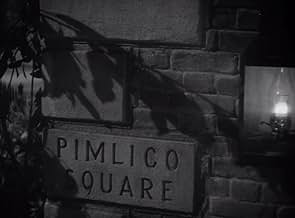
Gaslight (1940) In 1944, MGM released a movie about a thief who slowly tries to drive his wife insane in order to find out the location of some jewels. The movie was called Gaslight, and it starred Charles Boyer and Ingrid Bergman. But the movie wasn't an MGM original by any means; its antecedent was a much-lesser-known 1940 British film by the same name. (Apparently, when MGM bought the rights to the story, based on a play by Patrick Hamilton, the studio attempted to destroy all existing prints of the earlier version, but they weren't successful.) In the opening scene, an old woman is strangled to death, and her killer ransacks her apartment in search of... well, something. His search is apparently fruitless. Years later, Paul Mallen (Anton Walbrook), a debonair society lord in London, moves with his wife Bella (Diana Wynyard) to the posh Pimlico Square, directly below the apartment of the murdered. Mrs. Mallen is quickly the talk of the neighborhood - she's a little off, they say. Something's not quite right with her. And those wags are right; Bella is constantly accused by her husband of stealing things from him, although she has no recollection of the events.
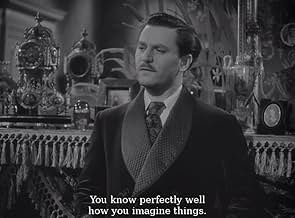
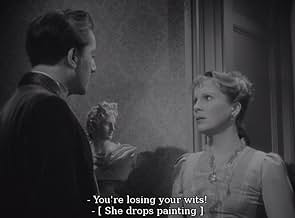
Mallen uses trick after psychological trick against his wife, although it's unclear to the audience what his motives are. Is he just playing with her? Does he merely delight in her anguish? He even deliberately keeps her from her cousin, a man who'd stood against their marriage at the wedding ceremony. What's Mallen's angle? Unlike its remake, this earlier version is delightfully understated - and bereft of stars whose names would be recognizable in the United States. It's remarkably well lit, too, typical for movies of the period. But where it draws most of its strength is from the two leads. Walbrook, who by that time had been in motion pictures for 25 years, is perfect as the sly, debonair, and viciously evil Mallen; Wynyard exudes vulnerability and panic; her Bella is terrified that she might be quite sincerely insane, vacillating from dignified serenity to sheer panic.
This movie is highly recommended to fans of noir film, particularly those who've seen the more-famous 1944 Hollywood version.
Mallen uses trick after psychological trick against his wife, although it's unclear to the audience what his motives are. Is he just playing with her? Does he merely delight in her anguish? He even deliberately keeps her from her cousin, a man who'd stood against their marriage at the wedding ceremony. What's Mallen's angle? Unlike its remake, this earlier version is delightfully understated - and bereft of stars whose names would be recognizable in the United States. It's remarkably well lit, too, typical for movies of the period. But where it draws most of its strength is from the two leads. Walbrook, who by that time had been in motion pictures for 25 years, is perfect as the sly, debonair, and viciously evil Mallen; Wynyard exudes vulnerability and panic; her Bella is terrified that she might be quite sincerely insane, vacillating from dignified serenity to sheer panic.
This movie is highly recommended to fans of noir film, particularly those who've seen the more-famous 1944 Hollywood version.
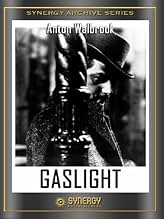
try to find this version instead of the Hollywood one
Although Ingrid Bergman and Charles Boyer got a lot of press for the movie GASLIGHT, the film was actually a remake of a British film made only a few years earlier. It seems that the big-wigs at the studio wanted to remake the film but pretend that it was an original Hollywood production so they bought up the prints and the remade film went on to be considered a "classic". However, recently the ORIGINAL version from 1940 has been discovered and has been shown on Turner Classic Movies.
Having seen both versions, I found them awfully similar--but I would have to say that I preferred the original. The wonderful Anton Walbrook was a wonderful and even more menacing husband and I just could see no reason why the movie should have been remade. It's really a shame, too, as I am sure that those associated with the original must have wished they'd gotten all the attention the 1944 version received.
My advice is see them both. However, if you only plan on seeing one, see this one--it's just a better film!
Having seen both versions, I found them awfully similar--but I would have to say that I preferred the original. The wonderful Anton Walbrook was a wonderful and even more menacing husband and I just could see no reason why the movie should have been remade. It's really a shame, too, as I am sure that those associated with the original must have wished they'd gotten all the attention the 1944 version received.
My advice is see them both. However, if you only plan on seeing one, see this one--it's just a better film!
Both Good Films !
I have liked the Gaslight films for many years and was surprised and delighted recently to find both versions together on an American DVD ! Miracles will never cease, I thought!
I have read various comments from people trying to compare these two films. I will not fall into this trap - I liked each film as much as the other..true, Walbrook looks more evil as a villain than Charles BOyer, and the 1940 version is perhaps a little more picturesque with the sets ( carriages, children etc ) but both films were very well done. The picture quality of the 1944 version is obviously better than that of 1940, and I had read somewhere that they had actually tried to get the print of the 1940 version destroyed as to have only the 1944 version available. What a horrible thought that someone could actually have wanted to do that !
So, they are both great suspense films and the black and white only serves to enhance the already seedy atmosphere ! Well worth several viewings !!!
I have read various comments from people trying to compare these two films. I will not fall into this trap - I liked each film as much as the other..true, Walbrook looks more evil as a villain than Charles BOyer, and the 1940 version is perhaps a little more picturesque with the sets ( carriages, children etc ) but both films were very well done. The picture quality of the 1944 version is obviously better than that of 1940, and I had read somewhere that they had actually tried to get the print of the 1940 version destroyed as to have only the 1944 version available. What a horrible thought that someone could actually have wanted to do that !
So, they are both great suspense films and the black and white only serves to enhance the already seedy atmosphere ! Well worth several viewings !!!
Better thrills than Bergman
The later version is Hollywood English, which I sometimes think is a downtown section of Hollywood Transylvanian. Believe me, the original is the real thing, from the small details up to the social assumptions: it's recognisably English. As such, the thriller is grounded in a reality that the later version can never have. And so it's scary! Of course, I admit that this justification of the original might be a lot less convincing if you're reading my words on the other side of the world...
As for the difficulty of getting hold of a copy, well every few years it's shown on one TV station or another over here, so there has to be a good copy somewhere out there.
Did you know
- TriviaWhen MGM remade the film with Charles Boyer and Ingrid Bergman, the studio attempted to have all prints of this earlier version destroyed. Fortunately, several prints escaped the fire (in fact, it is believed that director Thorold Dickinson surreptitiously struck a print himself before the negative was lost).
- GoofsAfter the murder of the old lady in 1865, a police constable is shown blowing a whistle to summon assistance. Whistles were not used by the Metropolitan Police until the 1870s; prior to that they used a football rattle to attract attention.
- ConnectionsFeatured in The Kenny Report: Episode dated 3 September 2024 (2024)
- SoundtracksThe Can-Can
(uncredited)
from "Orpheus in the Underworld"
Music by Jacques Offenbach
Arranged by Richard Addinsell
Played at the music hall and danced to by The Darmora Ballet
- How long is Angel Street?Powered by Alexa
Details
- Runtime
- 1h 24m(84 min)
- Color
- Aspect ratio
- 1.37 : 1
Contribute to this page
Suggest an edit or add missing content