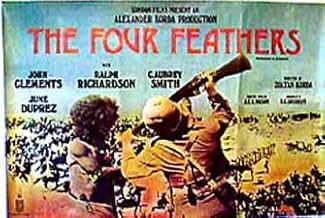
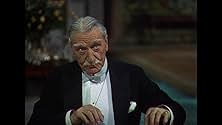
A British Army officer resigns, burning his last-day summons to war in the Sudan. Accusing him of cowardice, his girlfriend and three friends give him white feathers. To gain redemption, he ... Read allA British Army officer resigns, burning his last-day summons to war in the Sudan. Accusing him of cowardice, his girlfriend and three friends give him white feathers. To gain redemption, he shadows his friends to save their lives.A British Army officer resigns, burning his last-day summons to war in the Sudan. Accusing him of cowardice, his girlfriend and three friends give him white feathers. To gain redemption, he shadows his friends to save their lives.
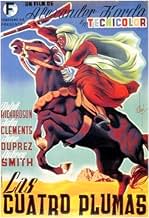
- Awards
- 1 win & 2 nominations total
- Man
- (uncredited)
Featured reviews
Never disgrace the regiment
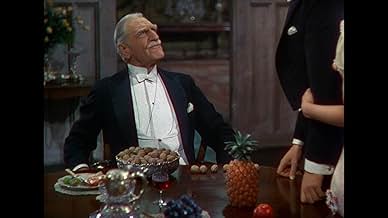
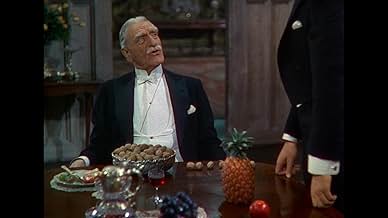
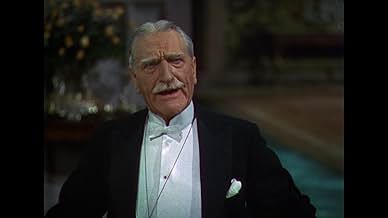
As in Stanley Baker's "ZULU" these giant black warriors are fearsomely portrayed with the scenes inside the primitive prison where the "dumb" spy Harry Faversham eventually finds himself are quite grim. And as another reviewer has commented, crusty Sir Aubrey as ever is the perfect & amusing retired tactician at the start & finish. A glare from under those bushy eyebrows was always enough! Great entertainment.
Britain Beats Hollywood At Its Own Game
But I'm not going to be internationalist about THE FOUR FEATHERS because this is a movie that makes you proud to be British , something that is sadly no longer allowed to happen these days . Perhaps the most stirring thing I can say about this movie is the way it wipes the floor with the contemporary competition that was coming out of Hollywood at the time . While the American studio were making similar monochrome movies with Errol Flynn and David Niven as the leads Ralph Richardson's performance alone is a reason to watch this movie and even if it wasn't there's still the story itself featuring themes like courage , honour , romance and redemption . You want battle scenes ? There's several in this movie as well choreographed as any thing seen in cinema at this time but perhaps the most what sets this British movie apart from other movies that were being produced across the pond is that it's a bit more gritty and sadistic than what Hollywood was producing . In one scene a British officer is flogged like a dog and he screams in pain as the camera pans on to the Mufti's face , a face lit up in sadistic glee , then the scene cross fades into a crowded dungeon where the prisoners are kept , a dark hell hole where the audience can actually taste the pain , fear and misery from the unfortunate prisoners . Even in those days Hollywood would pull their punches while a film like THE FOUR FEATHERSwould not
Sadly THE FOUR FEATHERS was released in 1939 which meant it qualified for the legendary Oscar ceremony the following year when GONE WITH THE WIND swept the board . A great pity because this very British movie deserved a hat full of awards . Sadly too Britain no longer has a film industry of its own and is reliant upon American finance , but perhaps the saddest thing is even if we did have a film industry no one in the business would want to film such an exciting historical epic in case they were labeled reactionary or racist
The Fantasy World of Harry Faversham
This version of "The Four Feathers" finds its main strengths in excellent color photography and well-staged action scenes, filmed on location. Producer Alexander Korda and director brother Zoltan work nicely with cinematographers Georges Perinal and (in the Sudan) Osmond Borradaile. The heroic "Harry" received a pop theme song entitled "The Fantasy World of Harry Faversham" from The Cowsills in 1968 (hear it on "Captain Sad and His Ship of Fools"), and a 2002 feature re-make starred Heath Ledger.
******* The Four Feathers (4/18/39) Alexander Korda : Zoltan Korda ~ John Clements, Ralph Richardson, C. Aubrey Smith, June Duprez
Love, honor and courage--British style!
June Duprez is the scornful woman, pretty as a picture in the only feminine role. Uncharismatic British actor John Clements is only adequate as the man who receives the "four feathers" and must redeem himself--but Ralph Richardson has the most memorable scenes as the sun-struck soldier who loses his helmet under the blazing sun and is blinded. Many gripping scenes as the hero undertakes a long journey to the Sudan.
Handsome Alexander Korda production rightfully deserves its ranking as a screen classic of 1939, but I have to say it's not without its faults as far as the structure of the story goes.
First of all, too much time is spent on hundreds of extras in battle scenes that become repetitious after awhile and interrupt the flow of the story and what is happening with our hero. Furthermore, the actor chosen for the "stiff upper lip" role of Haversham is John Clements, and much of his performance is too stiff to come alive. A more appealing and charismatic actor from that era would have sufficed and made the story stronger. Thirdly, there's a hint of incredibility in the tale of a man who would go to such extremes to regain his honor and go on a mission in which he would be reunited with the very men who scorned him. A bit much in the realm of credibility, but it does make a good story.
Summing up: Good adventure tale in which C. Aubrey Smith has one of his most memorable character roles as a stuffy "Colonel Blimp" type of career soldier recounting his favorite war tales.
What's Good Is Still Good
The film celebrates friendship and mutual obligation. It celebrates courage and determination. It celebrates a beautiful young couple and the love that conquers all, and celebrates the fact that the movies never let the funny-looking guy get the girl. It celebrates C. Aubrey Smith's eyebrows, and that's reason enough to watch any film.
The real heroes are Ralph Richardson, for acting at least 100% in every scene, never coasting or losing concentration for a minute, and the euphoniously named Osmond Borrodaile, whose second unit cinematography in faraway locations with monstrous cameras under difficult conditions enlivened many a movie.
Did you know
- TriviaDirector Zoltan Korda's own remake of this film, Storm Over the Nile (1955), re-used a lot of the battle sequences from this movie, which did not lend themselves very well to the cropping necessary to achieve the width of the CinemaScope ratio, nor did their comparative fuzziness blend well with the new footage.
- GoofsWhen General Burroughs is talking in the garden with Ethne, his swagger stick reverses ends.
- Quotes
Harry Faversham: In England, the white feather is the mark of a coward.
Dr. Harraz: Ah, I see. Then why worry? Be a coward and be happy.
Harry Faversham: No, Doctor. I have been a coward, and I wasn't happy.
- Crazy creditsOpening credits prologue: In 1885 the rebellious army of cruel dervishes enslaved and killed many thousands of defenceless natives in the Sudan, then laid siege to Khartoum. The scanty garrison's heroic commander, General Gordon appealed for help from England - but no help reached him.
- ConnectionsEdited into Storm Over the Nile (1955)
- SoundtracksAuld Lang Syne
(1788) (uncredited)
Lyrics by Robert Burns, music traditional
Heard during the departure of the Regiment
Details
- Runtime
- 2h 9m(129 min)
- Aspect ratio
- 1.37 : 1