IMDb RATING
6.9/10
3.2K
YOUR RATING


Convicts escaping from Devil's Island come under the influence of a strange Christ-like figure.Convicts escaping from Devil's Island come under the influence of a strange Christ-like figure.Convicts escaping from Devil's Island come under the influence of a strange Christ-like figure.
- Awards
- 2 wins total



Frederick Worlock
- Grideau
- (as Frederic Worlock)


Jack Adair
- Guard
- (uncredited)

Richard Alexander
- Guard
- (uncredited)

Stanley Andrews
- Constable
- (uncredited)

Betty Compson
- Suzanne
- (uncredited)

Gene Coogan
- Convict
- (uncredited)

Harry Cording
- Guard
- (uncredited)
6.93.1K
1
2
3
4
5
6
7
8
9
10
Featured reviews
The Angel of Devil's Island
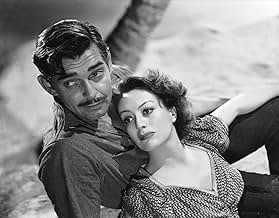
The Strange Cargo referred to in the title is in the person of Ian Hunter who is a mysterious other world convict who comes upon a group of them planning to escape from Devil's Island. It's a strange film, Strange Cargo with Clark Gable and Joan Crawford in the very last of eight films they were paired in by MGM.
Crawford dusts off her Sadie Thompson role for her character here. Even with the Code firmly in place it's rather obvious that Crawford is a working girl. She's free, but stranded on that notorious convict island. Gable is essentially the same cynical tough guy he played in so many MGM features at that time.
Ian Hunter is the mysterious stranger among them. These aren't a group of choir boys he comes among. Yet one by one as they die he brings a peace that passeth all understanding as the Good Book says. The escapees all don't die, but all but one come under his influence.
I'm surprised that TCM did choose this one for its theme this June of gays in the cinema. Prison films even during the days of the Code were a bit more open in treatment of homosexuality. The relationship of Albert Dekker and young John Arledge is rather obvious. Dekker in fact chooses a gruesome suicide rather than live without Arledge after he dies.
In fact what's really startling to me was that the heavenly figure that Ian Hunter represents neither condemns suicide or homosexuality. I'm really wondering how the censors of the day let that one slip through.
Paul Lukas has a very interesting part. He's today what we would consider a serial killer, he's married and killed many women for their money. He's cool and cynical and rejects Hunter's entreaties. When Hunter says they will never meet again, the line is loaded with implications.
Strange Cargo is a strange film. It's not bad, but could have been a lot better without code restrictions.
Crawford dusts off her Sadie Thompson role for her character here. Even with the Code firmly in place it's rather obvious that Crawford is a working girl. She's free, but stranded on that notorious convict island. Gable is essentially the same cynical tough guy he played in so many MGM features at that time.
Ian Hunter is the mysterious stranger among them. These aren't a group of choir boys he comes among. Yet one by one as they die he brings a peace that passeth all understanding as the Good Book says. The escapees all don't die, but all but one come under his influence.
I'm surprised that TCM did choose this one for its theme this June of gays in the cinema. Prison films even during the days of the Code were a bit more open in treatment of homosexuality. The relationship of Albert Dekker and young John Arledge is rather obvious. Dekker in fact chooses a gruesome suicide rather than live without Arledge after he dies.
In fact what's really startling to me was that the heavenly figure that Ian Hunter represents neither condemns suicide or homosexuality. I'm really wondering how the censors of the day let that one slip through.
Paul Lukas has a very interesting part. He's today what we would consider a serial killer, he's married and killed many women for their money. He's cool and cynical and rejects Hunter's entreaties. When Hunter says they will never meet again, the line is loaded with implications.
Strange Cargo is a strange film. It's not bad, but could have been a lot better without code restrictions.
Well-acted redemption drama
An unusual and well-acted redemption drama with strong performances by all the actors. The plot follows a group of convicts from their prison break to their deaths or final "escapes." The Christ figure, Cambreau, serves as the collective conscience that each deals with or denies.
not your typical Gable and Crawford film
"Strange Cargo" is a 1940 film starring Joan Crawford and Clark Gable that leaves the usual story lines behind - romantic comedy, kept woman, rags to riches - as it weaves an allegorical tale of escaping prisoners and a Christ-like figure who accompanies them. Gable is Andre Verne, a prisoner on Devil's Island who escapes with several other prisoners (Paul Lukas, Albert Dekker, Eduardo Ciannelli, J. Edward Bromberg and John Arledge). During the evening count, he's almost found missing but another man, Cambreau (Ian Hunter) replaces him in line. He then boards the boat to the mainland with them and Julie (Crawford), probably a prostitute, who is escaping also from a lecherous bounty hunter (Peter Lorre).
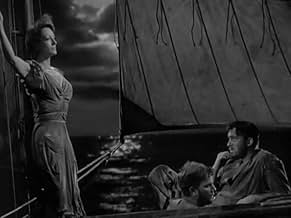
The prisoners fall on hard times as they escape through the woods and also while at sea when their water becomes tainted. Cambreau gives each prisoner comfort and helps them to confront the evil that brought them to Devil's Island, helping to bring them peace at last. This is not lost on Julie who sees a chance for redemption. Verne, however, isn't interested.
This is a very simple story beautifully directed by Borzage. The atmosphere of the film is dark and haunting. There is no preachiness. The sheer power of Cambreau and his sense of faith is what brings the prisoners solace. Hunter is majestic in the role. Gable is appropriately tough, and Crawford brings depth to Julie, who thought she knew what she wanted. The rest of the cast is top-notch.
"Strange Cargo" seems like a film that was made in the early '30s with its Christian parable. This was the last film that Crawford and Gable made together. Its powerful message makes this a fitting ending for a fine MGM team.
The prisoners fall on hard times as they escape through the woods and also while at sea when their water becomes tainted. Cambreau gives each prisoner comfort and helps them to confront the evil that brought them to Devil's Island, helping to bring them peace at last. This is not lost on Julie who sees a chance for redemption. Verne, however, isn't interested.
This is a very simple story beautifully directed by Borzage. The atmosphere of the film is dark and haunting. There is no preachiness. The sheer power of Cambreau and his sense of faith is what brings the prisoners solace. Hunter is majestic in the role. Gable is appropriately tough, and Crawford brings depth to Julie, who thought she knew what she wanted. The rest of the cast is top-notch.
"Strange Cargo" seems like a film that was made in the early '30s with its Christian parable. This was the last film that Crawford and Gable made together. Its powerful message makes this a fitting ending for a fine MGM team.
great
When I first saw this movie, over 30 years ago, I was captivated by it and still am. Unfortunately they do not show it often enough. Gable, Crawford, Lorre, Lukas all great and surely missed. Truely one of the lost gems of the Golden Age. Have not seen in years and can not wait until it is shown again.
Two masterpieces in a year.
In 1940,Frank Borzage gave two great movies in a row.In these trouble times ,it was a true tour de force to achieve that."Strange cargo" and "mortal storm" are admirable works,works of redemption,full of compassion for the human race .Hats off to you,M.Borzage,you who are often ignored when they list their favorite directors.
A user wrote that "strange cargo" was ahead of its time.It's so obvious that even now,it remains demanding ,deep,and absorbing.When you see where the adventures movie has gone,the likes of Indiana and co,you wonder that some works like that have been produced. "Strange cargo" anticipates the cinema future.In several respects it's John Huston before John Huston,but with more faith in the human nature. I would go as far as saying the first part is some kind of Bunuel's "la mort en ce jardin"(1956),but a Christian(!) Bunuel.The users who saw the Spanish director 's underrated film will be struck by the analogies between the two works .Gable's and Crawford' characters resemble George Marchal's and Simone Signoret's in "la mort en ce jardin".Or rather the other way about.
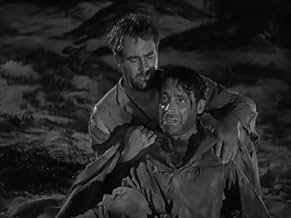
The main difference is the indomitable faith in God that Cambreau displays in the whole movie.His face radiates like a Christ,and Ian Hunter outshines the two stars Gable and Crawford.His performance ,subdued and sober,but always mesmerizing ,fascinates.There are unforgettable scenes:the beach ,where he opens the gates of eden for some kind of thief ;the cask of fresh water;his strange predictions;Clark Gable screaming "I'm God!" after throwing him into the water.The movie often verges on fantastic,but a spiritual and sustained fantastic,not drivel such as "IJ and the last crusade".
"Strange cargo" was followed by "mortal storm" ,which iseven more superior to it.Here ,Borzage anticipates on Minnelli "the four horsemen of the Apocalypse" 1961) and Visconti (la caditi degli dei 1969).His love for the human race is still beaming:in a world gone mad where nazi hate oozes everywhere,there will be several Cambreau to heal the wounds :Mr.and Mrs Roth,Martin,Freya and the old Mrs Breitner.
Do not miss his earlier works ,pacifist ones of course :"three comrades " and "no greater glory".Should they give a Nobel price of cinema,Frank Borzage would have been a strong contender in his lifetime.
A user wrote that "strange cargo" was ahead of its time.It's so obvious that even now,it remains demanding ,deep,and absorbing.When you see where the adventures movie has gone,the likes of Indiana and co,you wonder that some works like that have been produced. "Strange cargo" anticipates the cinema future.In several respects it's John Huston before John Huston,but with more faith in the human nature. I would go as far as saying the first part is some kind of Bunuel's "la mort en ce jardin"(1956),but a Christian(!) Bunuel.The users who saw the Spanish director 's underrated film will be struck by the analogies between the two works .Gable's and Crawford' characters resemble George Marchal's and Simone Signoret's in "la mort en ce jardin".Or rather the other way about.
The main difference is the indomitable faith in God that Cambreau displays in the whole movie.His face radiates like a Christ,and Ian Hunter outshines the two stars Gable and Crawford.His performance ,subdued and sober,but always mesmerizing ,fascinates.There are unforgettable scenes:the beach ,where he opens the gates of eden for some kind of thief ;the cask of fresh water;his strange predictions;Clark Gable screaming "I'm God!" after throwing him into the water.The movie often verges on fantastic,but a spiritual and sustained fantastic,not drivel such as "IJ and the last crusade".
"Strange cargo" was followed by "mortal storm" ,which iseven more superior to it.Here ,Borzage anticipates on Minnelli "the four horsemen of the Apocalypse" 1961) and Visconti (la caditi degli dei 1969).His love for the human race is still beaming:in a world gone mad where nazi hate oozes everywhere,there will be several Cambreau to heal the wounds :Mr.and Mrs Roth,Martin,Freya and the old Mrs Breitner.
Do not miss his earlier works ,pacifist ones of course :"three comrades " and "no greater glory".Should they give a Nobel price of cinema,Frank Borzage would have been a strong contender in his lifetime.


Did you know
- TriviaReceived a "Condemned" rating from the Catholic Legion of Decency for "irreverent use of Scripture" and "lustful complications." Even after the studio made the changes demanded, distribution was sharply cut by cities refusing to book it. Contemporary articles in The Hollywood Reporter noted the film was banned in Detroit. Other sources state it also was banned in Boston and Providence, Rhode Island.
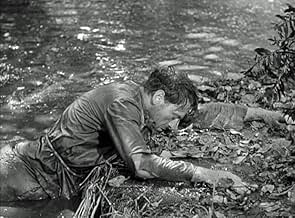
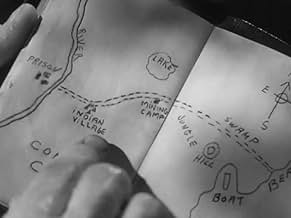
- GoofsAt one point, Verne (Clark Gable) escapes by jumping out a window into the water. A short while later, on land, he pulls a out a Bible from inside his shirt to check a map printed inside. As he flips through the pages, there is no sign whatsoever that the book got wet. The unprotected Bible should have shown signs of water immersion (damp edges, soggy paper, etc.), but it appears to be perfectly dry.
- Quotes
André Verne: So you outsmarted me, huh?
Julie: That's what happens, they tell me, when smart people get together. One of them winds up ahead.
- Alternate versionsThere is an Italian edition of this film on DVD, distributed by DNA Srl: "VOLTO DI DONNA (1941) + DONNE (1939) + STRANGE CARGO (1940)" (3 Films on a single DVD), re-edited with the contribution of film historian Riccardo Cusin. This version is also available for streaming on some platforms.
- ConnectionsFeatured in Hero at Large (1980)
- How long is Strange Cargo?Powered by Alexa
Details
Box office
- Budget
- $1,252,000 (estimated)
- Runtime
- 1h 53m(113 min)
- Color
- Aspect ratio
- 1.37 : 1
Contribute to this page
Suggest an edit or add missing content