
A mentally unstable man who has been kept in isolation for years escapes and causes trouble for his identical twin brother.A mentally unstable man who has been kept in isolation for years escapes and causes trouble for his identical twin brother.A mentally unstable man who has been kept in isolation for years escapes and causes trouble for his identical twin brother.
- Director
- Writers
- Stars



Jane Allen
- Jitterbug Dancer
- (uncredited)

Rod Cameron
- Eddie - Man in Cafe
- (uncredited)

Eddy Chandler
- Motorcycle Cop
- (uncredited)

Lane Chandler
- Neighbor
- (uncredited)

Catherine Craig
- Second Mill Girl
- (uncredited)
- Director
- Writers
- All cast & crew
- Production, box office & more at IMDbPro
6.4934
1
2
3
4
5
6
7
8
9
10
Featured reviews
Radon Family Values
Although Among The Living is a B film from Paramount it's a real nugget of gold among a lot of B dross. You will rarely see mob violence depicted as well as in this film. Two films that this stands comparison with in that regard are Fury and Night Of The Hunter.
It's also a great example of the mobility of careers. Frances Farmer whose career was heading down is in a relatively colorless part of the wife of one Albert Dekker. Susan Hayward plays the slutty daughter of a boardinghouse owner who gets involved with the other twin Dekker. She's got the far juicier role and makes the most of it.
Once upon a time a man had two twin sons both of whom grew up to be Albert Dekker. As is told by the town doctor Harry Carey, one was sent to a prep school, the other stayed at home. By all accounts dad was a tyrant at home and at work where he owned the mill that employed most of the town. The twin that stayed at home witnessed dad beating on mom and tried to stop it. Dad picked him and threw him against a wall injuring his brain.
Rather than risk exposure dad had his friend Harry Carey fake a death certificate and they kept the kid in a locked room. Now father is dead and the kid who has grown up to be Albert Dekker is a now quite unhinged and murders a family servant to escape.
And while out murders a woman that the town blames his brother for. Quite a dilemma for the sane Dekker and wife Farmer.
Hayward gives a good account of herself, but the film really belongs to Albert Dekker. This is quite possibly his career film, even more so than Dr. Cyclops. Especially playing the mad son, you really do feel for him knowing it's not his fault the way he is.
With a good does of both noir and Gothic horror, I highly recommend this film for fans of both genres. And definitely for fans of Susan Hayward as I am.
It's also a great example of the mobility of careers. Frances Farmer whose career was heading down is in a relatively colorless part of the wife of one Albert Dekker. Susan Hayward plays the slutty daughter of a boardinghouse owner who gets involved with the other twin Dekker. She's got the far juicier role and makes the most of it.
Once upon a time a man had two twin sons both of whom grew up to be Albert Dekker. As is told by the town doctor Harry Carey, one was sent to a prep school, the other stayed at home. By all accounts dad was a tyrant at home and at work where he owned the mill that employed most of the town. The twin that stayed at home witnessed dad beating on mom and tried to stop it. Dad picked him and threw him against a wall injuring his brain.
Rather than risk exposure dad had his friend Harry Carey fake a death certificate and they kept the kid in a locked room. Now father is dead and the kid who has grown up to be Albert Dekker is a now quite unhinged and murders a family servant to escape.
And while out murders a woman that the town blames his brother for. Quite a dilemma for the sane Dekker and wife Farmer.
Hayward gives a good account of herself, but the film really belongs to Albert Dekker. This is quite possibly his career film, even more so than Dr. Cyclops. Especially playing the mad son, you really do feel for him knowing it's not his fault the way he is.
With a good does of both noir and Gothic horror, I highly recommend this film for fans of both genres. And definitely for fans of Susan Hayward as I am.
"I guess you want me, don't you, Andy?"
'Among the Living (1941)' sits in the middle-ground between film noir and horror. The horror elements are obvious: the use of twins, representing the duality of man, recalls a more literal take on the themes of Stevenson's "Dr Jekyll and Mr Hyde." But even the "evil" twin himself is not a monster, as he is often described. Like Frankenstein's Creature, he is merely a social outcast, corrupted by the abuse of the true monsters, and who ultimately finds it impossible to assimilate into society. Like a frightened animal, Paul Raden struggles to understand the violent, cynical world in which he's been thrust, and the injustices knowingly done to him, combined with the years of abuse he endured at the hands of a dominating father, lead him to murder out of sheer terror. In many ways, Paul resembles the character of Lennie in Steinbeck's "Of Mice and Men," a simpleton with a brutish strength that he can't reconcile with his own child-like desires.
Though one would stop short of calling this a film noir, there are certainly traces of the necessary elements. Most prominent is the theme of hidden family secrets, of a shameful past coming back to haunt wrongdoers, as in 'The Strange Love of Martha Ivers (1946).' The corruptive influence of power is also referenced – as in the latter film, the primary sinner of 'Among the Living' (Raden, Sr., who is dead by the film's beginning) resides in a town that bears his name. The viewer can draw two conclusions: either that only through committing sin can a man attain power, or that from power itself is borne the desire to perpetrate crime, for he now has the means to conceal his misconduct. The latter is certainly true for the otherwise-respectable Dr. Saunders (Harry Carey), who – just once – compromised his professional integrity, and, twenty-five years later, finds that this one transgression has blackened his soul and destroyed his future.
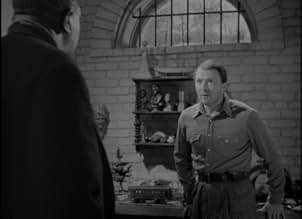
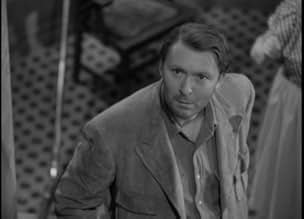
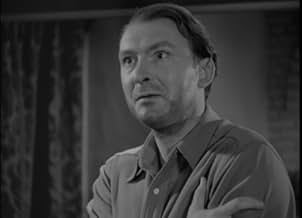
John Raden (Albert Dekker) is the film's hapless protagonist, an honest guy who unwillingly stumbles upon his family's dirty secret. Via a succession of ill-fated coincidences, implying the forces of Fate that would later pervade the film noir movement, John finds himself on trial for murder, thrust protestingly into an ad hoc mob trial that recalls Peter Lorre's judgement in 'M (1931).' Dekker is excellent in the dual- roles of John and Paul Raden, with the "bad" half always distinguishable, not just by his grizzled beard and raggedy clothing, but by the way he carries himself: slouched shoulders, arms held awkwardly, innocent and perplexed eyes upturned at the eccentricities of this unfamiliar society. Susan Hayward plays Millie, a minor femme fatale. She's an angel when you first see her, but the way she knowingly toys with Paul's naivete is quite repulsive, and her nastiness during the courtroom trial is similarly brutal. Notably, director Stuart Heisler would progress onto full-blown noir the following year with the Hammett adaptation 'The Glass Key (1942).'
Though one would stop short of calling this a film noir, there are certainly traces of the necessary elements. Most prominent is the theme of hidden family secrets, of a shameful past coming back to haunt wrongdoers, as in 'The Strange Love of Martha Ivers (1946).' The corruptive influence of power is also referenced – as in the latter film, the primary sinner of 'Among the Living' (Raden, Sr., who is dead by the film's beginning) resides in a town that bears his name. The viewer can draw two conclusions: either that only through committing sin can a man attain power, or that from power itself is borne the desire to perpetrate crime, for he now has the means to conceal his misconduct. The latter is certainly true for the otherwise-respectable Dr. Saunders (Harry Carey), who – just once – compromised his professional integrity, and, twenty-five years later, finds that this one transgression has blackened his soul and destroyed his future.
John Raden (Albert Dekker) is the film's hapless protagonist, an honest guy who unwillingly stumbles upon his family's dirty secret. Via a succession of ill-fated coincidences, implying the forces of Fate that would later pervade the film noir movement, John finds himself on trial for murder, thrust protestingly into an ad hoc mob trial that recalls Peter Lorre's judgement in 'M (1931).' Dekker is excellent in the dual- roles of John and Paul Raden, with the "bad" half always distinguishable, not just by his grizzled beard and raggedy clothing, but by the way he carries himself: slouched shoulders, arms held awkwardly, innocent and perplexed eyes upturned at the eccentricities of this unfamiliar society. Susan Hayward plays Millie, a minor femme fatale. She's an angel when you first see her, but the way she knowingly toys with Paul's naivete is quite repulsive, and her nastiness during the courtroom trial is similarly brutal. Notably, director Stuart Heisler would progress onto full-blown noir the following year with the Hammett adaptation 'The Glass Key (1942).'
One of a Kind
Deranged twin brother escapes home confinement after father's death and tries to fit into a new life.
Wacky, highly original horror story. When the luscious Hayward (Millie) makes her entrance at the stairs' top, it's like an explosion of saucy sex appeal. There's enough lively personality there to light up the room. In fact, her gold-digging coquette manages to steal the film. And that's against tough competition from Dekker as the wide-eyed, strangely sympathetic mad strangler. Together, they're easily one of filmdom's genuine odd couples.
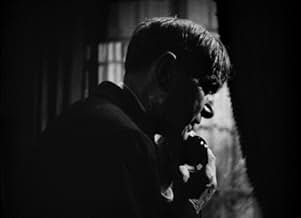
Frankly, the story at times makes little sense. But that's okay because it's the characters and Gothic atmosphere that distinguish the film. It's also one of the few films where the camera pans through a hellish mansion, only to focus finally on a guy in a straitjacket (Dekker as the mad Paul), of all things.
Catch that opening scene with the unemployed mill workers taunting the funeral rites for the mill owner. In fact, there's an odd class undercurrent to the screenplay as a whole. Considering that blacklisted leftist Lester Cole did both the story and the script, that's not surprising.
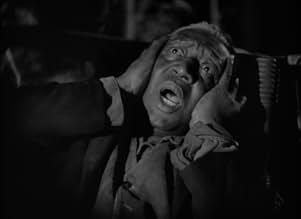
Moreover, the screenplay can be viewed as something of an allegory with mad brother Paul as the brutalized innocent, who would like to side with the workers (he prefers living with them), but has been too damaged by his mill owner father to be able to. In that sense, he suggests Dad's repressed (straitjacketed) humane side hidden away from public view, but finally released by Dad's death into a world his now childlike nature can't comprehend. More tragically, he can only relieve a woman's scream of pain by strangling her, the memory of his abused mother and his attempt to help still fresh in his mind. Dekker's affecting performance with its unexpected degree of pathos underscores, I believe, something of this way of looking at things.
Director Heisler certainly has a flair for exciting crowd scenes. That clip joint with its frenetic swing dancers is a marvel of editing and atmosphere, a really memorable scene. And those teeming street crowds add both color and more atmosphere. The movie's commanding visuals owe a lot to the underrated Heisler. Too bad, however, the talented Frances Farmer is largely wasted in a brief, conventional role.
Anyway, in my little book, the movie's a one-of-a-kind that rises above the ordinary B- feature or horror film, and should not be missed.
Wacky, highly original horror story. When the luscious Hayward (Millie) makes her entrance at the stairs' top, it's like an explosion of saucy sex appeal. There's enough lively personality there to light up the room. In fact, her gold-digging coquette manages to steal the film. And that's against tough competition from Dekker as the wide-eyed, strangely sympathetic mad strangler. Together, they're easily one of filmdom's genuine odd couples.
Frankly, the story at times makes little sense. But that's okay because it's the characters and Gothic atmosphere that distinguish the film. It's also one of the few films where the camera pans through a hellish mansion, only to focus finally on a guy in a straitjacket (Dekker as the mad Paul), of all things.
Catch that opening scene with the unemployed mill workers taunting the funeral rites for the mill owner. In fact, there's an odd class undercurrent to the screenplay as a whole. Considering that blacklisted leftist Lester Cole did both the story and the script, that's not surprising.
Moreover, the screenplay can be viewed as something of an allegory with mad brother Paul as the brutalized innocent, who would like to side with the workers (he prefers living with them), but has been too damaged by his mill owner father to be able to. In that sense, he suggests Dad's repressed (straitjacketed) humane side hidden away from public view, but finally released by Dad's death into a world his now childlike nature can't comprehend. More tragically, he can only relieve a woman's scream of pain by strangling her, the memory of his abused mother and his attempt to help still fresh in his mind. Dekker's affecting performance with its unexpected degree of pathos underscores, I believe, something of this way of looking at things.
Director Heisler certainly has a flair for exciting crowd scenes. That clip joint with its frenetic swing dancers is a marvel of editing and atmosphere, a really memorable scene. And those teeming street crowds add both color and more atmosphere. The movie's commanding visuals owe a lot to the underrated Heisler. Too bad, however, the talented Frances Farmer is largely wasted in a brief, conventional role.
Anyway, in my little book, the movie's a one-of-a-kind that rises above the ordinary B- feature or horror film, and should not be missed.
Fairly primitive doppelganger thriller, interesting for early Susan Hayward
Just what sort of movie is Among the Living? It's not that easy to determine. This short (67 minute) 1941 offering is part thirties gothic and part early noir; in any case it's fairly primitive but it has its moments. Albert Dekker (his screen debut) plays twin brothers, one of whom, presumed dead for a quarter-century, is an infantile psychotic. He's been sequestered away in the decrepit family pile all these years but manages to escape, taking up residence in a rooming house owned by the young Susan Hayward's mother. When it looks like the gibbering idiot has money to burn, Hayward sets her hat for him. The most interesting facet of the film is watching Susan Hayward play her speciality, an on-screen hellion, particularly since Frances Farmer, gets wasted as the proper and dutiful wife of the "good" Albert Dekker. Much mayhem ensues, revolving around the confusion between the brothers (the existence of one of whom, remember, has been a deep dark secret). Toward the end, the film develops an ugly energy as the townspeople coalesce into a lynch mob, but, beware: this is not Fritz Lang's Fury. By modern standards, Among the Living has become a curio.
A Gothic little tale set in modern times...
... 1941 that is. It boasts fine photography and a great score. It's part horror tale, part noir. John Raden returns for the funeral of Maxim Raden, his father and owner of all of the mills around town. It's obvious from the remarks of the average citizens outside the cemetery gates that their collective sentiment is good riddance.
Dr. Ben Saunders (Harry Carey) then reveals to John a terrible secret he's been keeping - that 25 years ago he forged a death certificate for John's identical twin brother Paul. Paul had become mentally disturbed and Maxim moved into a hotel in town and kept the insane Paul locked up in a room at Radin mansion with kindly and loyal servant Pompey as his keeper. Paul became disturbed probably due to a head injury received when his father threw him across the room when Paul came to his mother's rescue during one of the beatings Maxim was giving her. What did Dr. Saunders get in return? Maxim Radin endowed his clinic, but with Paul recently turning more violent, both Saunders' psychological and actual burden have become heavier and heavier. John, sent away to school before any of this happened, had no knowledge of any of this up until now.
Well, Paul kills Pompey, escapes his room, and finds some money at his father's grave. (It was unclear to me what money was doing there.) With this money and his misleading mostly gentle child-like demeanor he manages to rent a room in a rooming house and attract the attentions of the landlady's daughter (Susan Hayward as Millie Pickens). Millie teaches Paul to blend in - helps him find new clothes, gets him to shave - and now the town has an unpredictable homicidal maniac in its midst who only acts homicidal when the urge to kill strikes him but doesn't look the least bit out of place. Meanwhile, John Raden cannot convince Saunders to call the police because he doesn't want to lose the clinic he's worked so hard for. Of course the fact that the townspeople think Paul is dead and Paul and John are identical twins will eventually figure into this plot, but I'll let you watch and see how.
Albert Dekker does a great job of playing the dual role of sophisticated good guy John and child-like insane Paul, but it is Susan Hayward as Millie who steals the show. You can never quite tell if she really likes Paul because he's different - not pawing her all of the time - or if she's just after the gifts he can give her after she sees the wad of cash he keeps in his pockets. It's a great early role for her. Harry Carey gets to do more than he usually does late in his career, which were roles that usually entailed playing the wise old good guy. Here he is quite gray and not until the end are you sure just which side of his character will win. For those of you looking for a glimpse of Frances Farmer at work, that's all you'll get - a glimpse. She is barely noticeable as the wife of John Raden.
As for the atmosphere - it's perfect with thunderstorms, poorly lit rooms, cemeteries at night, and Paul's victims all found left with a terrified expression and their hands over their ears. Highly recommended for fans of old style horror. It's a shame this one isn't better known.
Dr. Ben Saunders (Harry Carey) then reveals to John a terrible secret he's been keeping - that 25 years ago he forged a death certificate for John's identical twin brother Paul. Paul had become mentally disturbed and Maxim moved into a hotel in town and kept the insane Paul locked up in a room at Radin mansion with kindly and loyal servant Pompey as his keeper. Paul became disturbed probably due to a head injury received when his father threw him across the room when Paul came to his mother's rescue during one of the beatings Maxim was giving her. What did Dr. Saunders get in return? Maxim Radin endowed his clinic, but with Paul recently turning more violent, both Saunders' psychological and actual burden have become heavier and heavier. John, sent away to school before any of this happened, had no knowledge of any of this up until now.
Well, Paul kills Pompey, escapes his room, and finds some money at his father's grave. (It was unclear to me what money was doing there.) With this money and his misleading mostly gentle child-like demeanor he manages to rent a room in a rooming house and attract the attentions of the landlady's daughter (Susan Hayward as Millie Pickens). Millie teaches Paul to blend in - helps him find new clothes, gets him to shave - and now the town has an unpredictable homicidal maniac in its midst who only acts homicidal when the urge to kill strikes him but doesn't look the least bit out of place. Meanwhile, John Raden cannot convince Saunders to call the police because he doesn't want to lose the clinic he's worked so hard for. Of course the fact that the townspeople think Paul is dead and Paul and John are identical twins will eventually figure into this plot, but I'll let you watch and see how.
Albert Dekker does a great job of playing the dual role of sophisticated good guy John and child-like insane Paul, but it is Susan Hayward as Millie who steals the show. You can never quite tell if she really likes Paul because he's different - not pawing her all of the time - or if she's just after the gifts he can give her after she sees the wad of cash he keeps in his pockets. It's a great early role for her. Harry Carey gets to do more than he usually does late in his career, which were roles that usually entailed playing the wise old good guy. Here he is quite gray and not until the end are you sure just which side of his character will win. For those of you looking for a glimpse of Frances Farmer at work, that's all you'll get - a glimpse. She is barely noticeable as the wife of John Raden.
As for the atmosphere - it's perfect with thunderstorms, poorly lit rooms, cemeteries at night, and Paul's victims all found left with a terrified expression and their hands over their ears. Highly recommended for fans of old style horror. It's a shame this one isn't better known.


Did you know
- TriviaJane Allen's debut.
- Quotes
Mrs. Pickens: I had one of them Frenchmen living here last year. Honest to goodness every time you'd turn 'round, that Frenchman was grabbin' your hand and kissing until he'd like to pull the skin off.
- How long is Among the Living?Powered by Alexa
Details
- Runtime
- 1h 7m(67 min)
- Color
- Sound mix
- Aspect ratio
- 1.37 : 1
Contribute to this page
Suggest an edit or add missing content