

Hollywood director John L. Sullivan sets out to experience life as a homeless person in order to gain relevant life experience for his next movie.Hollywood director John L. Sullivan sets out to experience life as a homeless person in order to gain relevant life experience for his next movie.Hollywood director John L. Sullivan sets out to experience life as a homeless person in order to gain relevant life experience for his next movie.
- Awards
- 2 wins total
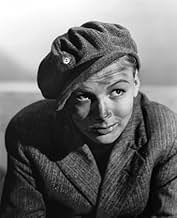
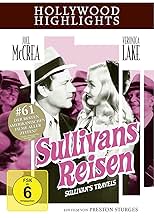
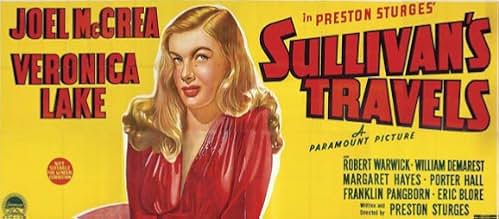


Charles R. Moore
- Colored Chef
- (as Charles Moore)


- Director
- Writer
- All cast & crew
- Production, box office & more at IMDbPro
7.930.3K
1
2
3
4
5
6
7
8
9
10
Featured reviews
The Importance of Comedy
In Hollywood, the spoiled director of humdrum movies, John Lloyd Sullivan (Joel McCrea), was born in silver spoon but is very successful with his superficial comedies. Out of the blue, he tells to his producer Mr. LeBrand (Robert Warwick) that he wants to make serious dramas, like "O Brother, Where Art Thou?" and he will live like a tramp on the streets to learn the sorrows of great part of the population. He wears cheap clothes and tries to blend with poor people but he always returns to Hollywood protected by the safety team hired by the studio.
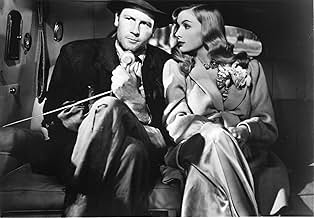
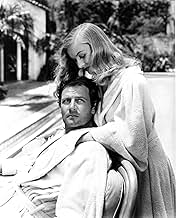
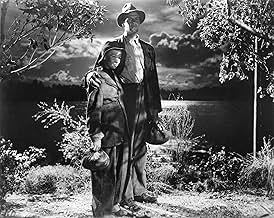
One day, he goes to a dinner with a coin and a blonde girl (Veronica Lake) offers bacon and eggs to him. Soon he learns that the girl is a failed actress that had never a chance in Hollywood and is returning home hitchhiking without any money. Sullivan decides to retribute her kindness giving a ride to her in his car but they are arrested by the police. When they are released, the girl decides to join Sullivan in his quest to learn about poverty. When Sullivan is satisfied, he is robbed and dumped unconscious in a train. He awakes in the countryside where there is an incident and he is arrested and sentenced to a labor camp, where he leans the importance of comedy in the miserable lives of destitute people.
"Sullivan's Travels" is a delightful movie by Preston Sturges with a satire of Hollywood lifestyle and the importance of comedy in the life of people, a relief for a couple of minutes for those that do not have other sort of entertainment. Joel McCrea is very funny in the role of a naive director trying to find how the poor people live. His chemistry with the gorgeous Veronika Lake is perfect and this was the first time that I noted that this lovely actress was only 1.51 m height. My vote is eight.
Title (Brazil): "Contrastes Humanos" ("Human Contrasts")
One day, he goes to a dinner with a coin and a blonde girl (Veronica Lake) offers bacon and eggs to him. Soon he learns that the girl is a failed actress that had never a chance in Hollywood and is returning home hitchhiking without any money. Sullivan decides to retribute her kindness giving a ride to her in his car but they are arrested by the police. When they are released, the girl decides to join Sullivan in his quest to learn about poverty. When Sullivan is satisfied, he is robbed and dumped unconscious in a train. He awakes in the countryside where there is an incident and he is arrested and sentenced to a labor camp, where he leans the importance of comedy in the miserable lives of destitute people.
"Sullivan's Travels" is a delightful movie by Preston Sturges with a satire of Hollywood lifestyle and the importance of comedy in the life of people, a relief for a couple of minutes for those that do not have other sort of entertainment. Joel McCrea is very funny in the role of a naive director trying to find how the poor people live. His chemistry with the gorgeous Veronika Lake is perfect and this was the first time that I noted that this lovely actress was only 1.51 m height. My vote is eight.
Title (Brazil): "Contrastes Humanos" ("Human Contrasts")
A celebration of the healing power of comedy
As a professional circus clown for twenty years,I think that Sullivan's Travels is the best, most lucid, explanation of what comedy is all about that has ever been made. Sure it's hokey, corny, contrived, and meandering. But so is all great comedy, from Shakespeare to Seinfeld! If you want your comedy to be tightly constructed, meaningful, unambiguous, and logical, then you do not want comedy at all -- you want some stuffy college professor's idea of What is Comedy for a term paper.
The glorious truth is that you cannot domesticate great comedy. It occurs on no regular basis, from no reliable source, and is accountable to no one for what it says and does. Preston Sturges wanted to make that point in Sullivans Travels and he does so exceedingly well with everything from slapstick frolics in the land cruiser to fleas in the bed to hectoring soliloquies about poverty from the butler.
Ten years before Chaplin tried to explain the same thing in his movie Limelight, Sturges tells a tale meant to both hearten and cozen us. It heartens us to know that a cynical, moneygrubbing place like Hollywood will continue to spin out comedies, because they make money. And it cozens us into thinking there is something magical about comedians. Anyone who has ever actually known or been married to a professional funnyperson knows they are by turns grumpy, lazy, tempermental, stubborn, and always insecure. Not the life of the party. But so what? They're clowns, god bless 'em, and that's all that counts.
You'll never understand the craft of humor if you don't watch, and love, Preston Sturges Sullivan's Travels!
The glorious truth is that you cannot domesticate great comedy. It occurs on no regular basis, from no reliable source, and is accountable to no one for what it says and does. Preston Sturges wanted to make that point in Sullivans Travels and he does so exceedingly well with everything from slapstick frolics in the land cruiser to fleas in the bed to hectoring soliloquies about poverty from the butler.
Ten years before Chaplin tried to explain the same thing in his movie Limelight, Sturges tells a tale meant to both hearten and cozen us. It heartens us to know that a cynical, moneygrubbing place like Hollywood will continue to spin out comedies, because they make money. And it cozens us into thinking there is something magical about comedians. Anyone who has ever actually known or been married to a professional funnyperson knows they are by turns grumpy, lazy, tempermental, stubborn, and always insecure. Not the life of the party. But so what? They're clowns, god bless 'em, and that's all that counts.
You'll never understand the craft of humor if you don't watch, and love, Preston Sturges Sullivan's Travels!
A Truly Great Film Not to be Missed
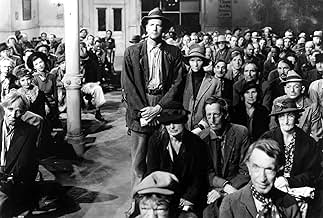
Having read some of the negative views on this film, I think it's necessary to take the long view. Anybody can have an opinion, but when people like Steven Spielberg, George Lucas, Sydney Pollack, Leonard Maltin and Roger Ebert place this film in their best 20 list, there must be a reason. First, Preston Sturgis, a genius, they even named a building after him on the Paramount Studio Lot. Seven big hit films in seven years, plus he had a giant reputation as a Broadway playwright. Although some may disagree, I think this film was his masterpiece. The scene in the poor black church, where the convicts go in shackles is so brilliant, it ranks with some of the best filmmaking on the planet. I've heard people say it was stereotypical, yet unfortunately, that's the way it was then. The juxtaposition of the convicts, who had lost their civil rights, and the poor African Americans who never had civil rights, mated to the song, "Let My People Go", puts this film heads and shoulders against anything anybody was doing in 1942.
Joel McCrea gives the performance of his career. I fell totally in love with Veronica Lake; who wouldn't? The first scene lasts five minutes without a cut. To the MTV generation this is mortal sin, but Sturgis, having come from the theater, lets his actors, act. When I was a film student, I learned more from this film, than any other of which I can think at the moment. It is a classic's classic. If you choose not to watch it, then you're missing something that formed the directing habits of the best directors of our era. In other words, you are the loser.
10/10
Joel McCrea gives the performance of his career. I fell totally in love with Veronica Lake; who wouldn't? The first scene lasts five minutes without a cut. To the MTV generation this is mortal sin, but Sturgis, having come from the theater, lets his actors, act. When I was a film student, I learned more from this film, than any other of which I can think at the moment. It is a classic's classic. If you choose not to watch it, then you're missing something that formed the directing habits of the best directors of our era. In other words, you are the loser.
10/10
Outstanding Film
"I want this to be a picture of dignity... a true canvas of the suffering of humanity... but with a little sex in it!" Sullivan's Travels is a delightful, intelligent, satirical witty comedy mocking Hollywood. It is about a big time Hollywood director (played by Joel McCrea) who is absolutely sick and tired of making the hum-drum, silly comedies: "Hey-Hey in the Hay" and "Ants in Your Pants of 1938". Instead, he wants to make something different...an important, relevant, socially relevant drama about poverty. When he realizes he knows nothing about THAT sort of life, he sets out with 10 cents in his pocket and finds out what it's really like. Along the way, he meets Veronica Lake - who plays "The Girl". She is a discouraged aspiring actress getting no where and on the verge of leaving town. Despite her own bad luck, she takes pity on the hobo Sullivan and buys him breakfast. When she eventually finds out his true identity, she insists on accompanying him on the road due to his inexperience at such a lifestyle. Lake does a great job of the dry co-star. She's not the greatest actress but she does justice to the part and offers a bit of eye candy for the viewers in contrast. She is a joy to watch on screen, that's for sure! I want to see more of her movies.
Sullivan's Travels is a very funny film with the appeal of Lake, witty comedy and a true underlying message. It is all this whilst still perfectly "taking the mickey" out of Hollywood's (often lame) attempts at making a movie with a message. A movie which can be watched by all - essential for those lovers of classic cinema.
Sullivan's Travels is a very funny film with the appeal of Lake, witty comedy and a true underlying message. It is all this whilst still perfectly "taking the mickey" out of Hollywood's (often lame) attempts at making a movie with a message. A movie which can be watched by all - essential for those lovers of classic cinema.
Reckless, tightrope masterpiece.
Sturges' most daringly double-edged film, laced with bitter ironies. It is also arguably the most audacious film in Hollywood's (mainstream) history, audacious because it takes the kinds of risks that can so easily fall flat on their face, and right until the final image, as Sturges becomes increasingly ambitious and multi-layered, you wonder how long he can keep it up without getting ridiculous. It never does, but the film is so full of contradictions, tensions, suppressions, clanging lurches in tone - 'Travels' is ostensibly a comedy, and one of Hollywood's best, but the last twenty minutes are truly painful to watch, harrowing and not at all funny.
The overriding source of tension, of course, is the film itself, the plot, and the emotions that are supposed to be elicited. It is very difficult, and frequently impossible to gauge the tone of any one scene. Sometimes this is straightforward, as when information is deliberately withheld from the audience, it is asked to make a judgement, and then shown to be wrong, as in the scenes where the studio moguls claim a background of deprivation (which is historically plausible). This kind of comedy is familiar enough.
But what about the later montage of Sullivan and the Girl experiencing the 'reality' of poverty - are these scenes supposed to be genuine representation of poverty? Are they part of a wider satire on pious films like 'Grapes of Wrath', which dubiously aestheticise poverty - there are a lot of Expressionistic flourishes in this sequence? Are they a kind of abstract purgatory through which Sullivan finds spiritual understanding?
There is a big difference between the representation of poverty in this sequence and the one where Sullivan is attacked and sent to prison. But is one more 'authentic' than the other - the second one bravely rejects the view of 'noble' poverty, shows how it dehumanises people, turns them instinctual and brutal; but it also provides a neat moral, which suggests that if you do somebody wrong, you will be (horribly) punished for it. This realism, therefore, is as contrived as the first. Is this Sturges' point, that the good intentions of realism are always tainted by ideological assumptions, patronising good-will, or motives of elevation. This sense of artifice, of a film comprised of varying self-reflexive modes rather than a plausible narrative, runs through 'Travels', with characters talking about the film they're in as a plot - in direst danger, Sullivan acknowledges the need for a helluva twist which duly arrives, filmed in silent slapstick with barely concealed Sturges contempt (and did his friends seem terribly put out by his death?).
This would seem to uphold 'Travels'' ostensible theme, its celebration of comedy as a sugar with which to sweeten the harshness of reality. This is a very cynical view of comedy, and a highly manipulative, conservative one - distract an unhappy populace from the injustice of their lives. The best comedies - from 'Sherlock Jr' and 'Modern Times' to 'Playtime' and 'The Discreet Charm of the Bourgeoisie' have always been about real life, encouraging their viewers to think harder about the society they live in, much more effectively than so-called naturalism.
'Travels' is no exception. It might be a celebration of comedy, but this is comedy a million miles from 'Ants in your Pants'. What other 40s film still manages to show the brutality of poverty, of the prison system, of race relations, the fate of young women in sexually voracious Hollywood (the Girl's ease with her body in the swimming pool scene speaks volumes), however we choose to read them? When Sullivan's determination at the end to continue making populist comedies is endorsed by the ringing laughter of the world's meek and suffering, the disjunction is grotesque. This is a man, on an airplane, completely removed from reality, surrounded by wealthy toadies. Those happy laughs could so easily be contemptuous guffaws, because what Sullivan wants to do, and Sturges hasn't, is hide the inequalities of capitalism, the system on which Hollywood thrives, and the flaws in which they would be only too happy to cover up with inanity. But to even suggest this is to fall into the 'Capra' trap mocked at the beginning.
This difficulty is what makes 'Travels' such a stunningly modern film - its shifts from sophisticated verbal wit to elaborate slapstick to blatant Carry On-like innuendo (the matronly sister dusting the bedpost after seeing a sweating, shirtless Sullivan work) to tragedy to hallucination and dream to satire foreshadows Melville and the New Wave, while the privileged rich man who cannot escape Hollywood would transmute into the guests who can't leave the house, or can't get dinner in later Bunuel films; or the film that begins with an end. The opening sequence takes off 'Citizen Kane'. The deadpan genderplay is quietly gobsmacking, and Veronica Lake as a (gorgeous) tramp would be alluded to by Jeanne Moreau in 'Jules et JIm'. But the joys are all Sturges', as he democratises comedy (see again that swimming pool sequence); I love in particular those glorious supporting actors: my favourite being the immortal Eric Blore and Robert Greig as Sullivan's servants.
The overriding source of tension, of course, is the film itself, the plot, and the emotions that are supposed to be elicited. It is very difficult, and frequently impossible to gauge the tone of any one scene. Sometimes this is straightforward, as when information is deliberately withheld from the audience, it is asked to make a judgement, and then shown to be wrong, as in the scenes where the studio moguls claim a background of deprivation (which is historically plausible). This kind of comedy is familiar enough.
But what about the later montage of Sullivan and the Girl experiencing the 'reality' of poverty - are these scenes supposed to be genuine representation of poverty? Are they part of a wider satire on pious films like 'Grapes of Wrath', which dubiously aestheticise poverty - there are a lot of Expressionistic flourishes in this sequence? Are they a kind of abstract purgatory through which Sullivan finds spiritual understanding?
There is a big difference between the representation of poverty in this sequence and the one where Sullivan is attacked and sent to prison. But is one more 'authentic' than the other - the second one bravely rejects the view of 'noble' poverty, shows how it dehumanises people, turns them instinctual and brutal; but it also provides a neat moral, which suggests that if you do somebody wrong, you will be (horribly) punished for it. This realism, therefore, is as contrived as the first. Is this Sturges' point, that the good intentions of realism are always tainted by ideological assumptions, patronising good-will, or motives of elevation. This sense of artifice, of a film comprised of varying self-reflexive modes rather than a plausible narrative, runs through 'Travels', with characters talking about the film they're in as a plot - in direst danger, Sullivan acknowledges the need for a helluva twist which duly arrives, filmed in silent slapstick with barely concealed Sturges contempt (and did his friends seem terribly put out by his death?).
This would seem to uphold 'Travels'' ostensible theme, its celebration of comedy as a sugar with which to sweeten the harshness of reality. This is a very cynical view of comedy, and a highly manipulative, conservative one - distract an unhappy populace from the injustice of their lives. The best comedies - from 'Sherlock Jr' and 'Modern Times' to 'Playtime' and 'The Discreet Charm of the Bourgeoisie' have always been about real life, encouraging their viewers to think harder about the society they live in, much more effectively than so-called naturalism.
'Travels' is no exception. It might be a celebration of comedy, but this is comedy a million miles from 'Ants in your Pants'. What other 40s film still manages to show the brutality of poverty, of the prison system, of race relations, the fate of young women in sexually voracious Hollywood (the Girl's ease with her body in the swimming pool scene speaks volumes), however we choose to read them? When Sullivan's determination at the end to continue making populist comedies is endorsed by the ringing laughter of the world's meek and suffering, the disjunction is grotesque. This is a man, on an airplane, completely removed from reality, surrounded by wealthy toadies. Those happy laughs could so easily be contemptuous guffaws, because what Sullivan wants to do, and Sturges hasn't, is hide the inequalities of capitalism, the system on which Hollywood thrives, and the flaws in which they would be only too happy to cover up with inanity. But to even suggest this is to fall into the 'Capra' trap mocked at the beginning.
This difficulty is what makes 'Travels' such a stunningly modern film - its shifts from sophisticated verbal wit to elaborate slapstick to blatant Carry On-like innuendo (the matronly sister dusting the bedpost after seeing a sweating, shirtless Sullivan work) to tragedy to hallucination and dream to satire foreshadows Melville and the New Wave, while the privileged rich man who cannot escape Hollywood would transmute into the guests who can't leave the house, or can't get dinner in later Bunuel films; or the film that begins with an end. The opening sequence takes off 'Citizen Kane'. The deadpan genderplay is quietly gobsmacking, and Veronica Lake as a (gorgeous) tramp would be alluded to by Jeanne Moreau in 'Jules et JIm'. But the joys are all Sturges', as he democratises comedy (see again that swimming pool sequence); I love in particular those glorious supporting actors: my favourite being the immortal Eric Blore and Robert Greig as Sullivan's servants.


Did you know
- TriviaCinematographer John Seitz admired Preston Sturges' unconventional approach to his work. The opening scene comprised ten pages of dialogue to cover about four and a half minutes of screen time. It was scheduled for two complete days of shooting. On the morning of the first day, Seitz found Sturges inspecting the set with a viewfinder, looking for where he could cut the scene and change camera set-ups. Seitz dared him to do it all in one take. Never one to refuse a dare, Sturges took him up on it, although the nervous Seitz had never attempted to complete a two-day work schedule in one day. With the endorsement of McCrea and the rest of the actors, Sturges pressed on, determined to set a record. The first take was fine, but the camera wobbled a little in the tracking shot following the men from screening room to office, so they tried again. They did two or three takes at the most and that was it - two full days work by 11 a.m. on the first day, a feat that had the entire studio buzzing.
- GoofsWhen the supposedly-unconscious Sullivan is being pulled into an empty boxcar by the bum who hit him, Joel McCrea is visibly pushing himself along with his foot, apparently because the other man is not strong enough to drag him.
- Quotes
[last lines]
John L. Sullivan: There's a lot to be said for making people laugh. Did you know that that's all some people have? It isn't much, but it's better than nothing in this cockeyed caravan.
- Crazy creditsThe Paramount logo appears as a seal on a package.
The package is opened to reveal a book with the film title on it and the opening credits appear on pages in the book.
- ConnectionsFeatured in The Cinematographer (1951)
- SoundtracksSpring Song
(1844) (uncredited)
Written by Felix Mendelssohn
Played as part of the score when Sullivan starts his experiment
Reprised when he starts a second time
Details
Box office
- Budget
- $689,665 (estimated)
- Gross worldwide
- $10,390
- Runtime
- 1h 30m(90 min)
- Color
- Aspect ratio
- 1.37 : 1
Contribute to this page
Suggest an edit or add missing content