

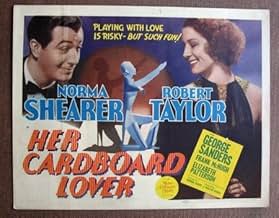
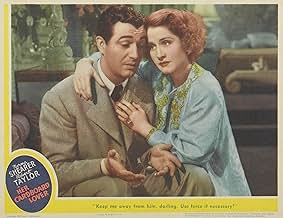
A rich woman pays a debt-ridden songwriter to pose as her boyfriend to deter an ex. The catch? Her fake boyfriend genuinely falls for her.A rich woman pays a debt-ridden songwriter to pose as her boyfriend to deter an ex. The catch? Her fake boyfriend genuinely falls for her.A rich woman pays a debt-ridden songwriter to pose as her boyfriend to deter an ex. The catch? Her fake boyfriend genuinely falls for her.


King Baggot
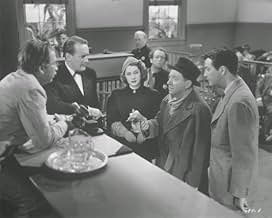
- Police Officer in Courtroom
- (uncredited)

John Berkes
- Waiter
- (uncredited)

Edward Biby
- Casino Patron
- (uncredited)

Ben Carter
- Elevator Operator
- (uncredited)

Hobart Cavanaugh
- Arresting Plainclothesman
- (uncredited)

Heinie Conklin
- Drunk in Courtroom
- (uncredited)

Richard Crane
- Casino Page
- (uncredited)
Russell Custer
- Courtroom Spectator
- (uncredited)

Helen Dickson
- Casino Patron
- (uncredited)

Frank Elliott
- Croupier
- (uncredited)

Rex Evans
- Dogar - Hotel Desk Clerk
- (uncredited)

Franklyn Farnum
- Casino Patron
- (uncredited)
5.9856
1
2
3
4
5
6
7
8
9
10
Featured reviews
She'll do anything to ward off the object of her affections
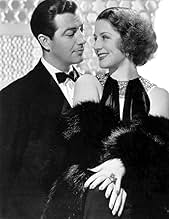
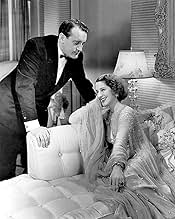
Norma Shearer, in her last film, is a wealthy woman desperate to stay away from her on-again/off-again boyfriend (George Sanders) in "Her Cardboard Lover.
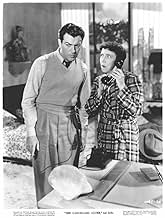
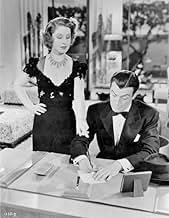
To do this, she has Robert Taylor, a songwriter who's crazy about her, work off his gambling debt by pretending to be her boyfriend.
A nice dramatic role would have been better for Shearer's final performance. But like Garbo, she went out with a comedy, and one that bombed at that, also like Garbo.
One wonders what MGM was thinking. The dilemma seems to have been finding vehicles for these older stars as the world - and they - were changing.
The film was made in 1942, and though it is a delightful comedy, it really has the look and feel of the '30s to it. There are some wonderful scenes - one where Taylor threatens to jump over a balcony and a dandy fight scene at the end. But in spots, it seems a little tired.
Norma Shearer wears gorgeous clothes and is over-dramatic, which is what the part called for. Robert Taylor does a fine job, and George Sanders was wasted.
One of the comments said that Shearer was too old for the role - yet the actors seem properly matched and this writer, anyway, had no idea of Shearer's age.
In the end, though, it wasn't a fitting way for her to go out. The role hearkens back to a much earlier time. Perhaps, in the end, that's what she wanted.
To do this, she has Robert Taylor, a songwriter who's crazy about her, work off his gambling debt by pretending to be her boyfriend.
A nice dramatic role would have been better for Shearer's final performance. But like Garbo, she went out with a comedy, and one that bombed at that, also like Garbo.
One wonders what MGM was thinking. The dilemma seems to have been finding vehicles for these older stars as the world - and they - were changing.
The film was made in 1942, and though it is a delightful comedy, it really has the look and feel of the '30s to it. There are some wonderful scenes - one where Taylor threatens to jump over a balcony and a dandy fight scene at the end. But in spots, it seems a little tired.
Norma Shearer wears gorgeous clothes and is over-dramatic, which is what the part called for. Robert Taylor does a fine job, and George Sanders was wasted.
One of the comments said that Shearer was too old for the role - yet the actors seem properly matched and this writer, anyway, had no idea of Shearer's age.
In the end, though, it wasn't a fitting way for her to go out. The role hearkens back to a much earlier time. Perhaps, in the end, that's what she wanted.
Amazing spontaneous talent!
Someone posted the comment that this film is "forgettable" and "triffling." But I saw Norma Shearer and Robert Taylor playing off each other with such spontaneity that I could only admire their talents all the more. Also, compare their rare comedic talents together in this film, along with their deep and tragic mutual acting in "Escape." Such a pair of talent-generating stars!
Norma Shearer
Firstly, I cannot believe that Norma Shearer is 40 in this film. She looks absolutely incredible and doesn't look a day over 30! Besides being beautiful, Norma Shearer was fantastic in this film! She was brilliantly funny and sophisticated. I once read that Norma Shearer couldn't act (I don't recall who this person is who claimed that), but this person is wrong. Norma can act, and it was definitely proved in this film. Luck was on Norma's side because she ended her acting career with this amusing film.
And Robert Taylor -- what a gag! I love his acting and he's just so adorable! He was fabulous in this film! I won't give anything away, but the definite high point in the film (as well as Robert Taylor's funniest scene) happens in the middle of the movie and deals with a 'sleepy' Taylor...
With such a little -- but talented cast -- this movie is fantastically funny and has hilarious moments and wonderful acting. I cannot rave enough about Norma & Taylor -- just see the film yourself!!
And Robert Taylor -- what a gag! I love his acting and he's just so adorable! He was fabulous in this film! I won't give anything away, but the definite high point in the film (as well as Robert Taylor's funniest scene) happens in the middle of the movie and deals with a 'sleepy' Taylor...
With such a little -- but talented cast -- this movie is fantastically funny and has hilarious moments and wonderful acting. I cannot rave enough about Norma & Taylor -- just see the film yourself!!
A Mild Farewell
This innocuous comedy that marked the farewell performance of Norma Shearer on the big screen has quite a history to it. It was a French play by Jacques Deval, adapted for the stage by P.G. Wodehouse among others. It ran for 152 performances in 1927 on Broadway and starred the legendary Jeanne Eagels with Leslie Howard.
It then went to the silent screen the following year with Marion Davies and Nils Asther in the leads and scored a modicum of success there. But the most bizarre adaption was yet to come. In 1932 the story was reworked for Buster Keaton and Jimmy Durante in the The Passionate Plumber. Irene Purcell is the female lead. Which brings us to the last and least version of this story.
I've a theory that Norma Shearer chose this vehicle to show Marion Davies that she could do one of her roles better. What other explanation could there be for turning down Mrs. Miniver as her farewell picture for this. And would you ever believe that Robert Taylor and Buster Keaton would play the same part on screen?
Shearer and Davies were a pair of feuding stars at MGM while Davies was there. Shearer was married to the boss, Irving Thalberg and Davies had her patron William Randolph Hearst who bought his way on to the lot. It's now conceded that Davies had a real flair for comedy, but that Hearst just could only see her as the heroine of many a drama. Shearer was a great dramatic actress who never quite scored in comedy. I'm betting for her final film she was going to show the retired Davies that she could do it better.
Well she didn't. In fact if any of P.G. Wodehouse's wit survived in this film, I must have dozed off. What emerges is a pleasant innocuous comedy which would have been long forgotten had it not been Norma Shearer's last film. When we first meet Shearer she's trying to fend off the advances of an amorous Taylor who has fallen in love at first sight. But later on she thinks he might be useful in fending off George Sanders's advances. She's trying real hard to dump the cad, but he's one charming rogue. So Norma hires Bob as Her Cardboard Lover to pretend he's the new man in her life. I think you can guess where this is going.
Shearer did not get quite the sendoff from the big screen that she thought she would have gotten, surely not anything like Mrs. Miniver would have been. For Taylor, he's pleasant enough, but if you want to see him and Shearer in much better form look at the 1940 film Escape.
It then went to the silent screen the following year with Marion Davies and Nils Asther in the leads and scored a modicum of success there. But the most bizarre adaption was yet to come. In 1932 the story was reworked for Buster Keaton and Jimmy Durante in the The Passionate Plumber. Irene Purcell is the female lead. Which brings us to the last and least version of this story.
I've a theory that Norma Shearer chose this vehicle to show Marion Davies that she could do one of her roles better. What other explanation could there be for turning down Mrs. Miniver as her farewell picture for this. And would you ever believe that Robert Taylor and Buster Keaton would play the same part on screen?
Shearer and Davies were a pair of feuding stars at MGM while Davies was there. Shearer was married to the boss, Irving Thalberg and Davies had her patron William Randolph Hearst who bought his way on to the lot. It's now conceded that Davies had a real flair for comedy, but that Hearst just could only see her as the heroine of many a drama. Shearer was a great dramatic actress who never quite scored in comedy. I'm betting for her final film she was going to show the retired Davies that she could do it better.
Well she didn't. In fact if any of P.G. Wodehouse's wit survived in this film, I must have dozed off. What emerges is a pleasant innocuous comedy which would have been long forgotten had it not been Norma Shearer's last film. When we first meet Shearer she's trying to fend off the advances of an amorous Taylor who has fallen in love at first sight. But later on she thinks he might be useful in fending off George Sanders's advances. She's trying real hard to dump the cad, but he's one charming rogue. So Norma hires Bob as Her Cardboard Lover to pretend he's the new man in her life. I think you can guess where this is going.
Shearer did not get quite the sendoff from the big screen that she thought she would have gotten, surely not anything like Mrs. Miniver would have been. For Taylor, he's pleasant enough, but if you want to see him and Shearer in much better form look at the 1940 film Escape.
6jhkp
Cukor directs Shearer and Taylor
As others have said, this was Norma Shearer's last film. I have no idea if she intended it to be, at the time, but it was, and she retired. Norma was, I think, 39 in this movie.
Shearer didn't appear in many comedies. The Women (1939), also directed by George Cukor, was fantastic, and a big hit. She was the lead, but her part was more serious, and she wasn't required to do the comedic heavy lifting (that was left mostly to co-star Rosalind Russell and the supporting cast).
I guess what I'm trying to say is that Norma didn't particularly have the light touch necessary for this type of sophisticated comedy. It's the sort of thing Claudette Colbert could have done in her sleep - and she would have made it seem better than it actually was.
It's a trifle about a woman hiring a good-looking man (Robert Taylor) as a secretary - but really it's to give the impression of being her lover, in order to make her boyfriend (George Sanders) jealous. Taylor's character already has a crush on her when he's hired.
Shearer is good enough, but the role seems to expose not only some of her acting weaknesses but also some of the qualities that made her a little hard to take as a personality. She was always able to rise to the occasion in difficult material - having triumphed in Romeo And Juliet (1936) (another occasion where she was directed by Cukor), and Strange Interlude (1932), as Eugene O'Neill's complex heroine, Nina Leeds. But as a film personality required to just "play herself" in this piece of fluff, she tends to come off as both strained, and, at times, strange.
Robert Taylor wasn't known for his comedic abilities, either, but the times he was cast in comedies he actually did very well. He's funny, here - but there's not a lot of chemistry between him Miss Shearer. And unfortunately he was almost a decade younger- and looks it. (George Sanders was also younger than Norma by a few years.)
Shearer and Taylor had been paired previously in the drama, Escape. They weren't a totally effective screen couple, but then Taylor seemed do do better opposite actresses who could display more vulnerability - such as Margaret Sullavan, Katharine Hepburn, and maybe especially, Vivien Leigh. (Strangely enough, Shearer's final acting role was in a 1951 radio adaptation of Waterloo Bridge - Taylor's one film with Leigh.)
Finally, director George Cukor is simply off his game, in this one. It didn't happen very often, but it was obvious when it did. Not that the script is up to the level of The Philadelphia Story, Holiday, or anything remotely that good. The story is really extremely light and a little dumb, and probably required some very expert, elegant, comedy stars to make you forget that fact. Which Shearer, Taylor, and Sanders were not, unfortunately.
Bosley Crowther of the New York Times put it on his 10 Worst list for the year, and it was a box office bomb. Norma Shearer turned down Mrs. Miniver to make it - paving the way for Greer Garson to take her place as First Lady of MGM.
Shearer didn't appear in many comedies. The Women (1939), also directed by George Cukor, was fantastic, and a big hit. She was the lead, but her part was more serious, and she wasn't required to do the comedic heavy lifting (that was left mostly to co-star Rosalind Russell and the supporting cast).
I guess what I'm trying to say is that Norma didn't particularly have the light touch necessary for this type of sophisticated comedy. It's the sort of thing Claudette Colbert could have done in her sleep - and she would have made it seem better than it actually was.
It's a trifle about a woman hiring a good-looking man (Robert Taylor) as a secretary - but really it's to give the impression of being her lover, in order to make her boyfriend (George Sanders) jealous. Taylor's character already has a crush on her when he's hired.
Shearer is good enough, but the role seems to expose not only some of her acting weaknesses but also some of the qualities that made her a little hard to take as a personality. She was always able to rise to the occasion in difficult material - having triumphed in Romeo And Juliet (1936) (another occasion where she was directed by Cukor), and Strange Interlude (1932), as Eugene O'Neill's complex heroine, Nina Leeds. But as a film personality required to just "play herself" in this piece of fluff, she tends to come off as both strained, and, at times, strange.
Robert Taylor wasn't known for his comedic abilities, either, but the times he was cast in comedies he actually did very well. He's funny, here - but there's not a lot of chemistry between him Miss Shearer. And unfortunately he was almost a decade younger- and looks it. (George Sanders was also younger than Norma by a few years.)
Shearer and Taylor had been paired previously in the drama, Escape. They weren't a totally effective screen couple, but then Taylor seemed do do better opposite actresses who could display more vulnerability - such as Margaret Sullavan, Katharine Hepburn, and maybe especially, Vivien Leigh. (Strangely enough, Shearer's final acting role was in a 1951 radio adaptation of Waterloo Bridge - Taylor's one film with Leigh.)
Finally, director George Cukor is simply off his game, in this one. It didn't happen very often, but it was obvious when it did. Not that the script is up to the level of The Philadelphia Story, Holiday, or anything remotely that good. The story is really extremely light and a little dumb, and probably required some very expert, elegant, comedy stars to make you forget that fact. Which Shearer, Taylor, and Sanders were not, unfortunately.
Bosley Crowther of the New York Times put it on his 10 Worst list for the year, and it was a box office bomb. Norma Shearer turned down Mrs. Miniver to make it - paving the way for Greer Garson to take her place as First Lady of MGM.


Did you know
- TriviaFinal film of Norma Shearer.
- Quotes
Terry Trindale: Who shall I say it's from, her lawyer?
Tony Barling: Lawyer? Hardly.
Terry Trindale: Well if this were bad news...
Tony Barling: Do I look like bad news?
- Crazy credits"The End. America Needs Your Money. Buy War Bonds And Stamps Every Pay Day."
- ConnectionsVersion of The Cardboard Lover (1928)
- SoundtracksI Dare You
(1942) (uncredited)
Music by Burton Lane
Lyrics by Ralph Freed
Played during the opening credits and often as background music
Played on piano by Robert Taylor
Reprised on piano by Robert Taylor and sung by him and Frank McHugh
Sung a cappella by Norma Shearer
Details
Box office
- Budget
- $979,000 (estimated)
- Runtime
- 1h 33m(93 min)
- Color
- Aspect ratio
- 1.37 : 1
Contribute to this page
Suggest an edit or add missing content