

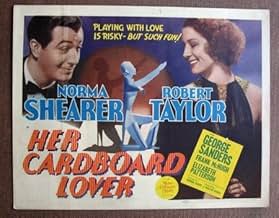
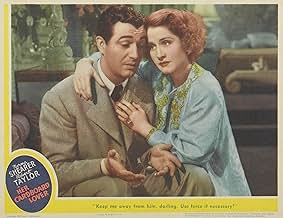
A rich woman pays a debt-ridden songwriter to pose as her boyfriend to deter an ex. The catch? Her fake boyfriend genuinely falls for her.A rich woman pays a debt-ridden songwriter to pose as her boyfriend to deter an ex. The catch? Her fake boyfriend genuinely falls for her.A rich woman pays a debt-ridden songwriter to pose as her boyfriend to deter an ex. The catch? Her fake boyfriend genuinely falls for her.


King Baggot
- Police Officer in Courtroom
- (uncredited)

John Berkes
- Waiter
- (uncredited)

Edward Biby
- Casino Patron
- (uncredited)

Ben Carter
- Elevator Operator
- (uncredited)

Hobart Cavanaugh
- Arresting Plainclothesman
- (uncredited)

Heinie Conklin
- Drunk in Courtroom
- (uncredited)

Richard Crane
- Casino Page
- (uncredited)
Russell Custer
- Courtroom Spectator
- (uncredited)

Helen Dickson
- Casino Patron
- (uncredited)

Frank Elliott
- Croupier
- (uncredited)

Rex Evans
- Dogar - Hotel Desk Clerk
- (uncredited)

Franklyn Farnum
- Casino Patron
- (uncredited)
5.9856
1
2
3
4
5
6
7
8
9
10
Featured reviews
Make believe
This is the second attempt to bring Jacques Deval's play to the screen. The first one was a vehicle for Marion Davies and Nils Asther, directed by Robert Z. Leonard. This new version bears George Cukor's signature as the director. The film is interesting for two reasons: it marked the last time its star, Norma Shearer, appeared on a film, and it also has Robert Taylor doing comedy, something he wasn't seen in often.
"Her Cardboard Lover" is a sophisticated comedy that capitalizes on the strength of its stars. The screen play by Valerie Wyngate has some ups and downs in it that even the great Cukor wasn't able to solve. First, there is a marked age difference between the stars, not because Ms. Shearer looks older, on the contrary, she is in excellent form, but Mr. Taylor appears to be much younger.
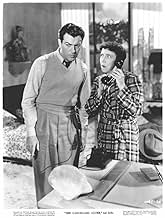
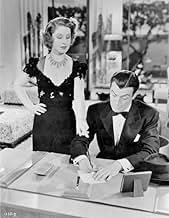
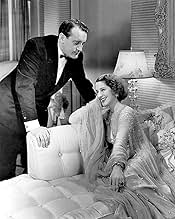
The film has some good moments for everyone. The best thing Mr. Cukor was able to do was to give the suave George Sanders the part of Tony Barling, the playboy who comes back to claim the love of Consuelo Croyden. They have parted in a bad way, but there's still something between the former lovers. By hiring Terry Trindale as the "fake" lover, in order to make Tony Barling jealous, a new dynamic enters into play.
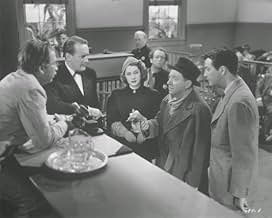
There are two extraordinary sequences toward the end of the film. The first one is the fight between Tony and Terry in the hotel's pantry when dishes, vases, and all kinds of porcelain gets smashed against walls. The second one is in the court that is presided by judge Sam, brilliantly portrayed by Chill Wills. The acting is first rate by this marvelous cast. In minor roles Frank McHugh and Elizabeth Patterson shine.
The film is a light comedy that is a delight to watch.
"Her Cardboard Lover" is a sophisticated comedy that capitalizes on the strength of its stars. The screen play by Valerie Wyngate has some ups and downs in it that even the great Cukor wasn't able to solve. First, there is a marked age difference between the stars, not because Ms. Shearer looks older, on the contrary, she is in excellent form, but Mr. Taylor appears to be much younger.
The film has some good moments for everyone. The best thing Mr. Cukor was able to do was to give the suave George Sanders the part of Tony Barling, the playboy who comes back to claim the love of Consuelo Croyden. They have parted in a bad way, but there's still something between the former lovers. By hiring Terry Trindale as the "fake" lover, in order to make Tony Barling jealous, a new dynamic enters into play.
There are two extraordinary sequences toward the end of the film. The first one is the fight between Tony and Terry in the hotel's pantry when dishes, vases, and all kinds of porcelain gets smashed against walls. The second one is in the court that is presided by judge Sam, brilliantly portrayed by Chill Wills. The acting is first rate by this marvelous cast. In minor roles Frank McHugh and Elizabeth Patterson shine.
The film is a light comedy that is a delight to watch.
A Mild Farewell
This innocuous comedy that marked the farewell performance of Norma Shearer on the big screen has quite a history to it. It was a French play by Jacques Deval, adapted for the stage by P.G. Wodehouse among others. It ran for 152 performances in 1927 on Broadway and starred the legendary Jeanne Eagels with Leslie Howard.
It then went to the silent screen the following year with Marion Davies and Nils Asther in the leads and scored a modicum of success there. But the most bizarre adaption was yet to come. In 1932 the story was reworked for Buster Keaton and Jimmy Durante in the The Passionate Plumber. Irene Purcell is the female lead. Which brings us to the last and least version of this story.
I've a theory that Norma Shearer chose this vehicle to show Marion Davies that she could do one of her roles better. What other explanation could there be for turning down Mrs. Miniver as her farewell picture for this. And would you ever believe that Robert Taylor and Buster Keaton would play the same part on screen?
Shearer and Davies were a pair of feuding stars at MGM while Davies was there. Shearer was married to the boss, Irving Thalberg and Davies had her patron William Randolph Hearst who bought his way on to the lot. It's now conceded that Davies had a real flair for comedy, but that Hearst just could only see her as the heroine of many a drama. Shearer was a great dramatic actress who never quite scored in comedy. I'm betting for her final film she was going to show the retired Davies that she could do it better.
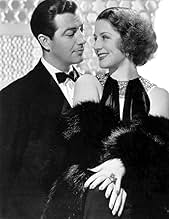
Well she didn't. In fact if any of P.G. Wodehouse's wit survived in this film, I must have dozed off. What emerges is a pleasant innocuous comedy which would have been long forgotten had it not been Norma Shearer's last film. When we first meet Shearer she's trying to fend off the advances of an amorous Taylor who has fallen in love at first sight. But later on she thinks he might be useful in fending off George Sanders's advances. She's trying real hard to dump the cad, but he's one charming rogue. So Norma hires Bob as Her Cardboard Lover to pretend he's the new man in her life. I think you can guess where this is going.
Shearer did not get quite the sendoff from the big screen that she thought she would have gotten, surely not anything like Mrs. Miniver would have been. For Taylor, he's pleasant enough, but if you want to see him and Shearer in much better form look at the 1940 film Escape.
It then went to the silent screen the following year with Marion Davies and Nils Asther in the leads and scored a modicum of success there. But the most bizarre adaption was yet to come. In 1932 the story was reworked for Buster Keaton and Jimmy Durante in the The Passionate Plumber. Irene Purcell is the female lead. Which brings us to the last and least version of this story.
I've a theory that Norma Shearer chose this vehicle to show Marion Davies that she could do one of her roles better. What other explanation could there be for turning down Mrs. Miniver as her farewell picture for this. And would you ever believe that Robert Taylor and Buster Keaton would play the same part on screen?
Shearer and Davies were a pair of feuding stars at MGM while Davies was there. Shearer was married to the boss, Irving Thalberg and Davies had her patron William Randolph Hearst who bought his way on to the lot. It's now conceded that Davies had a real flair for comedy, but that Hearst just could only see her as the heroine of many a drama. Shearer was a great dramatic actress who never quite scored in comedy. I'm betting for her final film she was going to show the retired Davies that she could do it better.
Well she didn't. In fact if any of P.G. Wodehouse's wit survived in this film, I must have dozed off. What emerges is a pleasant innocuous comedy which would have been long forgotten had it not been Norma Shearer's last film. When we first meet Shearer she's trying to fend off the advances of an amorous Taylor who has fallen in love at first sight. But later on she thinks he might be useful in fending off George Sanders's advances. She's trying real hard to dump the cad, but he's one charming rogue. So Norma hires Bob as Her Cardboard Lover to pretend he's the new man in her life. I think you can guess where this is going.
Shearer did not get quite the sendoff from the big screen that she thought she would have gotten, surely not anything like Mrs. Miniver would have been. For Taylor, he's pleasant enough, but if you want to see him and Shearer in much better form look at the 1940 film Escape.
Not Bad, Quite Amusing.
I don't know what all the fuss is about. Most of the criticism directed at this film is fairly unjust. After reading some reviews, I was hesitant at watching the film, but because it starred Robert Taylor, Norma Shearer and George Sanders, I thought I would give it a shot. I'm glad I did. It didn't make me turn off the TV set or change channels. The acting was excellent and the story was played out quite amusingly by the main cast. I believe the cast held up the film well. I have no problems with Shearer's age. After all, it's just a comedy. Jean Arthur was in her 50s when she was in Shane and 10 years older than Van Heflin too and no one criticized her. See and judge for yourself and never listen to critics. They don't know what they are saying half the time. We all have different tastes.
Amazing spontaneous talent!
Someone posted the comment that this film is "forgettable" and "triffling." But I saw Norma Shearer and Robert Taylor playing off each other with such spontaneity that I could only admire their talents all the more. Also, compare their rare comedic talents together in this film, along with their deep and tragic mutual acting in "Escape." Such a pair of talent-generating stars!
In the sound age, this film was the kiss of death for the lead actress
This version was so bad that Norma Shearer retired from the screen. I actually liked the quirky 1931 version with Irene Purcell in the same role, but it had the same effect on her career, and would be the last film in which she ever performed, though she was primarily a stage actress. Only the silent 1928 version with Marion Davies did not destroy the career of the leading lady.
Anyways, back to this version. In it Norma Shearer hires a lovestruck Robert Taylor (sporting a Bela Lugosi Dracula haircut with a point down the middle) to protect her from herself. Norma plays a Palm Beach vacationer hopelessly in love with a womanizer, played by, who else, George Sanders. Shearer hates that she can't control her desires for Sanders. Since Taylor owes her a gambling debt, he can pay it off by being Norma's secretary. His job doesn't involve typing. He's there to keep her away from Sanders, a job he performs too well, practically keeping her hostage in her own room. The chemistry between Shearer and Taylor is okay. But not as charged as her scenes with Sanders. You get the sense the two of them could have a happy open marriage. Shearer excels at playing liberated women (A Free Soul), (Private Lives). Norma wouldn't lose sleep over a philandering husband, as she would have her own trove of lovers. Of course, this is not Pre-Code Hollywood, which was something that worked in the favor of the 1931 version - "The Passionate Plumber".
I give Taylor credit for playing against type. Some of the comedic tropes for keeping Norma and George separated are funny, and some come across as creepy. This film has gorgeous sets, Harry Stradling's rich B&W photography, the elegant atmosphere, and of course Norma Shearer. But still, it just feels like the story is playing out in the wrong era.
Norma Shearer retired after this film. Apparently, during its making, someone said she had "jiggling grandma arms", and that was enough to have her hang it up at age 40. Although she still looked mighty fine to me.
Anyways, back to this version. In it Norma Shearer hires a lovestruck Robert Taylor (sporting a Bela Lugosi Dracula haircut with a point down the middle) to protect her from herself. Norma plays a Palm Beach vacationer hopelessly in love with a womanizer, played by, who else, George Sanders. Shearer hates that she can't control her desires for Sanders. Since Taylor owes her a gambling debt, he can pay it off by being Norma's secretary. His job doesn't involve typing. He's there to keep her away from Sanders, a job he performs too well, practically keeping her hostage in her own room. The chemistry between Shearer and Taylor is okay. But not as charged as her scenes with Sanders. You get the sense the two of them could have a happy open marriage. Shearer excels at playing liberated women (A Free Soul), (Private Lives). Norma wouldn't lose sleep over a philandering husband, as she would have her own trove of lovers. Of course, this is not Pre-Code Hollywood, which was something that worked in the favor of the 1931 version - "The Passionate Plumber".
I give Taylor credit for playing against type. Some of the comedic tropes for keeping Norma and George separated are funny, and some come across as creepy. This film has gorgeous sets, Harry Stradling's rich B&W photography, the elegant atmosphere, and of course Norma Shearer. But still, it just feels like the story is playing out in the wrong era.
Norma Shearer retired after this film. Apparently, during its making, someone said she had "jiggling grandma arms", and that was enough to have her hang it up at age 40. Although she still looked mighty fine to me.


Did you know
- TriviaFinal film of Norma Shearer.
- Quotes
Terry Trindale: Who shall I say it's from, her lawyer?
Tony Barling: Lawyer? Hardly.
Terry Trindale: Well if this were bad news...
Tony Barling: Do I look like bad news?
- Crazy credits"The End. America Needs Your Money. Buy War Bonds And Stamps Every Pay Day."
- ConnectionsVersion of The Cardboard Lover (1928)
- SoundtracksI Dare You
(1942) (uncredited)
Music by Burton Lane
Lyrics by Ralph Freed
Played during the opening credits and often as background music
Played on piano by Robert Taylor
Reprised on piano by Robert Taylor and sung by him and Frank McHugh
Sung a cappella by Norma Shearer
Details
Box office
- Budget
- $979,000 (estimated)
- Runtime
- 1h 33m(93 min)
- Color
- Aspect ratio
- 1.37 : 1
Contribute to this page
Suggest an edit or add missing content