IMDb RATING
6.9/10
2.9K
YOUR RATING
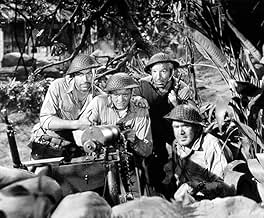
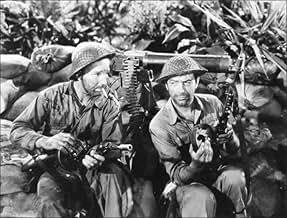
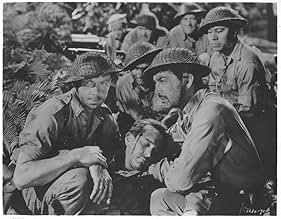
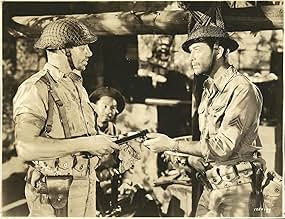
In 1942, in the Bataan peninsula of the Philippines, a ragtag American unit commanded by Sergeant Bill Dane attempts to blow-up a bridge in order to slow the Japanese advance.In 1942, in the Bataan peninsula of the Philippines, a ragtag American unit commanded by Sergeant Bill Dane attempts to blow-up a bridge in order to slow the Japanese advance.In 1942, in the Bataan peninsula of the Philippines, a ragtag American unit commanded by Sergeant Bill Dane attempts to blow-up a bridge in order to slow the Japanese advance.
- Director
- Writers
- Stars
- Awards
- 5 wins total
Alex Havier
- Yankee Salazar
- (as J. Alex Havier)
Ernie Alexander
- Wounded Soldier
- (uncredited)
Luke Chan
- Japanese Soldier
- (uncredited)
Wing Foo
- Japanese Soldier
- (uncredited)
Bud Geary
- Infantry Soldier
- (uncredited)
- Director
- Writers
- All cast & crew
- Production, box office & more at IMDbPro
6.92.8K
1
2
3
4
5
6
7
8
9
10
Featured reviews
Good early WWII action
Robert Taylor gives a gritty performance as the leader of a thrown together unit fighting a delaying action during the fall of the Philipines. Lloyd Nolan does a good job as a professional soldier with a past, Thomas Mitchell is good as the older career soldier, perhaps a bit out of shape from years of peace time duty. Robert Walkers portrayal of a young homesick sailor is a good start on his career. This 1943 movie features some of the best hand to hand combat scenes to come out of any war movie, regardless of era. The exhaustion afterwards is strikingly realistic. This movie, dialogue included, is patriotic. At the time of Bataan, there wasn't much good news as the US had suffered some devastating defeats. The characters, regardless of race or creed, are treated equally which is a real plus for that time. I first saw this movie in a theatre when I was 9, (and yes, after the movie was over, the house lights came on and the ushers passed thru the audience selling War Stamps). I liked the movie then, and like it even more now. I give it a 9.
NOTE: A previous persons comment stated that they were not even wearing American helmets. In fact, the helmets worn in the movie ARE correct for the American Army in the early 1940's.
A big office film of its time, despite its studio jungles...
Bataan is a province, central Luzon, Philippines, sheltering Manila Bay from the South China Sea... It is largely covered by jungle and is traversed north to south by steep mountains...
After the Japanese invasion of the Philippines in December 1941 and the fall of Manila (January 2, 1942), the defending Americans and Filipinos withdrew to Bataan, foiling Japanese efforts to split the forces of U.S. General Douglas MacArthur... His troops fought a fierce delaying action until April 9, 1942, and remnants, led by Lieut. Gen. Jonathan M.Wainwright, escaped to Corregidor Island, where they surrendered about a month later...
On January 9, 1945, U.S. Forces, under MacArthur, landed at Lingayen Gulf to the north and sealed off the Bataan Peninsula... Landings were then made at Mariveles Harbor in the south and on Corregidor Island, thus securing Manila Bay for the U.S. Navy...
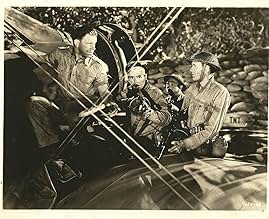
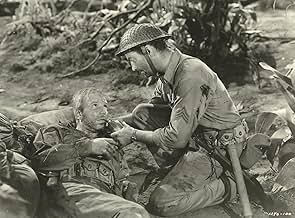
"Bataan" is the fictional story of 13 men who stayed behind, holding a bridge, and fighting to the death a rear guard action to ensure the success of the Allied forces retreat from the Philippines...
The audience live with the soldiers their last heroic days: George Murphy, an Air Force Lieutenant secretly reliable; Lloyd Nolan, the smart Corporal with compassionate qualities; Thomas Mitchell, a career NCO; Deni Arnaz, a friendly Spanish soldier; Barry Nelson, the competent Matowski; Lee Bowman, the Captain who falls with a bullet; Robert Walker (in his screen debut) who almost breaks down from homesickness; Kenneth Spencer, the black soldier with an undisturbed force and simple dignity, and Robert Taylor, the tough heroic Sergeant alive in the face of the enemy, who sets up his machine gun and keeps it firing until the end...
All are representatives of the heroism existing in all Americans, symbol of the heroic resistance...
After the Japanese invasion of the Philippines in December 1941 and the fall of Manila (January 2, 1942), the defending Americans and Filipinos withdrew to Bataan, foiling Japanese efforts to split the forces of U.S. General Douglas MacArthur... His troops fought a fierce delaying action until April 9, 1942, and remnants, led by Lieut. Gen. Jonathan M.Wainwright, escaped to Corregidor Island, where they surrendered about a month later...
On January 9, 1945, U.S. Forces, under MacArthur, landed at Lingayen Gulf to the north and sealed off the Bataan Peninsula... Landings were then made at Mariveles Harbor in the south and on Corregidor Island, thus securing Manila Bay for the U.S. Navy...
"Bataan" is the fictional story of 13 men who stayed behind, holding a bridge, and fighting to the death a rear guard action to ensure the success of the Allied forces retreat from the Philippines...
The audience live with the soldiers their last heroic days: George Murphy, an Air Force Lieutenant secretly reliable; Lloyd Nolan, the smart Corporal with compassionate qualities; Thomas Mitchell, a career NCO; Deni Arnaz, a friendly Spanish soldier; Barry Nelson, the competent Matowski; Lee Bowman, the Captain who falls with a bullet; Robert Walker (in his screen debut) who almost breaks down from homesickness; Kenneth Spencer, the black soldier with an undisturbed force and simple dignity, and Robert Taylor, the tough heroic Sergeant alive in the face of the enemy, who sets up his machine gun and keeps it firing until the end...
All are representatives of the heroism existing in all Americans, symbol of the heroic resistance...
An Unusual War Movie
For a war movie, this was a bit unusual in that almost the whole film took part in one place. You could almost make a play out of this. A group of men stay in one area trying to sabotage a bridge so the Japanese can't use it to transport supplies. Meanwhile, they have to fend off attacks by the enemy. The closing scenes feature that attack and some are quite brutal.
At least half of the story is not action but melodramatic looks at the soldiers, particularly of the squad's sergeant leader Robert Taylor and one of his men who has an attitude problem: Lloyd Nolan. We also get some shorter profiles of combat men played by Robert Walker, Thomas Mitchell and Desi Arnez (yes, Lucy's husband).
The special effects are more than passable considering they weren't too advanced in the film industry compared to today's technology. However, credibility was a little thin as those Japanese soldiers died awfully fast in those combat scenes at the end. I swear I saw several of them drop over before anyone hit them!
Taylor was the best in this movie "army" and Walker was the annoying character, playing an extremely young and generally stupid Navy guy (don't ask) who never stopped talking in this irritating voice. Other than his character, this was a tough, no-nonsense war movie.
At least half of the story is not action but melodramatic looks at the soldiers, particularly of the squad's sergeant leader Robert Taylor and one of his men who has an attitude problem: Lloyd Nolan. We also get some shorter profiles of combat men played by Robert Walker, Thomas Mitchell and Desi Arnez (yes, Lucy's husband).
The special effects are more than passable considering they weren't too advanced in the film industry compared to today's technology. However, credibility was a little thin as those Japanese soldiers died awfully fast in those combat scenes at the end. I swear I saw several of them drop over before anyone hit them!
Taylor was the best in this movie "army" and Walker was the annoying character, playing an extremely young and generally stupid Navy guy (don't ask) who never stopped talking in this irritating voice. Other than his character, this was a tough, no-nonsense war movie.
An excellent film about courage, duty, and honor
I remember seeing this film as a child, but only recently did I get a copy of the DVD and experience it as an adult. Being a student of history and in the military, war films have to go a long way to impress me. This one doesn't let you down. In some ways I think it does a better job realistically portraying war than some modern films I've seen. This small patrol of US Army soldiers must contend with lethal sniper fire, air raids, and overwhelming numbers of Japanese soldiers. One other thing it does a good job at is fully representing the diverse social spectrum of our country. For a film made in 1943, that is quite an accomplishment. Bravo!
The Horrors of War
My Mom saw this movie at the time it was released and said it gave her more nightmares than any horror film she ever saw. It is still violent today and must have been shockingly brutal back in the day.
Yes, you can say some of the soldiers are clichéd, but death is shown unflinchingly. Combat is portrayed as a bloody, messy, fatigue-inducing business. Boredom and endless waiting take their toll on nerves as well. The banter and cocky talk is whistling past the graveyard.
Lloyd Nolan's character is rough and unlikeable. He fights for freedom, but he fights dirty and he doesn't pretty things up with patriotic speeches. Some might complain about the black soldier playing harmonica and taking orders from white men. Actually, for the time, he was portrayed with dignity and shown to be as brave as any of the other soldiers. As for Robert Taylor, his weariness and resolve at the end are stirring and the last scene is not one you will soon forget.
Ignoring the propaganda aspects of the movie, the last half works as almost a pure horror movie, as our cast gets gruesomely picked off by unseen foes lurking in the jungle.
Exciting and gripping, it's easy to overlook the faults of this most violent and gritty of WW2 films made at the time.
"Bushido, Bushwa! You stink!" So died the heroes of Bataan...
Yes, you can say some of the soldiers are clichéd, but death is shown unflinchingly. Combat is portrayed as a bloody, messy, fatigue-inducing business. Boredom and endless waiting take their toll on nerves as well. The banter and cocky talk is whistling past the graveyard.
Lloyd Nolan's character is rough and unlikeable. He fights for freedom, but he fights dirty and he doesn't pretty things up with patriotic speeches. Some might complain about the black soldier playing harmonica and taking orders from white men. Actually, for the time, he was portrayed with dignity and shown to be as brave as any of the other soldiers. As for Robert Taylor, his weariness and resolve at the end are stirring and the last scene is not one you will soon forget.
Ignoring the propaganda aspects of the movie, the last half works as almost a pure horror movie, as our cast gets gruesomely picked off by unseen foes lurking in the jungle.
Exciting and gripping, it's easy to overlook the faults of this most violent and gritty of WW2 films made at the time.
"Bushido, Bushwa! You stink!" So died the heroes of Bataan...
Did you know
- TriviaPrologue: "When Japan struck, our desperate need was time--time to Marshall our new armies. Ninety-six priceless days were bought for us--with their lives--by the defenders of Bataan, the Philippine army which formed the bulk of MacArthur's infantry fighting shoulder to shoulder with Americans. To those immortal dead, who heroically stayed stayed the wave of barbaric conquest, this picture is reverently dedicated."
- GoofsAlthough the American soldier was clearly a great coconut tree climber, it is near to impossible to sit atop a coconut tree. Many Filipinos to this day fall when attempting this.
- Quotes
Sergeant Bill Dane: Come on, suckers! What's the matter with you? What are you waitin' for? Didn't think we were here, did you? You dirty rotten rats! We're still here! We'll always be here! Why don't you come and get it?
- Crazy creditsClosing credits epilogue: So fought the heroes of Bataan. Their sacrifice made possible our victories in the Coral and Bismark Seas, at Midway, on New Guinea and Guadalcanal. Their spirit will lead us back to Bataan!
- Alternate versionsAlso available in a computer colorized version.
- ConnectionsFeatured in The Ed Sullivan Show: A Salute to Lucy and Desi (1954)
- SoundtracksSt. Louis Blues
(1914) (uncredited)
Music and Lyrics by W.C. Handy
Sung a cappella and hummed often by Kenneth Spencer
- How long is Bataan?Powered by Alexa
Details
Box office
- Budget
- $958,000 (estimated)
- Runtime
- 1h 54m(114 min)
- Color
- Aspect ratio
- 1.37 : 1
Contribute to this page
Suggest an edit or add missing content